Cost of Living in Eilat
Where this figure comes from. No cost survey covers Eilat, so the $2,700 a month above is our own estimate rather than a measurement. On 416 of our 999 city guides the figure is built from a published Numbeo basket, a one-bedroom rent in the centre plus one person's monthly costs without rent, converted to USD; this city is not one of them. How we source everything.
Eilat sits at the cheaper end of Israel's cost scale, but it is still not a budget destination by global standards. Expect to spend roughly $2,620-3,920 per month as a solo remote worker, depending heavily on your accommodation choice.
- Rent, central 1-bedroom: $1,370 per month
- Rent, outside centre 1-bedroom: $1,240 per month
- Groceries (one person): $295-390 per month; basic staples are reasonably priced but imported goods cost more
- Eating out, cheap meal: $26; mid-range dinner for two: $130
- Coworking hot-desk (Eilat Hub): subsidised or free for qualifying members; Business House Eilat offers paid desks from roughly $165-260 per month
- Local transport, single bus: $1.50; monthly pass: around $65-82
One meaningful advantage: Eilat is a tax-free zone, meaning no VAT on most goods purchased in the city. This cuts everyday shopping costs noticeably compared to the rest of Israel.
Where to Work
Eilat is a resort town, not a tech hub, so dedicated coworking infrastructure is thin.
Coworking spaces
Eilat Hub, run by the municipality and located in the northern industrial area near Highway 90, is the most established option. It offers shared desks, free meeting rooms, a kitchen, and a startup-oriented community. Hours are Sunday to Thursday, 08:30-20:00. The distance from the tourist centre is about 15 minutes by bus or car.
Business House Eilat on HaBalan Street is a smaller municipally backed workspace suited to local business owners and freelancers, with hot-desk options.
Cafe work culture
Most of the city's cafes are tourist-facing and not set up as work environments. That said, a handful of spots are genuinely usable: Branja on Derech Yotam has WiFi, comfortable seating, and an all-day menu; Ginger on the same street offers power outlets alongside a laid-back dining atmosphere. Expect to order regularly; lingering for hours is not the norm.
WiFi situation
Hotel-grade fibre broadband is widely available in apartments. The 4G/5G mobile network from Cellcom, Partner, and Hot Mobile covers the city well and provides a reliable backup. Public WiFi at hotels and malls is decent. The weakest link is the limited number of purpose-built work cafes with fast, stable connections.
Getting Around
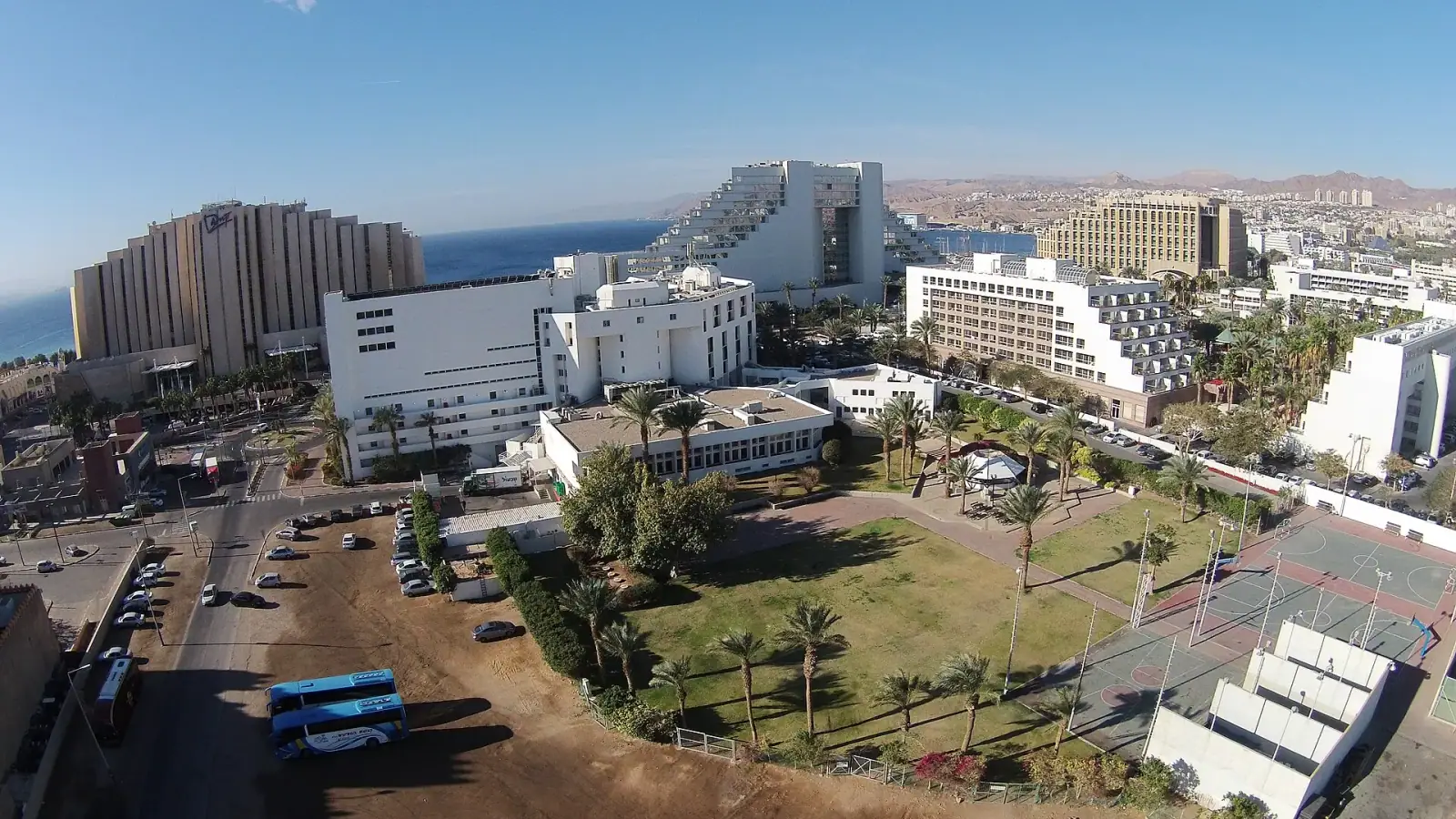
Eilat is a compact city and much of the tourist centre, North Beach promenade, and hotel strip is walkable in 20-30 minutes on foot. The climate makes walking unpleasant from June through August, when temperatures regularly hit 40°C.
Local Egged buses (lines 1, 6, 10, and others) cover the main routes at $1.50 per ride. A Rav Kav reloadable smart card works city-wide and nationwide. Taxis are available through the Gett app or street hail; always confirm the meter is running or agree on a price upfront.
Ramon Airport (ETH) is 18 km north of the city. Four bus lines connect the airport to central Eilat in roughly 20 minutes for $1.50. Free hotel shuttles depart every 15 minutes. A taxi costs around $26-33.
There is no direct train service to Eilat; getting here from Tel Aviv means a 4-hour bus ride (Egged or Dan), a short flight, or driving. The remote location is a real logistical consideration for frequent movers.
Sorting transport? Book an airport transfer, or compare car rental on Auto Europe and QEEQ.
Visas and Staying Long-Term
Most Western passport holders, including citizens of the US, UK, EU countries, Canada, and Australia, do not need a visa for Israel. Since January 1, 2025, they must obtain an ETA-IL (Electronic Travel Authorization) before travel. It costs $8, is valid for two years, and allows stays of up to 90 days within any 180-day period. Apply at least 72 hours before departure.
Israel does not have a dedicated digital nomad visa as of mid-2026. Extensions beyond 90 days must be applied for through the Population and Immigration Authority before your authorised stay expires; approval is discretionary. There is no straightforward long-term remote worker pathway from abroad.
Entry is never guaranteed: border officers retain full discretion regardless of an approved ETA-IL.
Best Time to Visit
Eilat has a subtropical desert climate with year-round sunshine and virtually no rain. The temperature range is the main variable.
October through April is the sweet spot for remote work. Winters (December to February) are mild and sunny, averaging 16-22°C (61-72°F), making this ideal for outdoor breaks and comfortable indoor working without excessive air conditioning bills. Spring (March to May) is warm and pleasant, though March and April see heavy bird migration if that interests you.
May and September are shoulder months: warm enough for the Red Sea and Aqaba Gulf, hot enough to require some AC, but manageable.
June through August is extremely hot. Daily highs of 38-42°C (100-108°F) are normal, and humidity stays low but the heat is relentless. You will spend most daylight hours indoors with air conditioning running constantly, which inflates utility costs and limits spontaneous outdoor breaks. Unless you specifically enjoy extreme heat, avoid this window for longer stays.
The peak Israeli holiday season runs July to August and around Jewish holidays (Passover in April, Sukkot in October), when accommodation prices spike and the city becomes crowded.
Pros and Cons
- Spectacular natural setting: Red Sea, coral reefs, Negev desert, and Jordanian mountains visible from the waterfront
- Tax-free shopping lowers everyday costs compared to the rest of Israel
- English is widely spoken throughout the tourist areas and hospitality sector
- Very safe city with low everyday crime and a welcoming tourist infrastructure
- Good internet in accommodation; mobile coverage is reliable
- Year-round sun and a genuine resort lifestyle for those who want it
- Remote location: 4+ hours by bus from Tel Aviv, no rail link; getting in and out is a commitment
- Brutal summers from June to August make outdoor life difficult
- Thin coworking infrastructure: only two real coworking options, few laptop-friendly cafes
- Small city feel: limited cultural events, arts scene, or professional networking compared to Tel Aviv
- High cost relative to region: still more expensive than comparable resort destinations in Southeast Asia or Eastern Europe
- Regional security context: the broader Israel-Gaza conflict and geopolitical volatility require ongoing monitoring and affect flight availability
Who Eilat Is Best For
Eilat suits remote workers who want a genuine beach-and-desert lifestyle and are willing to accept limited coworking infrastructure in exchange for it. If your work schedule is flexible, you dive or snorkel, and you want somewhere distinctly different from a major city, Eilat delivers that. It works particularly well for stays of two to four weeks in the winter months, when the weather is outstanding and Israeli tourists thin out.
It also suits people who are already travelling Israel and want a warm southern contrast to Tel Aviv or Jerusalem, or those using Eilat as a base for day trips into Wadi Rum in Jordan or the Sinai in Egypt via the nearby border crossings.
Skip Eilat if you need a large nomad community, multiple coworking options, a vibrant arts and food scene, or easy onward connections. It is also not the right base if you are sensitive to regional security news, as events elsewhere in Israel or neighbouring countries can affect the city's normal functioning. Tel Aviv is a far better fit for full-time nomads who want infrastructure, community, and culture alongside remote work.