Cost of Living in Vinales
Where this figure comes from. No cost survey covers Vinales, so the $800 a month above is our own estimate rather than a measurement. On 416 of our 999 city guides the figure is built from a published Numbeo basket, a one-bedroom rent in the centre plus one person's monthly costs without rent, converted to USD; this city is not one of them. How we source everything.
Vinales is affordable by Western standards, but Cuba runs on cash and the everyday reality is more improvised than the numbers suggest. Living simply, expect roughly $700 to $1,300 a month for one person, most of it going on a room in a casa particular (a licensed family homestay) and home-cooked meals. Bring physical cash, ideally euros or US dollars, because ATMs are unreliable, foreign cards frequently fail, and US-issued cards generally do not work at all. Shortages of specific goods are common, so prices swing and some items simply vanish for weeks. Budget for the informal economy, small tips, and the ETECSA wifi cards you will keep buying. Cigars sold at a tobacco farm come from the small share growers are allowed to keep, since the state buys most of the crop, and they cost a fraction of the price in a state shop, though they come without the official seal. The other good-value buy is guayabita del Pinar, a rum liqueur flavoured with a small wild guava and distilled in Pinar del Río, which travels home far better than anything from the craft stalls.
- Casa particular room: roughly $15 to $35 per night, often cheaper by the week or month
- A hearty casa dinner: around $8 to $15, usually pork, chicken, rice and salad
- ETECSA wifi card (1 hour): a few dollars, bought in CUP or hard currency
- Horseback tour of the valley: around $20 to $30 for a half day
Where to Work in Vinales
If your work needs you reliably online, Vinales is the wrong valley to settle in for long. Connectivity is the town's single biggest weakness. Most internet comes through ETECSA public wifi hotspots, accessed with prepaid scratch cards you feed in hour by hour, and speeds are slow, congested and prone to dropping out entirely. Some casas particulares and a few cafes advertise wifi, but it piggybacks on the same strained network, so video calls, large uploads and cloud syncing are frustrating at best. There is no true coworking space. If you need to work, treat it as a place for offline tasks, writing and planning, and never schedule a deadline or a client call you cannot afford to miss here.
- Buy ETECSA wifi cards in advance; the official queues can be long and resellers charge more
- Ask your casa host about their wifi honestly before booking, and temper expectations
- Download everything you need offline before arriving via Havana
- Consider a Cuban SIM with a data package as a slow backup, coverage permitting
Getting Around Vinales
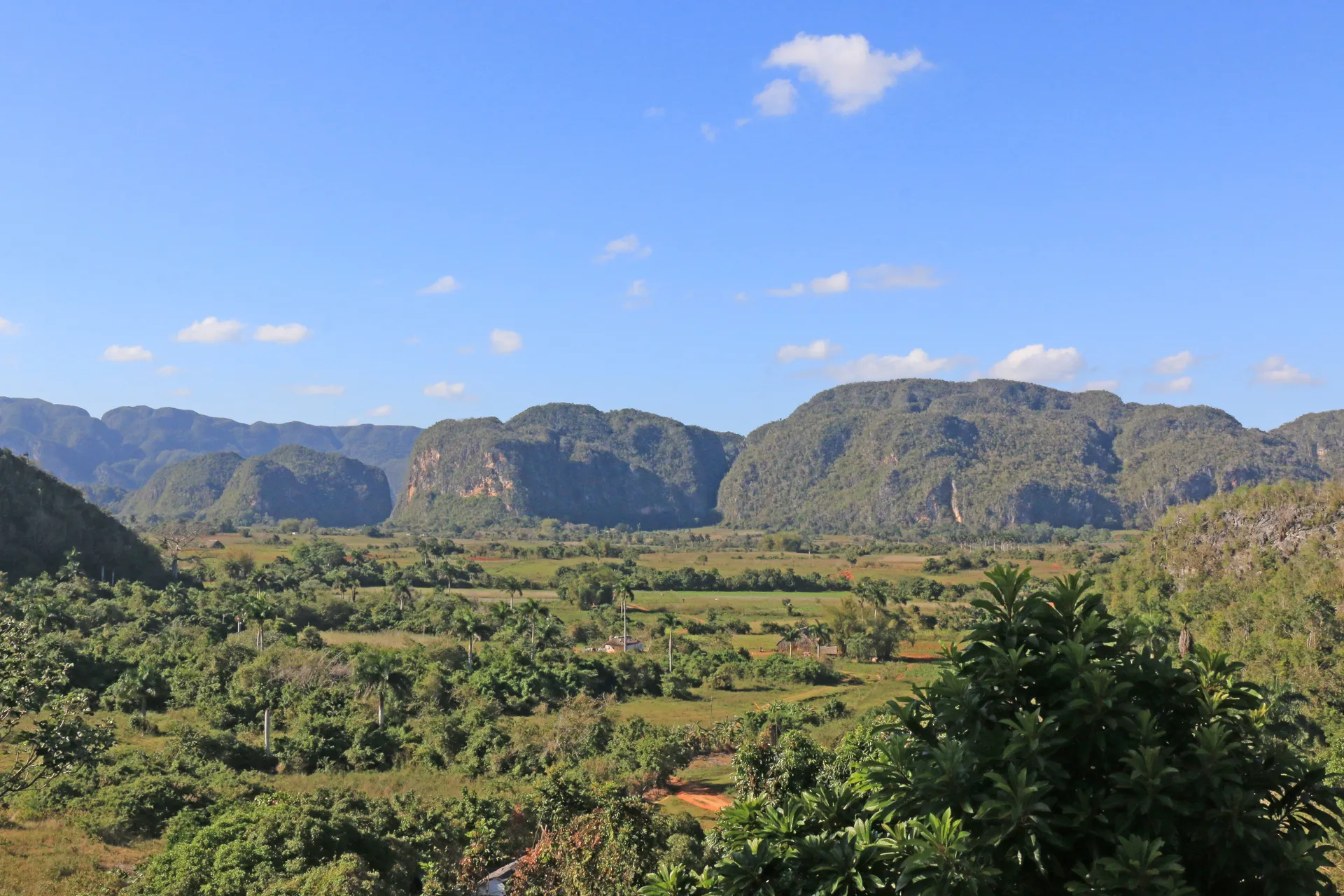
The town itself is small and easily walkable, strung along Calle Salvador Cisneros with its rocking-chair porches, casas and paladares within a few minutes of each other. To reach the valley proper, its tobacco farms with thatched drying barns, the Mural de la Prehistoria and the Los Jazmines viewpoint, people go on foot, by rented bicycle, on horseback or by bici-taxi. For longer hops, the Viazul tourist bus and shared taxis (colectivos) connect Vinales with Havana in roughly three hours and run toward the coast. Day trips to the beaches at Cayo Jutias or the fishing village of Puerto Esperanza are usually arranged through your casa host as a shared car or organized excursion. Pinar del Río, the provincial capital about 25 kilometres south, has the provincial hospital and the larger shops, and a colectivo makes the run in well under an hour.
- Walk the town center; nearly everything sits along or just off Salvador Cisneros
- Rent a bicycle or take a horseback tour to reach the farms and mogotes
- Use Viazul or colectivos for Havana (about 3 hours)
- Arrange Cayo Jutias and Puerto Esperanza day trips through your casa
Sorting transport? Book an airport transfer, or compare car rental on Auto Europe and QEEQ.
Visas for Vinales
Most visitors enter Cuba on a tourist card (the tarjeta de turista), typically valid for 30 days and often extendable once for another 30 at an immigration office, giving up to around 60 days total. You usually buy the card before departure through an airline, a Cuban consulate or a travel agent, and airlines often require proof of onward travel and travel insurance. US travelers face additional layers: travel must fit one of the authorized categories rather than pure tourism, and separate US regulations affect what is permitted.
- Tourist card: commonly 30 days, often extendable once to around 60
- Airlines may require onward travel proof and mandatory travel insurance
- US travelers: authorized-category rules and extra restrictions apply
Best Time to Visit Vinales
The dry season, roughly November to April, is the clear pick. Days are warm and sunny, humidity eases, the valley's red earth and green tobacco fields look their best, and horseback rides and cave visits are far more comfortable. This is also peak season, so casas fill up and prices firm around Christmas, New Year and the winter months. Summers, from about May to October, are hot, humid and prone to heavy afternoon downpours, though the valley turns lush and green. Overlapping this is the Atlantic hurricane season, roughly June to November, when storms can disrupt travel and power. For the best balance of weather, scenery and manageable crowds, aim for late November, early December, or March. Tobacco sets its own calendar: seedlings go into the fields in late autumn, the harvest runs roughly from January to March, and the leaves hang in the thatched drying barns into spring, so a February or March visit shows the whole process at work.
- November to April: dry, sunny, best conditions but busier and pricier
- May to October: hot, humid, green, with frequent afternoon rain
- June to November: Atlantic hurricane season, watch forecasts
Pros and Cons of Vinales
Vinales rewards a very particular kind of traveler and quietly punishes another. On the upside, the setting is genuinely spectacular: limestone mogotes rising from ox-ploughed tobacco fields, warm and welcoming casa hosts, low prices, real safety and a slow rural rhythm that feels increasingly rare. The tobacco culture, horseback trails, caves and viewpoints are world class. On the downside, the internet is slow and unreliable, the economy is cash only with recurring shortages, food can be repetitive, and English is limited outside tourism. Anyone whose income depends on being online will struggle here, and services can feel improvised. Come for the scenery and the culture, not for productivity or convenience.
- Pros: dramatic scenery, warm hosts, low cost, high safety, rich tobacco culture
- Cons: very poor internet, cash-only shortages, limited food variety, limited English
- Best enjoyed slowly, offline, and with realistic expectations
Who Vinales Is For
Vinales suits slow travelers, nature lovers and the culturally curious far more than deadline-driven remote workers. If you want to trade a fast connection for a rocking-chair porch, ride horses through tobacco farms, wander into caves and watch the light move across the mogotes, this is one of the most atmospheric places in the Caribbean. It works well for a writing retreat, a digital detox, or a short scenic break stitched into a wider Cuba trip via Havana. It is a poor fit for anyone who must take reliable video calls, upload large files, or spend without cash. Come with patience, cash in hand, and a plan that does not depend on the wifi. The valley's UNESCO listing, granted in 1999, rests on exactly that farming tradition, worked by hand on the valley floor much as it has been for centuries, which is why a morning on a farm explains the place better than any museum could.