Cost of Living in Havana
Where this figure comes from. No cost survey covers Havana, so the $800 a month above is our own estimate rather than a measurement. On 416 of our 999 city guides the figure is built from a published Numbeo basket, a one-bedroom rent in the centre plus one person's monthly costs without rent, converted to USD; this city is not one of them. How we source everything.
Havana at $800 a month is achievable but the cost structure is unlike anywhere else, and much of it depends on the informal exchange rate rather than the official one. A furnished casa particular room or small apartment on a monthly arrangement in Vedado or Centro Habana runs $250 to $500, with Habana Vieja and Miramar higher. Food is the volatile line: state shops are frequently empty, so groceries come from private markets and hard-currency stores at $150 to $300, while a paladar dinner is $8 to $20 and a peso street pizza under $1. ETECSA is the only mobile operator; a tourist data package with a few gigabytes costs $10 to $35 and is the single biggest working expense. Formal coworking barely exists, so budget $0 to $60 for hotel lobby access. Utilities in a rental usually bundle in at $30 to $80. Transport is $30 to $60. Value verdict: cheap headline, expensive friction.
Where to Work in Havana
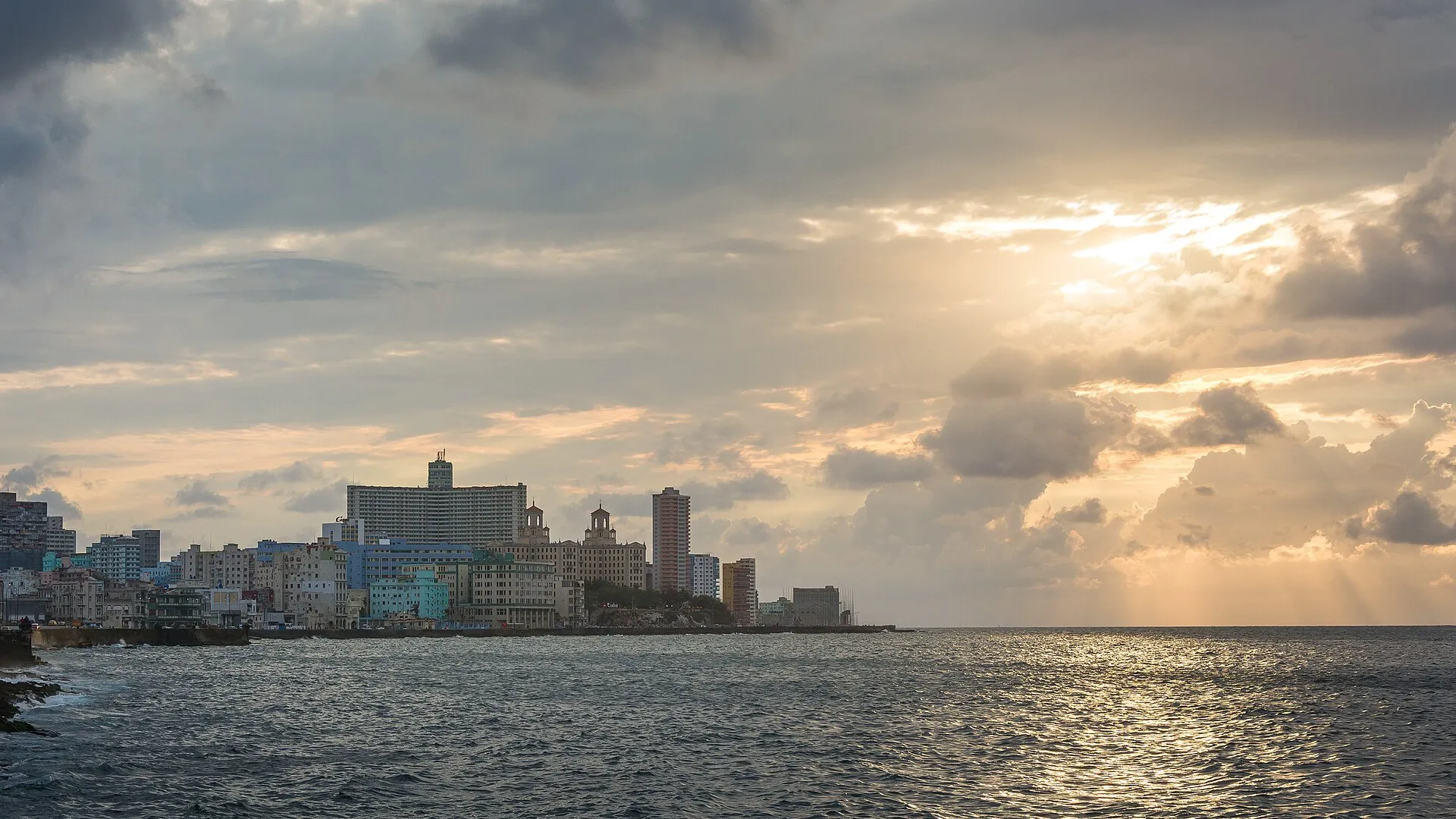
Havana is the hardest working environment on this list, and expectations should be set accordingly. Vedado is the practical base: leafy, mid-century, close to the Malecón, the university and most of the reliable wifi points. Centro Habana is cheaper and more chaotic; Habana Vieja is beautiful but touristed and noisy; Miramar holds the diplomatic and business infrastructure and the most stable connections. There is essentially no coworking sector. The workable options are hotel lobbies and bars, with the Habana Libre, the Nacional and the larger Miramar hotels offering the steadiest signal, plus ETECSA wifi parks and cafes in Vedado. Mobile data on ETECSA is the main lifeline but speeds are typically a few Mbps, congested in the evening, and video calls often fail outright. Nationwide blackouts and rolling power cuts of several hours are routine, so a power bank and offline-first workflow are essential. Occasional national internet restrictions during unrest are a real risk.
Getting Around Havana
Havana has no metro and no functioning ride-hailing apps in the Western sense; Uber does not operate. The dominant private option is the colectivo, a shared fixed-route almendrón running along arteries such as Línea and Neptuno, costing roughly $0.40 to $1 per person in local pesos. Private taxis negotiate a flat fare: expect $5 to $15 for a crosstown trip, more if you look like a tourist and do not agree the price first. State buses, the guaguas, cost pennies but are overcrowded and unreliable. A local app called La Nave functions in parts of the city but coverage and payment are inconsistent. Vedado, Centro Habana and Habana Vieja are highly walkable and best explored on foot, with broken pavements the main hazard. José Martí airport is 20 km south: a taxi is $25 to $35, fixed by convention. No car needed; renting one is expensive and fuel shortages are chronic. A small ferry crosses the harbour to Regla and Casablanca for a few pesos and is the cheapest way onto the water, running all day from a pier beside the old town. Fuel shortages thin every other service without warning, so a plan that depends on a bus is a plan with a hole in it.
Sorting transport? Book an airport transfer, or compare car rental on Auto Europe and QEEQ.
Visas for Havana
Cuba does not issue a digital nomad visa and there is no remote-work route. Nearly all Western visitors enter on a tourist card, the tarjeta del turista, which is a paper visa bought from an airline, a Cuban consulate or an authorised agency for roughly $25 to $110 depending on source. It grants 30 days for most nationalities and 90 days for Canadians, and can be extended once in country for an equal period at an immigration office, giving a practical maximum of 60 days for most Europeans and 180 for Canadians. Travel medical insurance is mandatory and checked. US citizens face additional constraints: travel must fall under one of the authorised OFAC categories, ordinary tourism is not one of them, and travel to Cuba disqualifies a traveller from later using ESTA visa-waiver entry to the United States, a rule that also applies to Europeans who have visited Cuba since 2021. Working remotely on a tourist card is not formally sanctioned.
Best Time to Visit Havana
Havana is tropical and warm all year, with a clear dry and wet split. The dry season, November through April, is the best window: highs of 26C to 29C, lower humidity, sea breezes along the Malecón, and the least rain. December to March is the peak and books out. May through October is hot, humid and wet, with July and August reaching 32C or more and feeling considerably worse in buildings without air conditioning, especially during power cuts. Hurricane season officially runs June to November, with the real risk concentrated in September and October; Cuba is directly in the Atlantic track and major storms cause extended outages and damage. Key dates include the Havana Jazz Festival in January, the Havana Biennial in spring on its irregular cycle, the International Film Festival in December, and Carnaval de La Habana in August. Book anything around Christmas and new year far ahead. Cold fronts in the winter months push the sea straight over the seawall and close the road behind it, which happens several times each season and soaks anything parked along it. Residents watch for it, and the spray reaching the buildings opposite is the standard photograph of this city in January.
Pros and Cons of Havana
The appeal is genuine and almost entirely non-practical. Havana is one of the most visually and culturally extraordinary cities in the Americas: mid-century Vedado, crumbling Habana Vieja, live son and jazz most nights, and street life untouched by chains. Accommodation and food can be cheap, violent crime is minimal, and casa particular hosts provide local access hotels never match. The drawbacks are severe and disqualifying for most remote workers. Internet is slow, expensive, ETECSA-monopolised and prone to national outages during unrest; video calls frequently fail. Blackouts of four to twelve hours are routine, not exceptional. Shortages of food, medicine, fuel and cash are chronic, ATMs often fail, and US-issued cards do not work at all, so hard currency must be carried in. Bureaucracy is opaque, the dual exchange rate confuses constantly, heat without air conditioning punishes half the year, and no nomad community exists.
Who Havana Is For
This is a place for travellers first and remote workers a distant second. It fits writers, photographers, musicians, researchers and anyone whose work is asynchronous, offline-tolerant and unbothered by a week without a stable connection. It rewards people with genuine curiosity about Cuban history, music and politics, patience for improvisation, and a willingness to carry cash, plan around blackouts and accept that nothing runs on schedule. Spanish is close to essential. Stays of a few weeks between projects work far better than a base. It is emphatically wrong for anyone doing client calls, live collaboration, trading, streaming, or any job that assumes reliable bandwidth and power. Skip it if a stable coworking routine, card payments, food variety, air conditioning or a nomad social scene matter, and skip it entirely if a US ESTA or frequent US travel is part of the plan, since a Cuba stamp forfeits visa-waiver eligibility.