Cost of Living in Trinidad
Where this figure comes from. No cost survey covers Trinidad, so the $900 a month above is our own estimate rather than a measurement. On 416 of our 999 city guides the figure is built from a published Numbeo basket, a one-bedroom rent in the centre plus one person's monthly costs without rent, converted to USD; this city is not one of them. How we source everything.
Trinidad can be lived on a modest budget, but Cuba is a cash economy and prices swing wildly with shortages, the tourist season, and whichever informal exchange rate applies the week you arrive. Budget roughly $700 to $1,300 a month living simply, with most of that going to a casa particular (a licensed private guest room) and to eating at paladares, the family-run private restaurants. Carry enough cash, ideally euros or US dollars to change on arrival, because foreign cards frequently fail and ATMs are unreliable. Expect to pay a premium for anything imported and to occasionally go without items that are simply unavailable. Living cheaply here means eating what is in season, walking everywhere, and keeping your expectations flexible rather than fixed.
- Casa particular room: roughly $15 to $35 a night, often cheaper by the month.
- Paladar dinner: roughly $8 to $18 per person; street snacks far less.
- ETECSA wifi cards: a few dollars per hour of connection time.
- Bring cash; foreign cards and ATMs are unreliable and US-issued cards generally do not work.
Where to Work in Trinidad
Connectivity is where Trinidad falls down, and it is the single reason the town makes a poor base for anyone whose work needs them reliably online. There is no real coworking scene. Internet comes mainly through ETECSA, the state telecom, via prepaid Nauta wifi cards used in public plazas and hotspots, plus limited and often slow wifi in some casas particulares and hotels. Speeds are modest, connections drop, and outages happen. Do not plan deadline work, live video calls, or anything bandwidth-heavy around Trinidad. If you must work, treat it as an occasional-email-and-messaging place, download what you need in advance, and build in generous buffer time. Many nomads simply take Trinidad as a screen-free break between more connected bases like Havana or destinations outside Cuba entirely. Mobile data has also drifted toward the dollar: the state telecom now sells its larger data packages for foreign currency and caps what can be bought in pesos, so a tourist SIM topped up with dollars is the realistic way to get more than a trickle.
- Buy Nauta wifi cards from ETECSA offices or resellers; guard the login codes.
- Plaza Mayor and hotel lobbies are common hotspot areas, but they get crowded and slow.
- Ask your casa host directly whether they have wifi and how reliable it actually is.
- Expect frequent dropouts; never schedule a critical call you cannot reschedule.
Getting Around Trinidad
The historic center is small and walkable, though the cobbled streets are beautiful and brutal at once: uneven stones are hard on wheels, luggage, and ankles, so pack light and wear sturdy shoes. Within town you will mostly walk. Horse carts, bicitaxis, and classic-car taxis cover longer hops, and shared colectivo taxis are the workhorse for intercity travel. Viazul, the tourist bus line, links Trinidad to Havana, Cienfuegos, and Santa Clara, while shared taxis often run the same routes faster for a negotiated fare. A slow tourist train and organized excursions reach the Valle de los Ingenios sugar valley. For the coast and mountains, arrange day trips to Playa Ancon beach and up to Topes de Collantes in the Escambray range.
- Walk the center; save wheels for the cobbles' sake and your own.
- Viazul buses and shared colectivo taxis connect Havana, Cienfuegos, and Santa Clara.
- Day-trip to Playa Ancon (beach) and Topes de Collantes (mountains and waterfalls).
- The Valle de los Ingenios is reachable by tourist train or organized tour.
Sorting transport? Book an airport transfer, or compare car rental on Auto Europe and QEEQ.
Visas for Trinidad
Most visitors enter Cuba on a tourist card, the tarjeta de turista, rather than a stamped visa, and Trinidad follows the same national rules as everywhere else in the country. The card is typically bought before travel through an airline, Cuban consulate, or authorized agency, and is usually valid for an initial stay that can often be extended once inside Cuba through immigration offices. US travelers face additional layers: US law restricts tourism to Cuba and requires travel to fit specific authorized categories, and a different pink tourist card applies to those departing from the United States.
- The tarjeta de turista is the standard entry document for most nationalities.
- Extensions are generally handled at immigration offices inside Cuba.
- Travel medical insurance is commonly required for entry.
- US travelers face extra restrictions and category rules.
Best Time to Visit Trinidad
The dry season, roughly November through April, is the clear winner: warm days, cooler evenings, lower humidity, and the most comfortable conditions for wandering the cobbled streets and heading to the beach or the mountains. This is also the busiest and priciest window, so book casas ahead. Summers, roughly May through October, are hot and humid, with heavy afternoon downpours that can be dramatic and draining in equal measure. The Atlantic hurricane season runs roughly June through November, and while direct hits on Trinidad are not constant, storms can disrupt travel, power, and the already fragile internet. If you value comfortable weather and reliable movement over fewer crowds, aim squarely at the dry months.
- November to April: dry, most comfortable, busiest and most expensive.
- May to October: hot, humid, frequent afternoon rain.
- June to November: Atlantic hurricane season; build in flexibility.
Pros and Cons of Trinidad
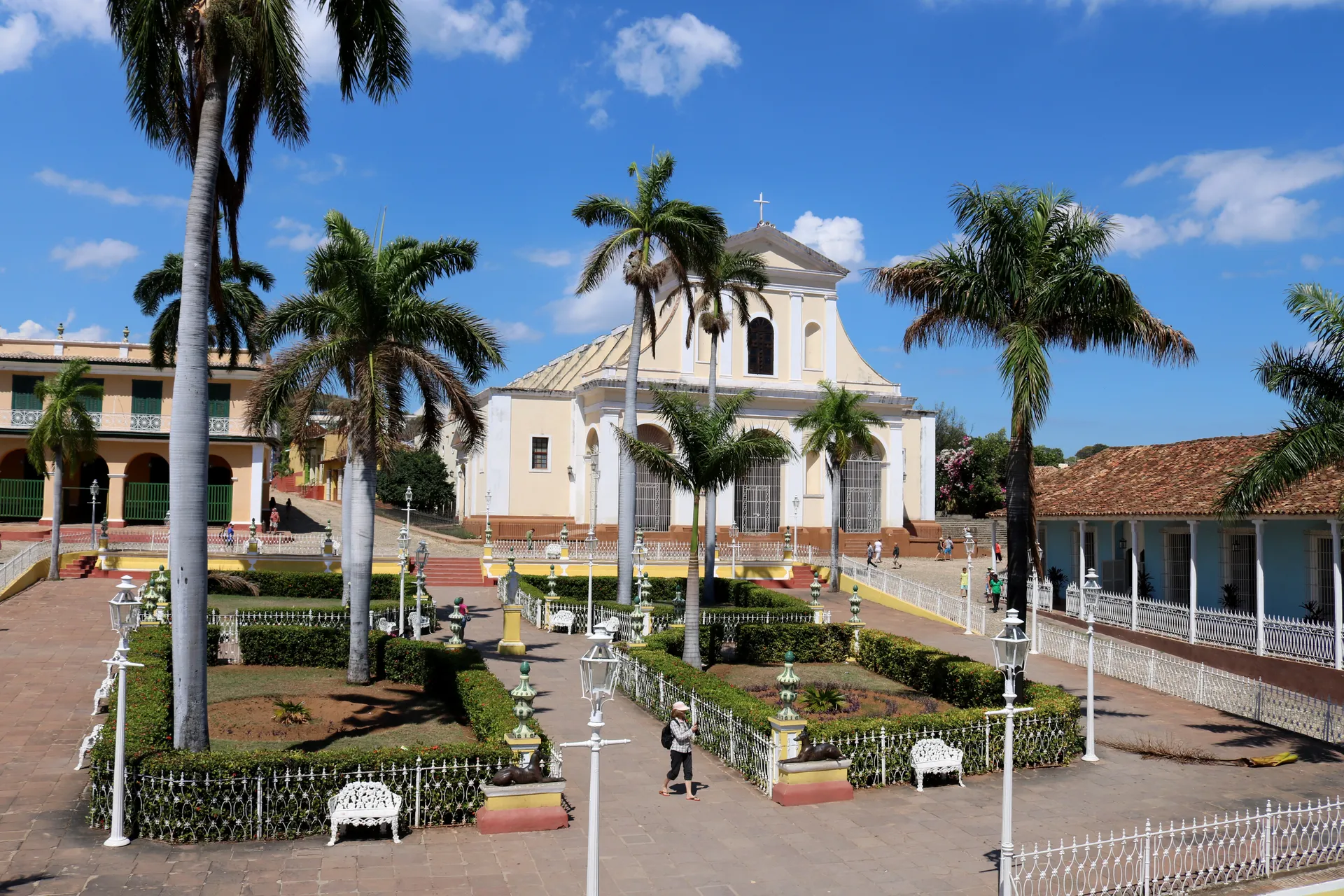
Trinidad is one of the most atmospheric small towns in the Caribbean, a UNESCO World Heritage site of pastel houses, the Plaza Mayor, and live son and salsa spilling down the steps of the Casa de la Musica most nights. It is genuinely safe, deeply musical, and surrounded by remarkable nature, from Playa Ancon to the Escambray mountains and the Valle de los Ingenios. The trade-offs are real and non-negotiable: poor, scarce internet, a cash-only economy complicated by Cuba's dual-currency history and chronic shortages, and food options that can be limited when supplies run thin. It rewards curiosity, patience, and cultural appetite, and punishes anyone expecting seamless connectivity or convenience. The town owes its preservation to a reversal of fortune. Sugar from the valley plantations paid for the mansions in the eighteenth and nineteenth centuries, then the trade declined and Trinidad slid into a long sleep, which left the colonial core largely as the planters built it.
- Pros: exceptional music and culture, striking colonial architecture, strong safety, beach and mountains close by.
- Cons: very poor internet, cash-only with currency and shortage headaches, limited food selection at times.
- Pro: walkable, human-scaled, and genuinely atmospheric day and night.
- Con: hard to be productively remote; not a place for deadline-driven work.
Who Trinidad Is For
Trinidad is for the culturally hungry traveler more than the deadline-driven remote worker. If you want to soak up live music, colonial streetscapes, warm hospitality, and easy access to beach and mountains, and you can treat internet as an occasional luxury rather than a daily necessity, this town will delight you. It suits sabbatical takers, between-projects nomads, writers and artists working offline, and anyone deliberately unplugging. It is a poor fit for people who must join daily video calls, ship work on tight deadlines, or rely on card payments and fast, always-on connectivity. Come with cash, patience, and flexible plans, lean into the music and the pace, and Trinidad becomes a place you remember long after faster, more convenient bases blur together.
- Great for: culture seekers, offline creatives, sabbatical and slow travelers.
- Great for: music lovers who want live son and salsa nightly.
- Poor for: anyone needing reliable internet or card payments.
- Poor for: deadline-driven remote work and constant video calls.