Cost of Living in Kragujevac
Real market data
Source: Numbeo · July 2026
$980/moSolo nomad1-bed centre + living costs
$1,430/moCoupleshared 1-bed + costs
$880/moLean / localcheaper area + costs
- 1-bed rent, city centre$400din41,227
- 1-bed rent, outside centre$310din31,552
- Monthly costs excl. rent (1 person)$570din58,394
- Meal, inexpensive restaurant$11din1,100
- Monthly transit pass$29din3,000
- Buy price, per m² (centre)$2,240din228,782
Prices are from Numbeo (July 2026), converted to USD at $1 = din102.04 (01 Aug 2026). The monthly living-costs figure is our transparent one-person basket, groceries, a few meals out, utilities, phone, internet, transport and essentials, priced from those figures. Solo adds central rent; couple and lean are estimates from the same numbers.
Budget around $980 a month, which makes Kragujevac one of the cheapest cities on this site in Europe. A one-bedroom runs roughly $180 to $320. Market produce is very cheap and Sumadija is Serbia's fruit-growing region, producing the plums that become rakija and some of the country's better wine. Eating out is inexpensive: a full meal with drinks runs under twelve dollars almost anywhere. Utilities are moderate. Serbia uses the dinar and is outside the European Union, which keeps prices well below the bloc. Anyone comparing with Belgrade should note that Kragujevac runs roughly half the price for a comparable flat, which is the largest such gap in central Serbia. Winter heating is the one line that moves. Much of the housing stock runs on district heating billed by floor area rather than by use, so a large flat costs the same to heat whether you are in it or not, and that is worth asking about before signing anything. Rents are usually agreed in euros and paid in dinar at the day's rate, often in cash and often without a written lease, which keeps the price down and offers no protection at all. Mobile data and home internet are cheap by any European measure.
Where to Work in Kragujevac
Connectivity is good. Serbia has extensive fibre in the cities at low prices, comprehensive mobile coverage and generally reliable power. There is a small coworking presence and Serbia's technology sector has grown substantially, though it is concentrated in Belgrade and Novi Sad rather than here. The time zone is central European. Serbian administration is slower and more paper-based than the European Union average, and residence applications generally require documents to be translated by a court-certified translator. Anyone forming a company should know that Serbia has a favourable flat-rate tax regime for registered freelancers that a good number of regional software workers use. The university is the centre of gravity for anything professional here, and its engineering and science faculties are the reason a technology employer would look at the city at all. Day to day, cafes are where work actually happens: Serbian cafe culture is unhurried, the coffee is cheap, and nobody minds a laptop on a table for three hours. Opening a local bank account as a foreigner is harder than the rest of the setup and usually needs the residence permit first, so plan on foreign cards for the opening months.
Getting Around Kragujevac
Kragujevac is compact and walkable around the pedestrianised centre, with buses covering the rest cheaply. Trains reach Belgrade in about three hours on a slow line and buses do it in two. Belgrade's Nikola Tesla airport is the practical air connection at around two hours. The Sumadija countryside around the city is gentle hill country of orchards and monasteries, and the Zica and Studenica monasteries, both medieval and both significant, are within ninety minutes south. Anyone travelling should use the buses rather than the trains, since Serbian rail on this line is slow and the coach network is frequent and inexpensive. Taxis inside the city cost very little and are how most people cross town once the buses thin out. A car opens up Sumadija properly and the hill roads are good enough, though the run to Belgrade is two-lane for much of the way rather than motorway, which is why the coach takes the time it does. The pedestrian centre is a pleasure to walk, and the evening korzo, the slow social circuit through it, is still a real habit here rather than a line in a guidebook.
Sorting transport? Book an airport transfer, or compare car rental on Auto Europe and QEEQ.
Visas for Kragujevac
Serbia grants ninety days in any one hundred and eighty visa-free to citizens of the European Union, the United Kingdom, the United States, Canada, Australia and a long list of others, which is generous. Serbia is outside the European Union and Schengen, so time here does not count against a Schengen allowance, which makes it a genuinely useful base for anyone managing that limit. There is no digital nomad visa. Longer stays require a temporary residence permit applied for locally, and the process is slow. Anyone applying for temporary residence should expect to need court-certified translations of every document, which is the step that takes the longest in practice. Foreigners must register their address with the police within twenty-four hours of arrival, the so-called white card, and a hotel does this automatically while a private landlord usually does not. It gets asked for later, at the residence application and sometimes on the way out, and not having it is an avoidable problem. Serbia also wants proof of health insurance and of a local address for temporary residence, and the ninety days can be reset by leaving, which most people do through Bosnia or Hungary.
Best Time to Visit Kragujevac
May to September is the comfortable window, with July around twenty seven degrees. Spring and autumn are short and pleasant, and the plum harvest in late summer is when the rakija distilling starts across the region. Winter from December to February is cold, often around freezing, and brings the Balkan winter air quality problem: domestic heating on wood and coal across the Sumadija valleys pushes particulate readings well above guidance during still weeks. Anyone here in autumn should look for the rakija distilling, which happens across Sumadija from September and is a genuinely social occasion in the villages. July and August now bring heat waves that hold above thirty for days at a time, and the older housing stock has little air conditioning, so the summer is less comfortable than the average suggests. The air quality problem is concentrated from November to February and is worst in still, cold weather, so anyone staying through it should plan on an indoor air filter rather than hope for wind. Arsenal Fest in summer is the city's main music event and fills the town for a weekend.
Pros and Cons of Kragujevac
Costs are very low here, ninety visa-free days do not touch a Schengen clock, and the city has a real history: Serbia's first capital after independence from the Ottomans, its first grammar school, its first theatre and its first university all began in this city. Sumadija's monasteries and orchards are around it. Winter puts a lid of bad air over the city, the economy is still recovering from the collapse of the Zastava car works, and the Sumarice memorial park, which commemorates a 1941 mass execution, is not a light thing to live beside. Kragujevac is safe in the ordinary sense, and people are direct and hospitable once the first exchange is past, which is what visitors consistently report and the guidebooks tend to miss. This is not a place that has been arranged for outsiders at all: no expatriate infrastructure, very little English beyond the university, no international school. The practical difficulty of a long stay is higher than the low prices imply, and the nearest airport being in another city compounds it.
Who Kragujevac Is For
A European standard of living for a fraction of the European price, with no Schengen days spent, which suits people working European hours. The modern Serbian state effectively began in this town, which is a larger claim than its present size suggests. It suits walkers drawn to the Sumadija monasteries. Serbian winter smog is bad enough to be a health question for anybody sensitive to it, no international community exists here, and some Serbian is necessary because English runs out quickly once you leave the university district. The Zastava works built the Yugo here, and the plant's rise and collapse is not one chapter in the modern history of this city, it is more or less the whole of it. Choosing this over Novi Sad or Nis means trading a smaller, cheaper city for a thinner social scene, and most people who want Serbia on a budget without the isolation end up in Novi Sad instead. Kragujevac makes more sense for someone with a specific reason to be here, a language to learn, a project to finish, a partner from the region, than as a first stop in the country. It rewards a stay measured in months rather than weeks.
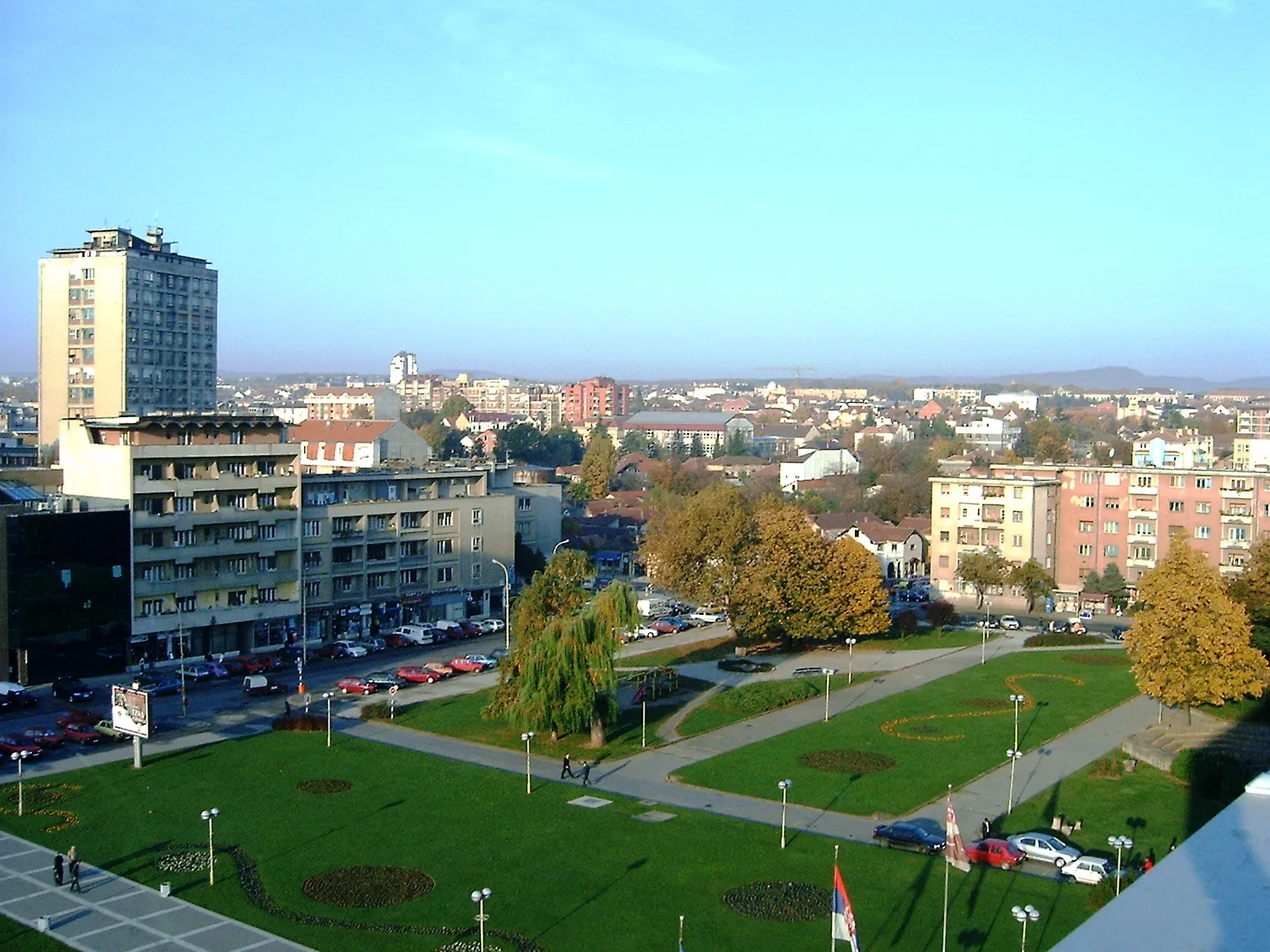 Photo: Струјајое / Wikimedia Commons (CC BY-SA 3.0)