Cost of Living in Skopje
Real market data
Source: Numbeo · August 2026
$930/moSolo nomad1-bed centre + living costs
$1,330/moCoupleshared 1-bed + costs
$830/moLean / localcheaper area + costs
- 1-bed rent, city centre$430MKD 23,075
- 1-bed rent, outside centre$320MKD 17,554
- Monthly costs excl. rent (1 person)$500MKD 27,195
- Meal, inexpensive restaurant$9MKD 500
- Monthly transit pass$28MKD 1,500
- Buy price, per m² (centre)$2,710MKD 146,260
Prices are from Numbeo (August 2026), converted to USD at $1 = 54.04 MKD (01 Aug 2026). The monthly living-costs figure is our transparent one-person basket, groceries, a few meals out, utilities, phone, internet, transport and essentials, priced from those figures. Solo adds central rent; couple and lean are estimates from the same numbers. The guide below quotes its own monthly range, which is a different measurement rather than a competing one: this table prices a defined basket at the figures above, while that range is a judgement about how somebody actually lives here.
Skopje is one of the cheapest capitals in Europe, and your money goes a long way here. All prices below are in US dollars, converted from Macedonian denar prices.
- Rent, central 1-bedroom: $335-465/month
- Rent, outer neighborhoods: $220-335/month
- Groceries (full week): $46-65/month
- Eating out, local restaurant: $5.50-9.50 per meal
- Mid-range dinner for two: $28-37
- Coworking hot-desk: $56-93/month
- Local transport (monthly pass): $28
- Coffee at a cafe: $2-3
Total monthly range: A comfortable solo nomad lifestyle runs $1,020-1,480/month, depending on your accommodation choice and how often you eat out.
Where to Work
Skopje has a small but functional remote-work infrastructure. Connections in coworking spaces are fast (fiber is common), and cafe work is culturally accepted.
Coworking Spaces
- Coffice (Sv. Kiril i Metodij 48, Center): The most popular dedicated space in the city center. Day passes run around $16; monthly memberships around $130. Includes coffee, conference room access, and printer use.
- INNOX Innovation Center (Ploshtad Makedonija, Center): A large 1,000 m2 facility on Macedonia Square with dedicated desks, glass private offices, and a coffee bar. Day passes start at ~$8; unlimited monthly plans available.
- Konnectivity (Luj Paster 1, Centar): Professional shared office with monthly plans from around $230. Meeting rooms and refreshments included.
Cafes for Laptop Work
Public Room (50-th Division 22, Center) is the go-to spot: a multi-floor venue open 9am to 1am, consistently busy with students and remote workers. Fast, free WiFi and plenty of power outlets. Laboratorium (Bulevar Kliment Ohridski 68) doubles as a cultural center and has reliable WiFi and a calm atmosphere. Most mid-range cafes in Centar and Debar Maalo tolerate laptop workers as long as you order regularly.
The WiFi Situation
Residential and coworking fiber in Skopje is genuinely fast. Mobile data via A1 or Telekom is affordable and solid. Budget accommodation and some older cafes can be hit-or-miss, so test the connection before committing to a day's work.
Getting Around
The center of Skopje is compact and walkable. Most attractions, restaurants, and coworking spaces in Centar and Debar Maalo are within a 20-minute walk of each other.
- City bus: A flat fare of $0.50 per ride covers all local routes. Monthly passes are $28. Routes cover the whole city but can be infrequent outside rush hours.
- Taxi: Cheap and widely available. Meters start at $1; a cross-town ride rarely exceeds $5.50. Use only metered, licensed cabs or book via the Taxi5 app to avoid overcharging.
- Rideshare: Bolt operates in Skopje and is a reliable alternative to street taxis.
- Airport transfer: Alexander the Great Airport is 24 km east of the city. A licensed airport taxi costs $11-15 and takes about 20 minutes. Shuttle buses (around $3.50/~$3) run a few times daily but are slower and less frequent. Public bus line 52 is the budget option at ~$1.50, but check the schedule as it does not run late at night.
Sorting transport? Book an airport transfer, or compare car rental on Auto Europe and QEEQ.
Visas and Staying Long-Term
Most Western passport holders can enter North Macedonia without a visa for up to 90 days within any 180-day period. This includes citizens of the USA, EU, UK, Canada, and Australia. That 90-day window is enough for a solid medium-term stay.
There is currently no official digital nomad visa in North Macedonia. Proposed legislation was not passed. For stays beyond 90 days, a temporary residency permit is the most common legal route: the application fee is around $58 and processing typically takes 30-45 days. You will need to demonstrate a purpose of stay (employment, study, or property ownership).
Best Time to Visit
Skopje has a continental climate with hot summers and cold, often heavily polluted winters. The best windows for remote workers are spring and autumn.
- April to June: Temperatures of 15-25C (59-77F), low rainfall aside from May which is the wettest month. Pleasant for walking and outdoor cafe work.
- September and October: The sweet spot. Days are warm (20-25C/68-77F), crowds are gone, and air quality is still acceptable. This is the most comfortable period for a longer stay.
- July to August: Temperatures regularly hit 35C (95F) and above. Tourist season peaks, outdoor activities are uncomfortable midday, but coworking spaces are well air-conditioned.
- November to February: Air quality is a serious problem. Skopje sits in a valley, and winter temperature inversions trap vehicle exhaust, coal-burning smoke, and industrial emissions. PM2.5 readings routinely reach 5-10 times WHO limits. Anyone with respiratory conditions should avoid this period entirely.
Best window overall: Mid-September through late October, or late April through early June (avoiding the May rain peak).
Pros and Cons
Pros
- Very low cost of living by European standards, with strong purchasing power
- 90-day visa-free entry for most Western passports, no bureaucracy to start
- Fast fiber internet widely available in coworking spaces and apartments
- CET/CEST time zone, ideal for working with European clients
- Compact, walkable center with good cafes and restaurants
- Genuine Macedonian cuisine and an underrated food scene
- Low violent crime; solo travelers and women generally feel safe
- Easy day trips to Lake Ohrid, Matka Canyon, and Mavrovo National Park
Cons
- Winter air pollution is severe and a real health risk from November through February
- Small nomad community: fewer structured meetups and slower networking than in larger hubs
- No digital nomad visa; 90-day limit with a complicated extension process
- Summer heat (35C+) can be draining for weeks at a time
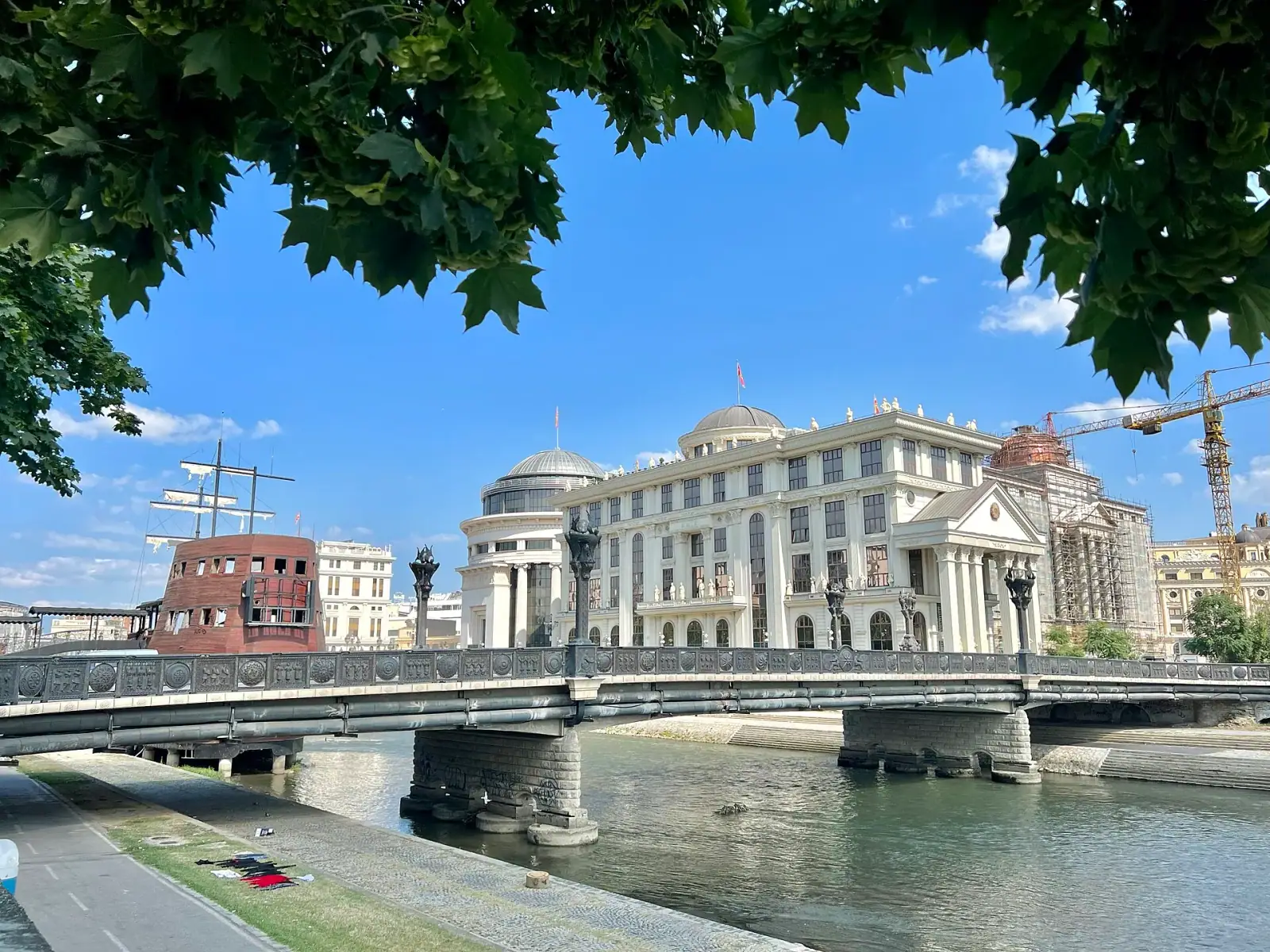
- The kitschy Skopje 2014 construction project makes parts of the center feel discordant
- Limited direct international flight connections; often requires a layover
Who Skopje Is Best For
Skopje suits nomads who prioritize a very low cost of living and are happy to trade a smaller community and fewer amenities for real savings. If you are working with European clients, the time zone is perfect, and the low overhead lets you stretch a freelance income significantly further than in Western Europe.
It is a good fit for solo travelers comfortable navigating a city where English is spoken in tourist areas but less reliably elsewhere, and for anyone who wants to use it as a base for exploring the wider Balkans, since bus and road connections to Kosovo, Albania, Serbia, and Greece are all reasonable.
Skip Skopje if you need a well-developed nomad scene with regular events and easy meetups. It is also a poor fit for anyone with asthma, COPD, or cardiovascular conditions who cannot avoid a winter visit. And if aesthetics and urban design matter to you, the city center's marble-clad statues and neoclassical facades are genuinely divisive.