Cost of Living in Nantes
Real market data
Source: Numbeo · August 2026
$1,560/moSolo nomad1-bed centre + living costs
$2,150/moCoupleshared 1-bed + costs
$1,420/moLean / localcheaper area + costs
- 1-bed rent, city centre$830€724
- 1-bed rent, outside centre$690€597
- Monthly costs excl. rent (1 person)$730€635
- Meal, inexpensive restaurant$17€15
- Monthly transit pass$64€56
- Buy price, per m² (centre)$5,240€4,552
Prices are from Numbeo (August 2026), converted to USD at $1 = €0.87 (01 Aug 2026). The monthly living-costs figure is our transparent one-person basket, groceries, a few meals out, utilities, phone, internet, transport and essentials, priced from those figures. Solo adds central rent; couple and lean are estimates from the same numbers. The guide below quotes its own monthly range, which is a different measurement rather than a competing one: this table prices a defined basket at the figures above, while that range is a judgement about how somebody actually lives here.
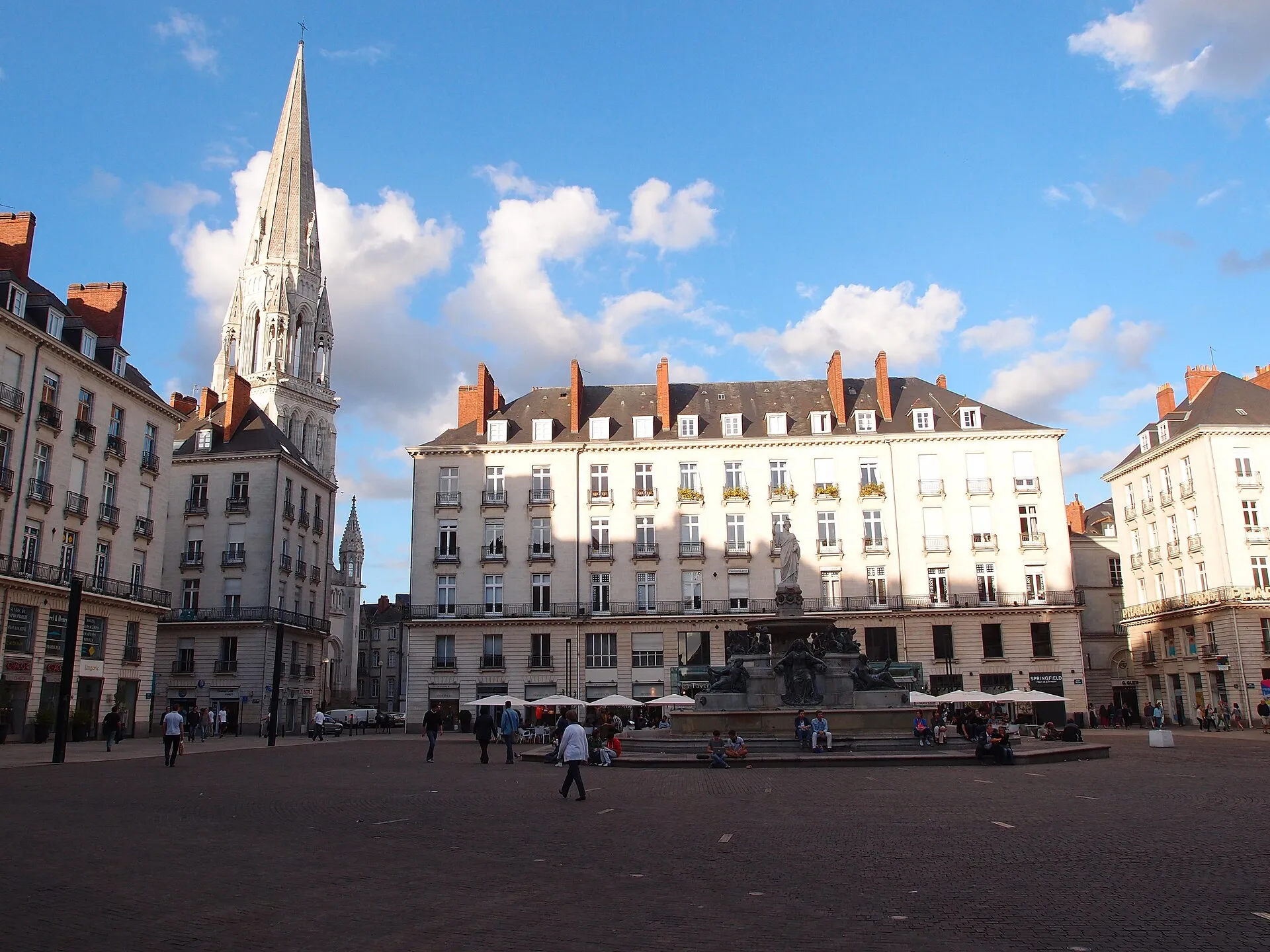
Nantes is one of France's most livable cities and noticeably cheaper than Paris, though it is not a budget destination by European standards. Here is a realistic monthly breakdown for a solo remote worker in 2025:
- Rent, city center (1BR): $850-1,150
- Rent, outer neighborhoods (1BR): $680-850
- Groceries: $230-340
- Eating out (mid-range meals, occasional): $170-280
- Coworking hot-desk: $230-350 per month
- Local transport (monthly pass): $72
- Mobile SIM (10GB+): $11-17
Total realistic range: $1,600-2,400 per month, depending heavily on how often you eat out and whether you choose a central or peripheral apartment. Rents have risen about 5-6% year on year through early 2026, with the average per-square-meter price around $20-22 for furnished flats. Comparable quality in Paris would cost 50-80% more.
Where to Work
Nantes has a solid and growing coworking scene, partly because the city has a large student population and a genuine tech and startup community. You have real options here.
La Cantine Numerique (40 Rue de la Tour d'Auvergne) is the best-known hub, run by a non-profit that connects the web and innovation ecosystem. It has 168 workstations, fast internet, and hosts tech events. It welcomes day-use members. Now Coworking on Ile de Nantes is a large premium space with 150 stations, 14 meeting rooms, and a good atmosphere. Nuage B occupies the top floors of the KANOA building on Ile de Nantes with panoramic city views. Label Escale occupies a middle ground: it functions as both a cafe and a coworking space, with decent WiFi and unlimited coffee included.
Cafe work culture in Nantes is possible but mixed. Many traditional cafes are not set up for laptop workers and have limited power outlets. Newer, specialty coffee spots are more welcoming. Public WiFi in the city is unreliable; your best bet is a local SIM with a data plan or a dedicated coworking membership. Broadband at most coworking spaces is strong, but the city's free WiFi network is considered poor coverage.
Getting Around
Nantes has one of the best urban transport networks among French cities of its size. Three tram lines and a dense bus network cover most of the city, and a single ticket costs $2. A monthly TAN pass runs about $72. Trams are frequent during business hours and the system is generally reliable.
The city is also very bike-friendly. The Bicloo bike-share system has stations throughout the center, and dedicated cycle lanes make riding practical day to day. Walking covers most of the central city comfortably.
Getting to and from the airport is straightforward. Nantes Atlantique Airport is about 8 km southwest of the center. A dedicated shuttle bus runs every 20-30 minutes between the airport, the main train station, and the city center for $11 per trip, and that ticket also covers tram and bus use on the day. The journey takes roughly 25-30 minutes. Tram line 3 to Neustrie connects with the shuttle route. Taxis are available but cost $28-46 for the same trip.
Nantes is well connected by TGV: Paris is about 2 hours by fast train, and Bordeaux is around 2 hours 20 minutes.
Sorting transport? Book an airport transfer, or compare car rental on Auto Europe and QEEQ.
Visas and Staying Long-Term
France is part of the Schengen Area. US, UK, Canadian, Australian, and most other Western passport holders can enter visa-free for up to 90 days in any 180-day window across all Schengen countries combined. This is not 90 days per country; it is 90 days total across the zone.
France has no dedicated digital nomad visa as of mid-2026. Remote work from France on a standard tourist entry is officially not permitted under French law, regardless of where your clients or employer are based. For stays beyond 90 days, the most realistic options are the long-stay visitor visa (you must show you are not working in France), a freelance/profession liberale visa, or the Talent Residence Permit (which requires either a French employer or a company you are founding). The Talent Permit can be valid for up to 4 years. Language requirements (A2 or B1 French) now apply to most long-term permits except the Talent category.
Best Time to Visit
Nantes has an oceanic climate: mild but wet. Rain is spread across the year, with the heaviest months being November through February, when you can expect 10+ rainy days per month and grey skies as the norm. Winters are mild rather than cold (average 5-10°C / 41-50°F) but damp and not particularly energizing for remote work focus if you depend on outdoor time.
May through September is the best window for a stay. Late May and June offer warm temperatures (18-22°C / 64-72°F), manageable crowds, and the city at its most pleasant. July and August are warmer (up to 24-25°C / 75-77°F) and livelier, though the city empties slightly in August as locals take their own vacations. September remains warm and quiet, which suits remote workers well. Spring (March-April) is cool and rainy but cheaper for accommodation.
Pros and Cons
Pros
- Noticeably cheaper than Paris with similar urban quality of life
- Excellent public transport and bike infrastructure
- Active tech and startup scene with real coworking options
- Strong cultural life: museums, live music, street art, festivals
- Safe city with low violent crime
- Good TGV connections to Paris and Bordeaux
- Genuinely good food scene built on Loire seafood and regional produce
Cons
- No dedicated digital nomad visa; legal remote work long-term requires proper setup
- English proficiency is uneven; French is essential for daily life outside tourist contexts
- Wet and grey for much of the year outside summer
- Free public WiFi is poor; you need your own data solution
- Rents have risen sharply in recent years; it is no longer cheap by French provincial standards
- Smaller international nomad community than Lisbon, Barcelona, or Paris
Who Nantes Is Best For
Nantes works well for nomads who want a genuinely French urban experience without Paris prices or Paris crowds. If you enjoy a real city with culture, good food, walkable neighborhoods, and a functioning tech scene, and you are comfortable in French or willing to learn, Nantes rewards a longer stay.
It is a particularly good fit for people already based in or traveling through western Europe who want a month or two in a city with substance. French speakers will integrate easily. People who enjoy cycling, markets, wine bars, and a mid-pace city rhythm will feel at home. It also suits people who want proximity to the Atlantic coast: beaches and rural Loire Valley wine country are within easy reach.
Skip Nantes if you are chasing a large English-speaking nomad community, looking for a warm climate year-round, need extensive co-living options, or want Southeast Asia-level costs. Those seeking a buzzy nightlife scene or a constant stream of nomad events will also find it quiet by comparison to bigger hubs.