Cost of Living in Djerba
Where this figure comes from. No cost survey covers Djerba, so the $750 a month above is our own estimate rather than a measurement. On 416 of our 999 city guides the figure is built from a published Numbeo basket, a one-bedroom rent in the centre plus one person's monthly costs without rent, converted to USD; this city is not one of them. How we source everything.
Budget around $750 a month as a solo remote worker in Djerba, which is low even by Tunisian standards outside the capital and reflects an island whose economy runs on package tourism rather than on residents. A one-bedroom place runs roughly $200 to $400, with Houmt Souk and the beach strip at Sidi Mahrez costing more than anywhere inland. Food is very cheap if bought locally, and the island produces its own olives, dates and fish. The dinar is a closed currency, so bring the means to pay for things rather than assuming a card works. This is our own estimate rather than measured data. The closed currency matters in practice: dinars cannot legally be taken out or exchanged abroad, so anything left over at the end of a stay is effectively spent or lost.
Where to Work in Djerba
Djerba has almost no coworking provision, and remote work happens from apartments, hotel lobbies and the cafes of Houmt Souk. Tunisian fibre reaches the main towns and mobile data is inexpensive with reasonable coverage across the island, though speeds are modest by European standards and evening congestion is noticeable in the resort areas. Power cuts are occasional rather than routine. French is the practical second language for anything administrative, with English limited to the tourism trade, so anyone here for a stretch will get further with some French than without it. Speeds in the resort strip drop noticeably in the evenings when the hotels fill, so anyone with calls to make is better placed in Houmt Souk than on the beach. Pottery has been made at the village on the south coast for two thousand years, out of a local clay, and the workshops there still sell direct. It is one of the few trades on the island not tied to the hotels. The working population divides sharply between people employed by the resorts for six months and everybody else, and the two groups keep different hours and different calendars.
Getting Around Djerba
Djerba is flat, about five hundred square kilometres, and connected to the mainland by a Roman causeway that still carries the road, with a ferry at the other end of the island. Houmt Souk, the main town, is walkable, but the beaches, the synagogue at Erriadh and the villages are spread out and need transport. Scooters and rental cars are the usual answer and both are cheap. Louage shared taxis cover the longer routes. Djerba-Zarzis airport handles charter flights from across Europe in season, which is what makes the island unusually easy to reach for its size. The Roman causeway is the only fixed link and a single road, so an accident on it closes the island's main connection until it clears. A ferry at the western tip crosses to the mainland in a quarter of an hour and runs through the night, which is the alternative when the causeway is blocked and the shorter route south in any case. Riding a bicycle across it is realistic, though the villages sit further apart than a map on this scale prepares you for, and a long ride into a headwind in August is hard work rather than a pleasure.
Sorting transport? Book an airport transfer, or compare car rental on Auto Europe and QEEQ.
Visas for Djerba
Tunisia allows most Western nationals ninety days visa-free on arrival, which is straightforward and rarely questioned. There is no digital nomad visa. Staying beyond ninety days means either leaving and returning, which is generally tolerated, or applying for a residence permit through the local authorities, a process that requires local sponsorship and patience. Anyone overstaying should know that a fine is levied at departure, calculated by the length of the overstay, which is an administrative matter rather than a serious one but is easily avoided. Rules are applied more consistently at the airport than at the land borders. Anyone leaving and returning to reset the ninety days should do so through the airport rather than a land border, where the practice is applied less consistently. Cash above a set threshold has to be declared on the way in, and the declaration slip is what allows the balance to be taken out again, so the form matters more than the amount does. Anyone working with a local partner should know that a foreign company cannot simply invoice from here without a registered presence, which is a tax question rather than an immigration one and catches people out later.
Best Time to Visit Djerba
April to June and September to November are the best months, with warm days, a swimmable sea and none of the summer crowds. July and August are hot, above thirty most days, and the island fills with European package tourists, which pushes prices to their annual peak. Winter is mild by any northern measure, with daytime temperatures around seventeen and very little rain, and it is a genuinely pleasant time to work here even though much of the resort infrastructure closes. The El Ghriba pilgrimage falls in spring and brings a security presence with it. Much of the resort infrastructure shuts between November and March, so a winter stay means the island to yourself and considerably fewer places open to eat. The sea here is shallow for a long way out and warms earlier in the year than the open Mediterranean does, which is why the swimming season starts weeks ahead of the northern coast. Desert wind reaches the island a few times each year and puts sand in the air for a day at a stretch. Dates come in through the autumn and the roadside stalls sell them still on the stem.
Pros and Cons of Djerba
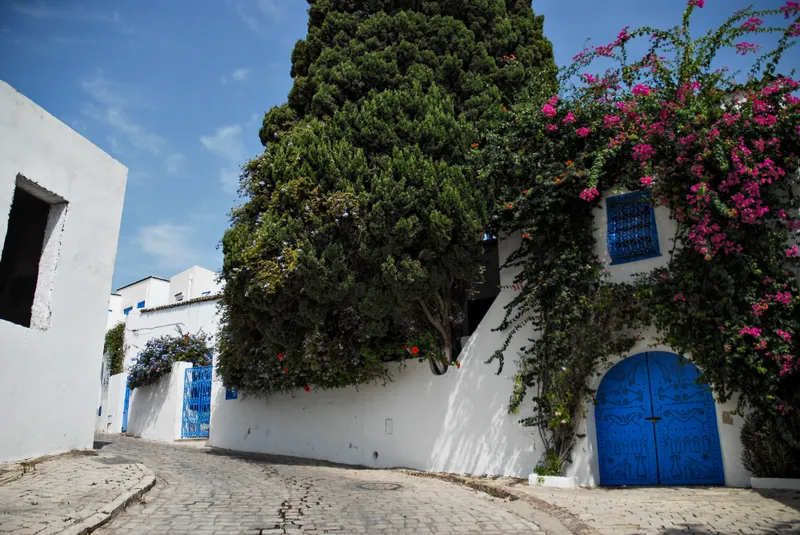
Djerba is a flat island of whitewashed courtyard houses, palm groves and one of the oldest synagogues in the world at El Ghriba, with a settlement pattern UNESCO listed in 2023 and a street art project at Erriadh that brought artists from thirty countries to paint the village. It is cheap, warm and easy to reach from Europe. The island is dominated by all-inclusive resorts that keep their guests inside, there is no remote-working scene of any kind, little English is spoken, and anything beyond the tourist economy runs slowly. It is a place to be quiet in rather than to network. El Ghriba draws a pilgrimage each spring that is one of the oldest continuous Jewish observances anywhere, and the security around it is a visible reminder of why that is notable.
Who Djerba Is For
Mediterranean warmth, very low costs and a short flight back to Europe, for anyone content with their own company. It works particularly well in the shoulder seasons, when the weather holds and the resorts have emptied. A professional community does not exist on the island, the internet is adequate rather than fast, and the nearest thing to a city is on the mainland. Anyone with French will find the island far easier to live in than anyone without. It rewards a month or two rather than a year, unless the appeal is precisely how little happens. Winter flights to Europe are shorter and more frequent from here than the island's size would suggest, because the charter network that serves the resorts keeps operating at reduced frequency through the cold months.
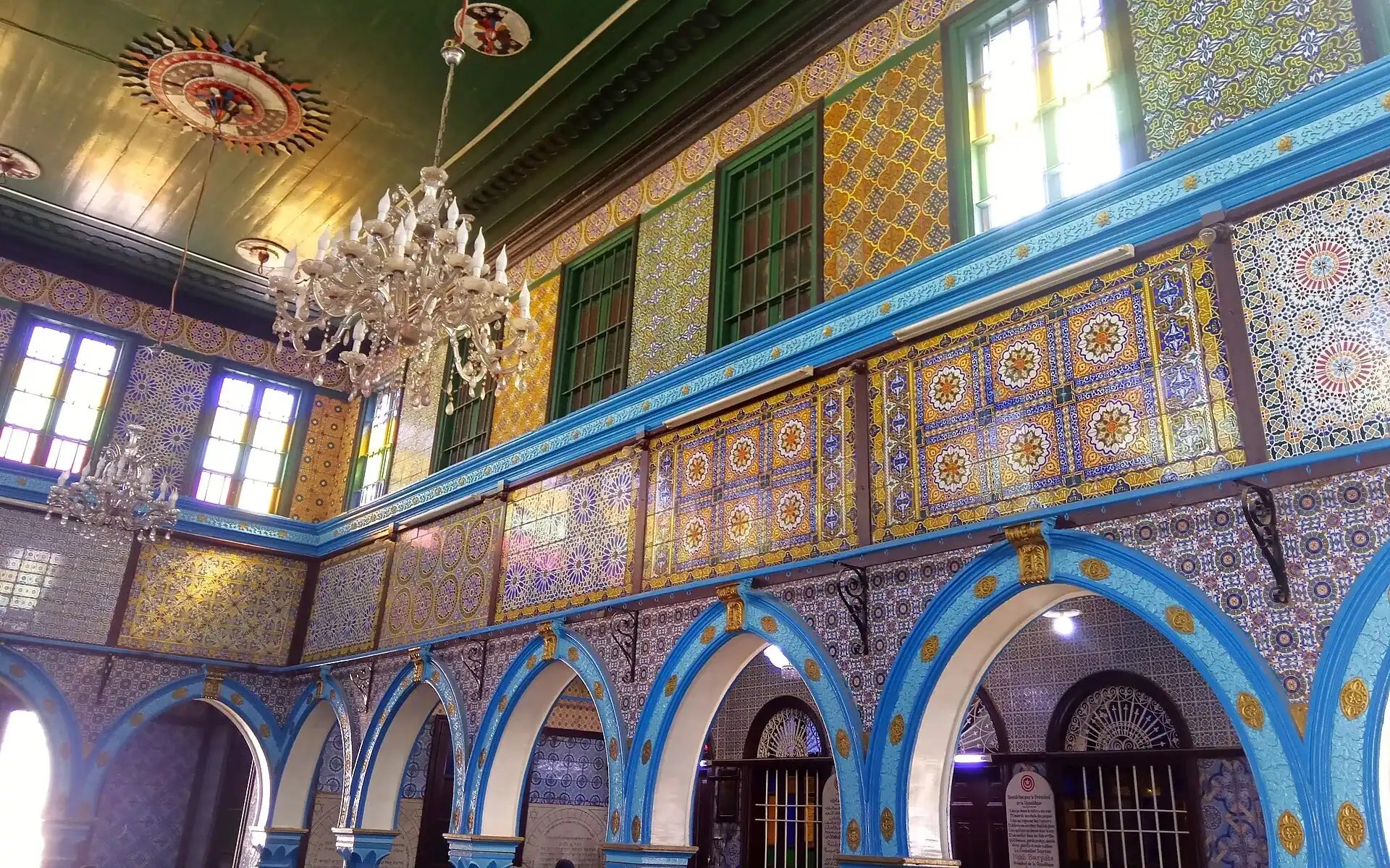 Photo: Dr. Ondřej Havelka (cestovatel) / Wikimedia Commons (CC BY 4.0)