Cost of Living in Sidi Bou Said
Where this figure comes from. No cost survey covers Sidi Bou Said, so the $800 a month above is our own estimate rather than a measurement. On 416 of our 999 city guides the figure is built from a published Numbeo basket, a one-bedroom rent in the centre plus one person's monthly costs without rent, converted to USD; this city is not one of them. How we source everything.
Sidi Bou Said is a small, upmarket village, so it sits at the pricier end of Tunisia while still being affordable by European or North American standards. A comfortable monthly budget runs roughly $600 to $1,000, depending on how you live. Rent is the biggest variable, as short-term holiday lets near the cobbled centre command a premium, while longer stays in La Marsa next door cost less. Cafe prices are inflated by tourism, but everyday groceries, local eateries and transport into Tunis remain cheap. Treat all figures as editorial estimates rather than fixed quotes, and expect seasonal swings between summer and winter. The currency is the constraint that shapes everything else. It cannot legally leave the country or be bought abroad, so you arrive with none, change on landing, and are supposed to convert what is left back at departure with the exchange receipts to prove it. Cards work in the bigger hotels and restaurants and nowhere else, and the machines have daily limits. Practically this means carrying more cash than feels comfortable and keeping every receipt. Rent is the other swing: a village let in July costs what three months costs in January, which is why most people staying long take a place one town over.
- Monthly budget: roughly $600 to $1,000 as an editorial estimate
- Rent: higher in the village centre, cheaper in nearby La Marsa
- Cafes and restaurants: touristy spots cost more than local eateries
- Groceries and transport: inexpensive, with cheap trains into Tunis
Where to Work in Sidi Bou Said
This is a scenic village rather than a coworking hub, and it is better to know that before booking than after. Sidi Bou Said itself has no meaningful cluster of dedicated coworking spaces, so most remote workers lean on cafes, apartment desks and the atmosphere of the place for focused mornings. The historic Cafe des Nattes and clifftop Cafe Sidi Chabaane are lovely for a break but busy and tourist-heavy, not reliable offices. For serious work, hop to neighbouring La Marsa or into central Tunis, where you will find better cafes, occasional coworking options and coffee shops with steadier seating. Base here for beauty, commute nearby for productivity. An infrastructure fact matters more here than the cafe list. Fixed-line internet in this country is among the slower offerings in the region, and upload speeds in particular are modest, which is fine for email and painful for sending files or holding an hour on camera. Test the specific flat rather than a national average. Mobile beats the fixed lines by a wide margin, so a generous data plan tethered to the laptop is the arrangement most people settle on after a fortnight of trying the alternative. Power is steady and the voltage is European.
Getting Around Sidi Bou Said
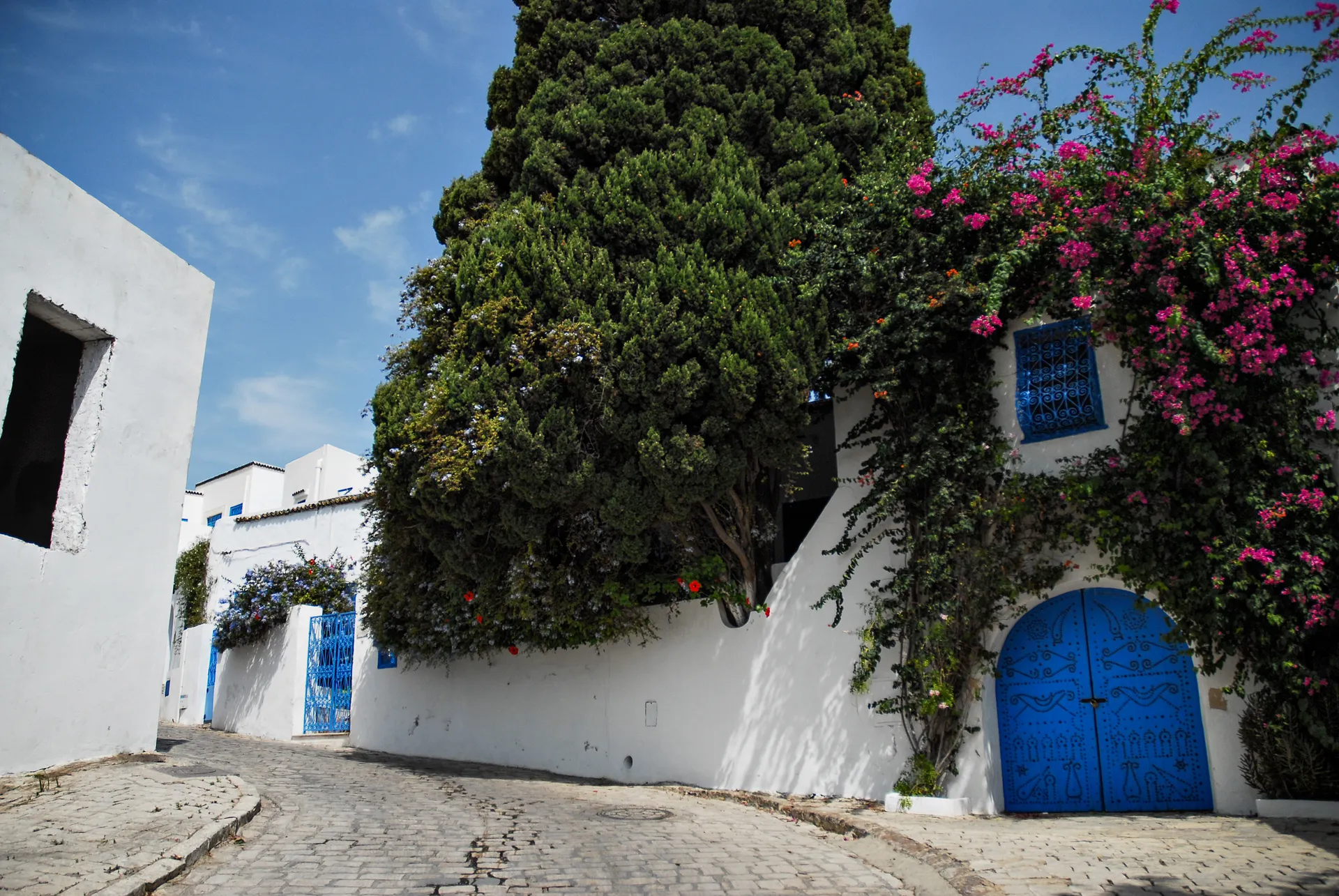
The village itself is best explored on foot, as its steep cobbled lanes, blue doors and viewpoints are compact and largely pedestrian. For getting further afield, the TGM light-rail line links Tunis, La Marsa and Sidi Bou Said cheaply and frequently, making it the backbone of nomad life here. Taxis and ride-hailing are easy for heavier trips or late nights, and neighbouring Carthage with its Roman ruins is a short ride away. Tunis-Carthage airport is close, roughly a 20 minute drive. Driving into the narrow centre is awkward, so most residents park on the edges and walk in. The light rail is worth understanding before you rely on it. It is old, slow and crowded at commuting hours, and services have been suspended for maintenance for months at a stretch in recent years, so check it is running before planning a life around it. The last train back from the capital also leaves earlier than a dinner would suggest, which is how most visitors end up in a taxi at least once. Settle the price before the door closes; a driver waiting at the village gate prices for visitors and one flagged out on the main road does not.
Sorting transport? Book an airport transfer, or compare car rental on Auto Europe and QEEQ.
Visas for Sidi Bou Said
Tunisia is welcoming for short stays. Many nationalities, including most European Union citizens, Britons, Americans and Canadians, can enter visa-free for up to 90 days, which comfortably covers a seasonal base or a slow-travel stint. There is currently no dedicated digital-nomad visa, so longer-term residents typically rely on visa runs or apply for residence through other channels, which involves more paperwork. Keep proof of onward travel and accommodation handy, as border officers may ask. For most nomads, the 90-day allowance is generous and simple. Those ninety days run per entry rather than across a rolling window, so a trip out and back genuinely restarts the clock, which is why a short hop to Europe or to a neighbour is the standard arrangement for people staying a year. An overstay is settled by a fine worked out per week and paid at the airport before you fly: simple, but recorded, and repeat offences do shape future entries. Anyone renting long-term should also expect the lease to be registered, and a landlord to want a passport copy for that purpose.
Best Time to Visit Sidi Bou Said
Sidi Bou Said enjoys a classic Mediterranean climate, with warm, dry summers and mild, wetter winters. Late spring, from April to June, and early autumn, in September and October, are the sweet spots, offering pleasant temperatures, blue skies and fewer crowds than the peak. High summer is hot and busy, as Tunisians and international visitors flock to the coast, so the village lanes and cafes can feel packed. Winter is quiet and atmospheric, cooler and greener, with occasional rain but plenty of crisp, sunny days. If you want that famous blue-and-white light without the crush, aim for the shoulder seasons. The weather is only half of it. The fasting month moves through the calendar and changes the village completely while it lasts: cafes close through the day, the evenings become the social hours, and the light on the blue and white at dusk is at its best with everyone out in it. In high summer the domestic holiday season brings weekend crowds up from the capital that fill the lanes to a shuffle, so a weekday in August is a different place from a Saturday. November is usually the calmest and clearest month to work in.
Pros and Cons of Sidi Bou Said
Sidi Bou Said trades practicality for pure atmosphere. As a base it is genuinely beautiful, safe-feeling and steeped in artistic history, with Tunis and La Marsa close enough to cover the gaps. The trade-offs are real, though: it is small, seasonal and tourist-priced, with little in the way of coworking, nomad community or nightlife. Weigh the charm against the logistics before committing to a long stay, and read the honest lists below. Something belongs on those lists that changes the character of the place more than any of them. This village is a day-trip destination for the capital, and between about eleven and five the main lane is a slow-moving queue of visitors and the cafes are full of people who will be gone by evening. Before nine and after six it belongs to the few hundred people who live here, and that version is the one worth staying for. Whether the place works as a base depends entirely on whether you can arrange your day around those hours.
- Pros: stunning clifftop setting and iconic blue-and-white lanes
- Pros: safe, walkable and rich in art, cafes and history
- Pros: cheap rail links to Tunis, La Marsa and Carthage
- Cons: tiny, touristy village with almost no coworking scene
- Cons: quiet nightlife, thin nomad community and seasonal crowds
Who Sidi Bou Said Is For
This village suits the aesthetically minded slow traveller far more than the party-seeking hustler. If you are a writer, artist, designer or anyone who values calm, beauty and a strong sense of place, Sidi Bou Said can be an inspiring seasonal base, especially paired with trips into livelier Tunis. It works well for couples, remote workers who mostly need a laptop and good light, and travellers exploring Carthage and the coast. It is a poorer fit if you crave a bustling coworking scene, a big built-in nomad crowd or lively nightlife, all of which are thin here. Come for atmosphere, not action. A concrete arrangement that works: rent one town over along the coast, where the supermarkets, the gym and the year-round restaurants are and the rent is half, then walk or take the train up here in the evenings. That way you get the view without the tourist pricing and the practicality without the sterility. On length, six to ten weeks is the natural stay; the village itself is exhausted in a weekend and what sustains a longer visit is the capital, the Roman ruins next door and the coast. Learn some French, which is the working second language everywhere here.