Cost of Living in Shymkent
Real market data
Source: Numbeo · June 2026
$660/moSolo nomad1-bed centre + living costs
$940/moCoupleshared 1-bed + costs
$530/moLean / localcheaper area + costs
- 1-bed rent, city centre$320₸154,000
- 1-bed rent, outside centre$190₸92,000
- Monthly costs excl. rent (1 person)$340₸161,381
- Meal, inexpensive restaurant$11₸5,000
- Buy price, per m² (centre)$1,050₸500,000
Prices are from Numbeo (June 2026), converted to USD at $1 = ₸474.52 (01 Aug 2026). The monthly living-costs figure is our transparent one-person basket, groceries, a few meals out, utilities, phone, internet, transport and essentials, priced from those figures. Solo adds central rent; couple and lean are estimates from the same numbers.
Budget around $660 a month as a solo remote worker in Shymkent, which is cheaper than Almaty and Astana and among the lowest figures for any city of a million people on this site. A one-bedroom flat runs roughly $200 to $350, with the newer developments and the centre at the top of that range. Food is very cheap, with the bazaars supplying produce from the surrounding Turkestan region and the Uzbek border trade keeping prices down. Utilities are inexpensive but winter heating is a real cost. The figure is built from Numbeo prices for Shymkent: a one-bedroom in the centre plus a one-person basket of food, transport and bills. A ride across the city through one of the local apps is a dollar or two, and fibre at genuinely fast speeds costs under $10 a month, which is among the best internet value anywhere on this site.
Where to Work in Shymkent
Shymkent has a small coworking market, considerably behind Almaty's but real, serving a local economy of trade, agriculture and light industry. Kazakh internet is fast and remarkably cheap, with fibre widely available in the city and strong mobile coverage, and it is one of the country's genuine practical advantages. Power is reliable. Russian is the working language of business and daily life alongside Kazakh, with Uzbek widely spoken given the border and the population, and English is rare outside a few younger professionals. Some Russian makes an enormous difference here. Kazakhstan runs five hours ahead of central European time and two behind Beijing, which puts a European morning in the Shymkent afternoon and makes work with Europe straightforward and with the Americas impractical. A lead smelter dominated the Soviet-era city and left ground contamination that surveyors and clean-up crews are still working through, which is worth knowing before choosing which part of the city to live in. The refinery on the northern edge is the other heavy industry and the largest single employer in the region. Neither has any use for a foreigner without a contract already in hand.
Getting Around Shymkent
Shymkent is a flat, spread-out city of over a million and the central districts around the Independence Park and the bazaars are walkable, while the rest needs transport. Buses are cheap and cover the city, and ride-hailing through the regional apps is inexpensive and the usual default. Shymkent airport has domestic flights and connections to Turkey, the Gulf and Central Asian capitals. Turkistan, with the Yasawi mausoleum that is the country's most important Islamic monument, is around two hours north, and the Uzbek border and Tashkent lie a similar distance southwest. The road southwest to the Uzbek border at Zhibek Zholy is the busiest crossing in Central Asia, and Tashkent is close enough that some residents treat it as the nearer big city rather than Almaty. Overnight trains run north and east across the country and are how most people cover the enormous distances, with a berth costing less than a domestic flight and taking the night rather than the day. Shared minibuses handle everything shorter, leaving from the bazaars once they fill and stopping wherever a passenger asks. Neither runs to a timetable an outsider can consult in advance.
Sorting transport? Book an airport transfer, or compare car rental on Auto Europe and QEEQ.
Visas for Shymkent
Kazakhstan gives citizens of around eighty countries thirty days visa-free on arrival, which is simple but short. The country launched a Neo Nomad Visa for remote workers in 2024, offering up to a year to people employed or contracted outside Kazakhstan who can demonstrate a monthly income around the low thousands of dollars, and the scheme is new enough that implementation details have shifted since the announcement. Longer stays otherwise run through work permits or the country's investor categories. Anyone entering visa-free should note the thirty days runs from arrival rather than per entry, and that registration is handled automatically at the border for most nationalities. The crossing into the country to the south is walked rather than driven by most people, with a queue on each side and a separate procedure at each, so an hour is a fair estimate on a quiet day and a morning on a busy one. A run over the border resets nothing if the neighbour is also visa-free, because each country counts only its own days.
Best Time to Visit Shymkent
April to June and September to October are the comfortable windows, with warm dry days and the steppe green in spring. Shymkent is the warmest large city in Kazakhstan and its summers are hot and dry, regularly above thirty-five degrees through July and August, though the low humidity makes that more bearable than the number suggests. Winter is mild by Kazakh standards, which is a low bar but a real distinction, with daytime temperatures around freezing rather than the deep cold of the north. Snow falls but rarely settles for long. Nauryz in late March is the event worth timing around, marking the spring equinox with several days of public celebration across the city and the surrounding region. The garden tulip came originally from these foothills, and the wild species still flower across the slopes for a few weeks each spring, which is a short window and the reason botanists turn up here at all. Dust off the steppe is the summer nuisance rather than the heat itself, and it settles on everything indoors as thoroughly as it does outside.
Pros and Cons of Shymkent
Shymkent is an old Silk Road city and the warmest in Kazakhstan, with bazaars that still function as trade hubs rather than attractions, the Yasawi mausoleum at Turkistan two hours north, and the Aksu-Zhabagly reserve, the oldest protected area in Central Asia, within reach. Costs are very low and the internet is genuinely fast and cheap. No foreign circle exists here, English will not carry you far, the summer is severe, and the city is built to work rather than to be looked at. Air quality in winter suffers from heating across the whole region. The city was also promoted to republic status in 2018, alongside Almaty and the capital, which brought a wave of public investment that is visible in the newer districts. Shymkent is also the closest large Kazakh city to the Uzbek border, which makes a Silk Road circuit through Tashkent, Samarkand and Bukhara a matter of a few hours rather than a separate trip.
Who Shymkent Is For
Russian, or the willingness to acquire some, buys a very cheap Central Asian base with fast internet and easy access to Uzbekistan and the Silk Road sites. Anybody moving through Central Asia slowly gets more from this than anybody trying to make a single city into a home. English will get a visitor almost nowhere, no foreigners have settled here in any number, and a professional network would have to be built from nothing in Russian or Kazakh. The Neo Nomad Visa is recent and its published requirements have not been stable. European working hours land well here. A five-hour offset turns a European morning into a local afternoon here, which leaves the first half of the day genuinely free rather than nominally so.
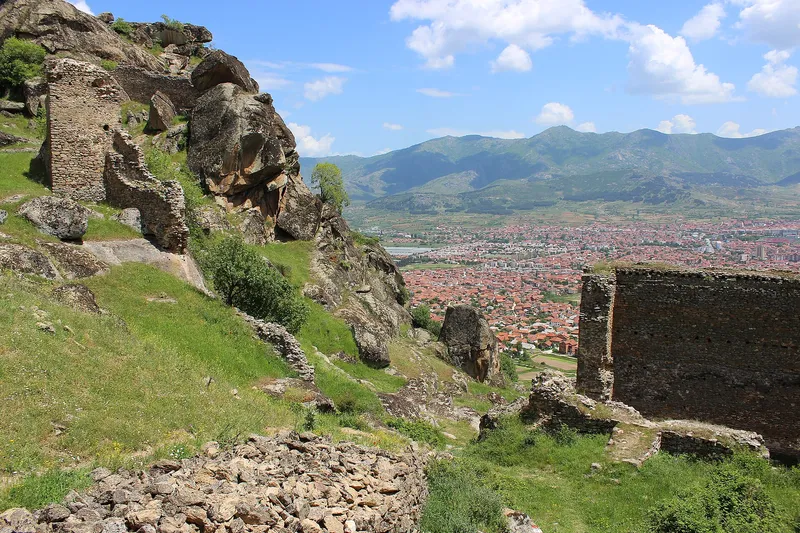
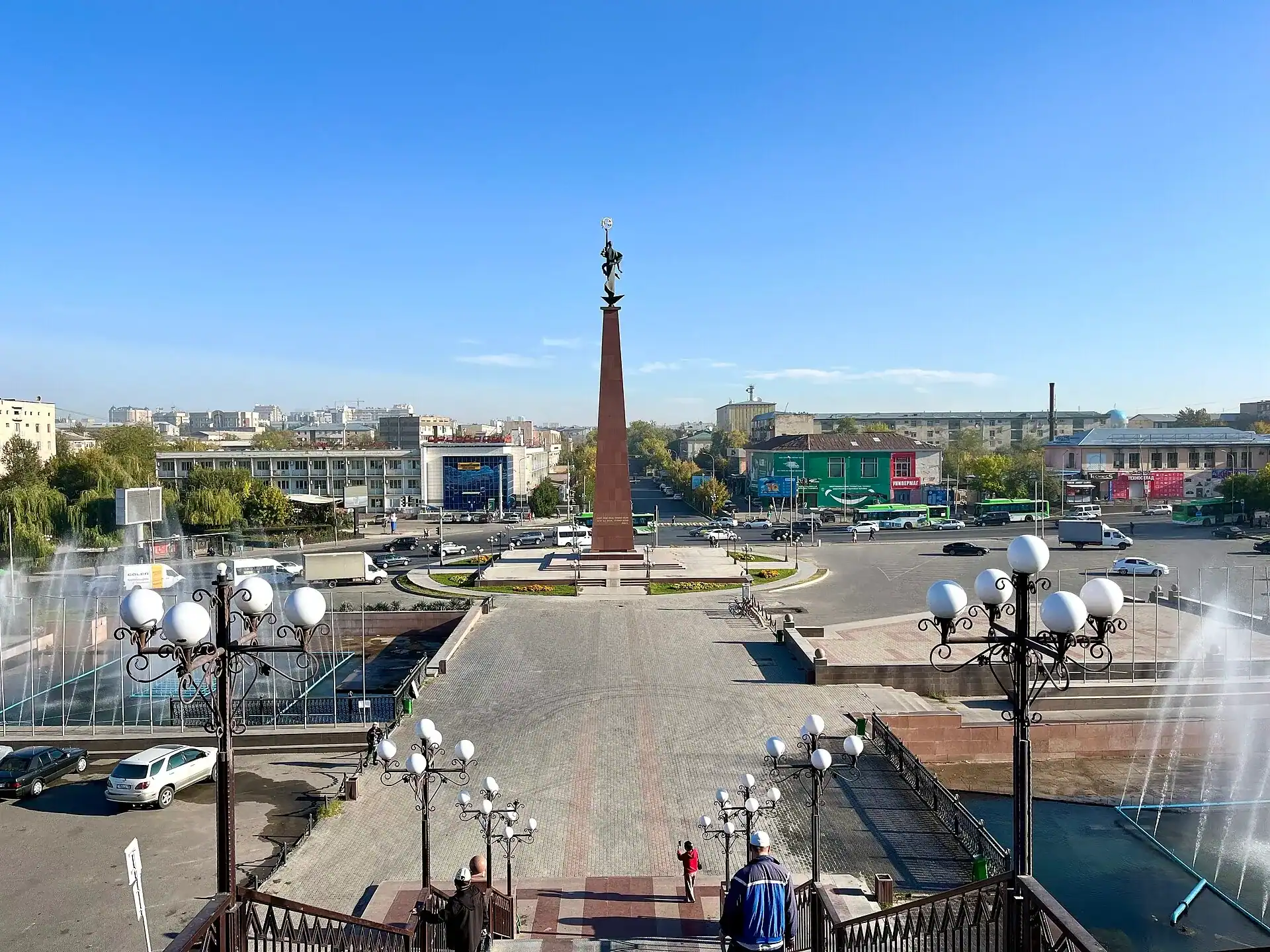 Photo: ほっきー / Wikimedia Commons (CC0)