Cost of Living in Bukhara
Where this figure comes from. No cost survey covers Bukhara, so the $900 a month above is our own estimate rather than a measurement. On 416 of our 999 city guides the figure is built from a published Numbeo basket, a one-bedroom rent in the centre plus one person's monthly costs without rent, converted to USD; this city is not one of them. How we source everything.
Bukhara is genuinely cheap, one of the best-value historic cities anywhere. A comfortable single-person budget runs roughly $800 to $1,100 a month. Guesthouses and simple furnished flats in or near the old town cost little, often $200 to $400 for a longer stay, and a filling plate of plov or a bowl of lagman runs just a few dollars at a local canteen. Bazaar produce, bread and dried fruit are almost free by Western standards. These are our editorial estimates in the som, and overall Bukhara rivals Samarkand as one of Central Asia's most affordable bases. Winter is when the figure moves. An old stone building costs real money to warm, and a guesthouse bill in January can look nothing like the same room in May. Season matters too: rooms in the historic centre are dearer through April, May, September and October, when tour groups fill them. Cash still rules outside the larger hotels, so budget a little for card fees, and expect a long-stay discount if you negotiate directly with an owner rather than booking nightly.
- Guesthouse or simple flat, long stay: roughly $200 to $400 a month
- Plate of plov at a local spot: roughly $2 to $3
- Shared taxi across town: roughly $1 to $2
- Afrosiyob fast train toward Samarkand: roughly $10 to $20
Where to Work in Bukhara
Bukhara is a small heritage city, not an established nomad hub, and its working infrastructure is modest. Home internet and 4G are cheap and cover the city, but speeds are lower and less consistent than in a major capital, so test any accommodation before relying on it for video calls. Dedicated coworking is essentially absent; a small number of modern cafes and guesthouse courtyards near the centre offer wifi and a place to settle in. An Ucell or Beeline SIM is an inexpensive backup. Bukhara suits a focused, lower-intensity working rhythm rather than a base for constant high-bandwidth meetings. Uzbekistan sits five hours ahead of UTC year-round, so a Bukhara afternoon lines up with the European working day, while a client in North America will only reach you late in your evening, which is a thing to agree to sparingly. Guesthouse courtyards are the pleasantest desks in the city between roughly nine and noon, before the heat and the tour buses arrive. If a call matters, sit close to the router, use a wired connection where one exists, and keep a charged SIM tethered as the fallback.
Getting Around Bukhara
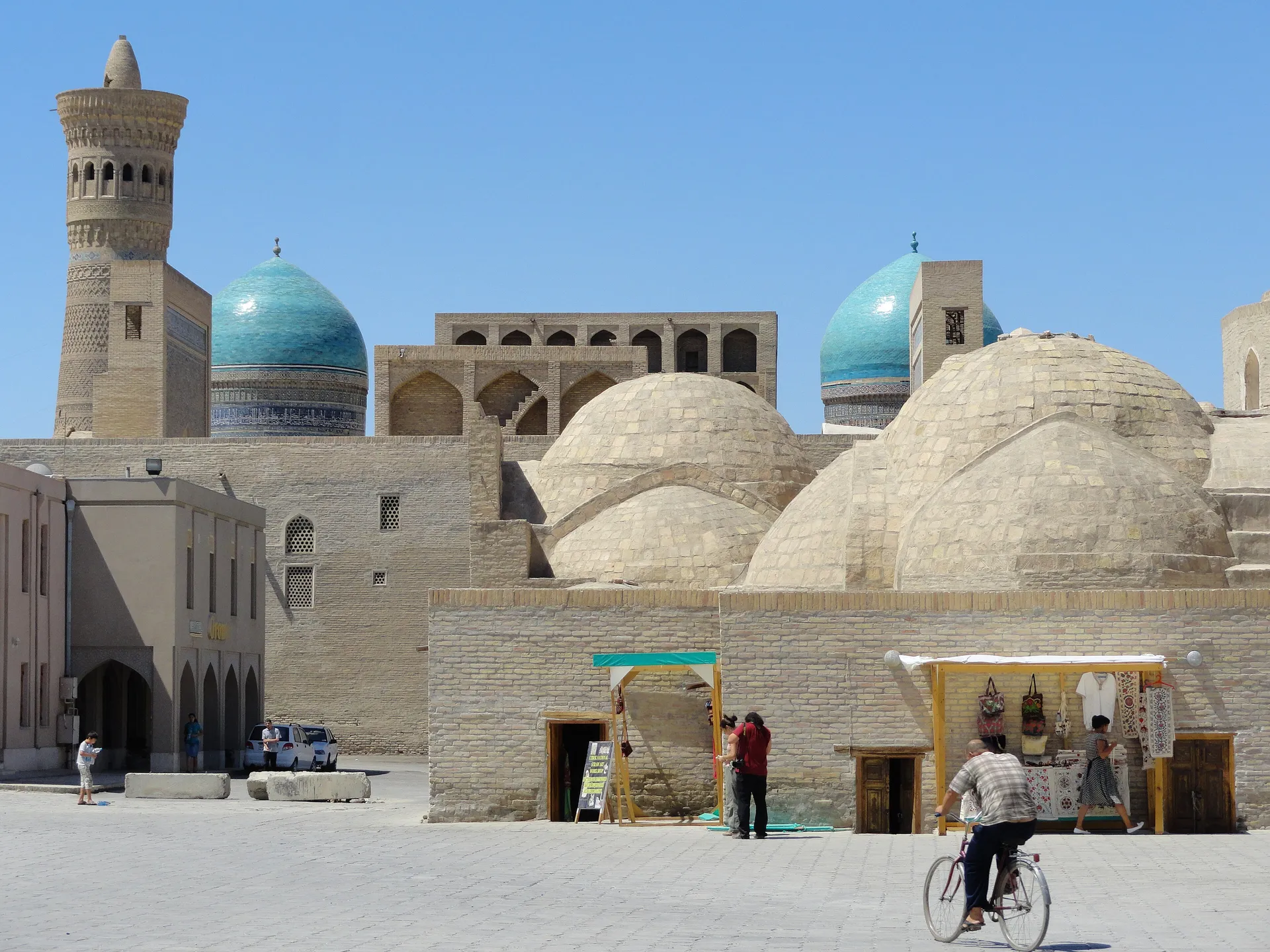
Bukhara's great pleasure is that its historic core is wonderfully compact and walkable: the madrasas, minarets, trading domes and the Lyab-i-Hauz pool are all within an easy stroll of one another. Shared taxis and the Yandex app make longer trips cheap and simple, and marshrutka minibuses cover set routes for pennies. The Afrosiyob high-speed train links Bukhara to Samarkand and Tashkent in comfort, making Silk Road travel easy, and the airport offers regional and some international flights. For daily life, though, you will mostly explore on foot. The railway station sits well outside the old quarter, out toward Kagan, so build a taxi leg into any train plan rather than assuming you can walk to the platform. The newer districts where most residents actually live spread far beyond the monuments, and that is where the larger supermarkets, the pharmacies and the cheaper food are. In July and August, move at dawn and after sunset and treat the middle of the day as indoor time.
Sorting transport? Book an airport transfer, or compare car rental on Auto Europe and QEEQ.
Visas for Bukhara
Uzbekistan has opened up markedly for visitors. Citizens of the EU, UK and many other countries can enter visa-free for 30 days, and travellers from the United States and elsewhere are granted visa-free entry or a simple e-visa, arranged online in advance. This makes a month in Bukhara straightforward, with accommodation registration usually handled automatically by your hotel or guesthouse. Longer stays need an e-visa or permits. Policy has liberalised repeatedly in recent years. The rule worth understanding properly is the address slip. Renting a private flat rather than staying in a hotel shifts the duty of recording where you sleep onto you or your landlord, through an online system, and travellers who skip it have been fined at the airport on the way out. Keep every slip you are handed until you are out of Uzbekistan. Nothing here resembles a remote-work permit, so extending a stay means crossing a border and coming back, or applying under a different category entirely.
Best Time to Visit Bukhara
Bukhara has a hot desert climate, so spring and autumn are by far the best times to visit. April to early June brings warm, comfortable days and pleasant sightseeing weather, while September and October offer clear skies, mild temperatures and the harvest season. Summer, from late June to August, is intensely hot and dry, often well above 35 Celsius, which makes exploring the open squares punishing at midday. Winter is cold, sometimes snowy, and quiet, with the tiled monuments looking striking under grey skies but short daylight and chilly conditions. Aim for the shoulder seasons. Navruz, the spring new year on 21 March, fills the squares with music and family gatherings and is worth timing a trip around, though rooms go early. The shoulder weeks themselves are the busiest of the year for tour groups, so the monuments photograph better before nine in the morning than at any other hour. If cost matters more than comfort, late February and early November sit just outside the rush, with cold but workable days and the lowest room rates you will see.
Pros and Cons of Bukhara
Bukhara trades modern nomad comforts for one of the world's most complete medieval cities and superb value. The trade is easier to judge once you name what you would be giving up. There is no peer group here, which means no one to eat dinner with on a Tuesday and no one who can tell you which landlord is fair, and that absence wears on most people faster than slow internet does. Against it sits something genuinely rare: a working city built around monuments that have stood for five centuries, where a month costs less than a fortnight in most of Europe and where nothing about the place feels staged for you. The people who regret coming are the ones who arrived expecting a scene. The people who stay longer than planned are usually the ones who came to work quietly and found the setting did something for their concentration that a cafe in a bigger city never had.
- Pros: an extraordinarily well-preserved Silk Road old town of madrasas, minarets and bazaars, extremely low costs, a very safe and hospitable culture, easy visa-free access, and a compact, walkable, atmospheric centre.
- Cons: little English outside tourism, an almost non-existent nomad and expat community, limited coworking and modest internet, quiet nightlife, and harsh summer heat. It is a place to soak up history, not to plug into a scene.
Who Bukhara Is For
Bukhara is for the history-loving, budget-conscious nomad who values atmosphere, safety and Silk Road romance over a ready-made community and fast infrastructure. Writers, photographers, history buffs and slow travellers will find it captivating, and the warmth of Uzbek hospitality makes it easy to settle in. It works best as a focused, low-cost base for someone who does not depend on constant high-bandwidth calls or a peer network. Learn a few Uzbek or Russian phrases, come in spring or autumn, and pair Bukhara with Samarkand and Tashkent by fast train for a full Central Asian chapter. Give it three or four weeks rather than three or four months. That is long enough to stop seeing the old town as a postcard and start noticing the bread man's rounds and which teahouse fills with locals at five, and short enough that the thinness of the social side never becomes the main fact of your life. Anyone whose work depends on a reliable calendar of client calls, or who needs other remote workers nearby to stay sane, will be happier basing themselves in the capital and treating Bukhara as the fortnight that makes the trip memorable.