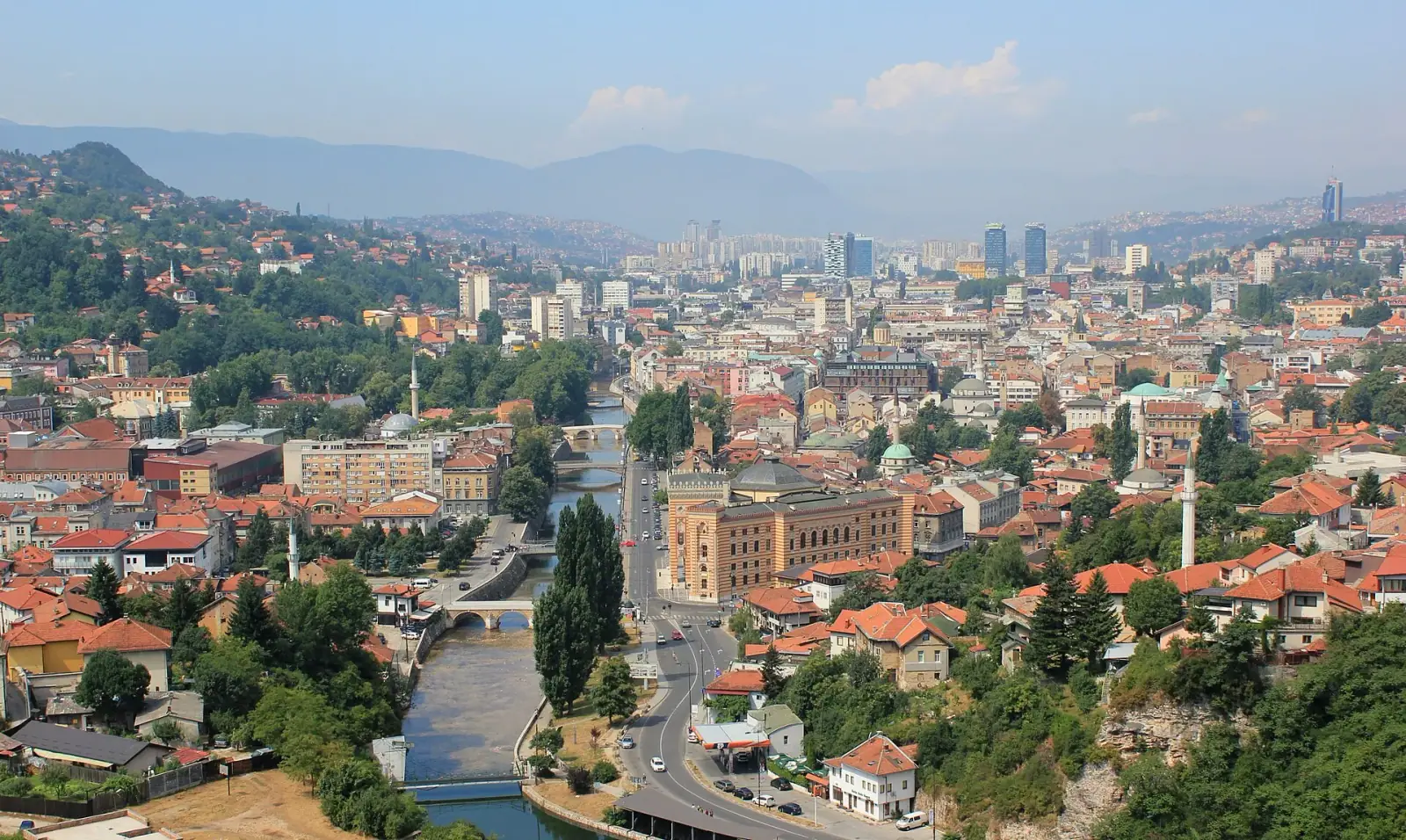
 Sarajevo
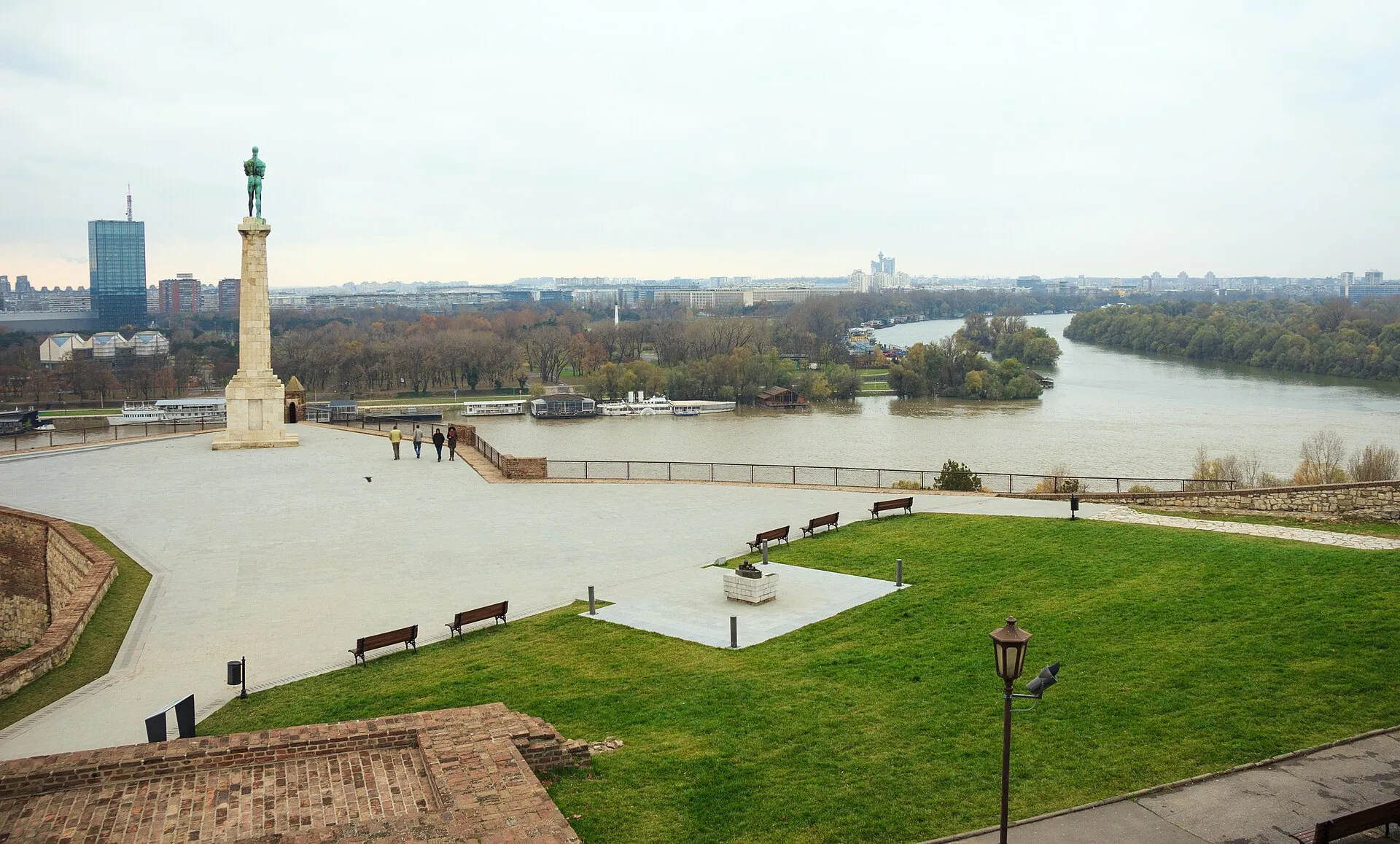
 Belgrade
You can regret either of these cities, and the way you would regret each one is predictable enough to plan around. Both sit outside the EU and the Schengen area, so your 90 European days stay untouched in either, which is why they end up on the same shortlist. What goes wrong afterwards is completely different.
Signing a lease in Sarajevo in June
June is when Sarajevo sells itself. You walk from the copper workshops of Baščaršija along Ferhadija, where the buildings turn from Ottoman to Austro-Hungarian within a few steps. The cable car from Bistrik, destroyed in the war and rebuilt in 2018, lifts you to 1,160 metres on Trebević in under ten minutes, and the 1984 Olympic bobsleigh track is up there among the trees. Our estimate for a full month is $1,400, and at that price you may be tempted to sign for a year.
Then the heating season starts. The city lies in a narrow valley, and when the wind drops, the exhaust and smoke have nowhere to go, so thick smog can sit over the streets for days. January highs average 4°C, which rules out walking it off. A twelve-month lease signed in June is a lease on that January. Anyone with asthma or small children should plan to be elsewhere for the coldest weeks, and everyone else should at least budget for the option.
The quieter regret arrives around month three. With about 275,000 people, Sarajevo has a small remote-work crowd and few places where you will fall into conversation with someone in your line of work. Bosnians are easy company, but if you arrive alone and speak no Bosnian, the evenings can get long.
Moving to Belgrade for the nights
Belgrade disappoints in the opposite way. The reason most people picture it is the splavovi, the barges moored along the Sava and the Danube that pull in weekend visitors from Bosnia, Croatia and Slovenia. On a hot summer day, Ada Ciganlija, the river island turned lake beach, takes 200,000 to 300,000 bathers. That is wonderful, and it accounts for perhaps two days of your week.
From Monday to Friday you live in a city of 1.2 million with no metro. Construction began in 2021 and the first line is not due until 2033. Buses and trams have been free for everyone since January 2025, which is a real gift until yours is sitting in the traffic with everything else. The flats with charm are in Dorćol and Vračar, where rents have been climbing, while the good-value ones are in the socialist-era blocks of Novi Beograd. At around $1,700 a month on our numbers, you are paying only $300 more than in Sarajevo for far more city, but do not expect the old cheap Balkans. Nor should you expect cleaner air: Belgrade's winters also rank among Europe's worst.
What you do get is colleagues. Microsoft runs a development centre here, the games studio Nordeus started here, and the city counts as one of the foremost IT hubs in southeast Europe. You also get a country in the middle of a turn. After two years of student-led protests, the Student List won a parliamentary majority on 25 October 2026 and Aleksandar Vučić conceded, with a presidential vote still ahead. Arriving now means living through whatever comes next, and that could be thrilling or tiresome.
Which mistake is easier to fix
Traffic can be managed by living near your favourite café. Loneliness is much harder to solve, and so is a valley full of smoke. So we would send most people to Belgrade first, and send them to Sarajevo from April to October if they already have a work routine and want hills, history and a lower bill.
Testing both is easy enough. Air Serbia flies the route in about 50 minutes, and the bus takes over six hours through the mountains from the East Sarajevo station, not the main one. Whichever you try, rent by the month until you have lived through the first cold week.
 United States
 United Kingdom
 Germany
 Canada
 Australia
 India