Cost of Living in Santa Fe
Where this figure comes from. No cost survey covers Santa Fe, so the $2,400 a month above is our own estimate rather than a measurement. On 416 of our 999 city guides the figure is built from a published Numbeo basket, a one-bedroom rent in the centre plus one person's monthly costs without rent, converted to USD; this city is not one of them. How we source everything.
Budget around $2,400 a month as a solo remote worker in Santa Fe, which is expensive for New Mexico and reflects a small city with constrained housing and a strong second-home market. A one-bedroom apartment runs roughly $1,300 to $1,800, with the areas near the plaza at the top and the southern suburbs considerably cheaper. Groceries and eating out are ordinary American prices, which is to say high, and Santa Fe's restaurant scene pushes the upper end. Utilities are moderate; the high desert climate means little air conditioning but real winter heating. A car adds meaningfully to the monthly total. New Mexico's gross receipts tax runs around seven to eight per cent and applies to services as well as goods, which catches out anyone used to a straight sales tax. Health insurance sits outside this figure and dominates any American budget, typically several hundred dollars a month for an individual buying independently. Running a car adds roughly $400 to $600 once insurance, fuel and winter tyres are counted, and there is no realistic way to avoid it here.
Where to Work in Santa Fe
Santa Fe has a small coworking scene serving its arts, government and technology sectors, with desks from roughly $200 a month. As the state capital it has a substantial administrative workforce, and Los Alamos National Laboratory an hour north brings a scientific population that shapes the professional network. Fibre reaches most of the city with reliable speeds at typical American prices, which are high. Mobile coverage is good in town and thins quickly in the surrounding mountains and mesas. The cafes around the plaza and on Canyon Road are comfortable places to work. That laboratory holds one of the densest concentrations of physics and computing anywhere in the country, and its spillover gives a city of eighty thousand a depth of expertise it could not otherwise sustain. The city sits in Mountain time, one hour behind Chicago and two behind New York, which makes east-coast work an early start and European work impractical. Fibre runs about $70 to $100 a month for a decent connection.
Getting Around Santa Fe
The plaza district and Canyon Road are walkable and pleasant, but Santa Fe as a whole is an American city and a car is close to necessary for anything beyond the historic core. A local bus network exists and a commuter rail line, the Rail Runner, connects to Albuquerque in about ninety minutes. Albuquerque's airport is the practical air link, an hour south. The high desert around the city, the Sangre de Cristo mountains and the Rio Grande gorge all require driving. Winter brings snow at this altitude, so a vehicle that copes with it matters. The Rail Runner is cheap and pleasant but runs a limited weekday schedule and barely at weekends, so it works for a planned trip to Albuquerque rather than as everyday transport. Santa Fe sits at 2,100 metres and the road north over the mountains to Taos crosses higher still, closing occasionally in winter. The Turquoise Trail is the slower and far better of the two routes south.
Sorting transport? Book an airport transfer, or compare car rental on Auto Europe and QEEQ.
Visas for Santa Fe
The United States has no digital nomad visa and no realistic long-stay route for remote workers. Visa Waiver Program nationals get ninety days per entry through ESTA, and a B-2 visitor is normally admitted for six months, though neither status permits employment and border officers decide each admission. Longer stays require employer sponsorship on an H-1B or similar, an intra-company transfer, or one of the investor or extraordinary-ability categories. For most non-Americans there is no route here that permits working, only visiting. The practical consequence is that this page is written for people who already have the right to be in the United States. Anyone else weighing a long stay should look at the ninety-day limit honestly rather than planning around back-to-back entries, since a pattern of repeated visits is exactly what secondary inspection is for and the discretion sits entirely with the officer. Any question about an entry stamp is dealt with at the federal office in the larger city an hour south, since this one has none of its own.
Best Time to Visit Santa Fe
September and October are the best months in Santa Fe, with warm days, cold clear nights, the aspens turning gold in the mountains and the summer crowds gone. Late spring in May and early June is the second window, dry and mild before the monsoon. Summer brings afternoon thunderstorms from July into August and the city is busy with the opera and the art markets. Winter is cold at 2,100 metres, with regular snow and daytime highs near five, though the sun is relentless and the skiing above town is genuinely good. The air is extremely dry year-round. Zozobra burns at the start of Fiestas de Santa Fe in early September, a fifteen-metre marionette set alight in front of tens of thousands of people, and it is the single event the city organises itself around. The monsoon from July into August brings dramatic afternoon storms that clear by evening, and the light after them is what the painters came for.
Pros and Cons of Santa Fe
Santa Fe is the oldest state capital in the country and looks like nowhere else in it: adobe by ordinance, a plaza that has been there four hundred years, and a gallery scene that has drawn painters since the 1920s. The high desert light is the reason artists came and it is still the reason. It is expensive, it requires a car, is small enough that its whole social world is quickly mapped, and the American visa position makes it inaccessible to most non-Americans for anything longer than a few months. Altitude is a genuine factor rather than a footnote: at 2,100 metres the air is thin and extraordinarily dry, sleep is often poor for the first week, and the sun burns far faster than the temperature suggests. Water is the other constraint, with the Rio Grande basin under long-term stress and restrictions a normal part of a dry year.
Who Santa Fe Is For
Existing work rights and a taste for a small city with a real cultural identity, particularly among people in the arts, and anyone drawn to high desert landscape and skiing. Light, altitude and dry air are what people say they came for, and all of them read differently at seven thousand feet than they do lower down. Non-Americans without a visa pathway have nothing to work with here, a car is not optional at this spread, and the prices reflect an art market rather than a New Mexican one. Anonymity and a large city's range of professional opportunity are both things this town has traded away deliberately. Anyone arriving from sea level should also allow a week for the altitude, which at 2,100 metres is enough to be felt on the first few days. Seasonal and project-based work fits the rhythm here unusually well. The city empties noticeably between the summer markets and the ski season, and both rents and restaurant tables loosen in those windows for anybody whose schedule can take advantage of them.
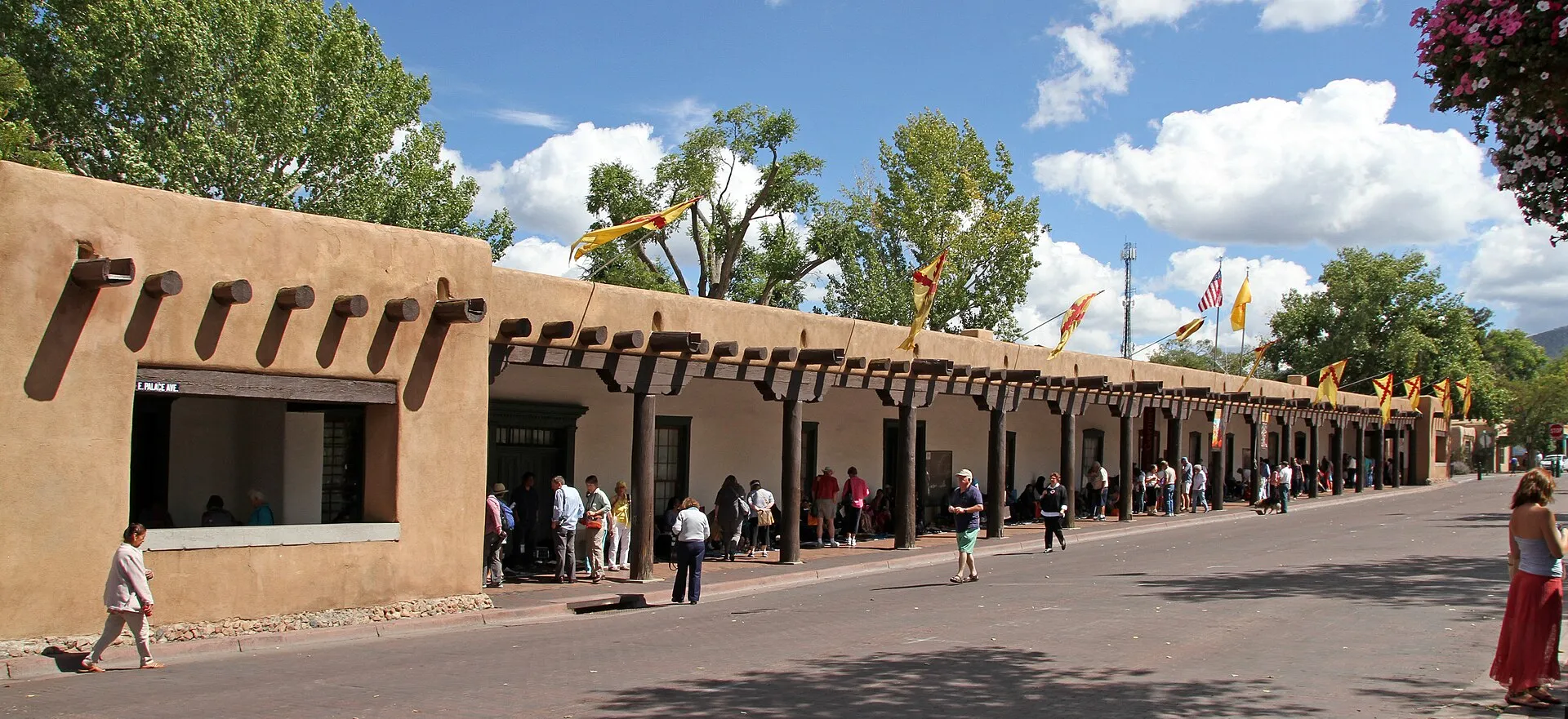 Photo: Tony Hisgett from Birmingham, UK / Wikimedia Commons (CC BY 2.0)