Cost of Living in Bath
Real market data
Source: Numbeo · August 2026
$2,860/moSolo nomad1-bed centre + living costs
$3,700/moCoupleshared 1-bed + costs
$2,440/moLean / localcheaper area + costs
- 1-bed rent, city centre$1,820£1,351
- 1-bed rent, outside centre$1,400£1,040
- Monthly costs excl. rent (1 person)$1,050£777
- Meal, inexpensive restaurant$22£16
- Monthly transit pass$130£97
- Buy price, per m² (centre)$10,140£7,536
Prices are from Numbeo (August 2026), converted to USD at $1 = £0.74 (01 Aug 2026). The monthly living-costs figure is our transparent one-person basket, groceries, a few meals out, utilities, phone, internet, transport and essentials, priced from those figures. Solo adds central rent; couple and lean are estimates from the same numbers.
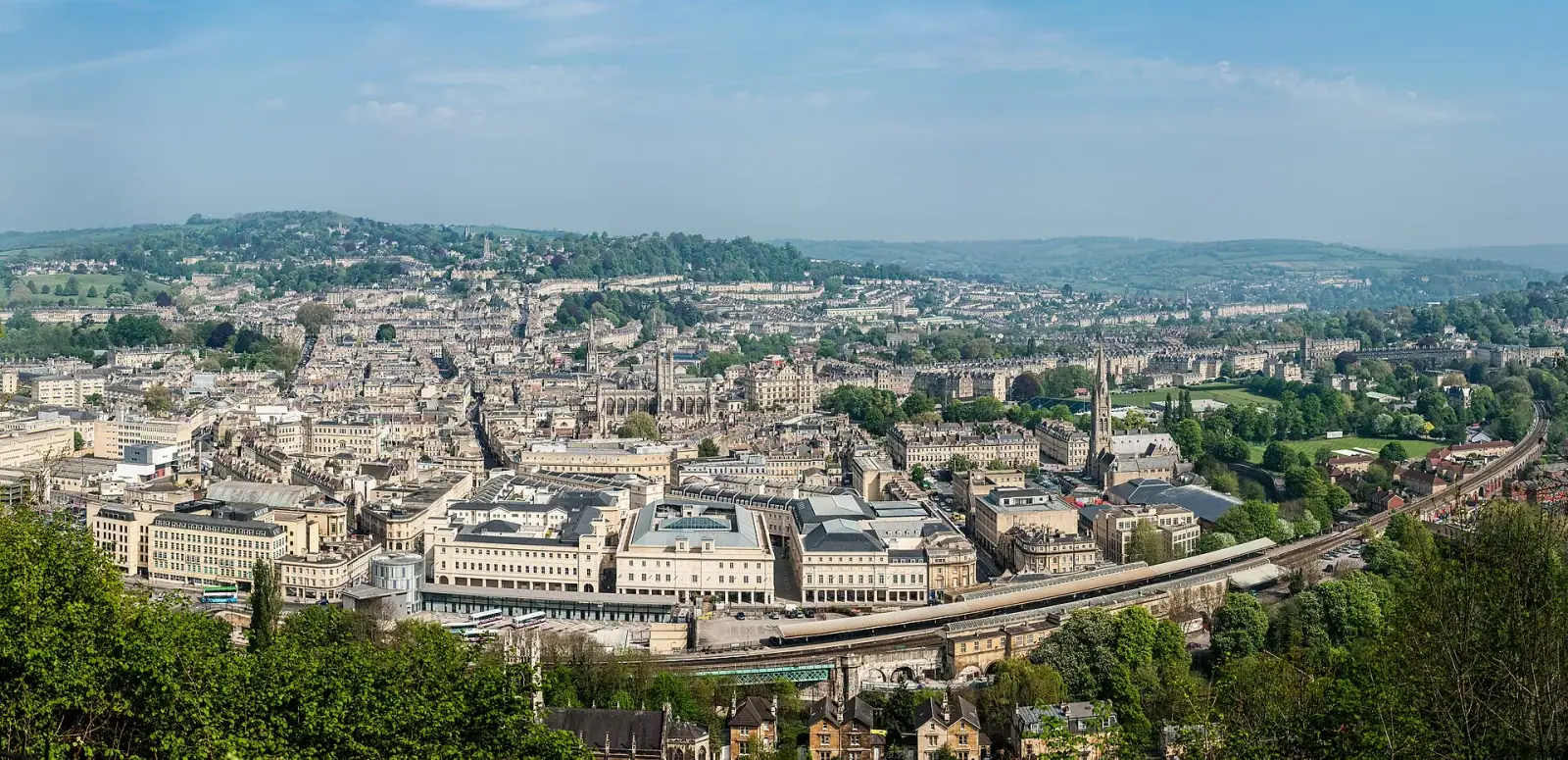
Bath sits firmly in the expensive tier of UK cities. You will not find the bargain lifestyle you might get in Eastern Europe or Southeast Asia, but you get a compact, walkable Georgian city with genuinely fast broadband and a high standard of services in return.
Rent is the biggest line item. A one-bedroom flat in the city centre typically runs $1,600 to $1,950 per month. Head to Oldfield Park or Twerton, about a 20-minute walk southwest, and you can find the same space for $1,150 to $1,450 per month. Groceries for one person buying sensibly at a Sainsbury's or Aldi cost around $230 to $270 per month. A sit-down meal at a casual restaurant runs $16 to $24 per person; a good mid-range dinner for two lands around $80 to $110. A coworking hot desk runs $100 to $210 per month depending on the space. A local bus pass costs $120 per month. Home broadband is around $43 per month.
Total realistic monthly range: $2,250 to $3,050, covering rent in a cheaper area, food, coworking, transport, and incidentals. City-centre rent pushes that to $2,650 to $3,750.
Where to Work
Bath has a small but solid coworking scene for a city its size. Runway East Bath at Kings Court, Parsonage Lane is the most professional option, close to Bath Spa station with meeting rooms and reliable gigabit-class connectivity. Rengen House on Argyle Street suits freelancers and creatives: community-oriented, wheelchair accessible, and priced from $330 to $470 per month for a dedicated desk. Gather Round at Trinity Church near Queen's Square is a striking French Gothic conversion housing over 120 creatives; hot desks start from $210 per month. Spaces Northgate House on Upper Borough Walls offers day passes from $60 and monthly flex memberships from $330 if you need a corporate-grade environment without a long commitment.
Cafe work is genuinely viable in Bath. Society Cafe has two city-centre locations (5 Kingsmead Square and 19 High Street) with fast free WiFi, plentiful power sockets, and enough table space to feel settled rather than squeezed. The atmosphere on Kingsmead Square, with outdoor seating on the square itself, is hard to beat on a good day. Landrace Bakery on Walcot Street is quieter and has a loyal local crowd; it suits focused morning sessions before it fills up. The general WiFi situation in Bath is good: most independent cafes offer reliable connections, and the city's compact footprint means you are rarely far from an option.
Getting Around
Bath is one of the most walkable cities in England. The historic core is about a mile across, and you can get between most points of interest on foot in under 20 minutes. The Roman Baths, train station, main shopping streets, and most coworking spaces are all within comfortable walking distance of each other.
For longer trips within the city, First Bus runs a fairly reliable network. A single fare costs $3.50; a monthly pass is $120. Cycling is possible on some routes but the hills around the city and the narrow Georgian streets can make it challenging. Bath does not have a tram or underground system.
Getting out of Bath is easy by rail. Bath Spa station sits in the city centre and has frequent Great Western Railway services to London Paddington (roughly 90 minutes) and to Bristol Temple Meads (12 minutes). The nearest international airport is Bristol Airport, about 25 kilometres southwest. The A4 bus service connects the airport to Bath, and the journey takes roughly 45 to 60 minutes and costs around $12 to $19 single. You can also take a bus to Bristol Temple Meads and pick up an airport bus from there. Taxis to Bristol Airport from Bath city centre run approximately $53 to $73.
Sorting transport? Book an airport transfer, or compare car rental on Auto Europe and QEEQ.
Visas and Staying Long-Term
Most Western passport holders, including Americans, Canadians, Australians, and EU citizens, can enter the UK visa-free as a standard visitor for up to six months. They buy an Electronic Travel Authorisation (ETA) before travelling to Bath; it costs $27 and covers multiple visits over two years. The UK does not currently offer a dedicated digital nomad visa. You are permitted to work remotely for a foreign employer while in the UK on a standard visitor entry, as long as you are not working for a UK-based employer or offering services to UK clients. The Home Office scrutinises stays longer than 90 days more carefully; if you plan to stay close to the six-month limit, keep clear records showing your income source is abroad. There is no straightforward way to extend a visitor stay beyond six months; you would need to leave and re-enter or qualify for a different visa category such as the Global Talent Visa if eligible.
Best Time to Visit
Bath has a temperate maritime climate: mild, damp, and rarely extreme in either direction. Summer (June to August) offers the warmest temperatures, typically 18 to 22 degrees Celsius, and the most daylight. It is also when tourists arrive in force. The Roman Baths and Pulteney Bridge areas become crowded on summer weekends, and accommodation prices rise. If you are primarily here to work, heavy foot traffic on narrow streets is a minor irritant rather than a deal-breaker.
The best window for remote workers balancing good weather with a quieter city is May to early June or September to October. Temperatures are comfortable, days are long enough, and the tourist pressure eases noticeably. Winter (December to February) is grey, damp, and cool with average highs around 8 degrees Celsius. It is the cheapest time to rent and the city has a quieter, more local feel, which suits some people well. Rainfall is spread across the year; there is no reliably dry season, but September tends to be one of the drier months.
Pros and Cons
- Genuinely beautiful city: Georgian architecture, Roman history, and a human-scale layout that makes daily life pleasant.
- Excellent rail connectivity: London in 90 minutes, Bristol in 12; easy to travel for meetings or breaks.
- Walkable and compact: You rarely need transport for day-to-day life once you have a base.
- Good food scene: Strong independent restaurants and a real local food culture beyond tourist traps.
- English-speaking: Zero language barrier; admin tasks, banking, and healthcare are all straightforward.
- Expensive: One of the priciest cities in England outside London, with rents rising fast.
- Small nomad community: Bath is not a hub; the coworking scene is limited compared to Bristol or London.
- Crowded in peak season: Summer weekends turn the centre into a bottleneck of tour groups.
- Grey winters: The damp, overcast climate from November to March demands adjustment if you are coming from sunnier places.
- No airport: Bristol Airport is accessible but adds travel time and cost for any flying you need to do.
Who Bath Is Best For
Bath suits nomads who want a base in England that offers genuine character rather than the anonymity of a large city. If you have existing connections to the UK, need easy access to London, and value beauty, safety, and a high standard of daily life, Bath delivers. It works well for people who prefer a slower pace and do not need a buzzing nomad meetup scene to feel at home. Writers, designers, and solo workers who thrive in a quieter, aesthetically rich environment often find Bath disproportionately inspiring for its size.
It is a harder sell if you are on a tight budget, need a large coworking community, or are chasing good weather for months at a stretch. Digital nomads used to the cost efficiency of Lisbon, Tbilisi, or Chiang Mai will find Bath a significant adjustment upward in price for a city that does not offer much in the way of a nomad infrastructure in return. Bristol, 20 minutes by train, offers a larger scene and lower rents if community and variety matter more to you than beauty and calm.