Cost of Living in Salt Lake City
Where this figure comes from. No cost survey covers Salt Lake City, so the $2,200 a month above is our own estimate rather than a measurement. On 416 of our 999 city guides the figure is built from a published Numbeo basket, a one-bedroom rent in the centre plus one person's monthly costs without rent, converted to USD; this city is not one of them. How we source everything.
Salt Lake City at $2,200 a month is manageable but no longer cheap, since demand from Californian transplants pushed rents up sharply. A furnished one-bedroom on a monthly lease in the Central City, 9th and 9th or Sugar House areas runs $1,300 to $1,800; Rose Park, Glendale or South Salt Lake bring that down to $1,000 to $1,400. Groceries for one cost $350 to $480, and restaurant meals run $15 to $28. A prepaid unlimited SIM costs $25 to $45. Coworking hot desks run $150 to $300 a month. Utilities are moderate: winter heating and summer cooling plus gigabit fibre come to $110 to $180. Transport is genuinely cheaper here than in Texas because UTA transit is usable, so $100 to $200 covers passes and occasional ride-hailing, though a ski season adds $300 to $900 in passes and gear. Value verdict: fair, and outstanding if outdoor access is the reason for coming. Spirits and stronger beer are sold only through state stores with restricted hours, and the rules on restaurant service are a subject of their own, which is a genuine adjustment rather than a quirk and shows up in what an evening out actually costs.
Where to Work in Salt Lake City
The best bases are the Avenues, a hillside grid of older homes just above downtown; the 9th and 9th district for cafes and independent shops; Sugar House for a more residential, tree-lined feel with its own commercial core; and Central City or the Granary District for downtown proximity and warehouse conversions. Internet is strong: Google Fiber, Xfinity and the municipal-adjacent UTOPIA network deliver gigabit across much of the valley. Coworking includes Kiln in the downtown core, Impact Hub Salt Lake City and a set of independent operators in the Granary District, plus WeWork downtown. Cafe culture is better than outsiders expect: Publik Coffee Roasters, Three Pines Coffee downtown, Blue Copper and La Barba are all working-friendly, with Publik in particular built around long stays. Caveats: many cafes close early by nomad standards, Sunday hours are restricted across the city, and downtown seating fills fast during ski season. The largest genealogical archive in the world sits downtown and is open to anybody at no charge, which is an odd thing for a city of this size to hold and draws researchers from everywhere. The church that built it shapes the working week here more than any employer does.
Getting Around Salt Lake City
Salt Lake City is the most transit-usable city in this group. UTA runs three TRAX light rail lines and the FrontRunner commuter train up and down the Wasatch Front, with a single fare around $2.50 and a day pass about $6.25; the downtown Free Fare Zone covers the core at no charge. TRAX reaches Salt Lake City International Airport directly, roughly 20 minutes from downtown, which is unusual for a US city of this size and makes airport transfers trivial; a ride-hail costs $18 to $28. Uber and Lyft handle everything else at $10 to $20 per trip. The street grid is enormous in block size, which makes walking slower than the map suggests, but downtown, the Avenues and 9th and 9th are genuinely walkable. A car is not strictly necessary in the valley, but reaching the Cottonwood Canyons ski resorts and the national parks to the south effectively requires one, though ski buses run in winter. The commuter train that runs 81 miles from Ogden to Provo through the city, has no Sunday service, which matters for anybody planning a weekend in either place without a car.
Sorting transport? Book an airport transfer, or compare car rental on Auto Europe and QEEQ.
Visas for Salt Lake City
The United States has no digital nomad visa and no proposal close to enactment as of 2026. Citizens of Visa Waiver Program countries, including the United Kingdom, most of the European Union, Japan, South Korea, Australia and New Zealand, can visit for up to 90 days on an approved ESTA costing $40.27, which must be obtained online before travel. That period cannot be extended, and a short trip to Canada or Mexico does not reset it. Other nationalities require a B-1 or B-2 visitor visa, typically admitted for six months per entry, with consular appointment waits that vary from weeks to over a year depending on the post. A visitor admission does not authorize employment of any kind in the United States. Customs and Border Protection officers decide admission and duration case by case.
Best Time to Visit Salt Lake City
Salt Lake City has four real seasons at 4,300 feet. December through March is ski season, and the Wasatch snow that markets itself as the greatest on earth is genuinely exceptional, with Alta, Snowbird, Brighton and Solitude all within an hour. The catch is the winter inversion: cold air pools in the valley for days or weeks, trapping pollution and producing some of the worst air quality in the United States, while the mountains above sit in sun. April and May are unsettled but pleasant, and May through June is excellent for hiking as trails clear. July and August are hot and very dry, often 92F to 100F, tolerable because of low humidity but increasingly marked by wildfire smoke drifting in from the west. September and October are the finest months: warm days, cool nights, brilliant canyon foliage. Sundance, long the marquee January event in nearby Park City, held its last edition there in 2026 and moves to Boulder, Colorado, from 2027, so winter here now belongs to the ski season.
Pros and Cons of Salt Lake City
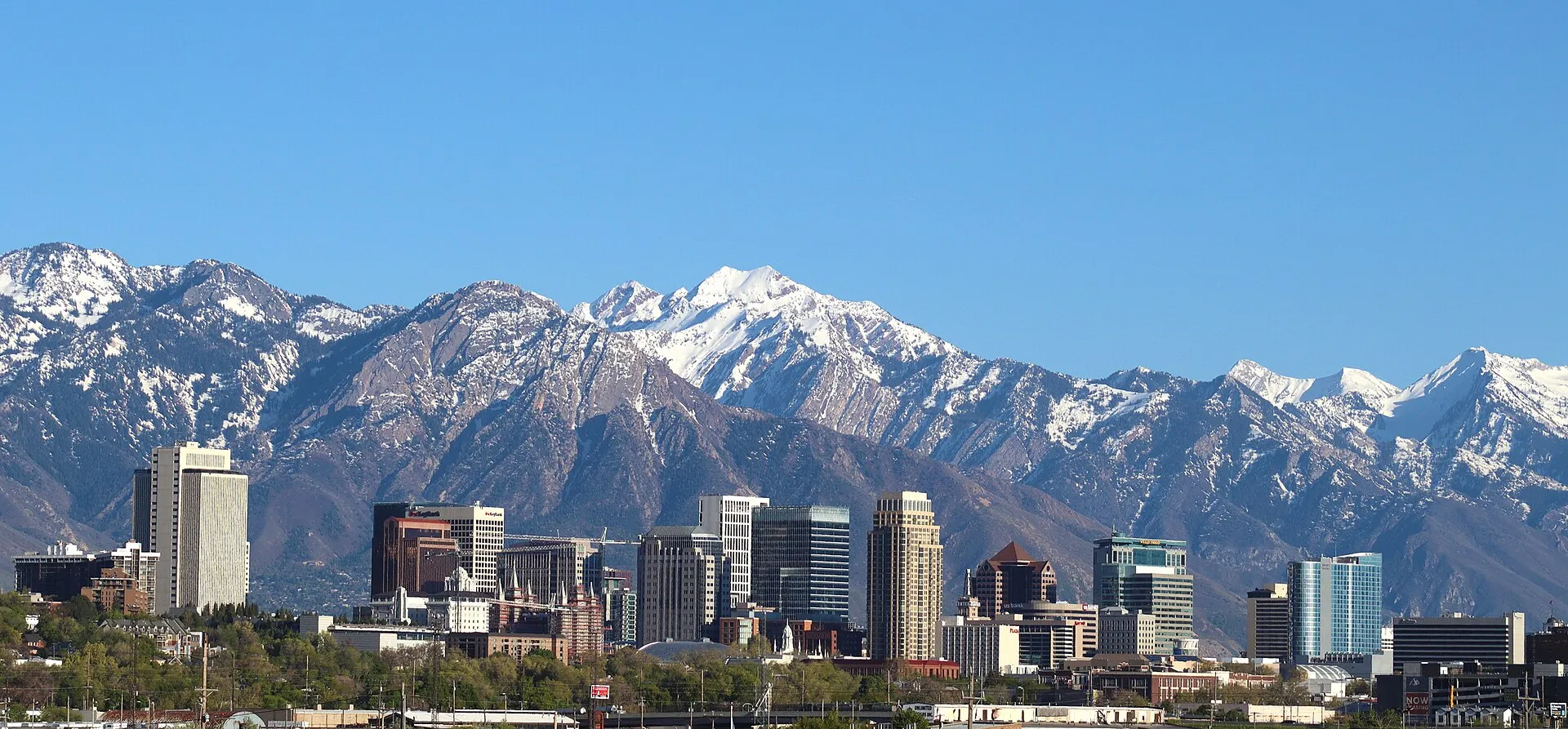
Geography is most of what recommends Salt Lake City. Four world-class ski resorts sit within an hour of downtown, five national parks lie within a day's drive, and hiking, climbing and mountain biking start at the valley edge. Transit is unusually good for the American West, the airport is a Delta hub reached directly by light rail, internet is gigabit, the Silicon Slopes tech corridor provides a real professional network, and the city is compact and safe. The winter inversion is the serious health drawback here, producing weeks of hazardous air, and summer wildfire smoke increasingly does much the same at the other end of the year. The Great Salt Lake's shrinking has raised the further prospect of toxic dust from the exposed lakebed. Rents have risen quickly, the alcohol laws remain restrictive by US standards, the cultural scene is modest for the population, and the dominant local religious culture can make the social landscape feel closed to outsiders.
Who Salt Lake City Is For
Salt Lake City is built for the outdoor nomad. Anyone who skis or snowboards seriously, climbs, trail runs, or wants national park access will find no better-positioned American city, and the combination of a real airport, gigabit internet and a mountain twenty minutes from a desk is rare. It suits remote tech workers who benefit from the Silicon Slopes network, and people who value a compact, orderly, transit-served city over big-city intensity. It is also a good fit for those who want American infrastructure without Texas-scale car dependence. Skip it if respiratory health is fragile, since the winter inversion and summer wildfire smoke are both genuinely hazardous. Skip it too if the priority is nightlife, a dense international food scene, or a large visible expatriate community; the alcohol regulations and comparatively homogeneous social fabric make Salt Lake City a quiet place for anyone whose life is not organized around the mountains. Snowboarders should know that two of the area's best-known resorts, Alta in Little Cottonwood Canyon and Deer Valley near Park City, still admit skiers only.