Cost of Living in Dallas
Where this figure comes from. No cost survey covers Dallas, so the $2,400 a month above is our own estimate rather than a measurement. On 416 of our 999 city guides the figure is built from a published Numbeo basket, a one-bedroom rent in the centre plus one person's monthly costs without rent, converted to USD; this city is not one of them. How we source everything.
Dallas at $2,400 a month gives a single nomad a comfortable, if car-shaped, standard of living. A furnished one-bedroom on a monthly lease in Uptown, Deep Ellum or Bishop Arts runs $1,400 to $2,000, while Oak Cliff, Lower Greenville or the eastern suburbs drop that to $1,100 to $1,500. Groceries for one cost $350 to $480. Restaurants span a wide range: $10 to $15 for excellent Tex-Mex or barbecue, $25 to $40 for the Uptown scene. A prepaid unlimited SIM costs $25 to $45. Coworking hot desks run $180 to $350 a month. Utilities including air conditioning, which dominates the bill from June to September, plus water and gigabit fibre, total $130 to $210. Transport is the honest budget-breaker: a car with insurance, fuel, tolls on the North Dallas Tollway and parking realistically costs $450 to $700. Value verdict: solid space and amenities for the money, undermined by mandatory driving costs. The absence of a state income tax is the headline here, and the property taxes, which are about as steep as any state levies, are not: they fall on the owner and come through in the rent, so the saving is smaller than the comparison usually suggests.
Where to Work in Dallas
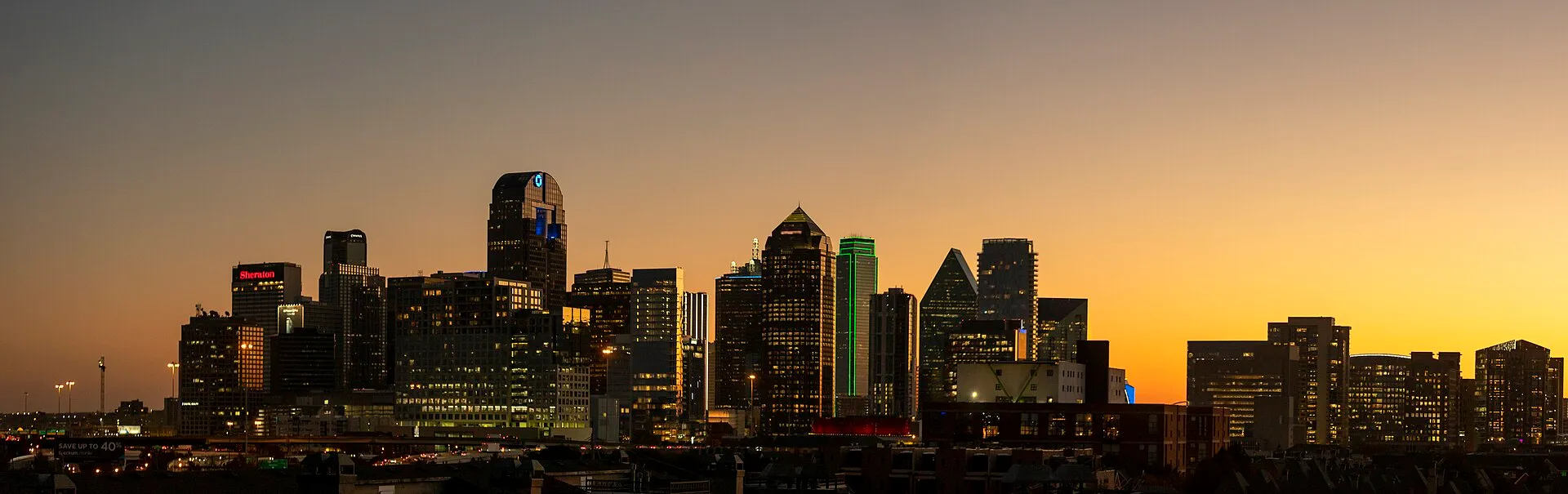
Location choice determines whether Dallas is pleasant or a commuting sentence. Uptown and the Knox-Henderson corridor offer the most walkable density with cafes and restaurants at street level. Deep Ellum is the creative and music quarter, gritty and loud but central. Bishop Arts in North Oak Cliff is the prettiest low-rise option, and Lower Greenville splits the difference. Internet is excellent: AT&T Fiber and Google Fiber deliver gigabit widely, and coworking spaces run comparable speeds. Coworking includes WeWork and Industrious in the Uptown and Arts District towers, Common Desk locations across Deep Ellum and Oak Cliff, and The Dallas Entrepreneur Center for a startup crowd. Cafes that reliably accept laptops include Ascension Coffee in the Design District, Houndstooth Coffee near Knox-Henderson, Weekend Coffee and the Magnolia-adjacent independents in Oak Cliff. Practical caveats: sockets are limited, weekday afternoons are the reliable window, and paid or valet parking is common in Uptown. A steady stream of large companies has moved its headquarters here from the coasts over the last decade, chasing the tax position and the cheaper space, and the professional population that arrived with them is why the northern suburbs look the way they do. For a freelancer it means corporate clients who are themselves recent arrivals and still assembling their suppliers.
Getting Around Dallas
A car is effectively mandatory in Dallas. DART operates the largest light rail network by mileage in the United States, four lines with a $3 single ride and $6 day pass, and it usefully connects downtown, Uptown via the free M-Line trolley, Deep Ellum, Fair Park and both suburbs and Dallas Love Field via a shuttle link. The problem is that coverage is broad but thin: headways are long, stations sit in parking lots, and journeys that take 20 minutes by car take an hour by rail. The TRE commuter line links Dallas and Fort Worth. Uber and Lyft cost $12 to $25 for typical inner-city trips. DFW International Airport is 30 to 45 minutes northwest and $45 to $70 by ride-hail, though the DART Orange Line reaches Terminal A directly for the standard fare; Love Field is closer and cheaper. Walkability is confined to Uptown, Deep Ellum and Bishop Arts, and summer heat suppresses even that. The closer airport is Southwest Airlines' home base and by law handles no international flights, so anything abroad starts at DFW, where the Skylink train links all the terminals airside in a few minutes.
Sorting transport? Book an airport transfer, or compare car rental on Auto Europe and QEEQ.
Visas for Dallas
There is no United States digital nomad visa, and nothing resembling one exists in 2026 policy. Visa Waiver Program nationals, covering the United Kingdom, most EU states, Japan, South Korea, Australia, Singapore and others, may enter for a maximum of 90 days with an approved ESTA costing $40.27, which must be secured before boarding. The 90-day allowance is not extendable, and leaving briefly for Mexico or Canada does not restart the clock. Non-VWP nationals need a B-1 business or B-2 tourist visa, with B-2 visitors normally admitted for six months per entry and long consular interview queues in high-demand countries. Visitors are barred from employment in the United States, and no visa is designed for remote workers. Admission and permitted duration remain entirely at the officer's discretion.
Best Time to Visit Dallas
Dallas has four distinct but lopsided seasons. The best months are April, May, October and November, when highs sit between 72F and 85F, skies are clear and the patio culture the city runs on is comfortable. Spring is also severe-weather season: North Texas lies in the southern edge of Tornado Alley, and April through early June brings supercells, hail large enough to damage cars and occasional tornado warnings. From late June through September the heat is relentless, with highs from 95F to 105F, extended stretches above 100F and the electricity grid under visible strain; outdoor life stops between noon and dusk. Winter is mild, generally 45F to 60F, but ice storms rather than snow are the hazard, and they shut the city down when they arrive. Key events include the State Fair of Texas at Fair Park from late September through October and the spring arts festivals in the Arts District.
Pros and Cons of Dallas
Dallas offers genuine practical advantages: no state income tax, a huge and diversified job market in finance, telecom and corporate headquarters, gigabit fibre almost everywhere, an enormous restaurant scene, the largest arts district in the country, and DFW International, one of the world's best-connected airports, which makes it an excellent base for a nomad who flies often. Housing gives far more space per dollar than the coasts. The negatives are the familiar Sunbelt list, and they are serious. The metroplex is one of the most sprawling urban regions on earth, so a car is not optional and the true monthly cost of living is inflated by driving. Traffic on the interstates is heavy and the tolled highways add up. Summer heat is extreme and long, air quality suffers with regular ozone action days, and the grid's reliability in both heat and ice is a live concern. Aesthetically, much of the metroplex is highway, parking lot and chain retail.
Who Dallas Is For
Dallas fits nomads who fly constantly and want to live next to a major global hub, those working with US corporate clients in finance, telecom, logistics or professional services, and anyone optimizing for disposable income given no state income tax and reasonable rents. A large, modern, comfortable American city with excellent internet and infrastructure is exactly what this is, on the single condition of being entirely at ease with driving everywhere. Long-stay remote workers seeking a stable, unglamorous, high-functioning base do well here. It is the wrong choice for car-free nomads, for anyone drawn to walkable historic urbanism, mountains, coastline or temperate summers, and for those with asthma or heat sensitivity. Nomads looking for an international backpacker or coliving community will not find one; Dallas's remote workers are largely settled Americans, and the social entry point is professional networks rather than hostels or coworking scenes. American Airlines loyalists in particular are well placed, since DFW is the carrier's largest hub and its headquarters sits beside the airport.