Cost of Living in Pointe-a-Pitre
Where this figure comes from. No cost survey covers Pointe-a-Pitre, so the $1,900 a month above is our own estimate rather than a measurement. On 416 of our 999 city guides the figure is built from a published Numbeo basket, a one-bedroom rent in the centre plus one person's monthly costs without rent, converted to USD; this city is not one of them. How we source everything.
Budget around $1,900 a month as a solo remote worker in Pointe-a-Pitre, which is expensive for the Caribbean and reflects the cost structure of a French department where much of the food is shipped from Europe. A one-bedroom place runs roughly $700 to $1,200. Groceries cost noticeably more than in mainland France, which has driven serious protests here more than once. The local markets and the lolos, the small Creole grills, are considerably cheaper. The euro is the currency. This is our own estimate rather than measured data. Anyone comparing with the independent islands nearby should note that European healthcare and schooling are included in what the higher cost of living buys. Water is the cost that does not appear on any comparison and dominates local life. The distribution network leaks badly enough that large parts of the archipelago run on rota cuts, tours d'eau, with taps dry for a day or more at a time, and households buy bottled water and keep storage containers as a matter of routine. Ask about it before signing anything. A negotiated basket of capped-price staples exists in the overseas departments, the bouclier qualite-prix, and knowing which items are on it changes a weekly shop more than switching supermarket does.
Where to Work in Pointe-a-Pitre
Guadeloupe has European infrastructure and it shows: fibre reaches the developed parts of the archipelago at good speeds, mobile coverage is comprehensive, and French mobile plans work here without roaming charges, which is a substantial advantage for anyone based in Europe. Power is reliable. There is a small coworking scene around Pointe-a-Pitre and Le Gosier. French is the language of everything administrative and commercial, with Guadeloupean Creole spoken among locals; English is limited outside tourism. Anyone working with mainland France should note the five-hour offset, which puts a French afternoon at the start of the Guadeloupean working day and makes mornings the overlap. The public sector and its salaries dominate the formal economy here, and the private sector outside tourism and construction is small, which shapes both the professional network and the price level. The Universite des Antilles has a campus at Fouillole with a real research population attached to it. For anyone working from home the practical constraint is not the connection but the water and power interruptions, so a laptop that holds charge and a filled kettle before a rota cut are the local adaptations rather than anything technical.
Getting Around Pointe-a-Pitre
Guadeloupe is shaped like a butterfly, with Grande-Terre's limestone plain on one wing and Basse-Terre's rainforest volcano on the other, joined by a bridge over a narrow channel. Pointe-a-Pitre sits at the join and is the commercial centre. Buses cover the main routes and most residents drive; the roads are European-standard and the traffic into Pointe-a-Pitre at peak is heavy. Ferries run to Marie-Galante, Les Saintes and La Desirade, and the airport has direct flights to Paris. Basse-Terre, confusingly, is both the name of the western wing and of the actual administrative capital, which sits at its southern end rather than in Pointe-a-Pitre. The Route de la Traversee runs across Basse-Terre through the rainforest and is the drive that explains the island, climbing from coast to coast past the Cascade aux Ecrevisses in under an hour. Road numbering follows the French system, so a departmental road here behaves exactly as it would in the Vosges. Cycling is a serious local sport rather than a leisure activity, and the Tour de la Guadeloupe each August closes roads across both wings for a week.
Sorting transport? Book an airport transfer, or compare car rental on Auto Europe and QEEQ.
Visas for Pointe-a-Pitre
Guadeloupe is an overseas department of France and part of the European Union, though it lies outside the Schengen area, which is a distinction that catches people out in both directions. European Union citizens have full freedom of movement and can live and work here without any permit at all, which makes Guadeloupe one of the simplest Caribbean options available to any European. Most other Western nationalities receive ninety days visa-free. Longer stays for non-EU citizens require a French long-stay visa applied for before travel. Anyone travelling on to Dominica or the independent islands nearby should note those are separate countries with their own entry rules, despite the short ferry. The archipelago was larger until recently, and knowing that clarifies the region's map: Saint-Martin and Saint-Barthelemy were both administered from here until 2007, when they were detached to become separate overseas collectivities with their own rules, which is why three French territories in these waters now operate three different arrangements. For non-Europeans, the residence permit issued here is a French one and carries the same conditions as the mainland's, applied for at the prefecture in Basse-Terre rather than anywhere closer.
Best Time to Visit Pointe-a-Pitre
December to April is the dry season, known locally as careme, with daytime temperatures around twenty-eight, lower humidity and the calmest sea. June to November is the wet season, called hivernage, and the hurricane season runs through it; Guadeloupe sits within the belt. Carnival here runs from January through to Ash Wednesday and is a serious, weeks-long affair rather than a single parade. The Route du Rhum, the transatlantic solo yacht race from Saint-Malo, finishes here every four years. La Soufriere, the volcano on Basse-Terre, is walkable year-round but is in cloud most days, so an early start is the only reliable way to see anything from the top. Sargassum is the seasonal problem that has grown rather than receded, arriving on the Atlantic-facing shores in variable quantity between spring and late summer and smelling as it decomposes, while the leeward coast where most visitors stay is largely spared. School holidays follow the French calendar, so the archipelago fills at Toussaint and in February when mainland families arrive. The sea stays swimmable in every month of the year, which makes the low season a genuine bargain for anyone who can tolerate the rain.
Pros and Cons of Pointe-a-Pitre
Guadeloupe gives you the Caribbean with European infrastructure, French healthcare, the euro and no visa question at all for Europeans, plus La Soufriere's rainforest volcano, the Cousteau reserve at Pigeon Island and the Carbet falls. The food is genuinely excellent, mixing French technique with Creole ingredients. French is all but required, and the cost of living is high and politically contentious with it, Pointe-a-Pitre itself is a working port rather than an attractive town, and unemployment on the islands is severe. The archipelago also includes Marie-Galante, Les Saintes and La Desirade, which are quieter and cheaper than the two main wings and reachable by ferry. The water crisis deserves stating as the structural problem it is, since it is the thing residents raise first and visitors discover late: decades of underinvestment in the network mean chronic shortages, rota cuts across whole communes and periodic protest about it, and no quick fix is in prospect. Unemployment runs high, particularly among the young, and the departure of a generation to mainland France is a demographic fact the islands discuss openly. The compensation is a landscape that ranges from limestone flats to active volcano within an hour's drive.
Who Pointe-a-Pitre Is For
A French speaker, and especially a European Union citizen, who wants the Caribbean without any immigration process and with infrastructure that works. Divers get the Cousteau reserve and hikers get a volcano. Guadeloupe operates in French from the airport onward, which makes the language a requirement rather than an advantage, and European prices in the Caribbean make a budget stay difficult to construct. Guadeloupe and Martinique are similar in status and different in character, Guadeloupe being wilder and Martinique more polished. Families get something genuinely unusual here. The schools are French state schools and the healthcare is the French system itself rather than a Caribbean approximation of it, with everything that implies for a longer stay. The smaller islands are where a good many people who stay actually end up. Marie-Galante is flat, agricultural and slow, Les Saintes has the best harbour in the archipelago, and both are cheaper and calmer than either wing of the main island while remaining French in every administrative sense. Anyone coming for a season rather than a fortnight should look there before signing anything near the commercial centre, which is where the jobs are and very little else.
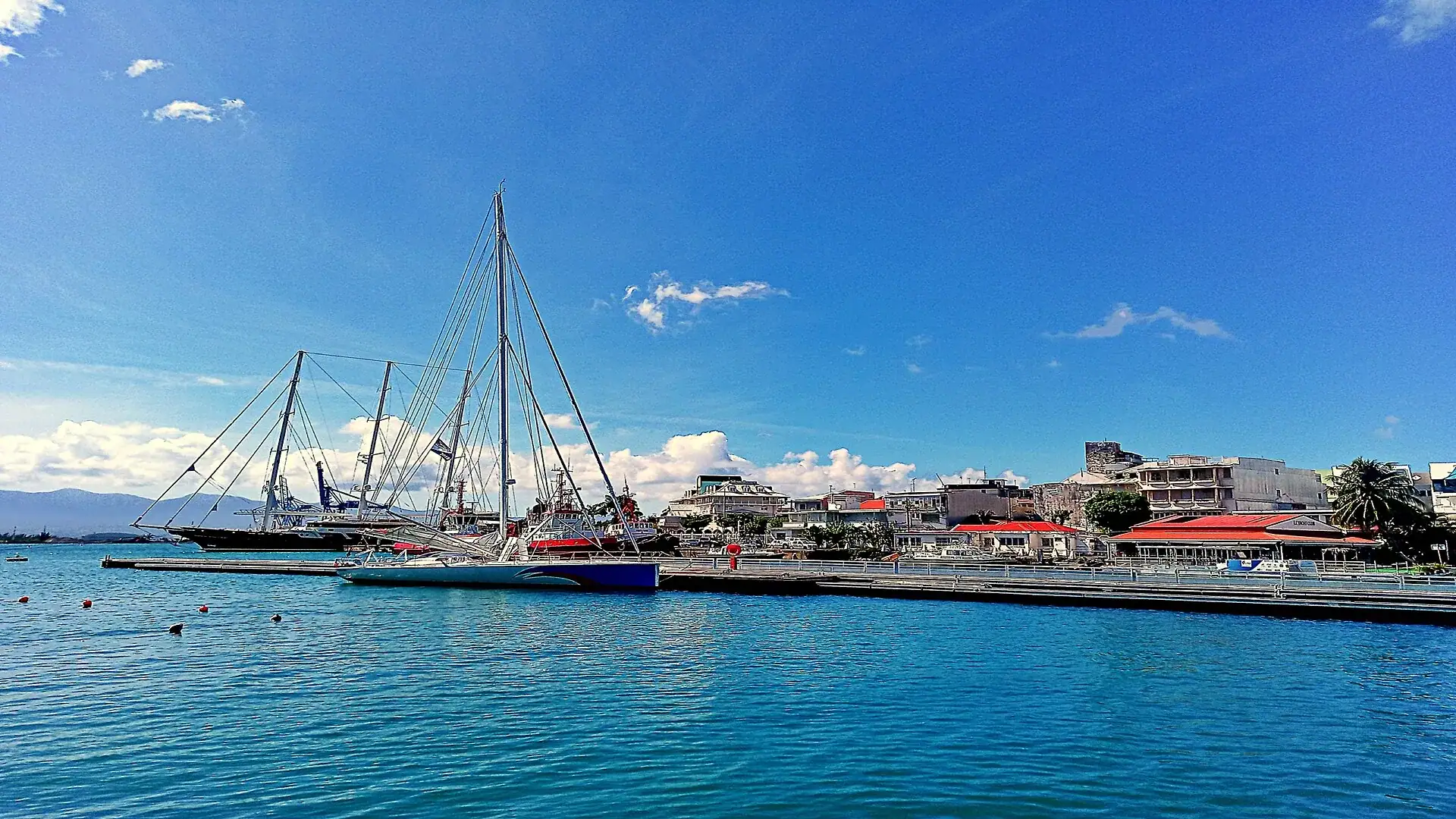 Photo: Filo gèn' / Wikimedia Commons (CC BY-SA 4.0)