Cost of Living in Jaisalmer
Where this figure comes from. No cost survey covers Jaisalmer, so the $750 a month above is our own estimate rather than a measurement. On 416 of our 999 city guides the figure is built from a published Numbeo basket, a one-bedroom rent in the centre plus one person's monthly costs without rent, converted to USD; this city is not one of them. How we source everything.
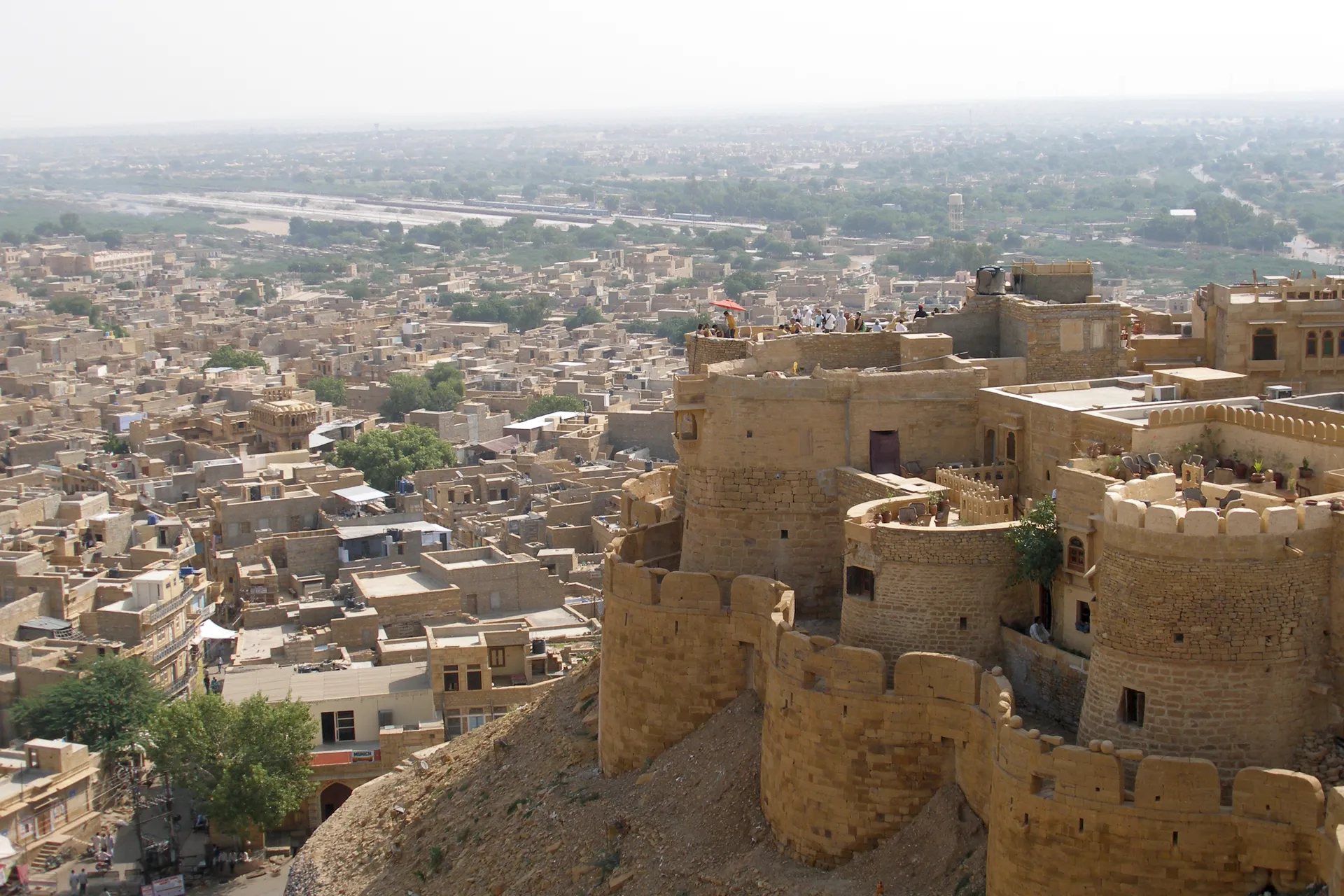
Jaisalmer is very cheap, a classic desert-town budget base in Rajasthan. A comfortable single-person budget runs roughly $650 to $1,000 a month. Atmospheric guesthouse rooms, many inside or just below the living Golden Fort in converted havelis, rent long-term for about $130 to $350, and Rajasthani thalis and street food cost a couple of dollars. These are our editorial estimates in US dollars. Beyond a room and food, the main costs are the odd camel or jeep safari into the dunes and travel in and out of this remote desert city. Where you sleep inside the walls is a live issue locally. Drainage from the hotels and homes built into the fort has been blamed for damage to its foundations, and conservationists have urged visitors to sleep below it and spend their days inside instead, which also happens to be cheaper. Safari prices vary more than anything else in town: a shared sunset camel ride is a few dollars, while a private tented night with dinner and music runs many times that, and the gap has more to do with the seller than the experience.
- Haveli or guesthouse room, long stay: roughly $130 to $350 a month
- Rajasthani thali: roughly $2 to $5
- Autorickshaw across the old city: roughly $1 to $2
- Overnight desert camel safari: a modest sum, negotiable
Where to Work in Jaisalmer
Jaisalmer is a remote desert heritage town, not a nomad hub, and its infrastructure reflects that. Fibre and 4G reach the city and are cheap, but speeds can be inconsistent and power cuts happen, so test any room's connection and keep a Jio or Airtel SIM as backup before relying on it for calls. Dedicated coworking does not exist; a scattering of rooftop cafes with fort or desert views serve as informal work spots. Given the remoteness and the extreme summer heat, Jaisalmer works best as a short, atmospheric stopover for lighter, flexible work rather than a base for constant video meetings. Sandstone walls a metre thick swallow a mobile signal, so a room deep inside the ramparts can be a dead zone while a terrace ten metres away is fine, and it is worth testing before you unpack. The wind carries fine desert dust into everything, which is hard on a laptop fan over weeks; a cover and a can of compressed air are cheap insurance. Demand on the grid peaks in the afternoon heat, so treat the morning as the reliable half of the day and keep anything that must not fail before noon.
Getting Around Jaisalmer
The heart of Jaisalmer is the living Golden Fort and the old town below it, a compact maze of golden sandstone lanes best explored on foot, though it is easy to get lost among the havelis and shops. Autorickshaws handle longer hops and are cheap once you agree a fare. The real journeys here are the camel and jeep safaris out to the Sam and Khuri sand dunes for sunset and overnight camps. Jaisalmer has a small airport with limited seasonal flights, and the overnight train and buses connect it to Jodhpur, Delhi and the wider network. Worth knowing before booking a safari: the nearer dune field is the busy one, with jeeps, dancers and a crowd at sunset, while the quieter alternative is further out and a good deal more like the silence people come for. West of town the desert becomes a military frontier zone, and the war memorials out that way are day trips with checkpoints rather than casual drives, so go with someone who knows the paperwork. Nothing here is close: plan on half a day of road for anything outside the town.
Sorting transport? Book an airport transfer, or compare car rental on Auto Europe and QEEQ.
Visas for Jaisalmer
Foreign visitors reach Jaisalmer on India's e-Tourist Visa, arranged online before arrival and issued in 30-day, one-year and five-year forms, with the longer versions allowing multiple entries that together may not exceed 180 days in a calendar year. A tourist visa does not permit local employment, though remote work for a foreign employer sits in the same grey area many long-stayers occupy. Keep copies of your visa. This is a border district, and that changes one thing: while the town and the dune circuit need no special paperwork, certain areas closer to the frontier are restricted, and visiting them means a permit obtained locally through the district authorities, usually arranged by a tour operator with a day's notice. Take your passport on any trip west rather than leaving it in the room safe, because checkpoints will ask. Nothing about this is onerous, but it is the one place in the state where turning up without documents can end a day out.
Best Time to Visit Jaisalmer
Jaisalmer sits deep in the Thar Desert, so its climate is defined by extreme heat, and the only comfortable time to visit is the cool, dry season from October to March. In these months, warm days and cool desert nights make exploring the fort and camping in the dunes a pleasure, and the vibrant Desert Festival in February is a highlight. Summer, from April to June, is brutal, regularly soaring past 45 Celsius, which makes daytime activity dangerous and the desert punishing. Avoid the summer months entirely; the desert winter is the reward. What nobody warns you about is how cold a desert night gets. In December and January the temperature can fall close to freezing after dark, and a dune camp without a proper sleeping bag is a long, miserable night, so pack a warm layer even though you are packing for Rajasthan. The monsoon barely reaches this far west, which means the rains that green the rest of the state hardly register here; late September is already dry and pleasant, and arriving then buys you the good weather before the season's prices and crowds arrive.
Pros and Cons of Jaisalmer
Jaisalmer offers a genuinely unique living-fort experience, with the trade-offs of an extreme, remote desert town. Remote is the word doing the heavy lifting. The closest place with a proper hospital is hours away by road, the airport runs a handful of flights and only in season, and if something goes wrong medically or professionally nothing can be fixed quickly from here. That is the real constraint, more than the heat or the internet, and it is why almost nobody treats this as a base rather than a stay. Set against it is an experience that has no substitute anywhere: several thousand people still live inside a twelfth-century fort, going about ordinary lives in lanes that were laid out for camels, and you can rent a room among them for the price of a coffee at home. Come knowing it is a chapter rather than an address, and it is one of the most memorable places in the country. Come expecting it to hold a career together, and it will not.
- Pros: one of the world's few still-inhabited forts, magical golden sandstone architecture, atmospheric havelis, unforgettable camel safaris and dune sunsets, extremely low costs, and a photogenic, storybook desert setting.
- Cons: extreme summer heat, a very remote location far from anywhere, weak internet and infrastructure, almost no nomad community, water scarcity, and limited nightlife. It is best for a short, immersive visit rather than a long work base.
Who Jaisalmer Is For
Jaisalmer is for the culture-and-adventure traveller who wants desert romance, living history and unforgettable scenery over comfort and connectivity. Anyone captivated by forts, camel safaris, sandstone havelis and dune camping will find it magical, and it makes an inspiring, inexpensive setting for a short creative retreat. It rewards travellers comfortable with India's intensity and a remote, basic environment. It is a poor fit for those who need fast, reliable internet, a nomad community, cool weather or any nightlife. Come in the desert winter, stay in a haveli near the fort, and let the Golden City and the Thar Desert work their spell. Think in days, not months. A week gets you the fort, a night in the dunes and a couple of the great havelis; two weeks is generous; beyond a month most people have run out of things the town can give them and are simply enduring the isolation. The people who get the most out of it are photographers, writers finishing something, and travellers stitching together a Rajasthan route who want one stop that feels nothing like the others. Pair it with a bigger city where the connection is real and the work can be caught up on.