Cost of Living in Plovdiv
Real market data
Source: Numbeo · August 2026
$1,060/moSolo nomad1-bed centre + living costs
$1,470/moCoupleshared 1-bed + costs
$900/moLean / localcheaper area + costs
- 1-bed rent, city centre$550€476
- 1-bed rent, outside centre$390€343
- Monthly costs excl. rent (1 person)$510€442
- Meal, inexpensive restaurant$10€9
- Monthly transit pass$29€26
- Buy price, per m² (centre)$2,330€2,020
Prices are from Numbeo (August 2026), converted to USD at $1 = €0.87 (01 Aug 2026). The monthly living-costs figure is our transparent one-person basket, groceries, a few meals out, utilities, phone, internet, transport and essentials, priced from those figures. Solo adds central rent; couple and lean are estimates from the same numbers. The guide below quotes its own monthly range, which is a different measurement rather than a competing one: this table prices a defined basket at the figures above, while that range is a judgement about how somebody actually lives here.
Plovdiv is one of the most affordable cities in the European Union, and the gap is real. A comfortable solo life costs between $885 and $1,590 per month depending on your habits.
- Rent, central 1-bedroom: $500-620/month. The Kapana, Old Town edges, and main pedestrian zone area.
- Rent, outer neighborhoods: $355-470/month. Areas like Trakiya or Kamenitsa, 10-20 minutes by bus from the center.
- Groceries: $145-205/month cooking at home with fresh markets and local shops.
- Eating out: A sit-down lunch at a local place runs $4.50-8. An evening meal for two at a mid-range restaurant in Kapana is $32-53.
- Coworking hot-desk: $24-32/day, or around $88-205/month on a monthly pass.
- Local transport: A single bus ticket is $0.50-1; a monthly pass is around $24-29. Most people in the center walk everywhere.
- Total range: Budget traveler working from cafes: around $885/month. Comfortable lifestyle with coworking, dining out a few times a week, and occasional day trips: $1,180-1,590/month.
Bulgaria now uses the euro. It joined the Schengen Area at the start of 2025 and the eurozone a year later, on 1 January 2026, with the lev converting at the long-standing peg of 1.95583 to the euro and ceasing to be legal tender that February. Old lev notes and coins can still be exchanged at the central bank without a deadline, so any cash left over from an earlier trip is not lost.
Where to Work
Plovdiv has a small but functional coworking scene. Gathr Cowork (ul. Emile De Laveleye 11) is the most polished option, with enterprise-grade fibre, a backup connection, hot desks, private offices, and 24/7 access on upgraded plans. It sits just off the main pedestrian street near Tsar Simeon Garden. Cat and Mouse Coworking (catandmouse.bg) in Kapana is more casual, sharing a building with the craft beer bar below; the vibe is creative and social. Raboteriya (raboteriya.com) offers a community-focused setup with quiet and loud zones, additional screens, and a 5-star Google rating.
Cafe work is genuinely viable here. Dwell Coffee near the center has reliable WiFi and outdoor courtyard seating. Snack! north of the river is popular with remote workers for its specialty coffee and relaxed atmosphere. Turtle Coffee is larger with indoor and outdoor tables and a good brunch menu.
WiFi quality across the city is strong. Bulgaria consistently ranks in the top 30 globally for broadband speed, and most cafes and all coworking spaces reflect this. The main frustration is not speed but the indoor smoking culture: some cafes still allow smoking inside, which makes working for hours uncomfortable if you are sensitive to it.
Getting Around
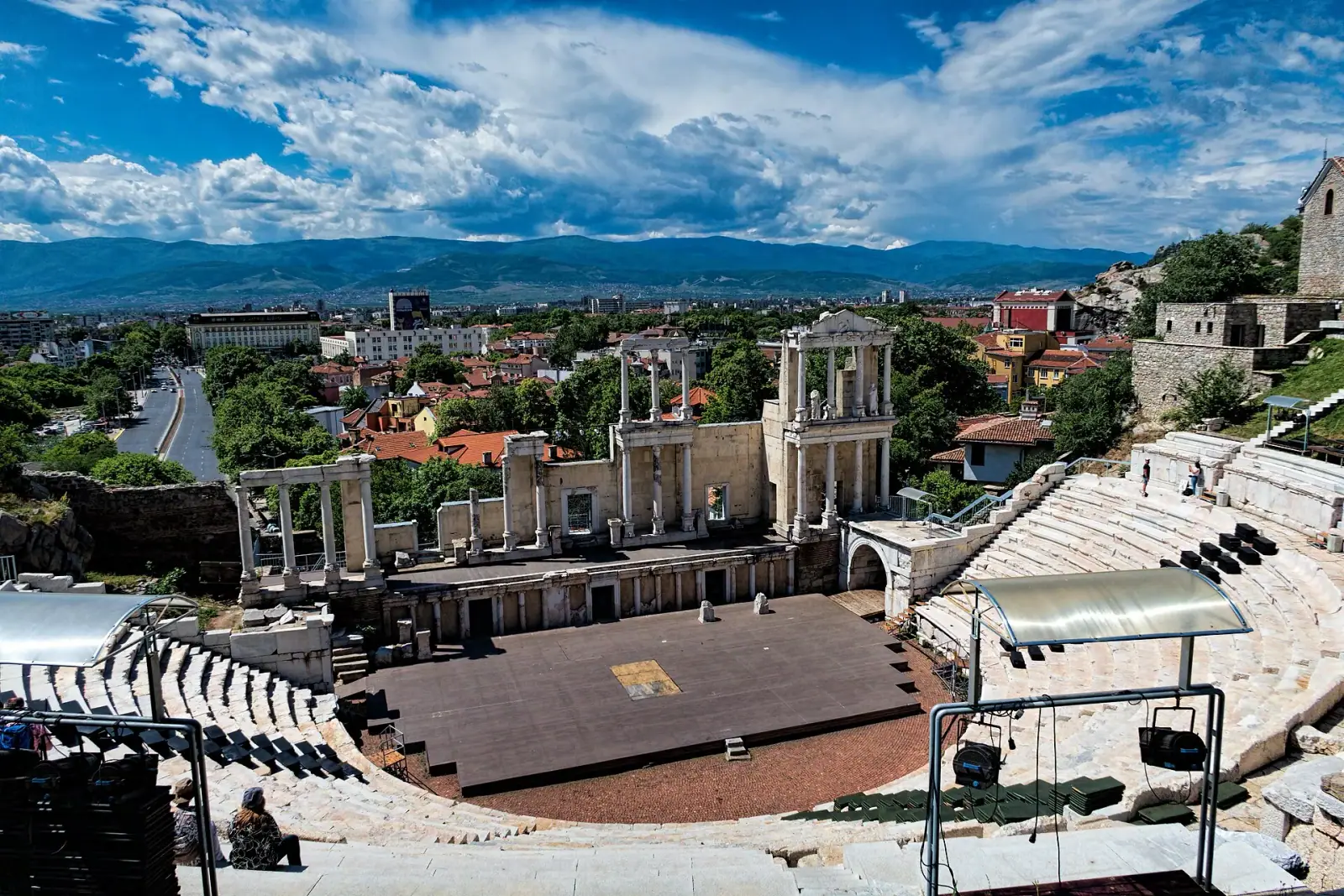
The city center is compact and highly walkable. The Roman Theatre, the Old Town, Kapana, and the main pedestrian strip along Knyaz Alexander I are all within a 15-20 minute walk of each other. You can realistically go car-free here without inconvenience.
For trips outside the center, Plovdiv runs a reliable bus and trolleybus network. A single ticket costs $0.50-1 and buses reach most residential areas. Taxis are cheap: a ride across town runs $3-9. The TaxiMe app works like Uber and is the most widely used ride-hailing option.
Plovdiv International Airport (PDV) sits 10 km from the city. It is a small airport handling mainly seasonal and charter flights; for regular international connections you will usually route through Sofia Airport (SOF), which is 2 hours away by bus or train. There is a once-daily shuttle bus from the city to PDV taking about 30 minutes, or a taxi costs $9-15.
Sorting transport? Book an airport transfer, or compare car rental on Auto Europe and QEEQ.
Visas and Staying Long-Term
Bulgaria joined the Schengen Area on January 1, 2025. Citizens of 59 visa-exempt countries, including the US, UK, Canada, Australia, and most EU nations, can stay up to 90 days within any 180-day period. This 90-day count is now shared across the entire Schengen zone, so time spent in Germany, France, or any other Schengen country comes off the same clock.
For longer stays, Bulgaria introduced a Digital Nomad Residence Permit. To qualify, you need to be a non-EU citizen working remotely for a company or clients outside Bulgaria, earn above the Bulgarian average salary threshold, and hold valid health insurance. The permit is issued for one year and can be renewed once, giving you up to two years. After that, a standard long-term residence permit is the next step if you want to remain.
Best Time to Visit
Spring (April to mid-June) is the sweet spot. Temperatures sit around 18-25C (65-77F), the Old Town and Kapana terraces are busy but not overrun, and the city hosts its outdoor festival season including the Plovdiv International Fair and various cultural events. This is also when the city looks its best, with flowering hillside parks and pleasant evenings outdoors.
Early autumn (September to October) is a close second: still warm, crowds thin out, and accommodation prices ease. If you prefer cooler conditions and are budget-conscious, this window often offers the best value.
Summer (July to August) brings real heat, regularly hitting 35-40C (95-113F). Working from a coworking space with air conditioning is fine, but extended periods without it become draining. Street life slows midday and the city can feel sluggish during peak heat.
Winter (December to February) is cold, occasionally foggy, and quiet. Plovdiv does not have a strong winter tourism draw. Air quality dips in winter due to heating and vehicle emissions, though it remains within acceptable ranges. A good time to be here if you want cheap rent and zero tourist crowds.
Pros and Cons
- Low cost of living compared to almost any Western European city
- Excellent internet across coworking spaces and most cafes
- Rich history and culture: Roman amphitheater, Old Town architecture, Kapana art district
- Very walkable center with a compact, human-scale layout
- Decent food scene with Bulgarian, Mediterranean, and international options
- Generally safe with low violent crime rates
- Bulgaria's Digital Nomad Permit offers a legal long-stay path
- Small nomad community: fewer networking events and coliving options than in Sofia or Lisbon
- Indoor smoking is common in cafes and bars, limiting comfortable workspace options
- Limited coworking supply: only a handful of real spaces; some are small or niche
- Airport connectivity is weak: most international flights route through Sofia
- Language barrier: English is spoken well by younger Bulgarians and hospitality staff but less so among older locals
- Summer heat can be severe and air conditioning is not universal
Who Plovdiv Is Best For
Plovdiv suits remote workers who prioritize cost efficiency and a culturally rich environment over a large nomad social scene. If you want to stretch a moderate income, explore a city with genuine history and character, and keep daily expenses predictably low, it delivers well. Freelancers and developers who can work independently without needing daily community events will find it easy to settle here for a month or a season.
It also works well as a base for exploring southern Bulgaria: the Rhodope Mountains, Bachkovo Monastery, and the wine region of Thrace are all within an hour by car or bus.
Skip Plovdiv if you need a large, established nomad hub with daily meetups, abundant coliving options, and heavy international flight connections. If your work depends on regular in-person networking or you want the energy of a bigger nomad ecosystem, Sofia (two hours away) or another European hub will serve you better.