Cost of Living in Ostend
Where this figure comes from. No cost survey covers Ostend, so the $1,550 a month above is our own estimate rather than a measurement. On 416 of our 999 city guides the figure is built from a published Numbeo basket, a one-bedroom rent in the centre plus one person's monthly costs without rent, converted to USD; this city is not one of them. How we source everything.
Budget around $1,550 a month, which is moderate for Belgium and cheaper than Brussels or Ghent. A one-bedroom runs roughly $700 to $1,100, with the seafront apartments at the top and the streets behind the station considerably cheaper. Groceries are ordinary Belgian prices. Eating out is where Ostend spends: the seafood, particularly the grey shrimp and the sole, is genuinely good and priced accordingly. Utilities are moderate. Belgium's tax and social contributions are among the highest in Europe, which matters for anyone employed here rather than remotely. Anyone comparing with the rest of the coast should note that Knokke to the northeast is considerably more expensive and De Panne to the southwest a little cheaper. Rent is indexed once a year to an official price measure rather than negotiated, so the increase is a calculation instead of a conversation, and for a badly insulated home that indexation is capped or blocked outright by the energy label on the building. The deposit goes into a blocked account that the tenant owns, and it is released only on both signatures or a judgment. The lease itself has to be registered by the landlord with the tax office, and an unregistered one leaves the tenant with more rights rather than fewer.
Where to Work in Ostend
Connectivity is good. Belgium has extensive fibre and cable, with comprehensive mobile coverage and reliable power, and Ostend is well served. There is a small coworking presence. The time zone is central European. The genuine practical advantage here is position: Ostend is an hour from Bruges and Ghent, ninety minutes from Brussels, and within reach of Lille, and the train network makes all of it straightforward without a car. Anyone working across Europe will find the connections better than the town's size suggests. Anyone registering with the commune should allow several weeks and bring more documents than the list requires, since Belgian administration is thorough rather than quick. Administration here runs in Dutch and only in Dutch, which surprises people who assume the country works in French as well, since the region sets the language of its own services and this one does not translate. The port has become the maintenance base for the offshore wind farms out in the North Sea, and the crew transfer vessels leaving at dawn are the visible end of a technical sector that barely existed fifteen years ago. That is where the engineering jobs are, and it is seasonal only in the sense that winter weather stops the boats.
Getting Around Ostend
The Kusttram, the coastal tram, runs the entire sixty seven kilometres of the Belgian coast from De Panne to Knokke and passes through Ostend, which makes it the longest tram line in the world and the practical way to move along the coast. The town itself is flat, compact and made for bicycles. Trains to Brussels take about ninety minutes and to Bruges fifteen. Ostend-Bruges Airport has limited service. The port handles ferries and freight, and the beach runs the length of the seafront. The passenger ferry to England stopped running in 2013, so a Channel crossing now means driving to Dunkirk or Calais, or taking the Eurostar out of Brussels, neither of which is the short hop the harbour still looks like it should offer.
Sorting transport? Book an airport transfer, or compare car rental on Auto Europe and QEEQ.
Visas for Ostend
Belgium is a member of the European Union and the Schengen area, so European Union and EEA citizens may live and work here without a permit, registering with the commune within days of arriving, which is a genuine requirement rather than a formality. Everyone else needs a Schengen visa for short stays or a residence permit for longer ones. There is no digital nomad visa. Belgian administration is famously layered, with federal, regional and communal responsibilities, and the commune is where most practical business is done. Anyone staying beyond three months should start the commune registration immediately on arrival, since the residence process runs from that date rather than from any later application. A neighbourhood officer calls at the address to confirm somebody actually lives there before the registration completes, and until that visit happens nothing else can move, so being out when they call sets the whole process back. The identity card issued afterwards carries a chip that signs tax returns and official forms, and it is genuinely used rather than ceremonial. Anybody moving between municipalities has to deregister and register again, because the record lives locally rather than nationally. Arriving from England, you meet the Entry/Exit System before you even leave, at the French booths in Dover for a Dunkirk ferry or at St Pancras for the Eurostar.
Best Time to Visit Ostend
June to September is the season, with July around twenty degrees and the beach and the tram both busy. Belgian coastal summers are unreliable and the sea is cold in every month, which locals accept and visitors find surprising. April, May and October are quiet and often pleasant. Winter from November to March is grey, wet and windy, with the seafront blasted by North Sea weather, though the town does not empty entirely the way smaller resorts do. The light in winter is what drew the painters here. The Theater Aan Zee festival at the end of July fills the town with performance for ten days and is the cultural high point of the year here. The coast runs on weekends as much as on seasons: the trains out of the interior fill on a Saturday morning in any month with sun, and the same town can be crowded on the Sunday and empty on the Tuesday. Beach huts go up in the spring and come down in the autumn, and those dates are a better guide to the local calendar than the weather is. Storms in the cold months shift enough sand that the town rebuilds its dunes with fences every year.
Pros and Cons of Ostend
Ostend is a seaside town with a real year-round population, excellent rail connections to the rest of Belgium and beyond, genuinely good food, and an artistic legacy more substantial than the beach suggests: James Ensor lived and worked here and his house is open, and the Mu.ZEE collection is worth an afternoon. The coastal tram is a genuine pleasure. The weather and the wind work against it, so does a certain postwar architectural bleakness along the front, and the prices are Belgian rather than cheap in any sense. Ostend was also Leopold II's favourite resort and much of the grand seafront architecture dates from that period, which the town's museums address rather than avoid.
Who Ostend Is For
A beach, fast trains and no need for a car, inside the European Union, which suits people working across several European time zones. It suits cyclists, since the coast and the Flemish interior are both flat and comprehensively provided for. It suits anyone who takes seafood or Belgian beer seriously. The North Sea does not do Mediterranean weather in any month. Anybody wanting a picturesque old town should note that Bruges is fifteen minutes away and this is emphatically not Bruges, and Belgian prices leave little room for a tight budget. James Ensor's house on the seafront is preserved as he left it, and his masks and skeletons are still among the strangest things anybody in Belgium has ever put on a canvas.
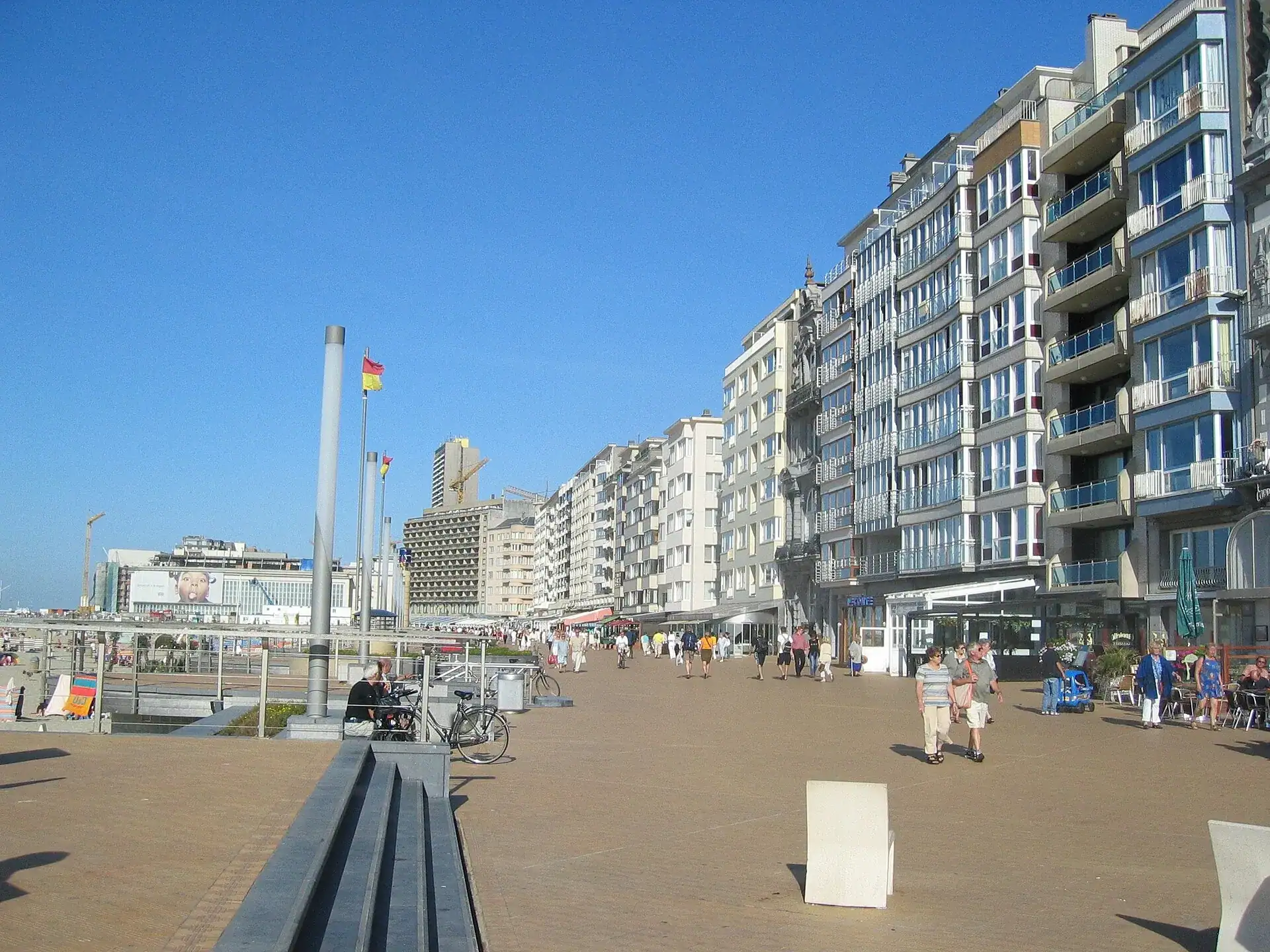 Photo: Gary Houston / Wikimedia Commons (CC0)