Cost of Living in Indore
Where this figure comes from. No cost survey covers Indore, so the $500 a month above is our own estimate rather than a measurement. On 416 of our 999 city guides the figure is built from a published Numbeo basket, a one-bedroom rent in the centre plus one person's monthly costs without rent, converted to USD; this city is not one of them. How we source everything.
Indore runs about $500 a month for one person. A furnished one-bedroom in Vijay Nagar or New Palasia is $120 to $220; older areas near the Rajwada are cheaper at $80 to $150. Street food is the city's defining pleasure and costs almost nothing: a plate of poha with jalebi for breakfast is well under a dollar, and an evening working through Sarafa Bazaar rarely passes $5. A restaurant dinner for two is $10 to $15. Coworking around Vijay Nagar and the AB Road corridor is $55 to $110 a month. Autos are $1 to $3. Home fibre costs $8 to $12 and utilities add $25 to $40. The cleanliness has an engine behind it rather than a campaign: the city separates waste at the door into six streams, sends none of the wet fraction to landfill, and runs a plant at Devguradia that turns food waste into compressed gas which fuels the municipal buses. Residents pay a small monthly collection charge for it, one of the few municipal fees a tenant here actually notices, and enforcement against dumping is real rather than nominal.
Where to Work in Indore
The coworking cluster is along AB Road and around Vijay Nagar, driven by Indore's IT services firms and the presence of both an IIT and an IIM in the city. A hot desk is $55 to $110 a month, private cabins two to three times that, and the spaces are aimed at local startups rather than visitors. Home fibre from Jio, Airtel or a local operator costs $8 to $15, which is the practical answer if you take a flat. Cafes around 56 Dukan and New Palasia are fine for a few hours but get loud in the evening. Power is reliable by regional standards and cuts are short. The local IT sector is largely services rather than product, working for clients in the United States and Europe, which means the professional rhythm already accommodates odd hours and a foreigner's timezone is unremarkable. The IIM's executive programmes bring a steady flow of mid-career people through the city, and its public events are among the few places a visitor can meet the local business layer without an introduction.
Getting Around Indore
Indore is spread out and an auto or a scooter is the default. Autorickshaws are cheap and Ola and Uber both operate; a cross-city trip is $2 to $4. The city bus network, iBus, runs on dedicated lanes along AB Road and is genuinely useful. A metro line has been under construction for years and partial services have begun on the eastern corridor. Scooter rental is $60 to $80 a month. The airport is 8km out with good domestic connections and some Gulf flights. Ujjain is 55km, Mandu about 90km and Maheshwar 90km on the Narmada, all comfortable day trips and all worth the drive. Ujjain, an hour north, was the prime meridian of Indian astronomy: classical Sanskrit texts measured longitude from a line through the city, and the eighteenth century observatory there is still used to compute the Hindu calendar. It is also one of the four Kumbh sites, which means that once every twelve years the road you are driving carries tens of millions of people rather than a few thousand. Mandu, in the other direction, is a ruined Afghan capital spread across a plateau and takes a whole day rather than an afternoon.
Sorting transport? Book an airport transfer, or compare car rental on Auto Europe and QEEQ.
Visas for Indore
India's e-visa covers most nationalities in 30-day, one-year and five-year forms, applied for online before you travel. The longer versions are multiple entry but cap the days spent in India at 180 per calendar year, so a one-year visa never means a year in the country. There is no digital nomad visa. Remote work for a foreign employer on a tourist visa is a grey area India has not addressed. Stays over 180 days require FRRO registration, and in-country extensions are hard for tourists, so most long stayers plan their dates around the yearly ceiling. Madhya Pradesh carries no protected area restrictions of the kind that complicate the northeast or the Andamans, so a standard e-visa covers everything reachable from here without a supplementary permit. The document worth carrying is a printed copy of the visa and the passport page, because hotels must file a form for every foreign guest and a phone screen at a reception desk at midnight is slower than a photocopy. Registration is done by the property rather than by you, but the property cannot do it without the paperwork.
Best Time to Visit Indore
October to March is the good stretch. Indore sits on the Malwa plateau at about 550m, which makes its winters noticeably cooler than the plains: December and January nights can drop under 10C with daytime highs in the mid 20s. April to June is hot, regularly past 40C, and dry. The southwest monsoon arrives in late June and runs to September, and Malwa gets a proper soaking that turns the surrounding countryside and the Vindhya escarpment green. September and October are the pleasant tail of it. If you are here for the food, the winter months are when the night markets are busiest and most comfortable to walk. The plateau's winter is why people from Delhi and Mumbai keep second homes here, and it is also when the air is worst: cool still nights trap crop-residue smoke and traffic exhaust across the Malwa, so December and January deliver the best temperatures and the poorest air of the year together. That trade-off decides the month for anyone sensitive to it. The monsoon brings the cleanest air and the most difficult roads, which is the opposite bargain.
Pros and Cons of Indore
Indore is famous for one thing above all others: it has topped India's national cleanliness survey every year since 2017, and the difference shows on the street. The street food is arguably the best in the country, the plateau keeps winters mild, there are two national institutes bringing a young professional population, coworking is real, fibre is cheap and fast, and Mandu, Ujjain and Maheshwar are all within a couple of hours. April to June is genuinely hot here, the air is mediocre and worse again in winter, there is no foreign nomad community at all, alcohol is available but nightlife is thin, and the city is sprawling rather than walkable. Mhow, twenty five kilometres southwest, is where Ambedkar was born, which puts the man who chaired the drafting committee of the Indian constitution on this city's doorstep, and the memorial there is a pilgrimage for Dalit visitors from every state. Indore also runs on a Maratha inheritance rather than a Mughal one: the Holkars ruled from here, and Ahilyabai Holkar, who governed from Maheshwar down the road, is remembered nationally for rebuilding temples in cities she never controlled.
Who Indore Is For
A comfortable, well-run Indian city to work from cheaply, for anyone who will take good infrastructure and outstanding food over an international scene. It is one of the easier large Indian cities to live in day to day, which is a real consideration if this is a three-month stay rather than a week. It is a strong base for central India: the Malwa forts, the Narmada temple towns and the Ujjain Kumbh cycle are all reachable. Other remote workers are effectively absent, the historic core is small against a very spread-out city, and neither a beach nor a nightlife is available anywhere in Madhya Pradesh. Nor is it a summer destination under any circumstances. It suits somebody with a tolerance for heat and a serious interest in food, because Sarafa after dark is not a night market in the tourist sense but a jewellery bazaar that converts, and eating through it properly takes several evenings and a local to explain what is in front of you. It suits a student of Indian politics, given Mhow. Anybody whose plan involves other foreigners should understand there are essentially none here, which is either the point or the problem depending on why you came.
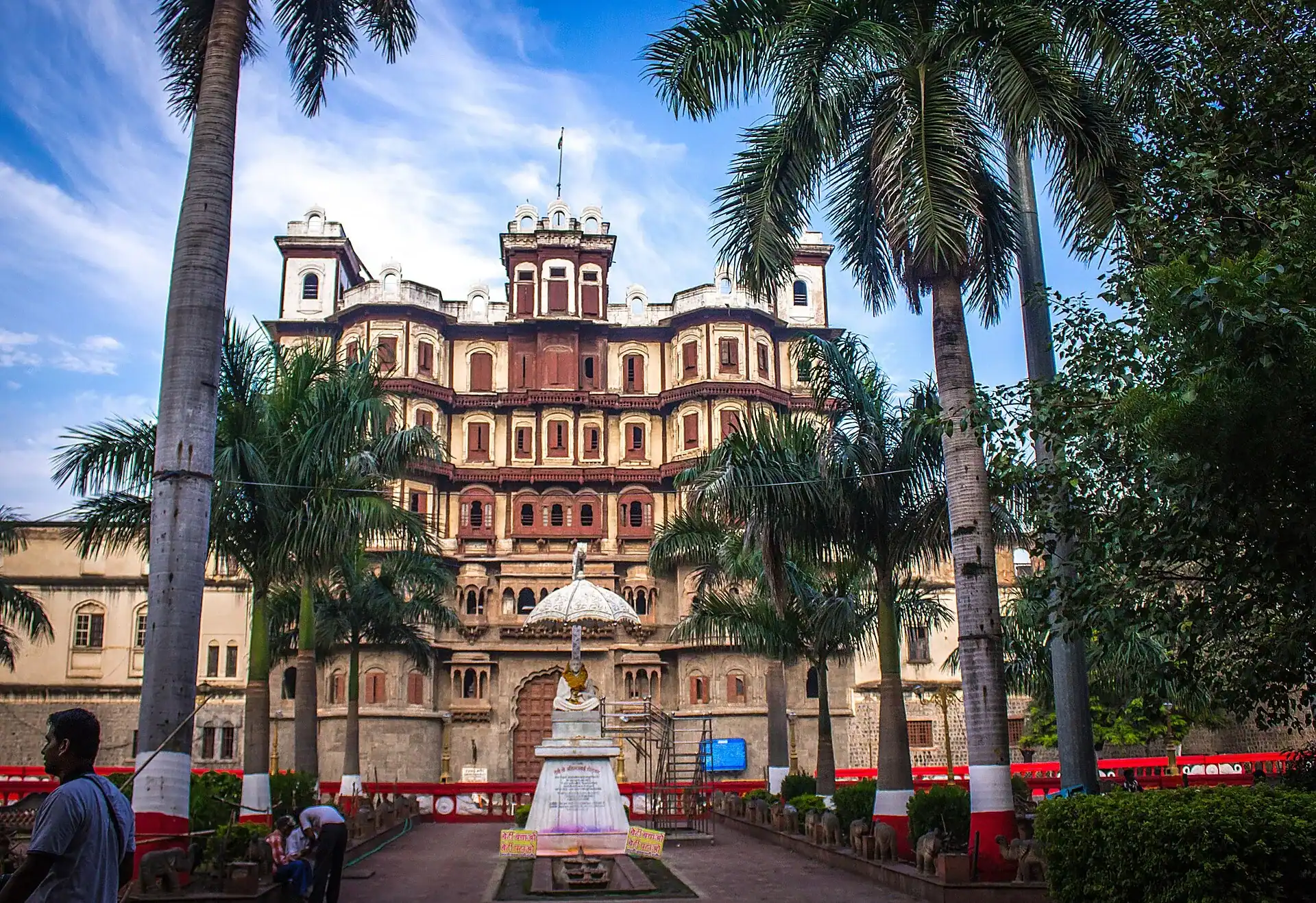 Photo: DeepakNigam / Wikimedia Commons (CC BY-SA 4.0)