Cost of Living in Montego Bay
Where this figure comes from. No cost survey covers Montego Bay, so the $1,300 a month above is our own estimate rather than a measurement. On 416 of our 999 city guides the figure is built from a published Numbeo basket, a one-bedroom rent in the centre plus one person's monthly costs without rent, converted to USD; this city is not one of them. How we source everything.
A single nomad running at roughly $1300 per month in Montego Bay is living carefully, because the resort corridor and the local town operate on two different price lists. A furnished monthly rental in a central or Ironshore apartment complex runs about $500 to $800, with Airbnb units on the Hip Strip or in Rose Hall asking $1000 and up for the same square footage. Groceries and mostly local eating come to $250 to $400; a patty and box lunch from a local cookshop is $3 to $6, while a Gloucester Avenue restaurant plate is $20 to $35. Digicel or Flow prepaid data sits at $15 to $30. Coworking, where available, is $80 to $150 monthly. Utilities with air conditioning are punishing at $80 to $180, since JPS electricity is among the costliest in the region. Local transport is $30 to $60. Verdict: liveable, but poor value against Latin America.
Where to Work in Montego Bay
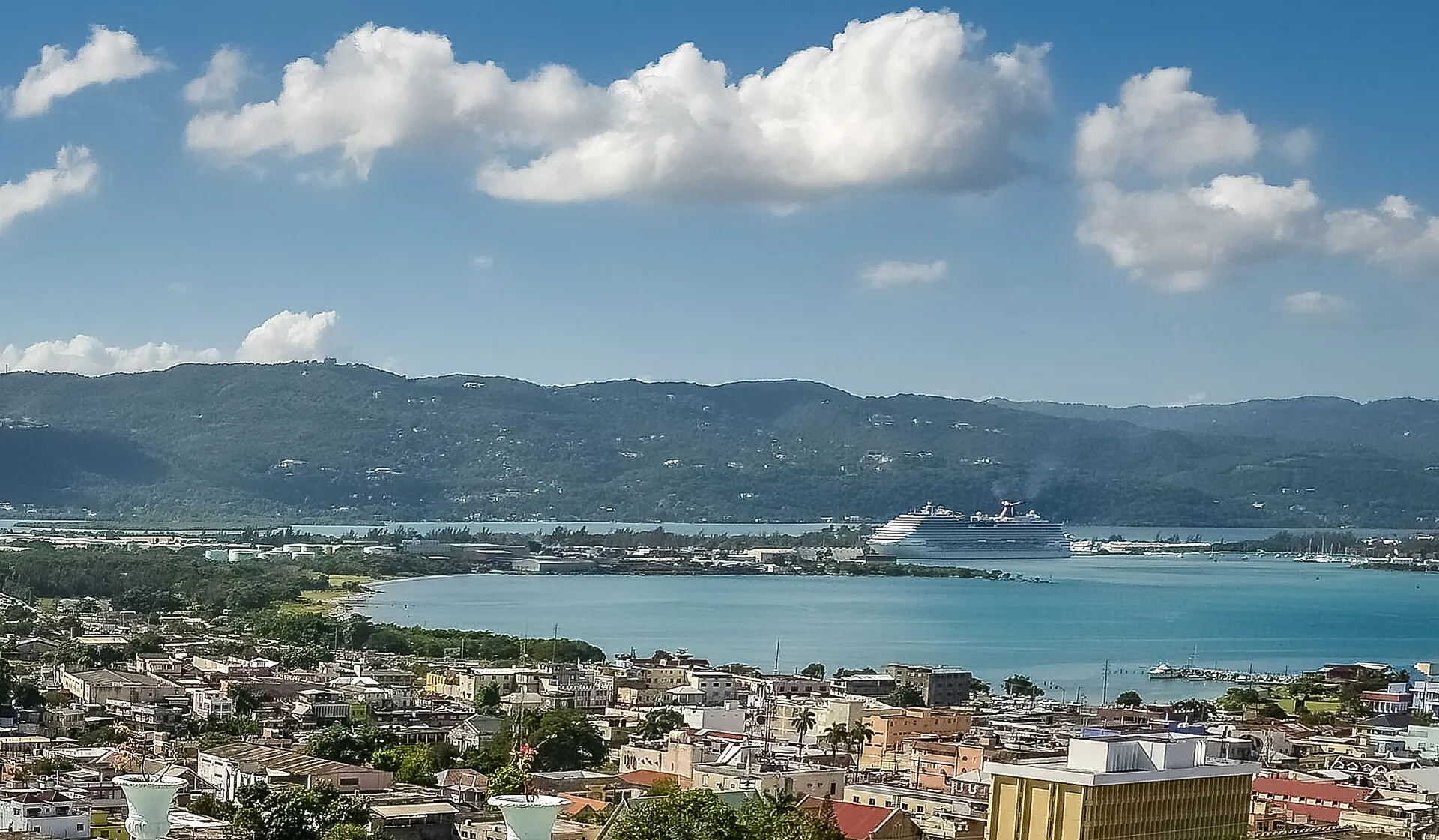
Basing decisions matter more here than venue lists. Gloucester Avenue, the Hip Strip, puts cafes, beaches and nightlife within a walkable kilometre but charges tourist rates and attracts persistent vendors. Ironshore and Rose Hall to the east are quieter residential and resort zones with better apartment stock and reliable utilities, though a car or taxi becomes necessary. Freeport, on the peninsula, is calm, gated and popular with longer stays. Inland Montego Bay proper around Fairview and Bogue is where locals live and prices normalise. Dedicated coworking is thin: a handful of small operators and the Fairview shopping centre area cover the demand, so hotel lobbies, resort business centres and cafes carry most of the load. Flow and Digicel deliver fibre and LTE in serviced buildings. Power cuts are routine, generators and a backup SIM are standard, and hurricane season outages can last days. The largest white-collar employer here is not tourism but the outsourcing industry: call centres in the free zone north of the airport employ thousands on shifts timed to the American day, which is why the roads are busy at hours that make no sense for a resort town.
Getting Around Montego Bay
Route taxis are the backbone: shared white-plate cars running fixed corridors, flagged from the roadside, with fares around $1 to $2 per hop paid on exit. Etiquette is to state the destination before getting in, expect three passengers across the back seat and carry small notes. Buses cover longer local routes cheaply, and Knutsford Express coaches connect Montego Bay to Ocho Rios, Negril and Kingston in air conditioned comfort for roughly $12 to $30 one way, booked online. Uber operates thinly and unreliably; InDrive has better local traction, and charter taxis with red PP plates are the tourist default at $10 to $25 across town. Sangster International sits minutes from the Hip Strip, which is walkable end to end. A rental car helps for exploring the north coast, though driving is on the left, roads are potholed and night driving is best avoided. There is no fast route across the middle of the island, so the capital is reached the long way round the coast rather than straight over the mountains, which is why a three-hour journey on a map becomes four in practice. Parts of the north coast road are tolled.
Sorting transport? Book an airport transfer, or compare car rental on Auto Europe and QEEQ.
Visas for Montego Bay
Jamaica admits citizens of the United States, Canada, the United Kingdom, the European Union, Australia and New Zealand visa free as visitors. Crucially, the length of stay is written by the immigration officer at the border rather than fixed by rule: grants commonly reach up to 90 days, but shorter stamps of 30 days or matched to a stated onward flight date are routine. Proof of onward or return travel and a confirmed accommodation address are asked for regularly and should be ready. Extensions are handled by the Passport, Immigration and Citizenship Agency, PICA, in person for a fee, and are discretionary rather than automatic. Jamaica has no digital nomad visa. Remote work for a foreign employer while on a visitor stamp is widely tolerated and not policed, but it is not formally authorised, so avoid discussing work at immigration. Working for a Jamaican employer requires a sponsored work permit.
Best Time to Visit Montego Bay
December through April is the dry high season and the reason most visitors come: daytime highs around 29 to 31C, low humidity by Caribbean standards, cool evenings and reliably calm sea. It is also the priciest window, with accommodation and flights peaking from mid December to early April. May brings the first rainfall spike as the wet pattern establishes. June through November is the Atlantic hurricane season, with genuine risk concentrated from August to October when storms, flooding and multi day power outages are realistic. October is the second and heavier rain peak. July and August are hot, humid and sticky but busy, carrying Reggae Sumfest in July, the anchor event of the local music calendar. Carnival falls in the spring around April, and the Christmas and New Year stretch is festive, crowded and expensive. This coast faces north, which spares it the weed that fouls the eastern beaches in some years but leaves it open to winter swells rolling down from storms far out in the ocean. The sea can be flat for a fortnight and then unswimmable for three days.
Pros and Cons of Montego Bay
The strengths are real: English is the working language with no adjustment period, direct flights from North America and Europe land at Sangster minutes from town, the beaches and north coast scenery are genuinely world class, and the music and food culture is lived rather than staged, with a warmth and humour that many nomads find hard to leave. The list on the other side is a difficult one. Jamaica has a persistently high national violent crime rate and area selection matters enormously, with some parishes and inner city zones effectively off limits. The resort strip runs a two tier pricing system and constant hustling of tourists wears thin. Dedicated coworking infrastructure is thin and unreliable, power cuts are routine, and hurricane season can shut down connectivity for days. Electricity and imported goods are costly, and the overall bill runs well above comparable Latin American bases.
Who Montego Bay Is For
Caribbean beach living with no language friction and short flights home is the offer, and it needs a budget with some room in it rather than one squeezed to the last dollar. Work that runs asynchronously and forgives the occasional outage is the practical condition. Repeat visitors who already know which streets and which complexes they trust have a far easier time of it than first arrivals, and the serious draw is Jamaican music and food rather than anything a resort brochure puts on its cover. It also fits short winter stays of one to three months, which sidesteps both hurricane season and the visa ambiguity. Skip it if cost per dollar is the deciding factor, since Colombia, Mexico and Brazil deliver more for less. Skip it too if a reliable coworking community, guaranteed uptime, casual late night walkability or a formal long stay visa pathway is non negotiable.