Cost of Living in Philipsburg
Where this figure comes from. No cost survey covers Philipsburg, so the $2,200 a month above is our own estimate rather than a measurement. On 416 of our 999 city guides the figure is built from a published Numbeo basket, a one-bedroom rent in the centre plus one person's monthly costs without rent, converted to USD; this city is not one of them. How we source everything.
Budget around $2,200 a month as a solo remote worker in Philipsburg, which is expensive and reflects an island of forty thousand people that receives well over a million visitors a year. A one-bedroom place runs roughly $900 to $1,500. Groceries are imported and the markup is heavy, though the French side of the island has cheaper supermarkets and many residents shop there deliberately, which is a genuinely useful trick. The Netherlands Antillean guilder is pegged to the dollar and dollars circulate everywhere. This is our own estimate rather than a reconciliation against measured data. Power comes from imported diesel and the tariff shows it, ranking among the steepest anywhere in the region, so air conditioning decides a monthly bill more than the rent does. Rentals on the Dutch side are usually quoted in dollars and on the French side in euros, and the rate between them moves the real cost of a lease without anyone renegotiating anything. Prices in the town itself rise on heavy cruise days, which is precisely why residents do their shopping when the harbour is empty.
Where to Work in Philipsburg
Sint Maarten's connectivity is reasonable: fibre reaches the developed parts of the Dutch side at workable speeds and mobile data covers the whole island, though a French SIM and a Dutch SIM behave differently on the two halves and roaming charges can appear without warning. There is a small amount of coworking. Power cuts happen. Dutch is official on the southern half and French on the northern, but English is the working language of almost everything commercial on both sides, which is what makes this island unusually easy to operate in. Storm season is the real infrastructure question rather than the daily service: a bad storm removes power and connectivity for weeks rather than days, as 2017 showed, and anyone whose income cannot pause needs a plan for that rather than an assumption. A generator is common in the better rentals and worth asking about by name. The working rhythm otherwise follows the American east coast, which suits anyone billing in dollars and leaves only the European afternoon as a usable overlap the other way.
Getting Around Philipsburg
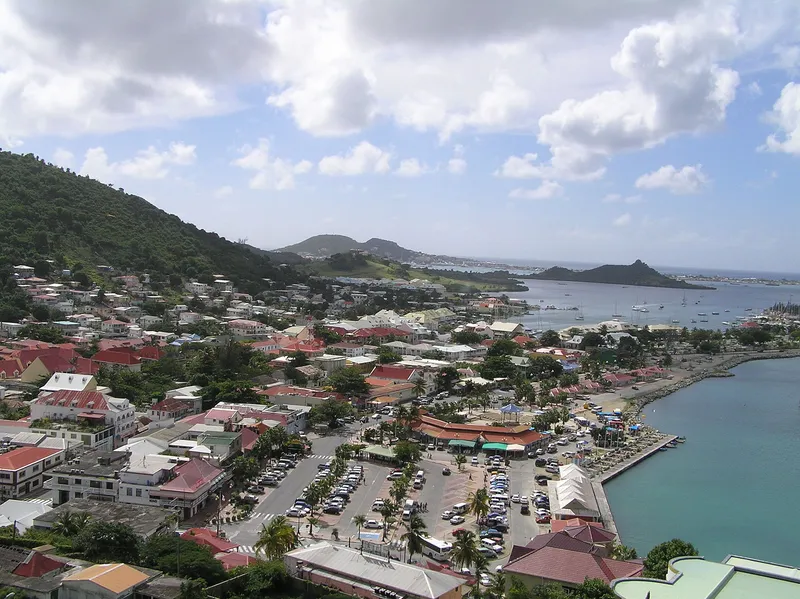
Philipsburg is a narrow strip between Great Bay and the Great Salt Pond, and Front Street runs its length in twenty minutes on foot. Beyond that a car is needed, and the island is small enough to drive across in forty minutes. Minibuses cover the main routes cheaply. The border between the Dutch and French sides is marked by a monument and nothing else: there are no checks, no barrier and no formality, and most people cross several times a week without noticing. Princess Juliana airport sits at the western end of the island and its approach over Maho Beach, where aircraft pass a few metres above sunbathers, is the island's best-known image. Traffic on an island this small is worse than it has any right to be, since a single road ring carries everything and the causeway across Simpson Bay Lagoon is the only relief. Car hire is cheap and competitive, which is how most visitors get about. Ferries run from here to Anguilla, Saba, Statia and Saint Barthelemy, and the island works as the hub for all four, which is a large part of why the airport matters as much as it does.
Sorting transport? Book an airport transfer, or compare car rental on Auto Europe and QEEQ.
Visas for Philipsburg
This is where the island gets complicated. Sint Maarten, the Dutch side, is a constituent country of the Kingdom of the Netherlands and grants most Western nationalities up to ninety days on arrival. Saint-Martin, the French side, is a French overseas collectivity outside the Schengen area, and European Union citizens have freedom of movement there. Because the border is unmarked, which side you are legally staying on is a question of where you sleep rather than where you walk, and the two sets of rules run in parallel. Anyone staying long term should establish clearly which side their lease is on, since that determines which set of immigration rules they are actually living under. Working on either side needs a permit, and both administrations protect local employment, so a visitor entry is for visiting. Dutch nationals have no automatic right to live and work on the Dutch side either, since Sint Maarten sets its own admission rules as a constituent country, which surprises people who assume a Netherlands passport settles the question. Extensions on the Dutch side are applied for locally and are not guaranteed, so a long stay is better built around leaving and returning.
Best Time to Visit Philipsburg
December to April is the dry season, with daytime temperatures around twenty-eight, low humidity and the highest prices, since this is when North America and the cruise ships arrive. May to November is hotter and wetter and the Atlantic hurricane season runs through it. Sint Maarten's exposure is not theoretical: Hurricane Irma passed directly over the island in September 2017 as a category five, destroying most of the buildings and the airport terminal, and the recovery took years. Anyone visiting in the low season should check what is open before booking, since a substantial share of the restaurants close in September and October. The cruise calendar governs the town's mood as much as the weather does. On a four-ship morning Front Street is impassable and by mid-afternoon it is empty again, and the schedule is published if you want to plan around it. The Heineken Regatta in early March fills the island and is the largest sailing event in the Caribbean. May and early December give dry-season conditions without peak prices, and sargassum affects the windward east coast in some years while the western beaches stay largely clear.
Pros and Cons of Philipsburg
Sint Maarten is the smallest landmass in the world divided between two sovereign states, and the difference between the Dutch and French halves is real: different food, different prices, different administration, and no border to speak of between them. The airport is one of the best-connected in the Eastern Caribbean and the eating, particularly on the French side at Grand Case, is the best in the region. The place is expensive, heavily built for cruise tourism, and severely exposed to hurricanes when they come. The two sides also have different price levels on almost everything, so a household that shops deliberately across the border spends noticeably less than one that does not. Medical care is limited on both sides, with a new hospital built on the Dutch side after the storm and anything complex still meaning Guadeloupe, Puerto Rico or Miami. Petty crime is a genuine consideration around the busier tourist areas, and residents are matter-of-fact about which streets to avoid after dark. The rebuild since 2017 has been uneven, and there are still visible shells standing alongside finished hotels, which tells you something about how insurance and ownership worked out here.
Who Philipsburg Is For
Two countries on one island, exceptional food, and the densest flight connections in the eastern Caribbean, for anyone who can absorb the prices. Anyone who cooks will find the French supermarkets genuinely change the budget. It works for ninety days rather than a year, since neither side offers a remote work visa. Quiet is not what a busy commercial island offers, and the cruise crowds are the specific problem: several thousand people come ashore on most winter mornings and the town is built around receiving them. Sailing is what this island is actually for. Simpson Bay Lagoon is among the largest enclosed anchorages in the Caribbean, and the bridge into it opens twice a day to a queue of masts. Against its neighbours this island is the practical one. Anguilla is quieter and far better set up for a year-long stay, Saint Barthelemy is more polished and considerably dearer, and both of them lean on the flights and the supermarkets here. Curacao, further west, is the Dutch Caribbean alternative, with a longer-stay visa and no hurricanes to speak of. Families manage well enough, though the schooling splits along the language line as everything else does.
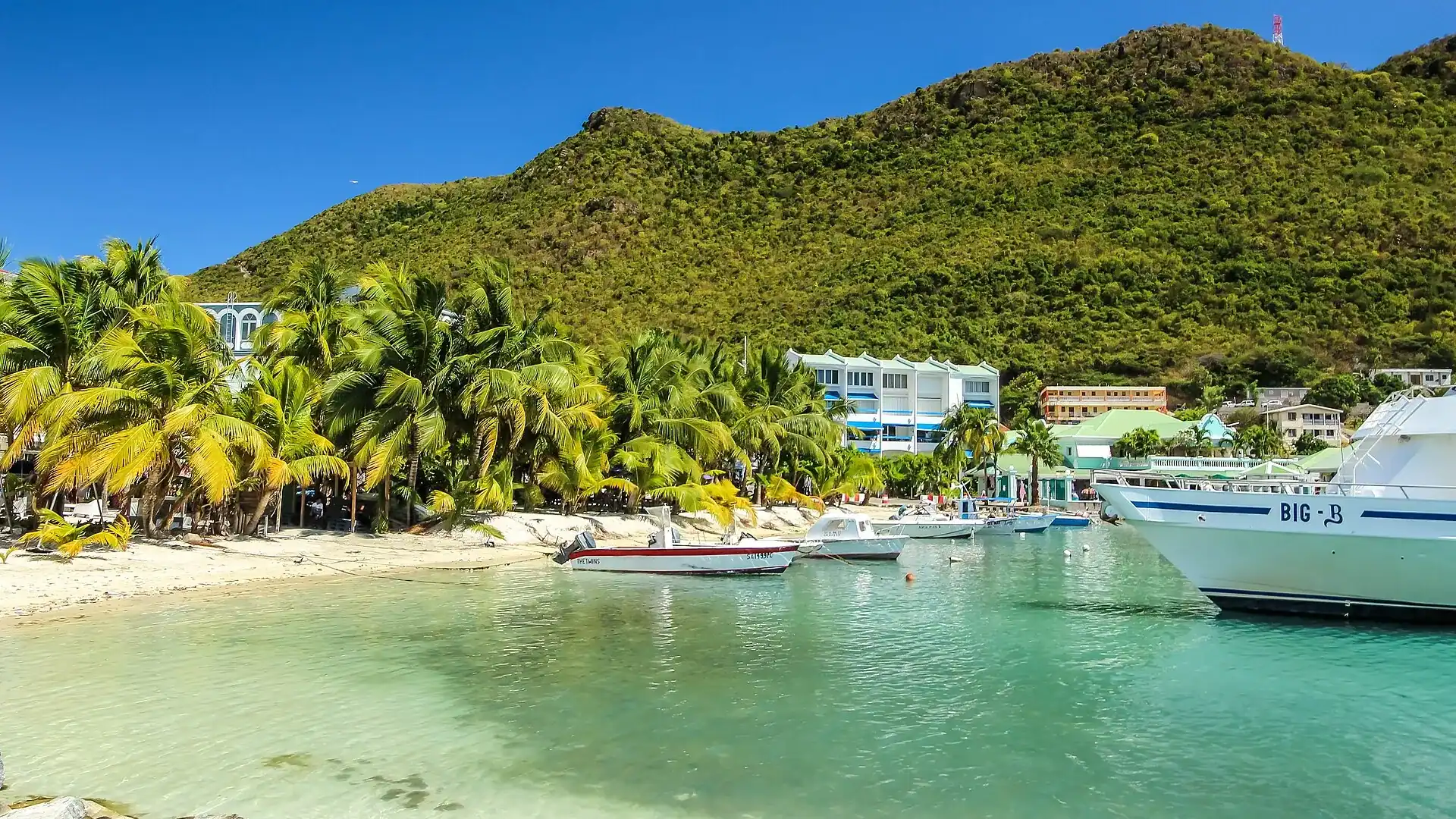 Photo: Dr. Thomas Liptak / Wikimedia Commons (CC BY-SA 4.0)