Cost of Living in Castries
Where this figure comes from. No cost survey covers Castries, so the $1,800 a month above is our own estimate rather than a measurement. On 416 of our 999 city guides the figure is built from a published Numbeo basket, a one-bedroom rent in the centre plus one person's monthly costs without rent, converted to USD; this city is not one of them. How we source everything.
Budget around $1,800 a month as a solo remote worker in Castries, which reflects an island where tourism sets prices along the west coast. A one-bedroom place runs roughly $700 to $1,200, with Rodney Bay and Gros Islet in the north at the top of that and the areas around Castries itself cheaper. Saint Lucia grows bananas, cocoa and a good deal of its own produce, and the Castries market is where the price difference shows. Imported goods carry the usual markup. The East Caribbean dollar is pegged at 2.7 to the United States dollar. This is our own estimate rather than measured data. A minibus ride anywhere on the island is under $3 and a rental car about $45 a day, which is the single biggest variable in an island budget.
Where to Work in Castries
Connectivity in Saint Lucia is workable rather than strong: fibre reaches Castries, Rodney Bay and the developed western coast at reasonable speeds, and mobile data from Flow and Digicel covers the populated areas. Coworking exists in a small way around Rodney Bay, which is where most of the island's remote workers and long-stay visitors end up rather than in Castries itself. Power cuts happen. The island runs four hours behind central European time, which makes a European afternoon a Saint Lucian morning and gives a reasonable overlap in both directions. Fibre packages run roughly $60 to $100 a month, high for the speeds delivered, so a mobile data bundle as a backup is standard rather than cautious. Bananas were the island's living until the preferential access it held into Europe was struck down in trade disputes, and the collapse of that trade in the nineteen nineties is why tourism now carries everything and why the interior holds so many abandoned plots. Understanding it explains a great deal about how the island talks about visitors. There is a small offshore financial sector, and beyond that almost every formal job is attached in some way to the hotels.
Getting Around Castries
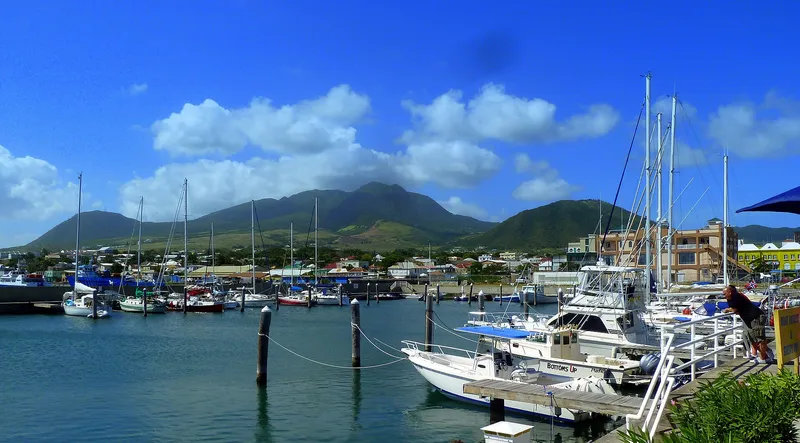
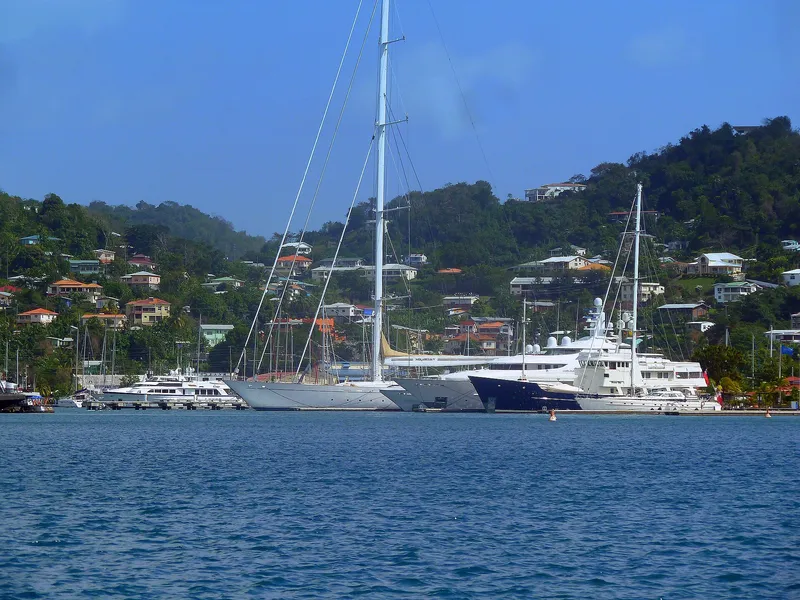
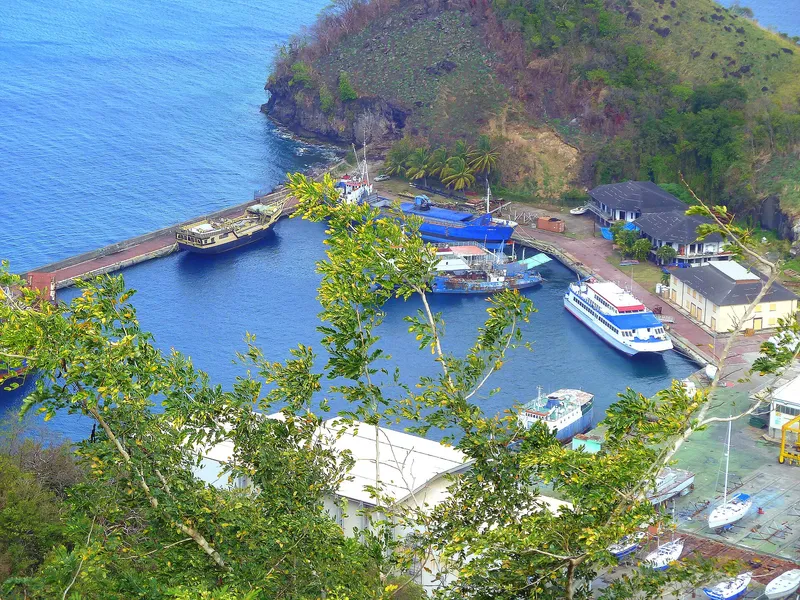
Castries sits around a deep harbour that takes cruise ships, and the central grid is walkable though busy and hot. Minibuses cover the island cheaply and frequently, running north to Rodney Bay and south along the coast to Soufriere, and they are the practical way to move. Driving is on the left and the west coast road to Soufriere is spectacular and slow, with hairpins the whole way. Hewanorra, the international airport, is at the far southern end of the island, an hour and a half from Castries, which is a longer transfer than most visitors expect. Minibuses stop in the early evening and after that a taxi is the only option, charged against a published tariff rather than a meter, so agree the fare first. A second airport sits right beside the capital and takes regional turboprops, so a connection through a neighbouring island can land you fifteen minutes from town rather than ninety, and it is worth pricing that routing against the direct long-haul flight. Water taxis run along the west coast and are the pleasant way to reach the bays under the peaks. The road across the interior is shorter on a map and slower in practice than going round the coast.
Sorting transport? Book an airport transfer, or compare car rental on Auto Europe and QEEQ.
Visas for Castries
Saint Lucia has no dedicated remote work visa, though it ran a Live It scheme during the pandemic that has not been maintained as a formal category. Most Western nationalities enter visa-free for up to six weeks, with extensions available through the immigration department, and British and Commonwealth citizens often receive longer on arrival. Anyone planning a longer stay should ask for the maximum at the border and then extend locally, which is routine. Saint Lucia also operates a citizenship by investment programme, which is a separate decision and unrelated to remote work. Saint Lucia is part of the OECS, whose citizens move and work freely between member states, though that does not extend to visitors from outside the bloc. Arriving by sea means clearing in at a designated port rather than wherever is convenient, and a yacht that anchors first and reports afterwards can expect a fine. Skilled nationals of the wider regional community may work here on a certificate instead of a permit, a distinction that matters to anybody holding one of those passports. Everybody else needs an employer to sponsor a permit, and the fee is set high enough to discourage casual applications.
Best Time to Visit Castries
December to May is the dry season, with daytime temperatures around twenty-nine, lower humidity and calm seas, and it is when prices are highest. June to November is the wet season and the hurricane season; Saint Lucia sits within the belt and has taken direct hits, most recently Tropical Storm Bret and its neighbours in recent years. Saint Lucia Jazz in May and Carnival in July are the two events worth planning around. September and October are the wettest, quietest and cheapest, and also the months when many hotels close for maintenance. Anyone booking into the June to November window should check whether their travel cover excludes named storms once one is forecast, which many policies do. Sargassum weed washes onto the Atlantic-facing side of the island through the warm months in some years and not others, and where it lands it smells and the beach clearing cannot keep up, which is why the sheltered western bays are where everybody swims. The trade winds strengthen around the turn of the year and sailors call them the Christmas winds, which is what makes the crossing season and the regattas fall when they do.
Pros and Cons of Castries
Saint Lucia has the Pitons, two volcanic plugs rising straight out of the sea at Soufriere that are a UNESCO World Heritage site and genuinely unlike anything else in the Caribbean, a drive-in volcano with sulphur springs, rainforest walks and a serious sailing culture around Rodney Bay. No remote work visa exists here either, and the airport sits a long way from the capital, Castries itself is a working port town rather than a place people choose to live, and the crime rate is higher than several of its neighbours, with the usual advice about specific areas. The centre empties and fills with the cruise schedule, so the character of Castries changes from one morning to the next depending on what is in the harbour.
Who Castries Is For
Dramatic landscape within a short drive, on the understanding that you will base yourself in Rodney Bay or Soufriere rather than the capital. Sailors get a great deal from Saint Lucia, which sits on the main Windward Islands route and hosts the finish of the Atlantic Rally for Cruisers each December. There is no long-stay visa to apply for, which settles the question for anybody planning more than a season. Arrivals should also plan the transfer from Hewanorra in advance, because discovering that drive at the end of a long flight is nobody's preferred introduction. The Pitons are the reason to come and they are ninety minutes from the capital. It suits a stay of weeks rather than months, given that the visa-free default is six weeks and extending means dealing with the immigration department in person.
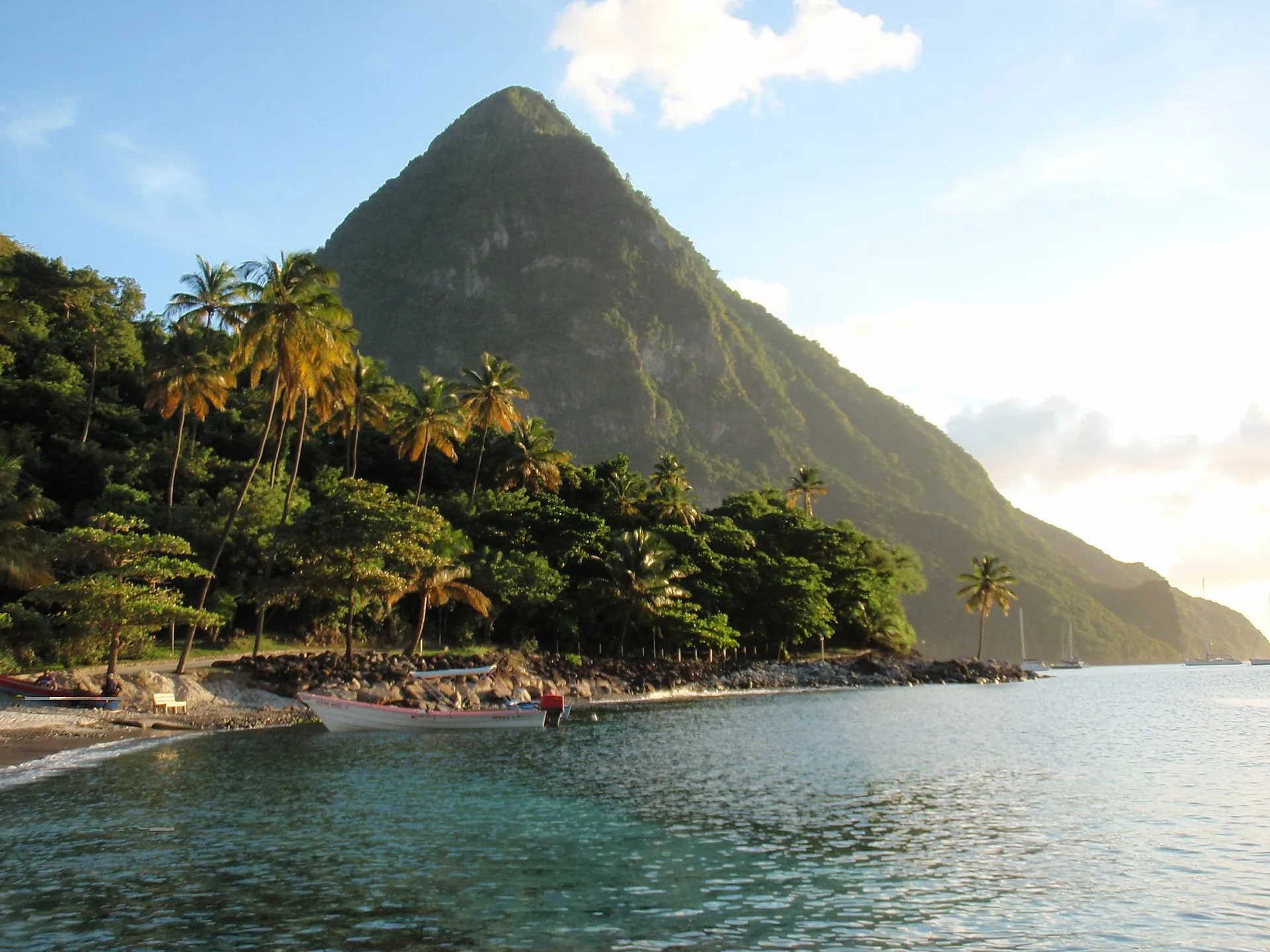 Photo: XeresNelro / Wikimedia Commons (CC BY-SA 4.0)