Cost of Living in Antalya
Real market data
Source: Numbeo · Jul 2026
$1,220/moSolo nomad1-bed centre + living costs
$1,740/moCoupleshared 1-bed + costs
$1,110/moLean / localcheaper area + costs
- 1-bed rent, city centre$570₺26,892
- 1-bed rent, outside centre$460₺21,850
- Monthly costs excl. rent (1 person)$650₺31,106
- Meal, inexpensive restaurant$9₺450
- Monthly transit pass$25₺1,200
- Buy price, per m² (centre)$2,030₺96,667
Prices are from Numbeo (Jul 2026), converted to USD at $1 = ₺47.54 (01 Aug 2026). The monthly living-costs figure is our transparent one-person basket, groceries, a few meals out, utilities, phone, internet, transport and essentials, priced from those figures. Solo adds central rent; couple and lean are estimates from the same numbers. The guide below quotes its own monthly range, which is a different measurement rather than a competing one: this table prices a defined basket at the figures above, while that range is a judgement about how somebody actually lives here.
Antalya is one of the most affordable Mediterranean cities for remote workers, though prices have risen with inflation and growing expat interest. Expect to spend around $650 per month on a comfortable lifestyle, excluding rent.
- Rent (city center, Muratpasa/Kaleici area): about $570 for a 1-bedroom apartment
- Rent (suburban areas, Kepez or outer Lara): about $460 for a 1-bedroom
- Groceries: $84-125 per month at local markets and supermarkets
- Eating out (local restaurants): $2-5.50 per meal; touristy Kaleici restaurants run $8.50-19
- Coworking hot desk: $63-105 per month; daily passes around $6.50-11
- Local transport (bus/dolmus): about $0.50 per ride; monthly pass around $13-17
- Mobile data (10 GB): roughly $6.50 per month
Realistic monthly total: $1,110-1,220 as a single person, depending on your accommodation standard and how often you eat out. Alcohol is expensive relative to other costs, and imported goods carry a premium. Higher-end restaurants approach Lisbon or Madrid prices.
Where to Work
Antalya has a small but functional coworking scene centered on a handful of dedicated spaces and a growing number of laptop-friendly cafes.
Coworking Spaces
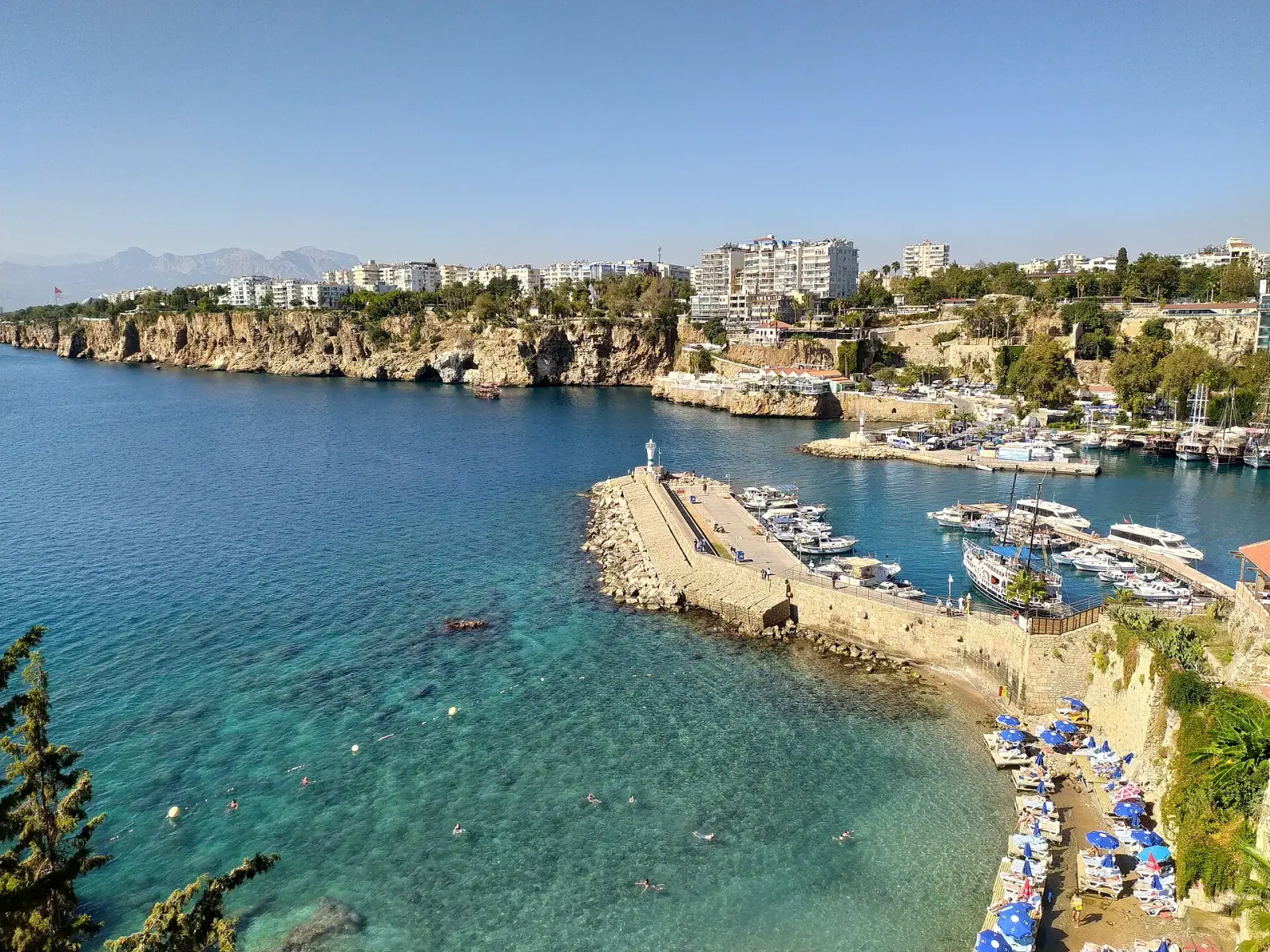
- Coworking Antalya sits under the ancient city walls in Kaleici with a terrace overlooking the marina. It offers 24/7 access, ergonomic chairs, and consistent wifi. It is the social hub of the local nomad community and runs weekly events. Some users find it expensive for what you get physically, but the location and community value are real.
- Creawork (two locations, including Sarampol Plaza) is more corporate in feel with high-speed internet, meeting rooms, and unlimited coffee. Good for focused, heads-down work.
- Lara Coworking near Lara Beach offers sea-view terraces, 24/7 access, and meeting rooms in a quieter setting away from the tourist core.
Cafe Work Culture
Cafe culture is welcoming toward laptop workers. %100 Coffee in Kaleici is popular for its clifftop harbor views and reliable wifi. Big Chefs Konyaalti on the beach promenade has a wide terrace and solid connectivity. Times Coffee and Co-Working near Kaleici has a dedicated coworking section with its own pricing tier.
WiFi Reality
Fiber is available through providers like Turk Telekom and TurkNet, so apartment and coworking speeds are genuinely fast in good buildings. Cafe wifi varies but is usually adequate for video calls. SIM data is cheap and fast enough for backup use.
Getting Around
The historic center around Kaleici and Konyaalti Beach is walkable and compact. The wider city requires public transport or a car. Minibuses called dolmus run frequently and cheaply along fixed routes. Regular city buses cover most areas. Taxis are inexpensive by Western standards: a 3 km trip costs around $1-2. There is no metro.
The airport (AYT) is roughly 13 km east of the city center. Taxis take about 20-30 minutes and cost $6.50-11. Airport buses (Havas) are cheaper at around $1.50-2. Antalya is a major international hub with direct flights to Europe, Russia, and the Middle East, so connectivity is excellent.
Between neighborhoods: Konyaalti (western beach strip) and Lara (eastern, newer area) both require transport from the old town. Many nomads settle in Muratpasa or Konyaalti specifically to stay on a single bus line.
Sorting transport? Book an airport transfer, or compare car rental on Auto Europe and QEEQ.
Visas and Staying Long-Term
Most Western passport holders (US, UK, EU, Canada, Australia) can enter Turkey visa-free for up to 90 days within any 180-day period. Some nationalities require an e-visa obtained online before arrival (a simple form and small fee). Turkey introduced a formal Digital Nomad Visa in 2024, which allows stays of up to 12 months with renewal possible. Eligibility requires being aged 21-55, holding a university degree, earning at least $3,000 per month from clients or employers outside Turkey, and working remotely. You apply for a Digital Nomad Identification Certificate online, then attend a consulate appointment. Alternatively, if you are already in Turkey on a tourist entry, you can apply for a short-term residence permit through the local migration office.
The 90-day tourist allowance is common for shorter stays.
Best Time to Visit
Antalya gets around 300 sunny days per year, so it is livable for most of the calendar. That said, some periods are significantly better for remote work.
- April to mid-June: The best window. Temperatures are 20-28C (68-82F), the sea is warming up, crowds are manageable, and accommodation is priced below peak. Cafes and outdoor terraces are pleasant for working.
- September to October: Nearly as good. Heat drops to comfortable levels, the sea stays warm through October, and the summer crowds thin out. This is arguably the best shoulder season for nomads who want beach access without the peak-season chaos.
- July to August: Very hot, often 35-40C (95-104F). The city is packed with tourists. Accommodation prices spike, cafes fill up, and working outdoors is difficult during midday. Air conditioning becomes essential.
- November to March: Mild but rainy. Daytime temperatures of 15-20C (59-68F) are comfortable indoors, and the city is quiet. Good for budget stays and focused work but limited beach time. January is the wettest month.
For pure remote work quality, April-June is the sweet spot.
Pros and Cons
Pros
- Low cost of living relative to Mediterranean peers in Spain, Italy, or Greece
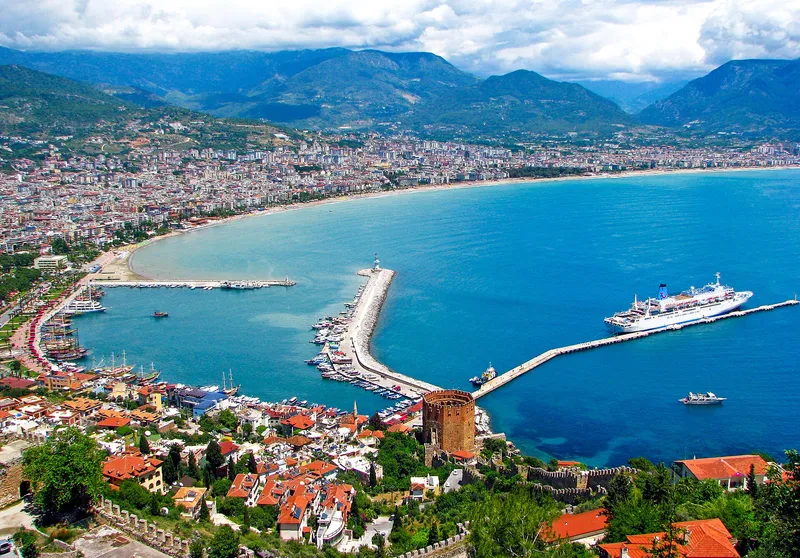
- Dramatic natural setting: limestone Taurus mountains behind, turquoise Mediterranean in front
- Active nomad community centered on Coworking Antalya with regular meetups
- 300+ sunny days per year and a long swimming season
- Fast fiber internet in apartments and coworking spaces
- Easy international flight connections from Antalya Airport
- Rich history and culture in Kaleici (old town with Roman walls, temples, harbor)
- Generally safe with low violent crime rates
Cons
- English is limited outside tourist zones; everyday errands can require a translation app
- Peak summer (July-August) is oppressively hot and crowded
- Alcohol is expensive and subject to high taxes
- Long-term apartment hunting is difficult, especially in high season when landlords favor short lets
- Turkish lira has experienced significant inflation; savings in TRY erode quickly
- Coworking supply is thin relative to the nomad demand; the main space has mixed reviews on value
- City sprawl outside the old town is car-dependent and generic
Who Antalya Is Best For
Antalya suits remote workers who want a sunny, affordable Mediterranean base with genuine history and outdoor access, and who prioritize cost savings over a polished nomad infrastructure. If you want to swim in clear water in the morning, work from a terrace with harbor views in the afternoon, and eat well for $5, Antalya delivers that reliably during the shoulder seasons.
It works especially well for people comfortable navigating day-to-day life without English, those who enjoy socializing with a diverse international crowd (the expat community includes many Eastern Europeans and Russians alongside Westerners), and anyone who wants to explore Turkey's coast or interior from a well-connected hub.
It is a harder fit if you need a large, well-resourced coworking scene, expect English-speaking service in shops and offices, or are sensitive to intense summer heat. Travelers looking primarily for a buzzing Western-style nomad hub with plentiful coworking options would be better served by Lisbon, Budapest, or Tbilisi.