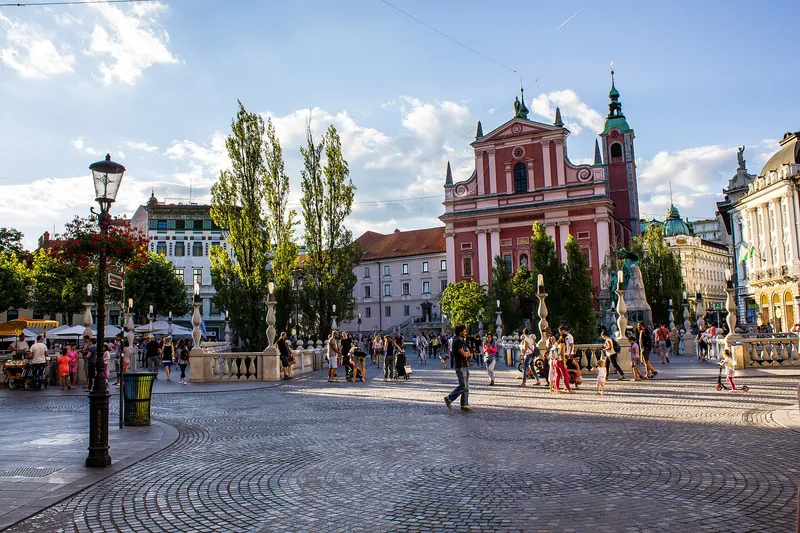
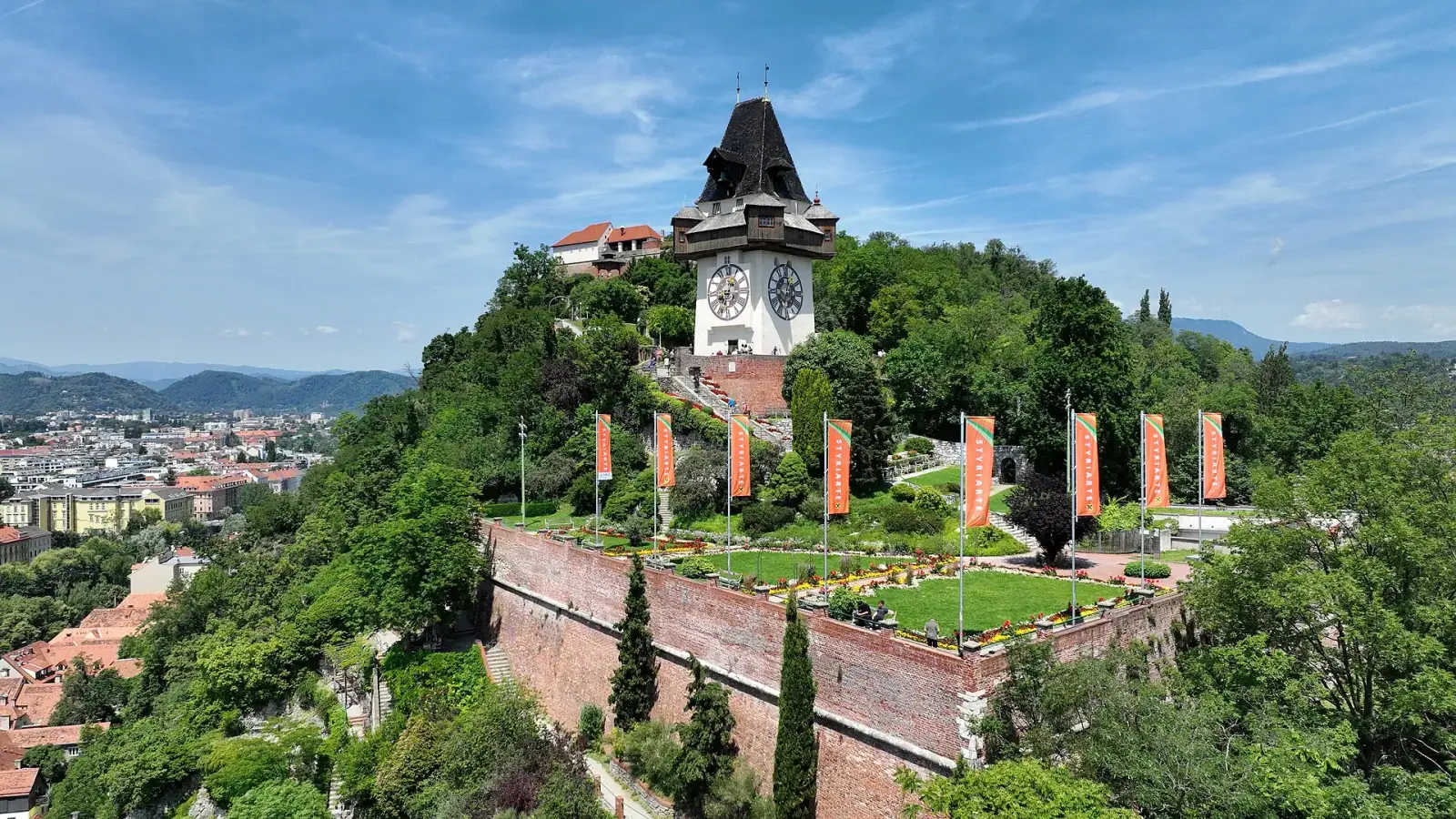
Schlossberg hill with Uhrturm clock tower overlooking Graz, Austria
Photo: C.Stadler/Bwag / Wikimedia Commons (CC BY-SA 4.0)
Austria flag

Graz

Austria

Austria's second city, student vibes, design scene, and culinary capital.

$2.600
Monthly Budget
--
Current Weather
Continental
Climate Type
70 Mbps
Avg. WiFi Speed
9/10
Safety Score
2,000+
Active Nomads
--
Time Difference
Scroll
0
Nomad Score

What Graz Offers Digital Nomads

Austria's second city, student vibes, design scene, and culinary capital. Graz pairs safety with cleanliness and a continental climate, all for about $2,600 a month. If anything, the size of the nomad scene lags.

Compare Graz vs Bled →

Category Breakdown

How Graz scores across all 13 factors

Weather in Graz

Monthly averages from 2019-2023 (Open-Meteo), and the best time to visit

-3°
Jan
-1°
Feb
11°
Mar
14°
Apr
18°
May
25°
15°
Jun
26°
16°
Jul
25°
16°
Aug
21°
11°
Sep
17°
Oct
Nov
-2°
Dec
Daily high & low (°C)Rainfall (mm/month)Best months to visit

The best time to visit Graz for comfortable weather is Jun, Jul, Aug. The warmest month is Jul (around 26°C by day), and the wettest is Aug (about 139mm of rain).

Chasing good weather? See other cities that are warm in Jun, or plan a multi-city route around the seasons. Staying a while in Graz? Check visa options, your time-zone overlap and how far your budget stretches, or find it on the world map.

Historical monthly averages, not a forecast. Source: Open-Meteo.

Best Neighborhoods in Graz

Where to base yourself for the perfect nomad experience

Altstadt (Old Town)

$$$
Historic & UNESCO

Graz's UNESCO Renaissance heart

Graz's Altstadt is Austria's best-preserved old town - UNESCO-listed, Renaissance architecture, and the iconic Schlossberg hill. It's genuinely stunning.

Best for: History lovers, architecture buffs, and those seeking Austrian charm
✓ Pros
  • UNESCO site
  • Schlossberg
  • Beautiful architecture
  • Walkable
✗ Cons
  • Touristy center
  • Expensive
  • Hilly

Lend

$
Hip & Multicultural

Graz's hip multicultural quarter

Lend is Graz's emerging cool - multicultural markets, Kunsthaus contemporary art, and creative energy. It's where Graz's future is happening.

Best for: Creatives, young travelers, and those seeking alternative Graz
✓ Pros
  • Kunsthaus
  • Multicultural food
  • Creative scene
  • Affordable
✗ Cons
  • Gritty areas
  • Variable quality
  • Less pretty

Gries

$
Local & Diverse

Graz's local residential quarter

Gries is Graz's working-class neighborhood - authentic local life, diverse community, and real Austrian prices. It's unglamorous but genuine.

Best for: Budget travelers, long-term visitors, and those seeking authenticity
✓ Pros
  • Affordable
  • Local markets
  • Authentic
  • Good transport
✗ Cons
  • Not scenic
  • Rough areas
  • Limited tourism

Jakomini

$$
Central & Practical

Graz's central transit hub

Jakomini is Graz's transport center - main square, tram connections, and commercial activity. It's practical rather than charming.

Best for: Transit connections, shopping, and those wanting central access
✓ Pros
  • Transport hub
  • Shopping
  • Central
  • Practical
✗ Cons
  • No charm
  • Busy traffic
  • Impersonal

St. Leonhard/University

$$
Academic & Green

Graz's academic green quarter

St. Leonhard hosts Graz's university - student cafes, green spaces, and intellectual atmosphere. It's leafy, young, and full of energy.

Best for: Students, academics, and those seeking university atmosphere
✓ Pros
  • University campus
  • Student cafes
  • Green spaces
  • Young energy
✗ Cons
  • Student crowds
  • Term-time focus
  • Limited evening life

Cost of Living in Graz

Graz is Austria's second-largest city and noticeably cheaper than Vienna, roughly 30-40% across most categories. That said, it is still a Western European city, so budget accordingly.

Monthly breakdown (approximate):

  • Rent, 1-bedroom central (Innere Stadt, Geidorf): EUR 900-1,200 / USD 980-1,300
  • Rent, 1-bedroom cheaper area (Lend, Eggenberg): EUR 650-900 / USD 700-980
  • Groceries (cooking most meals): EUR 250-350 / USD 270-380
  • Eating out (mix of casual and mid-range): EUR 250-400 / USD 270-435
  • Coworking hot-desk (monthly pass): EUR 120-220 / USD 130-240; day passes run EUR 20-30
  • Local transport (monthly pass): EUR 55-65 / USD 60-70
  • Utilities and internet (if not included in rent): EUR 100-150 / USD 110-165

Total realistic range: EUR 1,500-2,400 / USD 1,630-2,600 per month depending on rent choice and dining habits. A budget-conscious nomad sharing an apartment can dip below EUR 1,300; someone wanting a private central flat and daily restaurant lunches will land closer to EUR 2,400.

Where to Work

Graz has a solid, if not enormous, coworking scene. SpaceLend in the Lend district is the oldest and largest dedicated coworking space, open since 2014, with ergonomic desks, fast fiber internet, and a good community vibe. Coworking zu Geidorf near the city park offers more than 20 flexible desks plus offices and is popular with the university crowd. KANNST Coworking in Lend is smaller and more relaxed, with a balcony and kitchen. For occasional or Regus-style drop-in work, the City Tower and Smart City Regus locations are available.

Cafe culture is strong and genuinely laptop-friendly. Tribeka has four locations across the city with reliable WiFi, plenty of power outlets, and no pressure to move on. Ducks Coffee Shop near the university area is quieter and less crowded. Most central cafes tolerate laptop workers during off-peak hours, though you will want to order regularly to stay welcome during busy morning slots.

WiFi speeds are genuinely good. Median fixed-line and cafe speeds hover around 100-140 Mbps download, well above what you need for video calls. Reliability is high and outages are rare.

Getting Around

Graz is very walkable. The historic center (Innere Stadt) is compact enough that you can cover most of it on foot in under 20 minutes. The city consistently scores near the top in walkability among Austrian cities.

Beyond the center, the tram and bus network operated by Graz Linien is frequent and covers the whole city. A monthly pass costs around EUR 57-65. You can also rent bikes through the city bike-share system; cycling infrastructure has improved significantly in recent years. Uber and taxis are available but rarely necessary day-to-day.

Getting to and from the airport: Graz Airport (GRZ) sits about 10 km south of the center. The S-Bahn commuter train connects it to Graz Hauptbahnhof in roughly 20 minutes (runs hourly). Taxis cost around EUR 25-35. The airport is small and easy to navigate, with direct connections to major European hubs including Vienna, Frankfurt, Amsterdam, London, and Zurich.

Visas and Staying Long-Term

Austria is part of the Schengen Area. If your passport is from the US, Canada, UK, Australia, or most other Western countries, you can enter visa-free and stay for up to 90 days in any 180-day period across all Schengen countries combined, not just Austria.

EU and EEA citizens have the right to live and work in Austria without restriction.

Austria does not currently offer a dedicated digital nomad visa for non-EU citizens. If you want to stay longer than 90 days and work remotely, the closest legal route is a self-employment or freelance permit, which requires a more involved application process, proof of income, and usually a registered address. Many nomads use the 90-day Schengen window and then travel to a non-Schengen country before returning.

Note: As of October 2025, the EU Entry/Exit System (EES) is active, recording entry and exit data electronically at border points including Graz Airport. Always verify current requirements with the official Austrian Federal Ministry of the Interior or your country's Austrian embassy before traveling.

Best Time to Visit

The sweet spots for remote work in Graz are May-June and September-October. Temperatures are comfortable (15-24°C / 59-75°F), daylight is long, outdoor cafe season is in full swing, and tourist crowds are manageable. You can take lunch breaks in the Stadtpark or hike up the Schlossberg without overheating.

Summer (July-August) is warm and lively but can bring afternoon thunderstorms and higher accommodation prices. The city stays very active and coworking spaces run normal hours, so it works fine, just be ready for the occasional sweaty commute since not all cafes and older buildings have air conditioning.

Winter (November-February) is cold, gray, and often foggy due to Graz's basin geography. Air quality dips in cold, still conditions because pollution accumulates in the valley. It is a quieter, cheaper time to visit, and the Christmas market is genuinely pleasant, but if you need sunshine to stay productive, this is not your season.

Spring and autumn are the most reliable choices for a month-long work stint.

Pros and Cons

  • Pro: Significantly cheaper than Vienna or Zurich while still feeling like a proper European city
  • Pro: Excellent food scene anchored in Styrian cuisine, with strong local market culture
  • Pro: Compact, walkable, and very livable day-to-day
  • Pro: Fast, reliable internet and a functional coworking scene
  • Pro: Safe and clean with low violent crime
  • Pro: Good transport connections including a short hop to Vienna
  • Con: No digital nomad visa; 90-day Schengen limit applies to most non-EU visitors
  • Con: The nomad community is small compared to Lisbon, Tallinn, or Tbilisi
  • Con: German is essential for deeper integration; English gets you far as a visitor but less far as a resident
  • Con: Winter months can be gray, foggy, and have poor air quality due to the valley geography
  • Con: Nightlife is moderate, not Berlin or Budapest

Who Graz Is Best For

Graz suits you well if you value a high quality of life without capital-city prices. If you like being able to walk to excellent food markets, have a proper cafe culture to work in, and want to feel genuinely safe day and night, Graz delivers. It is a strong choice for EU/EEA citizens who can simply stay as long as they like without visa pressure. Couples or individuals who prioritize comfort, cleanliness, and livability over a buzzing nomad social scene will feel at home here.

It also works well as a base for exploring Slovenia, Croatia, and southern Austria, all within easy driving or train distance.

Graz is probably not your best pick if you want a large English-speaking nomad community to plug into immediately, a warm-weather year-round posting, or a visa-friendly long-stay option as a non-EU citizen working through the 90-day limit. If nightlife and non-stop social energy are priorities, look to Vienna or a larger hub first.
Where to Stay in Graz

Top neighborhoods and accommodations for digital nomads

Limehome Graz - Argos by Zaha Hadid

Aparthotel
Altstadt

Iconic Zaha Hadid building steps from the Opera House, with fully-equipped kitchens and fast WiFi perfect for medium-term stays.

Check availability →

Aparthotel Lavilo City Center

Aparthotel
Hauptplatz

Right on the main square with a 9.8 location score, kitchenettes, and streaming-ready rooms ideal for flexible nomad schedules.

Check availability →

Grazora Living Apartments

Serviced apartments
St. Leonhard

Fiber-optic WiFi, Nespresso machines, and penthouse terraces in a quiet residential block a short walk from the Old Town.

Check availability →

Augarten Art Hotel

Boutique hotel
Augarten

Design hotel by architect Gunther Domenig with 200-piece art collection, spacious desks, 24-hour pool and gym, 1 km from the centre.

Check availability →

Gästehaus Moßhammer

Guesthouse
Geidorf

Quiet adults-only guesthouse in the university quarter near the city park, with a terrace and walkable access to cafes and the Old Town.

Check availability →

Browse apartments, aparthotels and hotels across Graz. Compare prices and book a base that suits a remote-work stay.

See available stays in Graz →

Affiliate link. See our disclosure.

Best Coworking Spaces

Where nomads get work done in Graz

SpaceLend

Dedicated coworking space
Lend

Graz's largest and oldest coworking space since 2014, with ergonomic desks, fiber internet, meeting rooms, and a full kitchen.

Visit website →

Coworking zu Geidorf

Community coworking
Geidorf

Flexible desks and private offices near the city park and university, with fast fiber internet, kitchen, and a fitness room.

Visit website →

KANNST Coworking Space

Small coworking space
Lend

Relaxed boutique coworking with a balcony, kitchen, and quiet shared offices in the creative Lend neighborhood.

Visit website →

Tribeka

Laptop-friendly cafe
Innere Stadt

Spacious, student-popular cafe chain with reliable WiFi, plenty of power outlets, specialty coffee, and no pressure to leave.

View on Maps →

Ducks Coffee Shop

Specialty coffee cafe
Innere Stadt

Compact, cozy cafe near the university with fast WiFi and quality espresso drinks, popular with students and remote workers.

View on Maps →

Kunsthauscafe

Museum cafe
Lend

Spacious, design-forward cafe attached to the Kunsthaus Graz with reliable WiFi, good food, and a creative atmosphere.

View on Maps →

Where to Eat & Drink

Best food and drink spots in Graz

Gösser Bräu

Traditional Austrian brewery restaurant
Innere Stadt

Classic beer tavern ranked top 5 in Graz, serving Styrian comfort food and eight draught beers in a rooftop beer garden.

Visit website →

Der Steirer Graz

Styrian cuisine
Gries

One of Graz's most respected restaurants, pairing Styrian tapas with classics like Backhendl and local wines in a cozy cellar setting.

View on Maps →

Landhauskeller

Austrian regional cuisine
Innere Stadt

Historic restaurant inside the Renaissance Landhaus courtyard serving refined Styrian dishes including Tafelspitz and local trout.

Visit website →

Gerüchteküche

Creative vegetarian
Innere Stadt

Award-winning vegetarian and vegan restaurant recognized by Guide A la Carte, using seasonal local ingredients in creative modern dishes.

View on Maps →

Martin Auer

Bakery cafe and light meals
Innere Stadt

Beloved local bakery chain famous for quality bread, baguette sandwiches, and excellent espresso at consistently fair prices.

View on Maps →

Tribeka Bar

Bar and cafe
Grieskai

The riverside Grieskai Tribeka location doubles as a casual evening bar with craft beers and cocktails in a relaxed waterfront setting.

View on Maps →

What Do Nomads Say?

Vote on how accurate these scores are based on your experience

Cities with a Similar Vibe to Graz

Different places that score alike across our 13 categories, if you like Graz, these tend to feel similar.

Frequently Asked Questions About Graz

How much does it cost to live in Graz as a digital nomad?

A comfortable nomad budget in Graz is around $2,600 a month: a furnished rental, food, coworking, and getting around. Live a little outside the center or eat local to spend less.

Is the internet fast enough for remote work in Graz?

With a WiFi score of 7/10, connectivity in Graz is good for calls and focused work. A prepaid local SIM keeps you online when you are away from the apartment.

Is Graz safe for digital nomads?

Graz scores 9 out of 10 for safety in our ratings, which is excellent for solo travel and long stays. Use normal precautions at night and with valuables, and choose well-reviewed areas.

Is Graz a good city for digital nomads overall?

For nomads, Graz is worth a look if you value safety and cleanliness. Costs sit near $2,600 a month and the community keeps growing, though, like anywhere, it will not match every checklist.