Cost of Living in Zurich
Real market data
Source: Numbeo · August 2026
$4,500/moSolo nomad1-bed centre + living costs
$5,640/moCoupleshared 1-bed + costs
$3,880/moLean / localcheaper area + costs
- 1-bed rent, city centre$3,080CHF 2,489
- 1-bed rent, outside centre$2,450CHF 1,983
- Monthly costs excl. rent (1 person)$1,420CHF 1,149
- Meal, inexpensive restaurant$36CHF 29
- Monthly transit pass$110CHF 88
- Buy price, per m² (centre)$27,690CHF 22,380
Prices are from Numbeo (August 2026), converted to USD at $1 = CHF0.81 (01 Aug 2026). The monthly living-costs figure is our transparent one-person basket, groceries, a few meals out, utilities, phone, internet, transport and essentials, priced from those figures. Solo adds central rent; couple and lean are estimates from the same numbers.
There is no soft way to say this: Zurich is one of the most expensive cities on the planet, and it will test any nomad budget built around Lisbon or Bangkok math. Prices are set locally in Swiss francs, which trade very close to one to one with the US dollar, so the dollar figures below are close either way.
Here is a realistic monthly breakdown for one person:
- Rent, one bedroom in a central district: $2,850-3,710. Furnished short-term places run higher, and vacancy is tight, so expect competition.
- Rent, one bedroom in a cheaper outer area: $1,980-2,720, for example in Oerlikon or Altstetten rather than the center.
- Groceries: $495-740 if you cook and shop the discounters and weekly specials.
- Eating out: a weekday lunch special (Tagesmenu) is $25-31, a casual dinner $31-43 per person, and a coffee $5.50-7.50. Eating out often adds up fast.
- Coworking hot desk: roughly $370-680 per month for a flex membership, with pay-as-you-go desks from about $8.50 per hour.
- Local transport: a monthly pass for the two Zurich city zones is around $105.
All in, a single nomad renting centrally should plan for roughly $4,700-6,190 per month. Living further out and cooking at home can pull that toward $3,710, but Zurich never becomes cheap. Salaries here are high, which is why locals absorb these prices, but as a remote worker you carry the costs without the local paycheck.
Where to Work
Coworking is well developed, if pricey. Impact Hub Zurich is the anchor of the scene, with several locations including Colab near Limmatplatz, Viadukt, and Kraftwerk, plus flex memberships and by-the-hour hot desks. Beyond that you will find a range of independent and chain spaces across the city center and Zurich West, so book a day pass and test the vibe before committing to a monthly plan.
Cafe-work culture exists but is more reserved than in southern Europe. Plenty of cafes are pleasant for a couple of hours, though tables are smaller, laptops are less expected during busy lunch periods, and the price of a coffee makes all-day squatting an expensive habit. WiFi is genuinely excellent across the country: connections are fast and reliable almost everywhere, and mobile data coverage is strong, so a local SIM plus your phone hotspot is a solid backup for calls.
Getting Around
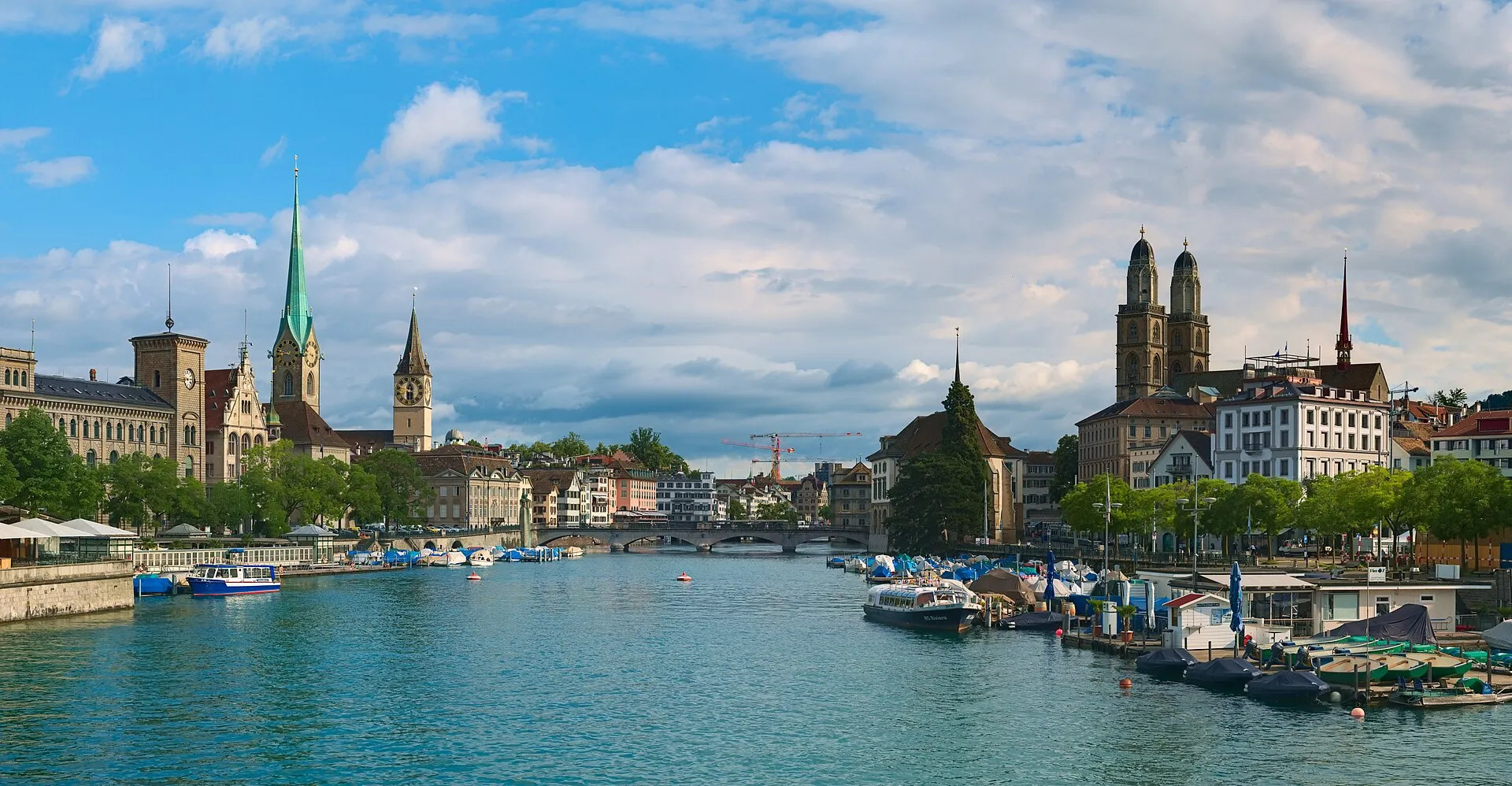
Zurich has one of the best public transport systems anywhere, run under the regional ZVV network. Trams, buses, and S-Bahn suburban trains are frequent, punctual, and clean, and a single ticket in the city costs a few dollars. The city is also compact and very walkable, so many nomads skip a car entirely and combine walking with the tram.
The lake, the Limmat river, and Uetliberg are all easy to reach on foot or rail, and a bike works well in the warmer months. Getting to and from the airport (ZRH) is painless: direct trains run from the airport to the main station (Zurich HB) roughly every ten minutes and take about fifteen minutes, for a low single fare. There is no need for a taxi unless you are moving heavy luggage late at night.
Sorting transport? Book an airport transfer, or compare car rental on Auto Europe and QEEQ.
Visas and Staying Long-Term
Switzerland is part of the Schengen Area, so most visitors from visa-exempt countries (including US, UK, Canadian, and Australian passport holders) can enter without a visa for up to 90 days within any 180-day period. Others need a Schengen Type C short-stay visa for the same window.
There is no Swiss digital nomad visa, and this is the important part: working while on a tourist entry, even remote work for a company based outside Switzerland, is treated as gainful employment and is not permitted. Switzerland enforces this seriously, and penalties can include fines, deportation, and entry bans. Longer-term legal routes (self-employment or residence permits) exist but are complex, decentralized by canton, and slow. Treat Zurich as a place to visit within your 90 days rather than a base to quietly work from.
Best Time to Visit
Zurich has four real seasons. Winters (December to February) are cold, often dipping below freezing, with short gray days and occasional snow, though the Christmas markets are genuinely lovely. Summers (June to August) are warm and lively, sometimes topping 30 degrees Celsius (86 F), with long daylight, lake swimming, and riverside evenings.
For remote work, the best window is late May through mid-September, when the weather is warm, the days are long, and the city is at its most outdoor and social. Spring and early autumn are pleasant and quieter, with fewer crowds and lower energy prices on your comfort. If you dislike cold and low light, skip deep winter.
Pros and Cons
- Pro: Superb public transport, safety, cleanliness, and infrastructure.
- Pro: Fast, reliable internet almost everywhere.
- Pro: Stunning setting with the lake, river, and mountains within reach.
- Pro: Compact and walkable, with easy day trips across Switzerland.
- Con: Extreme cost of living, among the highest in the world.
- Con: No nomad visa and strict rules that make working here legally difficult.
- Con: Locals can feel reserved, so a social circle takes time to build.
- Con: Small, low-key nomad scene compared with cheaper European hubs.
Who Zurich Is Best For
Zurich suits the well-funded remote worker or founder who values order, safety, and quality of life over price, and who wants a clean, efficient European base with world-class transport and nature on the doorstep. It rewards people who enjoy the outdoors, do not need a big party or coworking crowd to feel at home, and are staying within a short, tourist-length trip.
You should probably skip Zurich if you are budget-focused, if you need a large and easy nomad community to plug into, or if you were hoping to settle in and work long-term. On both cost and visa grounds, other European cities make that far simpler. Come to Zurich for a polished few weeks, not a cheap year.