Cost of Living in Kralendijk
Where this figure comes from. No cost survey covers Kralendijk, so the $1,900 a month above is our own estimate rather than a measurement. On 416 of our 999 city guides the figure is built from a published Numbeo basket, a one-bedroom rent in the centre plus one person's monthly costs without rent, converted to USD; this city is not one of them. How we source everything.
Budget around $1,900 a month as a solo remote worker in Kralendijk, which is expensive for a small island and reflects an economy built almost entirely on diving. A one-bedroom place runs roughly $800 to $1,300. Everything is imported and groceries carry a markup, though the Dutch supply chain keeps the choice wide. Bonaire uses the United States dollar rather than a guilder, which is unusual in the Dutch Caribbean and removes any conversion. Diving is the line that dominates any real budget here. This is our own estimate rather than measured data. The switch to the dollar came on 1 January 2011, when the islands left the Netherlands Antillean guilder behind along with the country that issued it, and prices were rounded upward in the process in a way residents still mention. Health insurance works on the Dutch model and is far cheaper than a private Caribbean policy, which offsets some of the grocery markup for anyone entitled to it. The recurring costs specific to the island are tanks and fills, the annual nature fee that funds the marine park, and a truck to reach the entry points, none of it avoidable.
Where to Work in Kralendijk
Bonaire's connectivity is good for its size: fibre reaches Kralendijk and the developed west coast at workable speeds and mobile data covers the island. Prices are high. Power is reliable and increasingly wind-generated, since the island runs a substantial wind farm. There is a small amount of coworking aimed at the long-stay diving population. Dutch is official and Papiamentu is the language of daily life, but English is widely spoken and Spanish is common given Venezuela is eighty kilometres away. Anyone working with Europe will find the offset behind central European time makes a European afternoon into a Bonairean morning, which is a workable overlap. Papiamentu here differs from the Curacao and Aruba versions in spelling as much as in sound, and Bonaire writes it phonetically where Aruba leans on Spanish convention. Dutch remains the language of schooling and government, so official business is conducted in it. Cruise ships berth directly in Kralendijk rather than at a separate terminal, so the town centre fills and empties on a schedule that matters if you work from a cafe there.
Getting Around Kralendijk
Kralendijk is small and walkable along its waterfront, but Bonaire's whole proposition requires a vehicle: the diving is from the shore, at some ninety marked entry points along the western coast identified by painted yellow stones at the roadside, and reaching them means a pickup truck with tanks in the back. That is what almost every visitor rents. The island is flat and cyclable in the south. Flamingo International airport is minutes from town with connections through Curacao, Amsterdam and Miami. The southern half of the island is salt pans and flamingo colonies, and the road around them makes a flat circuit that most residents cycle at least once. Rincon in the northern interior is the oldest settlement in the Dutch Caribbean, founded inland and out of sight of the sea so that raiders could not spot it from a ship. The road north continues into Washington Slagbaai, a national park occupying the whole top of the island, where the tracks are rough enough that rental agreements often exclude them. South of town the salt pans are still worked commercially, and the stone slave huts along that shore are barely large enough to sit up in.
Sorting transport? Book an airport transfer, or compare car rental on Auto Europe and QEEQ.
Visas for Kralendijk
Bonaire is a special municipality of the Netherlands rather than a constituent country, which makes its status different from Curacao or Aruba, though it sits outside the European Union and outside Schengen. Dutch and European Union citizens can live and work here with minimal formality. Most other Western nationalities receive ninety days on arrival. There is no dedicated remote work visa, and a quick exit to Curacao does not stretch a stay: most visitors may spend 90 days in any 180 in the Caribbean Netherlands, while US citizens get 180 days in any 365. Anyone diving here must complete a short orientation and buy an annual marine park tag before entering the water, which is enforced rather than nominal. Residents of Bonaire vote in Dutch general elections and for the European Parliament despite the island sitting outside the European Union, an arrangement with few parallels anywhere. Since 2023 they also elect a college that votes for the Dutch Senate. For a non-Dutch visitor none of that helps, and the practical route to a long stay remains those ninety days plus a willingness to explain yourself on re-entry.
Best Time to Visit Kralendijk
Bonaire sits below the hurricane belt and is dry, warm and windy essentially all year, around thirty degrees every month with very little rain, so there is no season to avoid. That consistency is the island's quiet advantage over most of the Caribbean. The busiest and most expensive window is December to April. October to December brings what rain there is. Diving conditions barely change through the year, which is why the island's visitor numbers are far steadier than its neighbours'. Sea turtles nest on the beaches between May and December, and the marine park restricts access to some stretches of shore during the season. The Pekelmeer in the south is one of only four places in the world where Caribbean flamingos breed, and the colony there is closed to people entirely during nesting. The birds commute to Venezuela to feed, which is why the flights over the salt pans at dawn and dusk are so reliable. Carnival runs in the weeks before Lent and is the one time the island is loud. Regatta week in October fills every room on the island, so aim at that date or well clear of it.
Pros and Cons of Kralendijk
Bonaire made its entire surrounding sea a national park in 1979, one of the first marine reserves anywhere, and the result is shore diving of a quality that nowhere else offers from a roadside: ninety marked entry points, healthy reef within swimming distance of the shore, and no boat required for most of it. The island is safe, outside the hurricane belt and uses the dollar. It is expensive, very quiet, and small enough to exhaust quickly, and there is essentially nothing to do here that is not underwater. The island also runs a substantial share of its electricity from wind, which is unusual in the Caribbean and shows in a grid that is more reliable than most. Lac Bay on the east coast is the counterweight to all that diving: a shallow lagoon with steady trade winds that has produced a run of world-class windsurfers from a population of around twenty four thousand. The mangroves at its head are a nursery for the reef fish that make the west coast worth diving, which is the sort of connection a small island makes obvious.
Who Kralendijk Is For
A diver, and the honest answer is that it is almost nobody else. For someone who wants to dive most days for months at a low marginal cost, Bonaire is arguably the best place on earth and the island is organised entirely around making that easy. Somebody who does not dive has removed the entire reason this island attracts anybody, and nightlife, a city and a workable budget are three further things it does not supply. Non-divers will find the island beautiful and be finished with it in a week. Beginners have an advantage here that experienced divers sometimes miss. Shore entries taken at your own pace build hours far faster than a boat schedule allows, and Bonaire is built entirely around them. It suits a windsurfer nearly as well as a diver, since Lac Bay is shallow enough to stand in and blows reliably almost every afternoon. Dutch administration paired with Caribbean weather is a narrow preference, but it is a real one and this is where it exists. Medical depth is the real limit: complex cases are flown to Curacao or the Netherlands, and the island is honest about that.
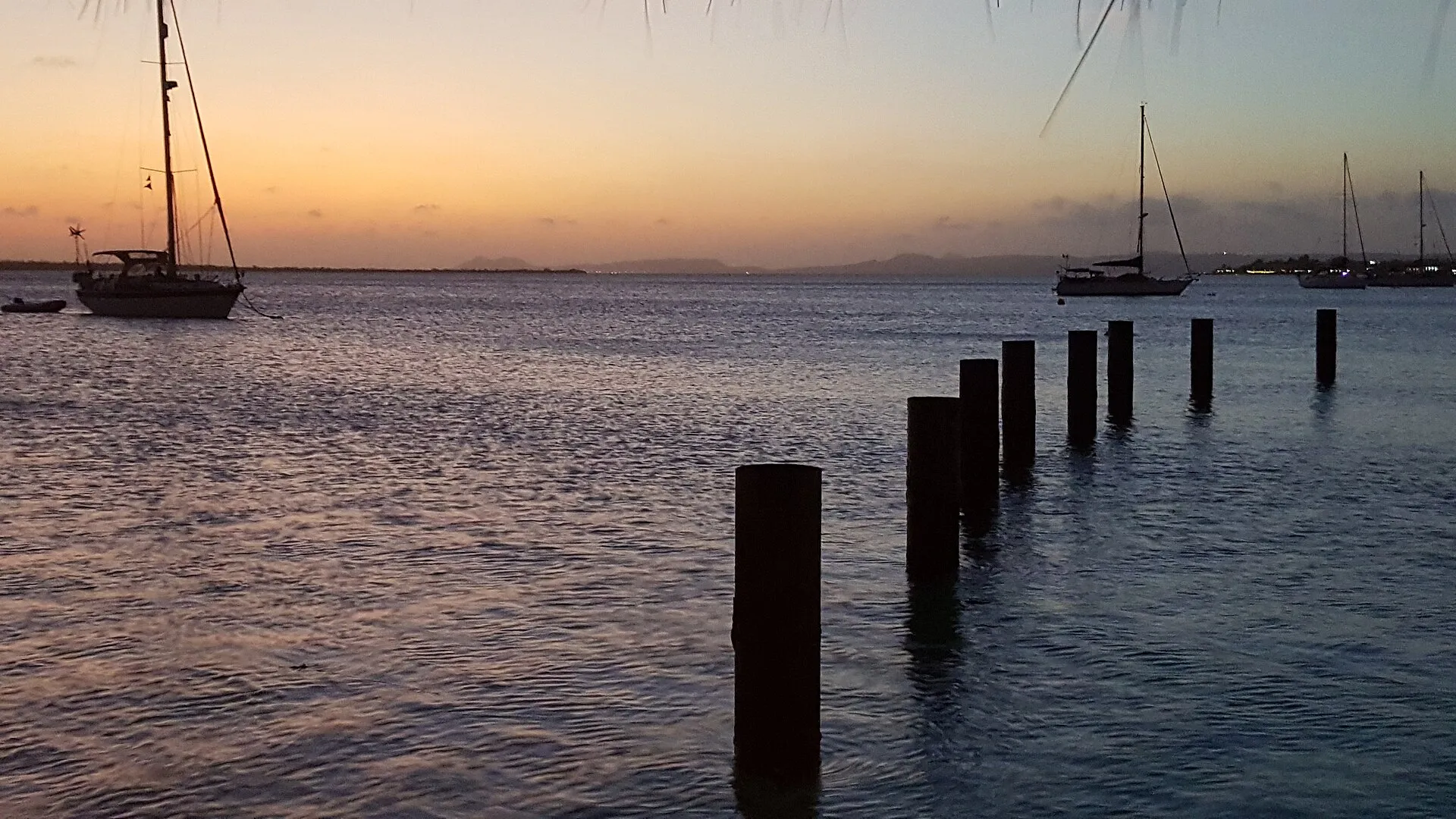 Photo: DanielleJWiki / Wikimedia Commons (CC BY-SA 4.0)