Cost of Living in Port Vila
Where this figure comes from. No cost survey covers Port Vila, so the $1,500 a month above is our own estimate rather than a measurement. On 416 of our 999 city guides the figure is built from a published Numbeo basket, a one-bedroom rent in the centre plus one person's monthly costs without rent, converted to USD; this city is not one of them. How we source everything.
Budget around $1,500 a month as a solo remote worker in Port Vila, and understand that Vanuatu imports nearly everything, so supermarket prices are startling relative to local wages. A one-bedroom flat runs roughly $500 to $850. The market produce is excellent and cheap, and eating at the market food stalls costs very little, but anything packaged or imported is expensive. There is no personal income tax in Vanuatu, which is a genuine part of the arithmetic. This is our own estimate rather than a reconciliation against measured data. Rent for anything aimed at expatriates is quoted in a different bracket from local housing, which is worth understanding before assuming a listed price is the going rate. Sales tax is fifteen per cent and there is no income tax at all, which is the arrangement the country is known for. Kava at a nakamal in the evening costs very little and is the ordinary social expense here rather than a bar tab, since drinking kava is what most of the town does after dark. Anything arriving in a container, which is nearly everything except the produce, carries freight and duty on top of the price it would have anywhere else.
Where to Work in Port Vila
Connectivity is the weakest thing about working here. Vanuatu is connected by a single submarine cable and outages have taken the whole country offline for days. Speeds in Port Vila are usable for email and light work, less so for anything demanding, and mobile data is expensive. There is essentially no coworking. Power is unreliable enough that a backup matters. The 2023 twin cyclones and the December 2024 earthquake both damaged infrastructure. Nobody should plan deadline-driven work here without a satellite fallback. Starlink has become the practical answer for anyone here who cannot afford to be offline, and is now common among businesses that depend on connectivity. The clock runs eleven hours in front of GMT, which puts the working day an hour ahead of Sydney for part of the year and makes Australian and New Zealand clients straightforward and European ones close to impossible. Offices open early and close in the middle of the afternoon, which is the tropical pattern and worth matching rather than fighting. Both French and English school systems operate here, a legacy of the joint colonial administration, and that shapes which professionals stay long enough to be worth knowing.
Getting Around Port Vila
Port Vila is small and the seafront, the market and the centre are walkable. Minibuses circulate constantly and cost a dollar or two, flagged down anywhere and taking a roundabout route to wherever the other passengers are going, which is the normal way to move. Taxis are available. The airport is ten minutes out with connections to Australia, New Zealand and Fiji. Efate has a sealed ring road that circles the island in about three hours, and the other islands are reached by small aircraft or ferry. Driving is on the right, unusually for the region, and the ring road is sealed while most side roads are not. The minibuses carry a B on the plate and the taxis a T, which is the quickest way to tell them apart before one stops. There is no timetable and no route map because neither would mean anything: you say where you are going and the driver decides whether it fits the load already aboard. Walking back along the seafront after dark is ordinary enough, though the unlit stretches past the centre are where people take a bus instead.
Sorting transport? Book an airport transfer, or compare car rental on Auto Europe and QEEQ.
Visas for Port Vila
Vanuatu gives most Western nationals a tourist visa on arrival for up to 120 days, and it cannot be extended, so four months is a ceiling rather than a target reached by renewals. There is no digital nomad visa, though Vanuatu is well known for a citizenship-by-investment programme that has attracted scrutiny and led several countries, including the European Union, to suspend visa-free access for Vanuatu passport holders. That is worth understanding as context rather than as a route. For a visitor the entry is simple. Vanuatu levies no income tax, which is the country's more legitimate financial draw. Anyone considering the investment programme should read the current international position on it carefully rather than the promotional material, since the restrictions on the passport have real consequences. Staying past it means leaving the country or moving onto a different permit, such as residence or work, before the 120 days run out, and the immigration office in town is where that switch is lodged. An onward ticket is asked for on arrival and checked at the departure airport more often than at this one. Paid work for a local business needs a permit tied to an employer, and the rules protecting ni-Vanuatu jobs are enforced rather than decorative.
Best Time to Visit Port Vila
April to October is the dry season and the best window, with warm days around twenty-eight, lower humidity and calmer seas. The wet season from November to March brings heavy rain, high humidity and the cyclone season, which in Vanuatu is not a formality: the country is among the most exposed to natural disaster on earth by most risk indices, and Cyclone Pam in 2015 and the twin cyclones of 2023 both caused severe damage. Plan around that window rather than through it. The volcano on Tanna, one of the most accessible active craters anywhere, is reachable year-round but the flights are more reliable in the dry months. Land diving on Pentecost, where men jump from wooden towers with vines tied to their ankles, runs between April and June and is the ceremony bungee jumping was copied from. It is a working ritual tied to the yam harvest rather than a performance, and reaching it takes a flight and an arrangement rather than a ticket. The dry months are also when the inter-island boats keep something like a schedule, which matters more than the weather to anyone planning to leave Efate.
Pros and Cons of Port Vila
Port Vila offers a genuine Pacific capital with no income tax, some of the best wreck diving in the world at the SS President Coolidge on nearby Espiritu Santo, accessible active volcanoes, and a small but real expatriate community. Bislama makes communication easy for English speakers. Connectivity is poor and sometimes absent altogether, costs are high for what you actually get, the cyclone and earthquake exposure is genuinely serious, and the hospital cannot handle much, which makes evacuation insurance essential rather than advisable. Bislama, the national creole, is close enough to English that a visitor can follow a conversation within days, which makes the country unusually easy to be in. Million Dollar Point, where departing American forces bulldozed their own wartime equipment into the sea rather than ship it home, is now a dive site full of jeeps and bulldozers. The country also topped the Happy Planet Index when it was first published in 2006, a result that says as much about the index as about the place but that nobody here has stopped mentioning since.
Who Port Vila Is For
Divers, sailors and people connected to the development or maritime sectors of the region, and anyone whose income is flexible enough to survive a week offline. It works for those attracted by the tax position who understand what they are giving up in infrastructure. A demanding video schedule and Pacific bandwidth do not go together, serious healthcare means a flight to Australia or New Zealand, and the cyclone season is something to build a stay around rather than hope to miss. The outer islands are the real destination and this is how they are reached. Tanna's volcano and Espiritu Santo's wrecks and blue holes both begin with a flight from Efate rather than ending there. Domestic flights are the real budget line for anyone who came for the islands rather than the capital, since flying is the only practical way between them and the fares are not small. Two months here with three island trips inside it costs a good deal more than the monthly figure suggests. Anyone planning that should book the internal legs before fixing the dates, because schedules thin without much notice.
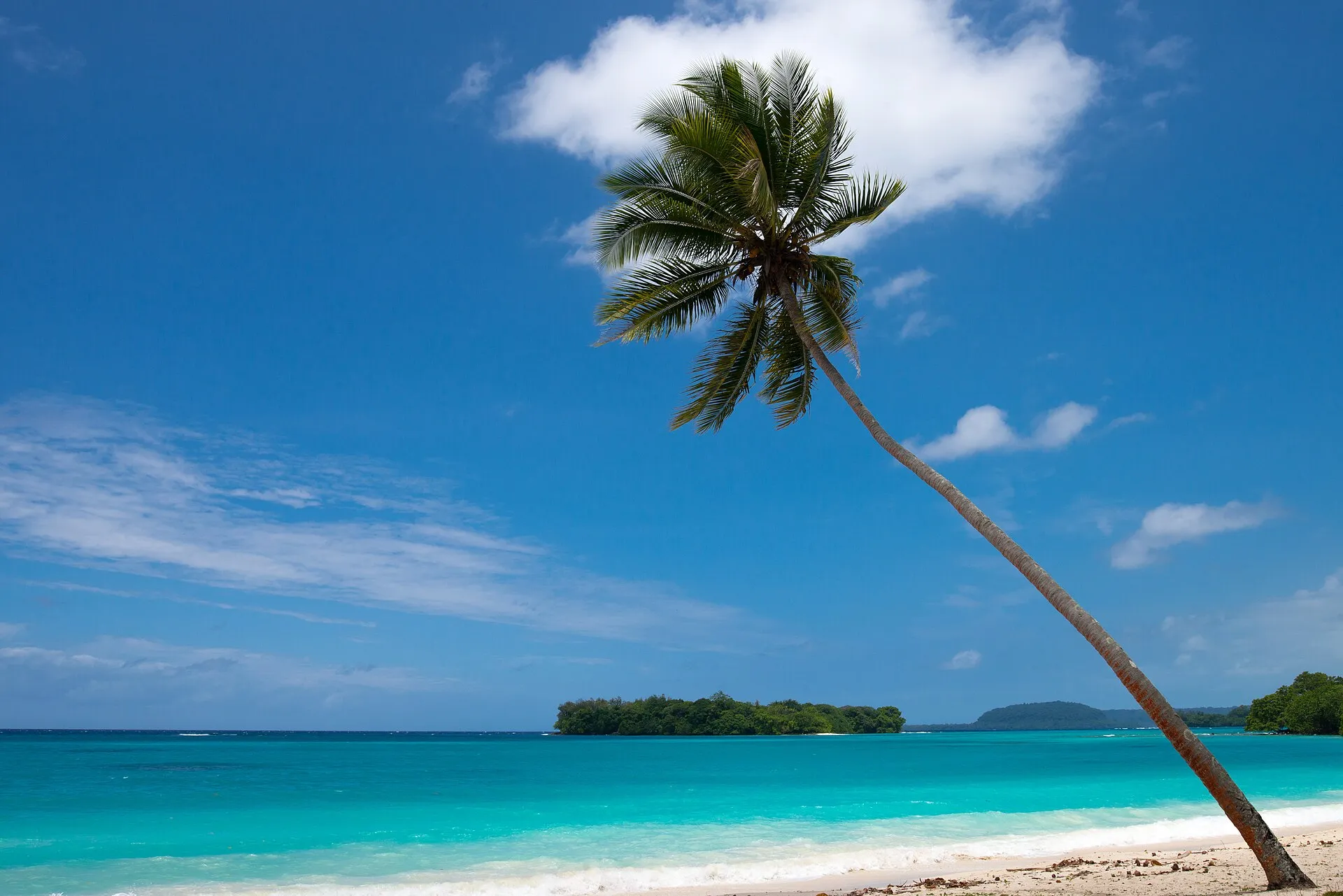 Photo: Humans of Vanuatu/ Imagicity / Wikimedia Commons (CC BY-SA 3.0)