Cost of Living in Bohol
Where this figure comes from. No cost survey covers Bohol, so the $800 a month above is our own estimate rather than a measurement. On 416 of our 999 city guides the figure is built from a published Numbeo basket, a one-bedroom rent in the centre plus one person's monthly costs without rent, converted to USD; this city is not one of them. How we source everything.
Around $800 a month works on Bohol, with the split between Tagbilaran and Panglao mattering more than anything else. In Tagbilaran city a furnished studio or one-bedroom costs $200 to $330; on Panglao near Alona Beach or Dumaluan the same unit runs $280 to $500 because of tourism demand, though monthly rates fall sharply outside December to April. Food is $180 to $260: carinderia meals at $1.50 to $3, fresh fish and rice cheaply at markets, and Alona restaurants at $7 to $14. A Globe or Smart SIM with a data bundle costs $8 to $15 monthly. Coworking is scarce, with day passes around $8 to $12 where offered. Electricity is expensive in the Philippines: $50 to $120 with steady air conditioning, plus $30 to $50 for fibre. Scooter rental is $70 to $110 monthly. Verdict: good value, with power the main budget risk. A foreigner cannot own land here at all, only a unit in a building where the foreign share stays under a set proportion, so a beach house offered for sale to somebody from outside involves a long lease or a local partner, and the arrangement matters a great deal more than the price does. Renting sidesteps the whole question.
Where to Work in Bohol
Panglao island is where most remote workers base themselves, either around Alona Beach for restaurants and dive shops or in the quieter Danao, Doljo and Dumaluan areas for lower rents and less noise. Tagbilaran, 20 minutes away over the causeway, is the practical city with banks, hospitals, malls and the Bureau of Immigration office. Dedicated coworking has come and gone on Panglao, so verify what is currently trading rather than relying on old listings; in practice most people work from air-conditioned cafes near Alona and Tawala, from dive-resort common areas, or from home. Converge and PLDT fibre reaches much of Panglao, and Starlink has become a common backup among villa owners. The real caveats are brownouts, which are frequent and can last hours, plus typhoon-driven outages; a large power bank and a well-loaded mobile data plan are essential rather than optional.
Getting Around Bohol
Bohol runs on tricycles, multicabs and scooters. Tricycle hops within Tagbilaran or around Alona cost $0.40 to $2, and a Tagbilaran to Panglao run is $6 to $10 by private tricycle or van. Ceres buses serve the interior towns, Loboc, Carmen and the Chocolate Hills, for $1 to $4. Ride-hailing coverage is patchy and Grab is not reliably available, so a scooter at $8 to $12 a day or $70 to $110 a month is effectively essential for anyone staying more than a couple of weeks. Panglao Bohol International Airport, opened in 2018, sits about 20 minutes from Alona with domestic flights to Manila, Cebu and Davao plus occasional international charters. Fast ferries are the other lifeline: OceanJet, Lite Ferries and Supercat run Tagbilaran to Cebu in about two hours for $10 to $22, with services to Camiguin, Siquijor and Dumaguete. The road through the interior passes a two-kilometre stretch of mahogany planted in the nineteen sixties, dark enough at midday to drop the temperature noticeably, and it is the part of the inland loop everyone remembers. Roads away from that circuit narrow quickly and are unlit, so the interior is a daytime proposition.
Sorting transport? Book an airport transfer, or compare car rental on Auto Europe and QEEQ.
Visas for Bohol
Most Western passport holders enter the Philippines visa-free for 30 days, provided they hold an onward or return ticket. Extensions are handled at Bureau of Immigration offices, including one in Tagbilaran: the first extension adds 29 days for roughly $60, after which longer six-month blocks become possible, and tourists may ultimately stay up to 36 months. Anyone staying beyond 59 days must obtain an ACR I-Card, costing about $100. There is also a mandatory eTravel registration online before arrival, which is free. An executive order in April 2025 authorised a digital nomad visa for one-year renewable stays aimed at remote workers with foreign income, but as of September 2026 no application process has been published, so nomads use the tourist extension route, which is straightforward and widely used. Long-term retirement residency via the SRRV is a separate option for those over 35 with capital to deposit.
Best Time to Visit Bohol
Bohol's best window is March to May: dry, hot at 30C to 34C, with the calmest seas and the best diving visibility around Balicasag and Pamilacan. February is also excellent and slightly cooler. June to October is the southwest monsoon, with humid days, heavy but often brief showers and greener interiors; prices drop and Panglao empties, which suits budget-focused stays. The riskiest window for the central Visayas is November to January, when tropical cyclones tracking west can hit hard, as Typhoon Odette did in December 2021, causing weeks of power and communication outages. December to early January is simultaneously peak tourist season, with Alona busy and rents highest. Whale shark and dolphin activity around Pamilacan peaks in the dry months. Festival highlights include the Sandugo Festival in Tagbilaran each July and Sinulog spillover from nearby Cebu in January. An earthquake in 2013 brought down several of the island's Spanish-era stone churches and lifted parts of the coastline clear of the water, and the rebuilt facades and the raised reef flats are both still there to see. Seismic risk here is not theoretical, and what has been put up since is noticeably better braced than what failed.
Pros and Cons of Bohol
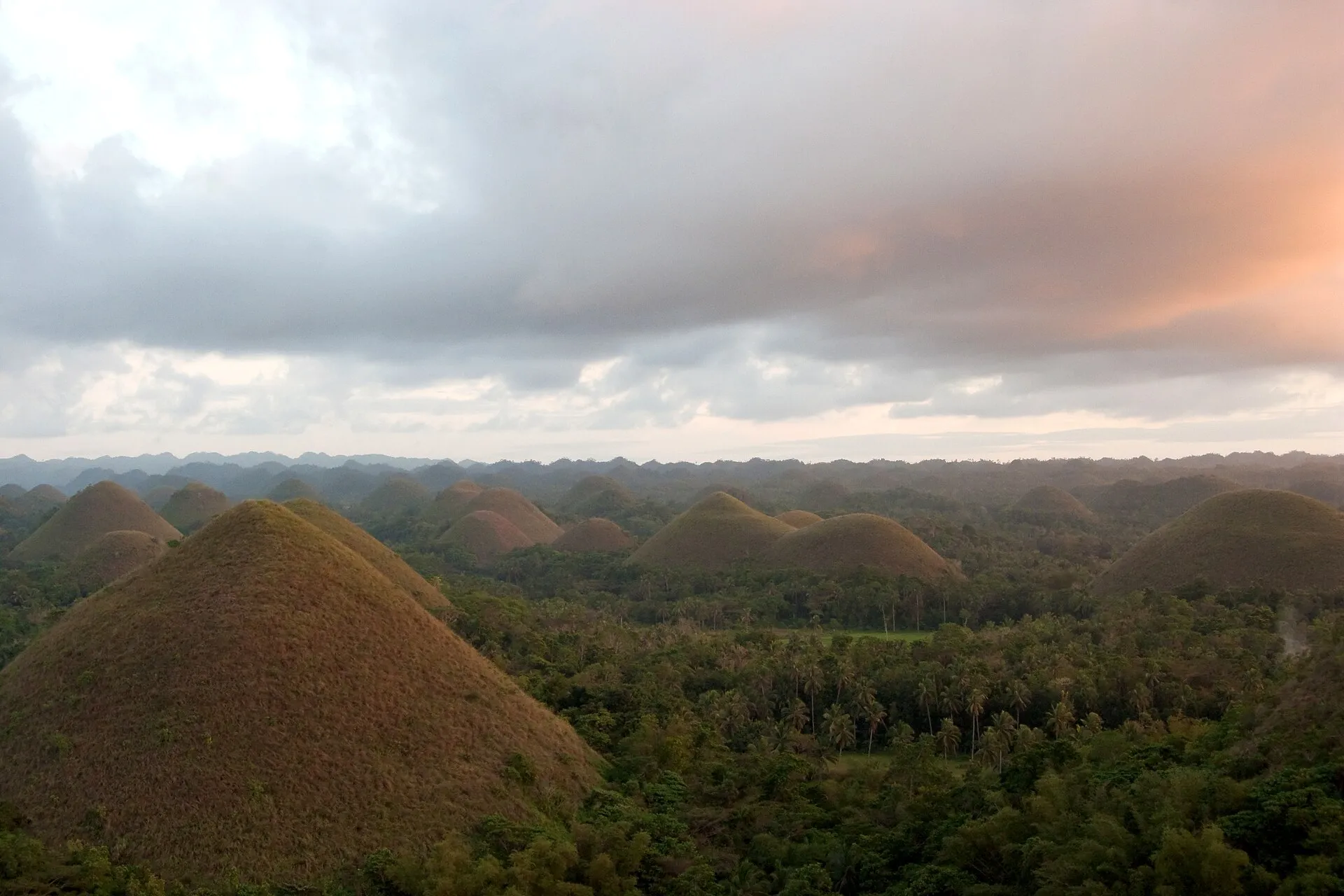
Bohol's appeal is straightforward: white-sand beaches at Alona and Dumaluan, some of the best diving and freediving in the Philippines at Balicasag and Napaling, the Chocolate Hills and Loboc River inland, tarsiers, warm water year round, low rents outside peak season, English spoken almost universally, and an international airport plus fast ferries to Cebu. Food and beer are cheap and the pace is relaxed. The counterweight is infrastructure: brownouts are frequent and can last hours, typhoons are a genuine seasonal risk with slow recovery, fibre coverage is uneven and Starlink is often needed as backup, coworking spaces are scarce and impermanent, medical care beyond basic cases means flying to Cebu, ride-hailing is unreliable so a scooter is mandatory, road quality varies, Alona has become noisy and overbuilt, and the nomad community is small and seasonal.
Who Bohol Is For
Divers, freedivers and beach-focused remote workers are the fit: Philippine costs, warm water and island life, with an airport and a hospital on the same island, which is not true of most of them. It works for self-sufficient solo nomads and couples with redundant connectivity, for anyone comfortable riding a scooter daily, and for long-stay travellers using the generous tourist extension system to spend months in the region. It also fits people who value nature, the Chocolate Hills, river trips and empty inland roads, over urban amenities. Skip it if the work cannot tolerate power cuts or a typhoon-season outage, if a structured coworking and meetup scene is what makes a base productive, or if consistent city infrastructure, public transport and healthcare matter. Those wanting the same country with more urban reliability should compare Cebu City; those wanting a larger nomad crowd should compare Siargao or Manila.