Cost of Living in Haifa
Where this figure comes from. The $3,000 monthly budget above is our own estimate rather than a measurement. How we source everything.
What locals pay
$740Rent, one-bedroom
$1,160Everything else
$1,900A month in all
A local tenant in Haifa pays about $740 a month for a one-bedroom, and about $1,160 for food, transport, phone and the rest at local prices. Our $3,000 monthly budget above is higher because remote workers usually rent central, furnished flats on shorter leases.
Rent: Central Bureau of Statistics (Israel), Price Statistics Monthly 7/2026 (CBS open licence), 2026 Q2, converted to a 45 m² one-bedroom in US dollars. The Central Bureau of Statistics (CBS), Price Statistics Monthly 7/2026, accessed 23 October 2026. Everything else: World Bank, International Comparison Program 2021 (CC BY 4.0) price levels applied to the US Bureau of Labor Statistics one-person household, brought to 2026 prices. How we source everything.
Haifa is noticeably cheaper than Tel Aviv but still sits firmly in the expensive tier for a Middle Eastern city. Expect to spend more than many Southeast Asian or Eastern European nomad hubs, though the trade-off is a functioning tech city with solid infrastructure.
- Rent, central (Carmel Center or German Colony): $1,050-1,210/month for a 1-bedroom
- Rent, cheaper areas (Hadar, Neve Shaanan): $720-885/month for a 1-bedroom
- Groceries: $295-425/month shopping at supermarkets like Rami Levy or Shufersal
- Eating out: $23-33 for a sit-down meal; falafel or shawarma in Wadi Nisnas costs under $8
- Coworking hot desk: $390-655/month at dedicated spaces; day passes around $33-49
- Local transport: $100/month for a bus/rail pass covering the whole metro area
- Total realistic range: $2,130-3,270/month depending on lifestyle and accommodation choice
Currency note: 1 USD is approximately 3.65-3.70 NIS as of mid-2025.
Where to Work
Haifa punches above its size for coworking infrastructure, driven by its role as Israel's northern tech hub. Matam, the country's oldest high-tech park, sits on the southern waterfront and anchors a lot of the serious tech activity.
Coworking Spaces
- WeWork Haifa (Derech Ha'atzmaut 45, Downtown): The most central option, near the port, with reliable fast WiFi, phone booths, and meeting rooms. Day passes and monthly memberships available.
- Regus Matam Park (Matam, southern waterfront): Located inside the high-tech park with Mediterranean sea views. Professional setup suited to those who want an office-like environment rather than a social coworking vibe.
- Mindspace Haifa (Nahum Het St 7, Park Ofer HaCarmel): A polished flex-office floor with 600+ workstations alongside Microsoft, Intel, and Google offices. Better suited to longer stays or those needing a premium address.
Cafe Work Culture
Cafe culture in Israel is strong and cafe-working is accepted, though not as formalized as in some nomad hubs. Aroma (multiple branches, including in the German Colony) is a go-to chain with free WiFi and power outlets. Cafe Palmer near the port and Millhouse Cafe in Bat Galim both have good reputations for a working atmosphere. Expect to buy a drink every couple of hours in busier spots.
WiFi quality in the city is generally reliable. Fiber connections are common in coworking spaces, and most cafes provide functional but not always fast connections.
Getting Around
Haifa's geography is unusual: the city stacks vertically up Mount Carmel, which means "walkability" depends heavily on which neighborhood you're in. Downtown (near the port) and Carmel Center (upper city) are each internally walkable, but getting between them on foot involves a steep climb.
The Carmelit
The Carmelit is Israel's only subway, a six-station underground funicular that runs from Paris Square (upper Carmel) down to Kikar Paris near the port in about eight minutes. Single fare: $2. It's genuinely useful for daily commutes between levels and runs on all days except Shabbat (Friday afternoon to Saturday night).
Buses and Trains
The Metronit is a rapid bus transit system with dedicated lanes covering major corridors. Regular buses fill in the gaps. Uniquely for Israel, Haifa runs some buses on Shabbat, making it more livable than Tel Aviv or Jerusalem for people without a car.
Getting to and from the Airport
Ben Gurion International Airport (TLV) is roughly 100 km south, near Tel Aviv. The train is the best option: trains run from Haifa Center to the airport in about 1.5 hours, costing around $16-18, and depart twice per hour on weekdays. Trains do not run on Shabbat or Jewish holidays, when you'll need a taxi or shared shuttle ($115-145). Haifa also has its own small domestic airport, Haifa Airport (HFA), with limited routes.
Sorting transport? Book an airport transfer, or compare car rental on Auto Europe and QEEQ.
Visas and Staying Long-Term
Most Western passport holders, including citizens of the US, UK, EU, Canada, and Australia, can enter Israel visa-free for up to 90 days. Since January 2025, these visitors must obtain an ETA-IL (Electronic Travel Authorization) before arrival. It costs $8, is valid for two years with multiple entries, and can be applied for online at least 72 hours before travel.
Israel does not offer a dedicated digital nomad visa. Remote workers typically enter on the tourist entry (ETA-IL or B/2 tourist visa). Working remotely for clients outside Israel on a tourist entry is a legal grey area: not explicitly permitted but rarely enforced. Do not work for Israeli clients or employers on a tourist entry.
Extensions beyond 90 days are possible by visiting a Ministry of Interior office, but approval is not guaranteed. Visa runs to a neighboring country are not straightforward due to regional politics; Cyprus (a short flight away) is a common option.
Best Time to Visit
Haifa has a Mediterranean climate: hot, dry summers and mild, rainy winters with pleasant spring and autumn shoulder seasons.
- Spring (March to May): The best window for most remote workers. Temperatures sit at 20-25°C, the Bahai Gardens are in full bloom, and the city feels alive without summer crowds or prices.
- Autumn (September to November): A close second. Temperatures drop back to comfortable levels after August's heat, the Haifa International Film Festival runs during October, and accommodation costs ease from summer peaks.
- Summer (June to August): Hot (28-33°C) and humid, with near-zero rainfall. The sea is warm for swimming, and the city is active, but extended screen time in the heat is draining without air conditioning.
- Winter (December to February): Mild by northern European standards (12-17°C), but this is the rainy season, with December and January seeing the most precipitation. Coworking spaces and cafes fill up with locals.
For a focused remote work stay, April-May or October is the sweet spot: good weather, manageable costs, and enough city energy to keep things interesting.
Pros and Cons
Pros
- Strong tech ecosystem and coworking infrastructure for a mid-sized city
- Genuinely multicultural: Jewish, Arab, and international residents coexist in ways that are rare in the region
- Cheaper than Tel Aviv by 20-30% while offering similar connectivity and amenities
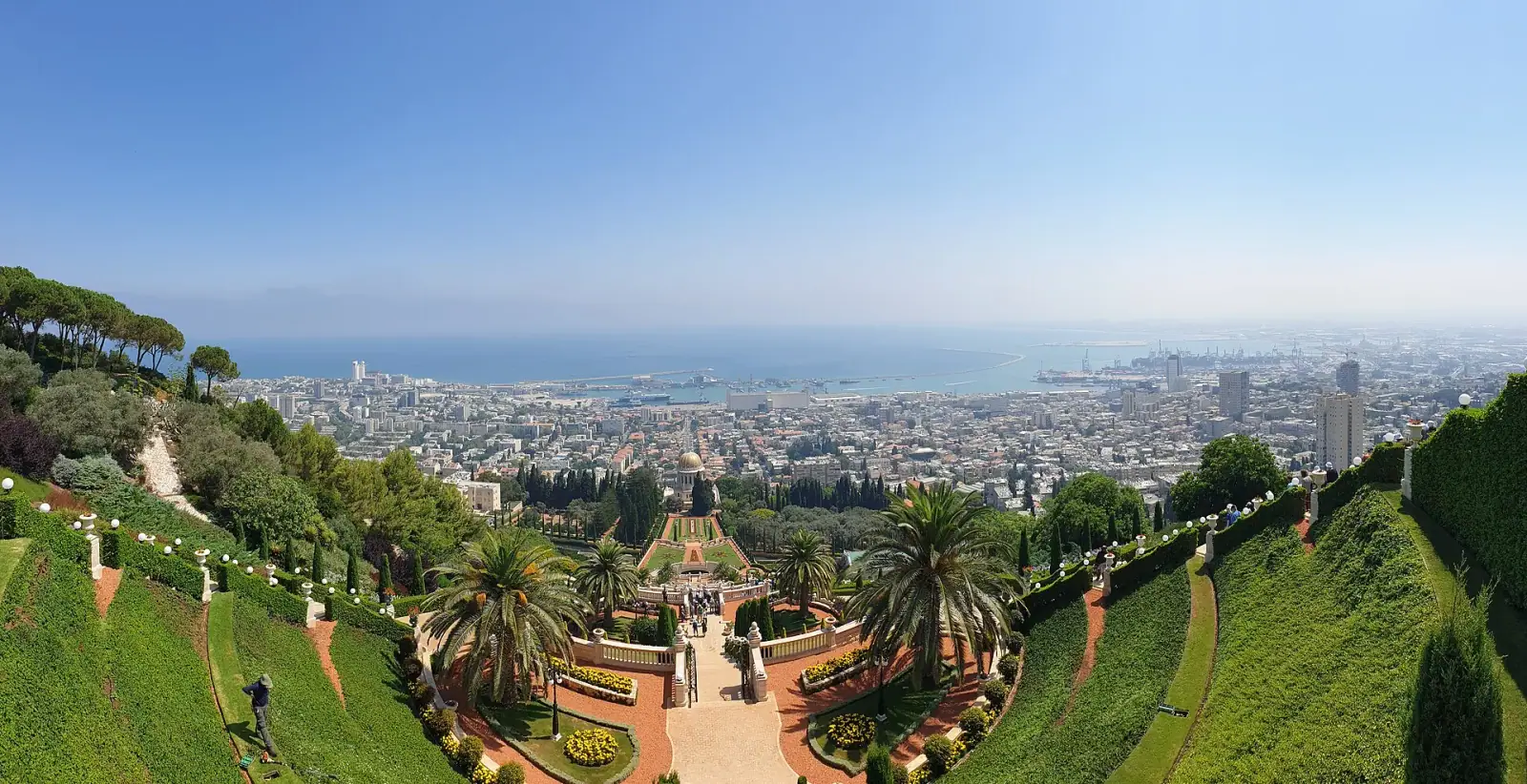
- Stunning setting: sea views, Bahai Gardens terraces, and Mount Carmel hiking on your doorstep
- Buses run on Shabbat, a practical advantage over most Israeli cities
- High English proficiency across the tech community and many service industries
- Mediterranean food at its best: fresh seafood, great Arab street food, strong cafe culture
Cons
- Regional security situation is an ongoing reality; rocket alert apps and shelter awareness are not optional
- No dedicated nomad visa; the 90-day tourist entry limit creates planning pressure for longer stays
- The city's vertical geography makes it tiring to navigate without a car or Carmelit access
- Nightlife is limited compared to Tel Aviv; evenings are quiet outside a few port-area spots
- Shabbat still shuts down most shops and restaurants from Friday afternoon to Saturday night
- Ben Gurion Airport is 1.5 hours away by train, adding friction to every arrival and departure
- Cost of living is high relative to quality of nomad infrastructure compared to cheaper alternatives in the region
Who Haifa Is Best For
Haifa suits nomads who want to experience Israel beyond Jerusalem and Tel Aviv, especially those with an interest in tech, coexistence culture, or the outdoors. If you are drawn to a working city with a genuine local character, fresh seafood on the waterfront, and weekend hikes in the Carmel mountains, Haifa delivers in a way that feels authentic rather than tourist-facing.
It works particularly well for people already embedded in the Israeli tech scene, those doing research or academic work connected to the Technion, or remote workers from Europe who want a warm-weather base that stays relatively affordable compared to Tel Aviv.
Skip Haifa if you are primarily chasing nightlife, a large global nomad community, or the cheapest possible cost of living. The regional security context is also a genuine consideration: anyone uncomfortable monitoring security alerts and knowing the location of the nearest shelter should factor that into their decision. Tel Aviv tends to attract nomads who want a bigger international scene; Haifa attracts those who are happy to go a little deeper into Israeli everyday life.