Cost of Living in Savannah
Real market data
Source: Numbeo · September 2026
$3,090/moSolo nomad1-bed centre + living costs
$3,850/moCoupleshared 1-bed + costs
$2,350/moLean / localcheaper area + costs
- 1-bed rent, city centre$2,150
- 1-bed rent, outside centre$1,410
- Monthly costs excl. rent (1 person)$950
- Meal, inexpensive restaurant$20
- Monthly transit pass$48
- Buy price, per m² (centre)$2,310
Prices are from Numbeo (September 2026), already in US dollars. The monthly living-costs figure is our transparent one-person basket, groceries, a few meals out, utilities, phone, internet, transport and essentials, priced from those figures. Solo adds central rent; couple and lean are estimates from the same numbers.
Budget around $3,090 a month as a solo remote worker in Savannah, which is moderate for the United States and cheaper than most coastal cities of comparable appeal. A one-bedroom apartment runs roughly $1,000 to $1,400, with the Historic District and Ardsley Park at the higher end and the southside considerably cheaper. Groceries and eating out are ordinary American prices. Utilities include serious summer air conditioning, which is a real cost in this climate. Georgia has no vehicle-free option worth relying on, so a car and its insurance belong in the budget unless you stay strictly downtown. The line that dominates an American budget and appears in no rent figure is health insurance, which for a self-employed person buying on the open market can rival the rent itself, and it is the single largest reason the United States prices out differently from everywhere else on this site. Downtown carries a tourist premium on everything from a coffee to a haircut, so a routine that stays inside the Historic District costs meaningfully more than the same routine two miles south. Tipping at twenty per cent is expected and belongs in any eating-out estimate.
Where to Work in Savannah
Savannah has a modest coworking scene concentrated downtown and around the Starland District, with desks from roughly $150 a month. The Savannah College of Art and Design shapes the city's professional character, filling it with designers, illustrators and film production people, which makes for an unusually creative freelance population for a city this size. Fibre reaches the central districts with reliable speeds at typical American pricing. Mobile coverage is comprehensive. The port, one of the busiest in the country, adds a logistics and business layer that is invisible downtown but real. Eastern time is the most useful position in the country for anyone working with Europe, giving a real morning overlap with London before the American day starts properly. Georgia's film tax credit is why the production work sits here rather than elsewhere in the South, and it sustains a freelance crew and post-production community that a city this size would not otherwise support. Cafes downtown fill with students during term and are workable outside it. Anywhere without serious air conditioning is unusable as a workspace from June to September.
Getting Around Savannah
The Historic District is one of the most walkable places in the United States, laid out around twenty-two squares on a grid that has barely changed since the eighteenth century, and a free downtown shuttle covers it. Beyond that, Savannah is a Southern American city and a car becomes necessary. Tybee Island and its beach are twenty minutes east. Savannah/Hilton Head International Airport has good domestic connections. Cycling downtown works well and is common. Charleston is about two hours north and Atlanta four hours west. Parking downtown is metered and enforced, which is worth knowing before assuming a car is the easy option in the Historic District. Amtrak stops here on the New York to Miami route, which makes the train a real if slow option up the eastern seaboard, and the station is a short drive west of downtown. A free passenger ferry crosses the river to Hutchinson Island and is a genuine shortcut rather than a tourist ride. Driving the Historic District is slower than the map suggests, because the squares have to be circled rather than crossed, which is precisely what keeps them pleasant to walk.
Sorting transport? Book an airport transfer, or compare car rental on Auto Europe and QEEQ.
Visas for Savannah
The United States has no digital nomad visa. Visa Waiver Program nationals get ninety days per entry through ESTA, and a B-2 visitor is admitted for six months as standard, with employment off limits under both. Longer stays require employer sponsorship, intra-company transfer or one of the investor and extraordinary-ability categories. For most non-Americans the United States remains one of the harder countries in this dataset to base in legally. Anyone entering on the Visa Waiver Program should also note that ESTA approval is permission to travel rather than a guarantee of entry, and the decision is made at the border. The Visa Waiver Program's ninety days cannot be extended or switched to another status from inside the country, so an intended longer stay has to begin with the right visa rather than be fixed later. And time in the United States counts towards tax residence under the substantial presence test, which sums days across three years, so repeated long visits can create a filing obligation well before anyone intended one.
Best Time to Visit Savannah
March and April are the best weeks in Savannah, when the azaleas are out, the temperature sits in the low twenties and the humidity has not arrived. October and November are the second window, warm and dry with the summer crowds gone. Summer from June to September is hot and extremely humid, regularly above thirty-two with heavy afternoon thunderstorms, and the hurricane season runs from June to November with the peak in September. Winter is mild, with highs around sixteen and occasional cold snaps, and the city is at its quietest. Savannah's St Patrick's Day dominates the calendar. It is among the largest celebrations in the country and fills the city completely, with accommodation booked months ahead and prices to match, so mid-March is either the reason to come or the week to avoid. The other seasonal warning is the sandgnat, a biting midge that arrives with the warm damp evenings of spring and autumn and is taken seriously by residents in a way that surprises visitors entirely.
Pros and Cons of Savannah
Savannah's Historic District is genuinely exceptional: twenty-two squares under live oaks and Spanish moss, an intact eighteenth-century plan, and a college that keeps it full of young designers rather than preserved in aspic. It is walkable, warm and cheaper than comparable American coastal cities. The summer humidity is punishing, the hurricane season is a real seasonal risk, crime rates are high once you leave the tourist core, and the American visa position puts the place out of reach for most non-Americans. The city is also flat and close to sea level, so tidal flooding on the riverfront is becoming a more regular event. The city's history is not only architectural, and Savannah has been more willing than most Southern cities to say so: the riverfront that produced the wealth behind those squares was a significant point of arrival in the domestic slave trade, and the museums and walking tours now address that directly rather than around it. On a practical note, the student population turns over every year, which keeps the city young and makes a settled social circle slower to build than the general friendliness suggests.
Who Savannah Is For
Work rights, a walkable historic city, warm winters and a creative freelance community, particularly for people in design, film and the arts. A coastal Southern city with real character at a genuinely moderate cost is exactly what this is. A foreign passport without a visa route buys a visit and nothing longer, summers here punish anybody who does not tolerate heat and wet air together, and this coast sits inside the hurricane belt with all that implies for insurance and for plans. Which streets to walk after dark is also a question that has to be asked here rather than assumed away. Position is the quieter argument. Charleston and the wider Lowcountry are both a couple of hours off, making this a base for a region rather than a destination alone. Anyone choosing between Savannah and Charleston is trading polish for a lower price and a rougher, more lived-in feel, and most people who have spent time in both come away with a firm preference. It suits writers and anyone whose work benefits from a walkable city where the day can be structured on foot. It is a genuinely good fit for people who want the American South without a car-dependent suburb, which is a narrower category than it sounds.
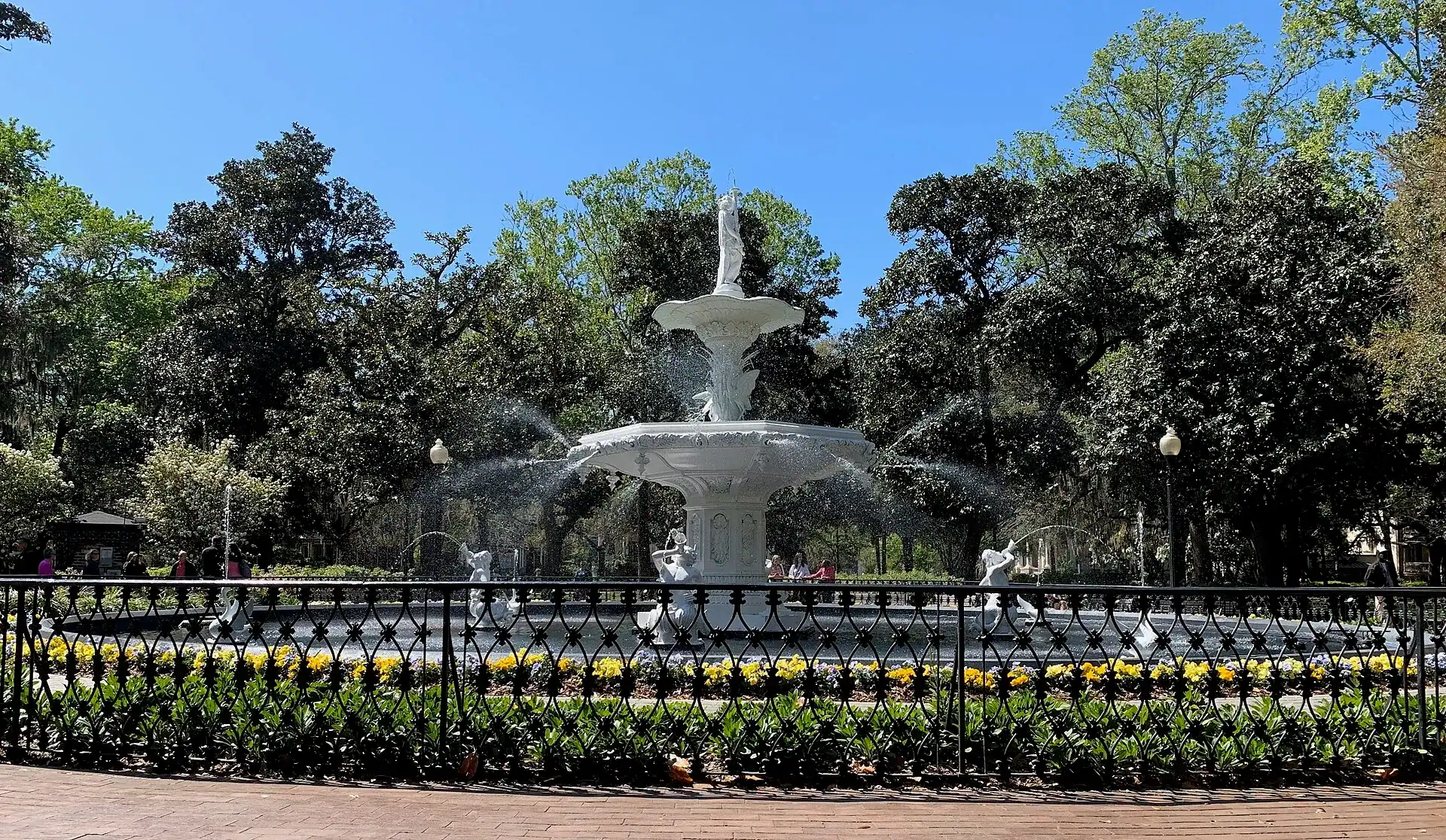 Photo: Seasider53 / Wikimedia Commons (CC BY-SA 4.0)