Cost of Living in Zacatecas
Real market data
Source: Numbeo · September 2026
$600/moSolo nomad1-bed centre + living costs
$870/moCoupleshared 1-bed + costs
$510/moLean / localcheaper area + costs
- 1-bed rent, city centre$260MX$4,500
- 1-bed rent, outside centre$170MX$3,000
- Monthly costs excl. rent (1 person)$340MX$5,863
- Meal, inexpensive restaurant$7MX$115
- Monthly transit pass$17MX$300
Prices are from Numbeo (September 2026), converted to USD at $1 = MX$17.34 (01 Aug 2026). The monthly living-costs figure is our transparent one-person basket, groceries, a few meals out, utilities, phone, internet, transport and essentials, priced from those figures. Solo adds central rent; couple and lean are estimates from the same numbers.
Zacatecas is one of the better-value colonial cities in Mexico, in part because it sees far fewer foreign nomads than San Miguel de Allende or Oaxaca, so prices have not been pushed up by outside demand. A solo remote worker living comfortably in or near the historic center can expect to spend roughly $900 to $1,600 per month, depending on how much you eat out and whether you rent short or long term. Housing is the biggest swing: a furnished one-bedroom near the cathedral costs meaningfully more per night on a short booking than a local lease negotiated in person. Everyday costs, market produce, comida corrida lunches, buses, and coffee, are genuinely cheap. These are editorial estimates, not surveyed figures, so treat them as a planning starting point.
- Furnished 1-bed rental: roughly $400 to $700 per month
- Comida corrida (set lunch): around $4 to $7
- Local bus or combi ride: under $1
- Coworking or cafe day: a few dollars in coffee, or a modest monthly desk fee
Where to Work in Zacatecas
Zacatecas is not a saturated coworking hub, so your setup will lean on laptop-friendly cafes plus a few dedicated desks. The historic center has a handful of reliable spots with decent wifi, strong coffee, and the kind of quiet mid-morning lull that suits calls. Home internet in central apartments is generally adequate for video meetings, though older buildings vary. The altitude means cool interiors year-round, so a warm layer helps on winter mornings when cafes are slow to heat up. If you need a professional backdrop or a stable connection for a big call, book a desk in advance rather than assuming walk-in space.
- Cafes along Avenida Hidalgo near the cathedral are the easiest daily option
- Carry a backup mobile hotspot for important calls
- Mornings are quietest; afternoons fill with students and locals
Getting Around Zacatecas
The historic center is walkable but genuinely steep. Zacatecas is built into a narrow ravine, so its callejones climb and twist, and a short map distance can mean a real hill. Sturdy shoes matter more here than in flatter colonial towns. For longer trips, local buses and combis are cheap and cover the city and neighboring Guadalupe. The teleferico cable car glides between two hilltops and is more a scenic ride than daily transport, but it is a lovely way to read the city's layout. General Leobardo C. Ruiz International Airport (ZCL) sits outside town with limited flights, so many travelers instead take comfortable long-distance buses to Guadalajara or Aguascalientes, both a few hours away, and connect onward from there. The airport's few routes point north, following the state's long emigration ties: Volaris flies nonstop to Chicago Midway, Los Angeles and San Jose, and American Eagle to Dallas Fort Worth. Arriving that way has a security logic as well, since Washington keeps the whole state at its highest warning level and allows its own staff to reach the city only by air, along the highway from the airport.
- Wear real walking shoes; the callejones are steep and cobbled
- Buses and combis reach Guadalupe and the outer neighborhoods cheaply
- The teleferico is scenic rather than practical daily transport
- ZCL airport has limited routes; buses to Aguascalientes or Guadalajara widen your options
- The altitude can leave you winded on hills at first
Sorting transport? Book an airport transfer, or compare car rental on Auto Europe and QEEQ.
Visas for Zacatecas
Most visitors from the US, Canada, the UK, the EU, and many other countries enter Mexico as tourists without arranging a visa in advance. The tourist entry has historically allowed up to 180 days, but this is now set at the immigration officer's discretion, and shorter stamps have become common, so never assume you will get the full period. Check the number written on your entry record and plan around it. If you want to base yourself here for many months or longer, the temporary resident visa is the usual route, and it is generally started at a Mexican consulate abroad before you arrive.
- Tourist entry: up to 180 days, but often granted for less at officer discretion
- Check the exact days written on your entry record on arrival
- Temporary resident visa suits longer stays and usually starts at a consulate abroad
Best Time to Visit Zacatecas
At around 2,440 meters, Zacatecas has a high-altitude climate that stays cool at night all year, even in summer. Spring, from roughly March to May, is warm, dry, and bright, and is many people's favorite window. Summer brings the rainy season, with afternoon storms that green the surrounding hills and clear quickly. Autumn stays pleasant, while winter days are mild in the sun but genuinely cold once it sets, so pack layers regardless of season. Culturally, Semana Santa fills the city around Easter, and the Festival Cultural de Zacatecas is a major draw with music and performances in the plazas. Book accommodation early around either, since central rooms sell out and prices climb. Late August brings a stranger spectacle, the Morismas de Bracho: four days of staged battles between Christian and Moorish armies on the hills at Bracho, held around the feast of Saint John the Baptist's martyrdom on 29 August. In 2025 it set a Guinness record as the largest theatrical performance ever staged, with 17,601 participants, and the city fills to match.
- Spring (March to May): warm, dry, and clear, a strong all-round choice
- Summer: afternoon rains, lush hills, quick-clearing storms
- Winter: mild sunny days but cold nights; bring layers
- Festival Cultural de Zacatecas and Semana Santa are peak, lively, and busy
Pros and Cons of Zacatecas
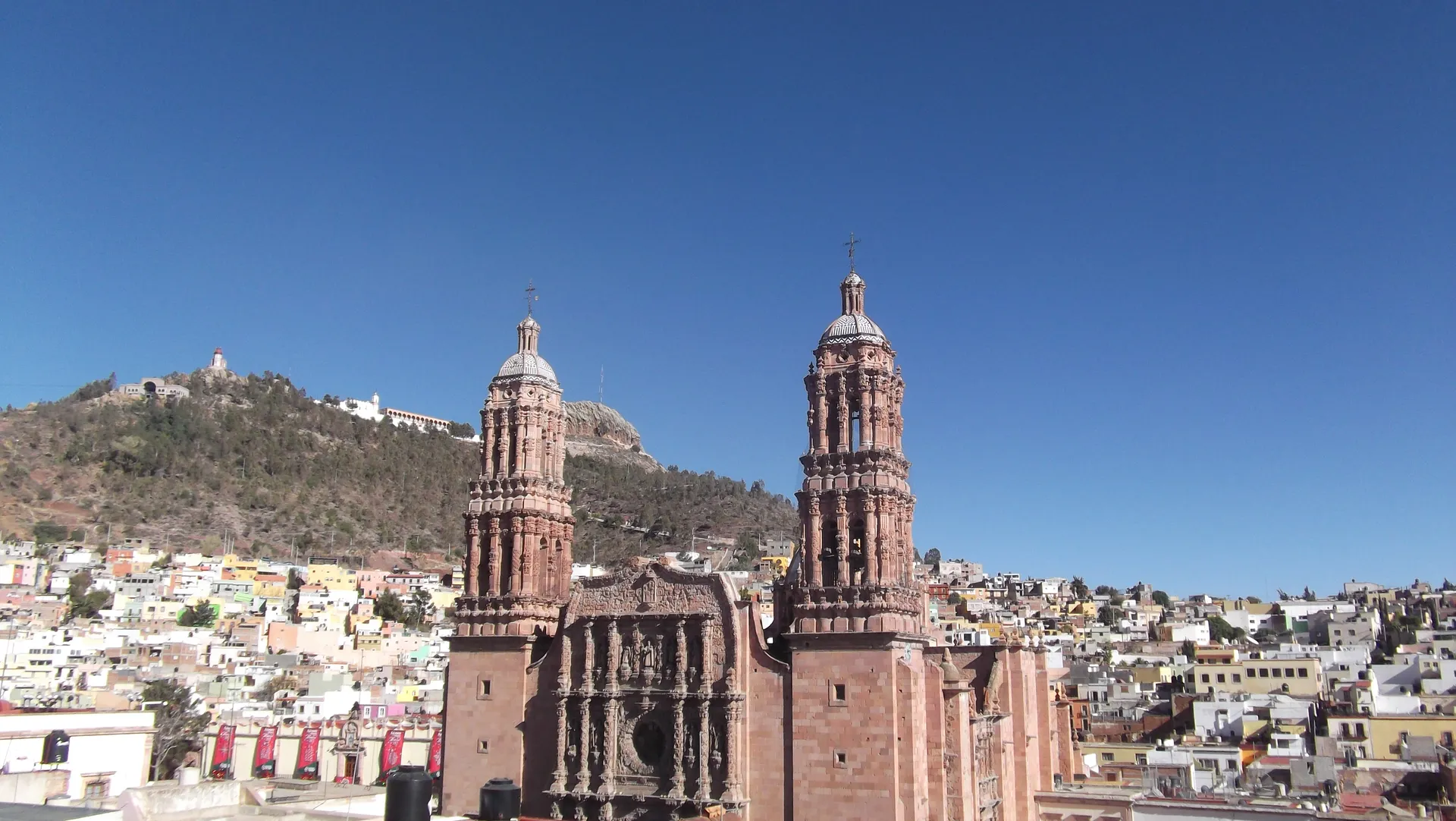
Zacatecas rewards travelers who want a strikingly beautiful, deeply Mexican colonial city without the tourist crush. The pink-stone baroque cathedral, the mines, the Coronel museums, and the nightly callejoneadas give it real character, and the low cost and warm locals make daily life easy. The honest trade-offs are practical: little spoken English, limited nomad infrastructure, a small international community, and the steep terrain and altitude that take adjustment. On safety, the historic center is generally calm and well touristed, but Zacatecas state has had serious cartel-related security concerns, so the sensible approach is to stay informed, keep to central and populated areas, avoid unnecessary intercity travel at night, and follow local guidance rather than assuming the whole state mirrors the peaceful center. The centre has been on UNESCO's World Heritage list since 1993 as a city built on colonial silver, and that fortune is what you are looking at in the scale of the cathedral and the mansions around it.
- Pros: stunning architecture, low cost, rich food and culture, few crowds, warm locals
- Cons: thin English, small nomad scene, steep hills, high altitude, limited flights
- Safety: central areas are calm, but stay informed given wider state-level concerns
Who Zacatecas Is For
Zacatecas suits the curious, self-reliant nomad who values authenticity over convenience and is happy to function in Spanish. If you love colonial history, museums, mountain light, and evenings that end with a wandering street party rather than a rooftop bar scene, you will feel at home here. It is a strong pick for a focused month or two of deep work in a beautiful, affordable setting, or for a slower traveler weaving through central Mexico who wants somewhere less discovered than the usual stops. It is a weaker fit for those who need a ready-made expat network, extensive coworking, English everywhere, or flat and easy walking. Come with patience, a warm layer, some Spanish, and an appetite for one of Mexico's most underrated cities.