Cost of Living in Sarandë
Where this figure comes from. No cost survey covers Sarandë, so the $1,100 a month above is our own estimate rather than a measurement. On 416 of our 999 city guides the figure is built from a published Numbeo basket, a one-bedroom rent in the centre plus one person's monthly costs without rent, converted to USD; this city is not one of them. How we source everything.
Sarandë is one of the most affordable spots on the Mediterranean coast, though costs spike hard in summer. Here is what to expect as a solo remote worker:
- Rent, central 1-bedroom (off-season, Oct to May): $425 to $670/month. Expect sea-view apartments to sit at the top of that range.
- Rent, away from waterfront or via local landlord: $305 to $490/month. A 1-bedroom booked directly through a local contact rather than Airbnb drops cost significantly.
- Warning on high season (mid-June to mid-September): Rental prices nearly triple. Budget $900 to $1,500/month for the same apartment in July or August.
- Groceries: $185 to $245/month for a single person covering basics, fresh produce, and local wine.
- Eating out: A sit-down meal at a local taverna runs $12 to $18. Coffee is $3 to $4.50. Budget $245 to $365/month if you eat out daily.
- Coworking hot-desk: Saranda Marketing and Coworking charges roughly $13/day with weekly and monthly rates available at a discount. A full month of hot-desking will run around $220 to $305.
- Local transport: Sarandë is compact and walkable, so most days cost nothing. A taxi across town is $3.50 to $6. Budget $24 to $61/month unless you travel out of town often.
- Total realistic monthly range: $700 to $1,100 in the off-season; $1,400 to $2,000+ in peak summer.
Albania's currency is the Albanian Lek (ALL). Cards are accepted in larger restaurants and hotels, but many small shops and landlords expect cash. Carry local currency.
Where to Work
Sarandë has one dedicated coworking space and a handful of solid cafes. The situation is workable but requires some planning.
Saranda Marketing and Coworking is the only purpose-built coworking space in town, opened in 2024. It sits on Road Five (Gjergji Araniti), a short walk from the promenade. The connection is fast, and the space offers 24/7 member access, monitors, a conference room, and free coffee. If you need reliability, this is your base.
For cafe work, the options are genuinely good. Sweesh and Vive Mare both have fast connections and are popular with remote workers. Jesa Cafe Bar near the port is workable too. Noname Bar on the south promenade is comfortable with decent speeds. Limani and Caffe Italia are better for a quick coffee than a full work session, as WiFi is patchy.
Power outlets are the main frustration. Most cafes have limited sockets, so arrive early and bring your own extension cable if you plan a long session. The coworking space has an outlet at every desk. In summer, many waterfront cafes prioritize drink turnover over lingering workers; shoulder-season visits are far more relaxed.
Getting Around
Sarandë is small and almost everything you need day-to-day is within a 15 to 20 minute walk. The promenade, main market, and most restaurants are flat and easy to navigate on foot.
For longer trips, shared minibuses (furgons) are the local option. They depart from near the main bus station and connect Sarandë to Gjirokaster (about 1.5 hours, $5 to $7.50) and eventually to Tirana (roughly 5 hours, $18 to $24). Express buses to Tirana also run daily, especially in summer via the coastal Riviera road.
Sarandë has no commercial airport. Your two main options are:
- Tirana Airport (TIA): Around 5 hours by bus or shared taxi. Most international flights arrive here.
- Corfu Airport (CFU), Greece: Just 30 minutes away by ferry. The Ionian Seaways and Finikas Lines ferries run up to 10 times daily in summer. This is often the faster and cheaper option if you are flying from Western Europe.
Taxis within town are cheap but drivers sometimes inflate prices for tourists, particularly in summer. Agree on a fare before getting in or use an app where available.
Sorting transport? Book an airport transfer, or compare car rental on Auto Europe and QEEQ.
Visas and Staying Long-Term
Most passport holders from the US, UK, EU, Australia, and Canada can enter Albania visa-free for up to 90 days within any 180-day period. You do not need to register with police for short stays, though some landlords will handle this for longer bookings.
For stays beyond 90 days, Albania has a formal long-stay pathway that functions as a digital nomad option. It requires a Type D long-stay visa followed by a Unique Permit for residence. Requirements include proof of remote income of at least around $9,800/year and proof of accommodation. The permit lasts 12 months and is renewable for up to 5 years total. From January 2025, Albania introduced a progressive income tax that starts at 0% on annual earnings up to approximately $7,310, making it attractive for lower earners.
Best Time to Visit
Sarandë has a classic Mediterranean climate with hot, dry summers and mild, rainy winters. For remote work specifically:
Best window: May to June and September to October. Temperatures sit between 22 and 28 degrees Celsius (72 to 82F), the Ionian Sea is warm enough to swim, crowds are manageable, and rental prices are well below peak. Cafes and restaurants are open and unhurried. This is when Sarandë is genuinely pleasant as a place to live and work.
July to August is peak beach season. The town fills with Albanian vacationers and international tourists. Prices surge, noise levels rise, and getting a quiet table at a cafe becomes harder. Coworking makes more sense this time of year than cafe-hopping.
November to March is quiet and cheap, but winters bring rain and the town goes into low-season mode. Many restaurants and cafes reduce hours or close entirely. It is manageable if you want solitude and low costs, but the vibe is subdued.
Pros and Cons
- Very low cost of living outside peak summer months
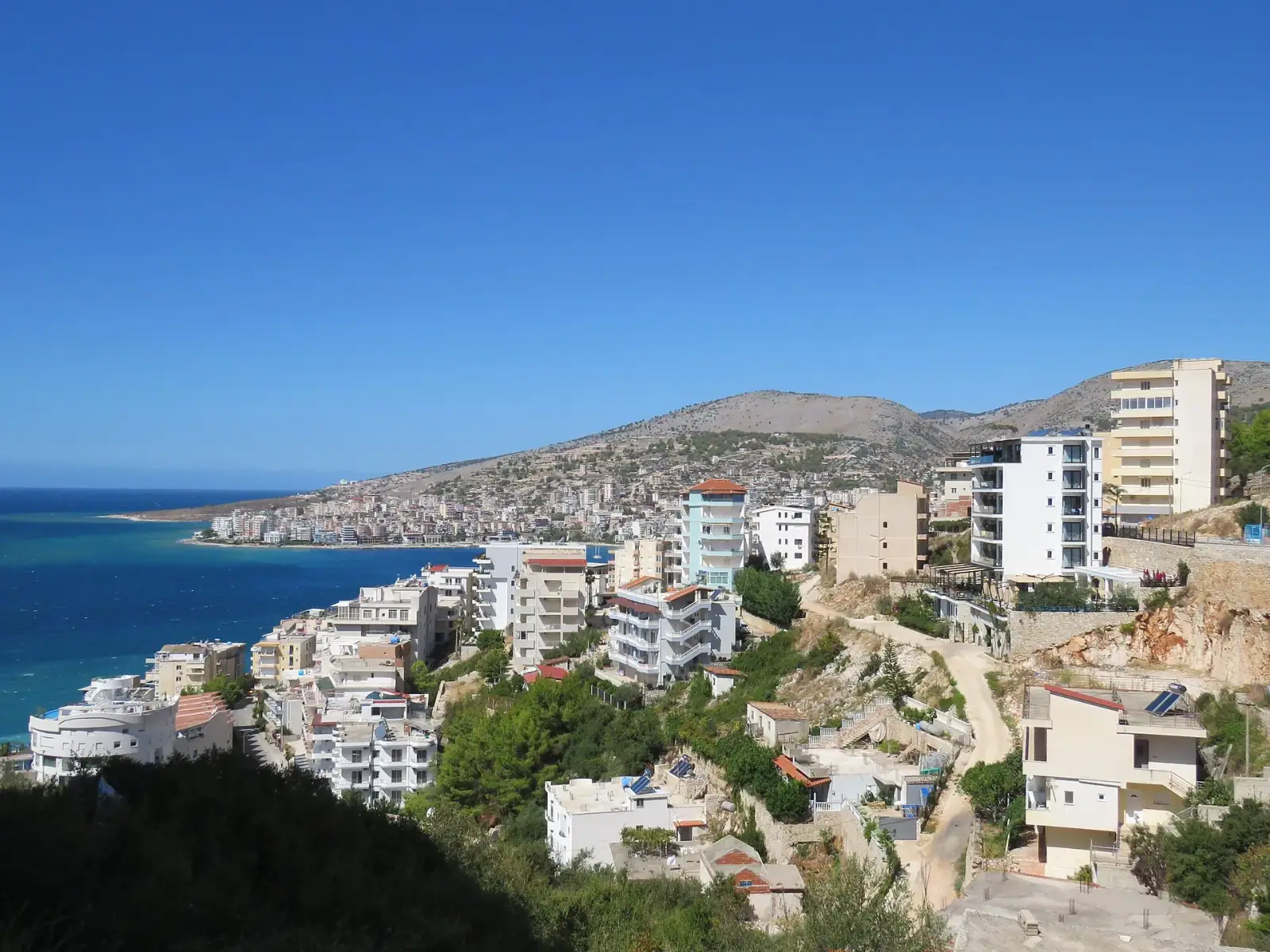
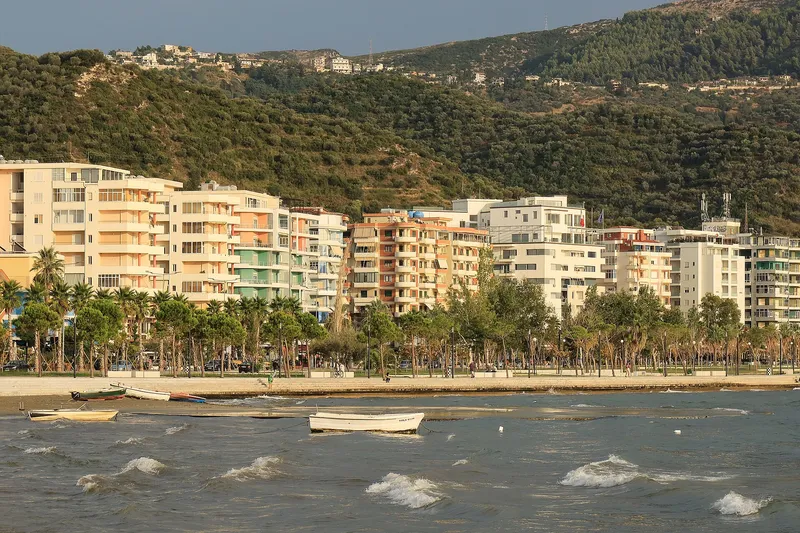
- Stunning setting on the Ionian Sea with mountains behind
- Easy access to Corfu and the Greek island circuit by ferry
- Growing infrastructure for remote workers, including a solid dedicated coworking space
- Genuine Mediterranean lifestyle without the Western European price tag
- Long visa-free window (90 days) plus a renewable nomad-friendly permit
- Chaotic and expensive in July and August when tourist numbers overwhelm the town
- No local airport, which adds travel friction and cost
- Cash-dependent economy with limited card acceptance at smaller venues
- Limited coworking infrastructure compared to larger regional hubs
- Quiet and somewhat isolated in winter with fewer open businesses
- Outlet scarcity in cafes makes long work sessions harder outside the coworking space
Who Sarandë Is Best For
Sarandë suits remote workers who put lifestyle and affordability above urban convenience. If your ideal day includes a morning swim, a solid few hours of work at a coworking space or a cafe with sea views, and a cheap, excellent dinner, this place delivers. It is particularly well suited to those on a mid-range budget who want a Mediterranean experience without Lisbon or Barcelona prices.
The 90-day visa-free window is ideal for a focused sprint. Those wanting to stay longer will find the long-stay permit more straightforward than in many European countries, especially if income is moderate.
Consider skipping Sarandë if you rely on a dense coworking scene, need a big city's professional network, or plan to visit in July or August on a tight budget. It is also a harder sell if you need frequent flight connections, since reaching any major airport takes half a day.