Cost of Living in Cairns
Real market data
Source: Numbeo · August 2026
$2,280/moSolo nomad1-bed centre + living costs
$2,940/moCoupleshared 1-bed + costs
$2,060/moLean / localcheaper area + costs
- 1-bed rent, city centre$1,460A$2,075
- 1-bed rent, outside centre$1,230A$1,752
- Monthly costs excl. rent (1 person)$830A$1,176
- Meal, inexpensive restaurant$18A$25
- Monthly transit pass$15A$22
- Buy price, per m² (centre)$6,550A$9,325
Prices are from Numbeo (August 2026), converted to USD at $1 = A$1.42 (01 Aug 2026). The monthly living-costs figure is our transparent one-person basket, groceries, a few meals out, utilities, phone, internet, transport and essentials, priced from those figures. Solo adds central rent; couple and lean are estimates from the same numbers. The guide below quotes its own monthly range, which is a different measurement rather than a competing one: this table prices a defined basket at the figures above, while that range is a judgement about how somebody actually lives here.
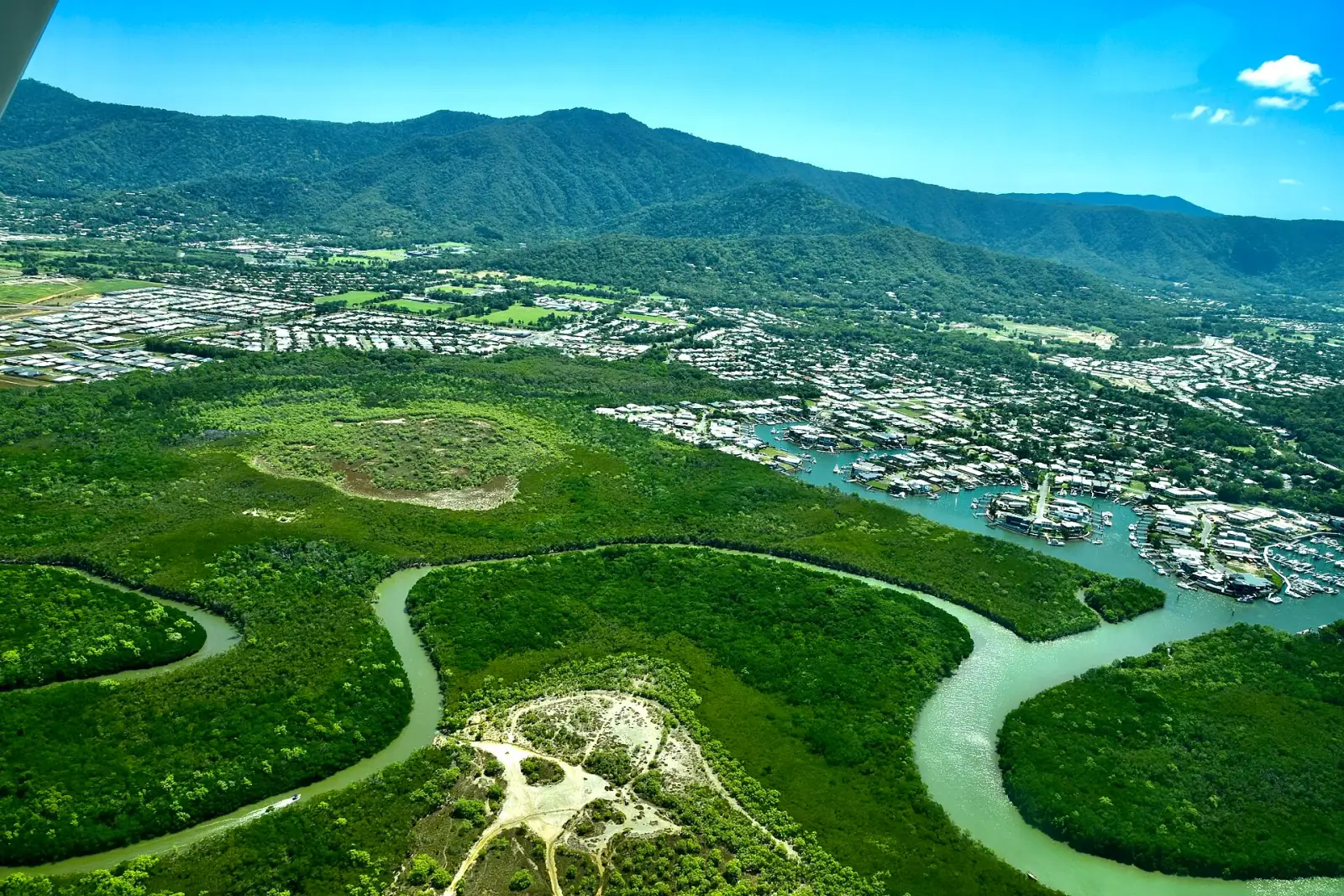
Cairns sits at the pricier end of Australian cities for nomads, though it remains cheaper than Sydney or Melbourne. Expect to pay more than Southeast Asia or Latin America for roughly comparable or better infrastructure.
Monthly breakdown (approximate, 2025 figures):
- Rent, central CBD or Esplanade area: $985-1,330 for a furnished one-bedroom. Shared accommodation drops this to $490-700.
- Rent, cheaper areas (Westcourt, Manoora, Manunda): $700-985 for a one-bedroom unfurnished.
- Groceries: $280-385 per month cooking most meals at home.
- Eating out: $11-18 per meal at a casual restaurant; expect $28-49 for a sit-down dinner with drinks. Budget $350-490 per month if you eat out regularly.
- Coworking hot desk: $205-245 per month, or roughly $25-35 per day.
- Local transport (Sunbus): $42-63 per month if you rely on buses. Many people in the CBD walk or cycle.
- Mobile data (10GB+ plan): $25-35 per month.
Total realistic monthly range: $1,970-2,950 for a single nomad renting privately and working from coworking spaces. Hostel-based nomads can get closer to $1,400. Staying in hotels or Airbnbs pushes costs significantly higher.
Where to Work
Cairns has a small but functional coworking scene. Art Work Spaces at 36 Abbott St in the CBD is the most polished option, with ergonomic desks, a green-wall fit-out, and a prestigious central address. TropicHUB, situated on a mezzanine warehouse near Cairns Central, provides 27-inch monitors at every desk, fast unlimited WiFi, and a focused, minimalist environment suited to deep work. It sits about eight minutes from the airport and six minutes from the CBD. The Cairns Business Hub closed in May 2025, so do not rely on listings that still mention it.
Cafe work is common but uneven. Blackbird Laneway in Oceana Walk Arcade (Grafton St) is the most laptop-friendly specialty coffee spot in the CBD, with comfortable seating and good natural light. Sipping Duck Coffee Roasters in Stratford roasts on-site and draws a consistent crowd of regulars; the Stratford location has enough table space to work. Wild Thyme on Shields St and Candy Cafe Bar on Grafton St both accommodate laptops during off-peak hours.
WiFi is generally reliable across coworking spaces. Cafe WiFi is more variable: some venues offer strong connections, others are slow or capped. Cairns' 4G and 5G coverage from Telstra and Optus is solid in the CBD and along the Northern Beaches. If your work demands consistent high-speed connectivity, a coworking membership is the safer choice over cafe-hopping.
Getting Around
The CBD is flat and compact. You can walk from the Esplanade to most cafes, coworking spaces, the Night Markets, and the main shopping precincts in under 15 minutes. A bicycle is a genuinely useful option here, especially along the foreshore path.
The local bus network is run by Sunbus under the TransLink system. It covers the CBD and connects to nearby suburbs and the Northern Beaches, but frequency is limited outside peak hours. There is currently no direct public bus link between Cairns Airport and the city. Your options from the airport are a taxi ($18-25, about 10-15 minutes to the CBD), a shared shuttle via operators like Con-x-ion or Cairns Airport Shuttle ($11-16 per person), or a rideshare. Many guesthouses and hotels also provide transfers.
A car is useful if you want to explore the Atherton Tablelands, Daintree, or beach areas north of the city such as Palm Cove or Port Douglas. For everyday CBD life, you can manage without one.
Sorting transport? Book an airport transfer, or compare car rental on Auto Europe and QEEQ.
Visas and Staying Long-Term
Australia does not offer a dedicated digital nomad visa as of mid-2026.
Citizens of eligible countries (including the US, UK, Canada, EU member states, Japan, and South Korea) can apply for an Electronic Travel Authority (ETA, subclass 601) or eVisitor (subclass 651) online before arrival. Both allow multiple entries and stays of up to three months per visit, valid for 12 months from issue. The ETA costs $14; the eVisitor is free.
A standard Visitor Visa (subclass 600) can be applied for if you are not eligible for the ETA or eVisitor. It can be granted for stays of three, six, or 12 months depending on the immigration officer's assessment. It does not permit local employment but does not restrict you from working remotely for overseas employers, though the legal position on this is not explicitly codified.
If you are aged 18-30 (or 35 for some nationalities), a Working Holiday Visa (subclass 417) allows a 12-month stay with the option to extend up to three years by completing regional work. This is a popular option for longer-term stays in Cairns, which sits in a regional work-eligible zone.
Best Time to Visit
Cairns has two seasons: dry (May to October) and wet (November to April). The dry season is by far the better window for remote work. Temperatures sit at a comfortable 21-27 degrees Celsius, humidity is low, skies are mostly clear, and afternoon storms are rare. This is also peak tourist season, which means higher prices and busier coworking spaces, but the conditions for productivity are genuinely good.
The wet season brings heavy daily rainfall, high humidity in the 80-90 percent range, and temperatures regularly above 30 degrees. Internet connectivity is generally unaffected by rain, but oppressive humidity makes working without air conditioning difficult. November to May is also stinger (jellyfish) season, which eliminates safe open-water swimming without a stinger suit. If you visit during the wet season, budget for reliable accommodation with air conditioning and factor in the discomfort.
The shoulder months of April-May and September-October offer a good compromise: dry-season conditions without the full peak-season price surge and crowd density.
Pros and Cons
Pros
- Direct access to the Great Barrier Reef and Daintree Rainforest for weekend breaks
- English-speaking, easy to settle in quickly with no language barrier
- Compact, walkable CBD with a relaxed tropical pace
- Good internet reliability in coworking spaces and most accommodation
- Strong food scene for a city of its size, with fresh local seafood
- Safe city with low violent crime rates
Cons
- Expensive by global nomad standards, especially accommodation and eating out
- Limited coworking options compared to larger Australian cities
- Wet season (November to April) is genuinely challenging: high heat, humidity, and heavy rain
- No public transport from the airport; car useful for exploring beyond the CBD
- Small city with a limited professional and tech nomad community
- Stinger season restricts swimming for roughly half the year
Who Cairns Is Best For
Cairns works well for nomads who want a relaxed, English-speaking base with extraordinary natural surroundings and do not need a large tech community around them. If your ideal week includes decent cafe coffee in the morning, a few hours of productive work in a coworking space, and a dive trip or rainforest hike at the weekend, Cairns delivers that reliably. It suits solo travelers who are comfortable in a smaller city, and couples or pairs who can split accommodation costs to take the edge off the pricing.
It is a stronger fit for people on Australian working holiday visas doing a longer regional stint, and for nomads who specifically want to be in Australia without the noise and expense of Sydney or Melbourne.
Skip Cairns if you need a large nomad community, frequent cheap flights to international hubs, cutting-edge coworking infrastructure, or a low cost of living. It is also a poor choice for anyone who cannot tolerate heat and humidity, since the wet season occupies nearly half the calendar year.