Cost of Living in Spokane
Real market data
Source: Numbeo · September 2026
$2,590/moSolo nomad1-bed centre + living costs
$3,360/moCoupleshared 1-bed + costs
$2,250/moLean / localcheaper area + costs
- 1-bed rent, city centre$1,630
- 1-bed rent, outside centre$1,290
- Monthly costs excl. rent (1 person)$960
- Meal, inexpensive restaurant$20
- Monthly transit pass$54
- Buy price, per m² (centre)$3,390
Prices are from Numbeo (September 2026), already in US dollars. The monthly living-costs figure is our transparent one-person basket, groceries, a few meals out, utilities, phone, internet, transport and essentials, priced from those figures. Solo adds central rent; couple and lean are estimates from the same numbers.
Budget around $2,590 a month as a solo remote worker in Spokane, which is one of the cheaper mid-sized cities in the American west and roughly half what the same life costs in Seattle. A one-bedroom apartment runs roughly $900 to $1,300, with downtown and the South Hill at the top of that and the north side and Spokane Valley below it. Washington has no state income tax, which is a meaningful difference for anyone earning here rather than abroad. Health insurance sits outside this figure and dominates any American budget. The figure is built from Numbeo prices for Spokane: a one-bedroom in the centre plus a one-person basket of food, transport and bills. Sales tax runs close to nine per cent and is added at the register rather than shown on the shelf, which is the offsetting cost and the thing that catches anyone used to a displayed price being the price.
Where to Work in Spokane
Spokane has a modest coworking market serving a healthcare, education and aerospace economy, with desks from roughly $150 a month and several spaces clustered downtown. Gonzaga University and the medical school give the city a professional layer beyond its size. Fibre is widely available at ordinary American prices and mobile coverage is comprehensive across the valley. Seattle is about an hour by air or four and a half hours by road, which is how most people here handle anything the local network cannot supply. Remote work is common enough in the city that it needs no explanation. The city sits in the Pacific time zone, which puts it three hours behind the American east coast and eight or nine behind most of Europe, so European work means very early mornings. An air force base west of the city is the single biggest employer for a long way around, and it is the reason the aerospace suppliers settled here at all, which the outdoor reputation gives no hint of. Healthcare is the other pillar, with two medical schools now training here, and together they support a professional population that depends on nothing seasonal. None of it competes for a remote worker's attention, which is rather the point.
Getting Around Spokane
Spokane is built around a river gorge with waterfalls running through the middle of downtown, which makes the centre unusually walkable for an American city of this size. Riverfront Park sits at the heart of it and the Centennial Trail runs sixty kilometres along the river towards Idaho, which is the best cycling here by a distance. The bus network covers the main corridors adequately and little else, so most residents drive. Spokane airport is fifteen minutes from downtown with direct flights across the west. Coeur d'Alene and its lake are forty minutes east over the state line. Snow closes the passes west over the Cascades several times each winter, which is worth knowing if the drive to Seattle is part of your plan rather than the flight. The long-distance train across the northern states calls here in the middle of the night, and this is where it splits, one half going on to the coast and the other to Portland, which is a piece of railway theatre performed at two in the morning to nobody at all. It is slow but genuinely pleasant if the schedule suits. Otherwise the interstate running east and west is the only road that matters.
Sorting transport? Book an airport transfer, or compare car rental on Auto Europe and QEEQ.
Visas for Spokane
The United States offers no digital nomad visa. Most Western nationals enter under the Visa Waiver Programme with an ESTA, which permits ninety days for tourism or business meetings and rules out employment. Nationalities outside the waiver programme need a B1 or B2 visa, and a B2 visitor is normally admitted for six months. Anything longer requires employer sponsorship, an investor category or family, and none of those routes is quick or cheap. Border officers judge the purpose of a visit rather than the location of an employer, so anyone entering under the waiver should be able to describe the trip as a visit and show onward travel. Tax residence is the trap rather than immigration: spending enough days here across three years triggers a presence test that can make somebody liable on worldwide income regardless of which visa they hold, and the counting formula is not intuitive. Anyone stringing visits together should run the numbers before the third year rather than after it. The travel authorisation is good for two years and any number of trips inside it.
Best Time to Visit Spokane
June, September and early October are the best months, with warm dry days, cool nights and the river at its most usable. July and August are hot and dry, often above thirty-two degrees, and wildfire smoke from the interior northwest has become a regular feature of late summer that can hold air quality down for a week at a time. Winter is cold and grey with real snow, daytime temperatures around freezing, and three ski areas within an hour and a half including Mount Spokane and Schweitzer over in Idaho. Spring comes late and wet. The smoke season is now predictable enough that residents track air quality daily through August and September, and an indoor filter is a normal household item rather than a precaution. The city calls itself after the lilac and holds a parade for it in May, which is when the gardens on the hill above downtown repay the climb. Cold air settles into the valley through the darkest weeks and can sit there for days, so a grey stretch down here is often bright a few hundred metres up on the ridge. The river runs hardest on snowmelt in April and the falls are loudest then.
Pros and Cons of Spokane
Spokane has a waterfall in the middle of downtown, sixty kilometres of riverside trail, three ski areas within ninety minutes and lakes across the Idaho border, all at costs that make Seattle look absurd. Hoopfest and Bloomsday give the city two of the largest events of their kind anywhere. There is no international circle here to join at all, the summer smoke season is a genuine health consideration, the winters run long and grey, and the city is isolated enough that most trips involve a flight. The professional network is real but shallow outside healthcare and education. Spokane is also the largest city between Seattle and Minneapolis, which gives it more medical and cultural infrastructure than its population would otherwise support.
Who Spokane Is For
Outdoor access and a walkable downtown at a price the coast cannot match, for an American who does not mind a real winter. It is unusually good for anyone who skis, since three areas sit within easy reach and none of them carries resort pricing. American work rights are the gate, and without them the rest is academic. Beyond that, the international scene is thin and the professional network shallow outside health care and the university. Anyone with a respiratory condition should look closely at what late summer does to the air here. American east-coast hours are the reason to be here rather than somewhere warmer. The three-hour offset turns a nine-to-five into a six-to-two and hands back every afternoon for the trail.
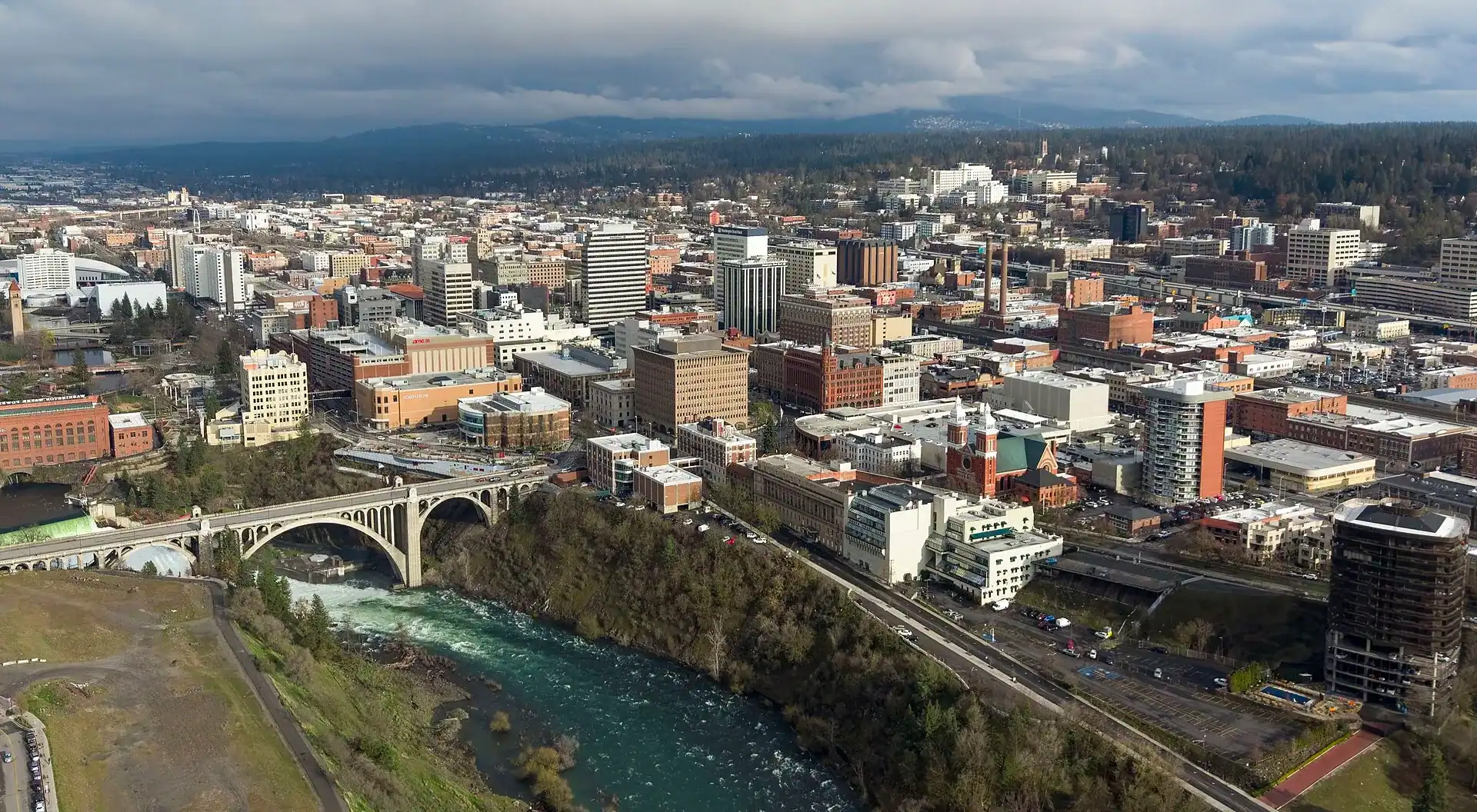 Photo: Quintin Soloviev / Wikimedia Commons (CC BY 4.0)