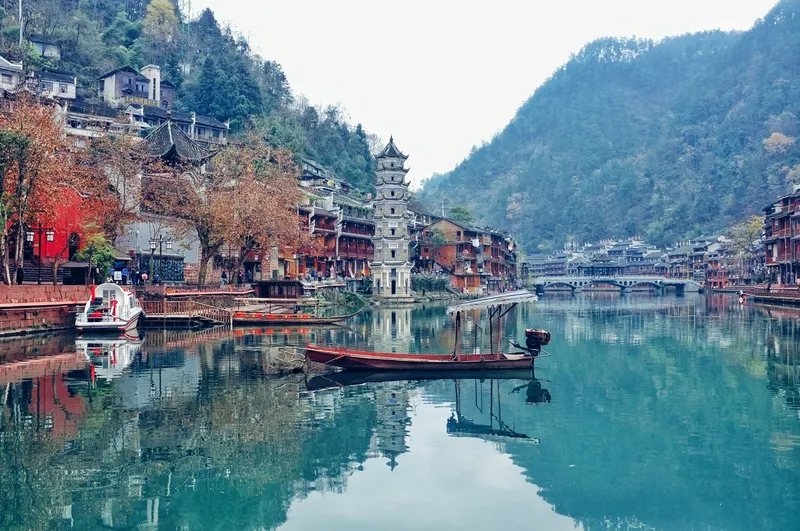
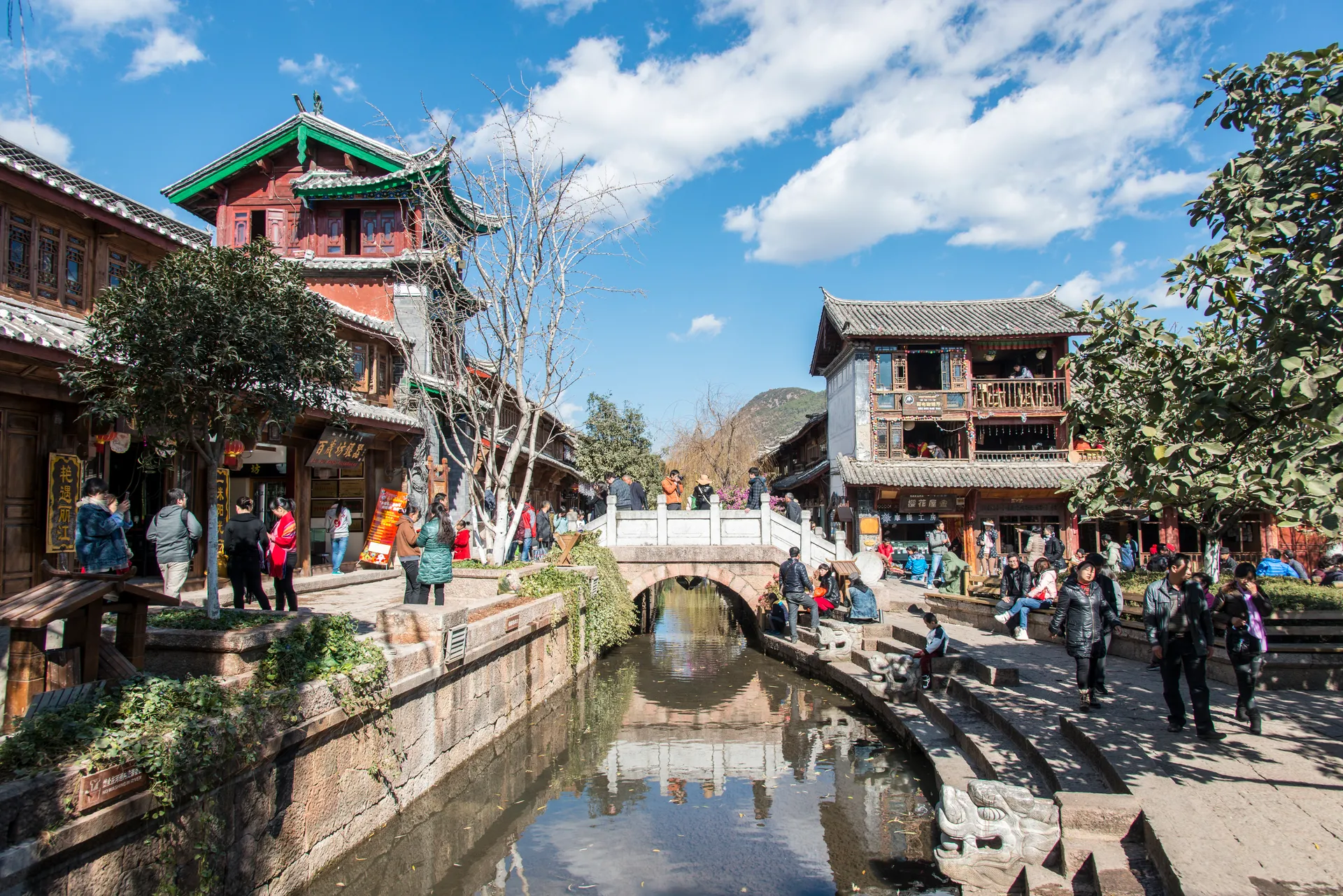
A canal and bridge in Lijiang Old Town, China
Photo: chensiyuan / Wikimedia Commons (CC BY-SA 4.0)
๐Ÿ‡จ๐Ÿ‡ณ

Lijiang

China

A UNESCO old town of canals, cobbled lanes, and Naxi culture in Yunnan, beneath the Jade Dragon Snow Mountain.

$800
Monthly Budget
--
Current Weather
Subtropical Highland
Climate Type
60 Mbps
Avg. WiFi Speed
8/10
Safety Score
500+
Active Nomads
--
Time Difference
0
Nomad Score

Setting Up as a Nomad in Lijiang

A UNESCO old town of canals, cobbled lanes, and Naxi culture in Yunnan, beneath the Jade Dragon Snow Mountain. For remote workers, Lijiang leans on nature and culture, with a typical budget near $800 a month. The main trade-off is the size of the nomad scene.

Compare Lijiang vs Sapa →

Nomad Facts at a Glance

The practical basics for Lijiang, China

CurrencyYuan (ยฅ, CNY)
LanguageMandarin
Plugs & powerType A/C/I ยท 220V / 50Hz
Tap waterBottled or boiled
TippingNot customary
Ride-hailingDiDi
Emergency110
Mobile dataeSIM: Airalo / Holafly
Driving sideRight
Dialling code+86
Time zoneUTC+8
Best time to visitMar, Apr, May

Country-level guidance to get you oriented, not a substitute for checking locally. Numbers and norms can change; 112 reaches emergency services from most mobiles worldwide.

Category Breakdown

How Lijiang scores across all 13 factors

Weather in Lijiang

Monthly averages from 2019-2023 (Open-Meteo), and the best time to visit

13°
-2°
Jan
14°
-1°
Feb
18°
Mar
20°
Apr
23°
May
24°
13°
Jun
22°
13°
Jul
22°
13°
Aug
20°
12°
Sep
18°
Oct
16°
Nov
13°
-1°
Dec
Daily high & low (°C)Rainfall (mm/month)Best months to visit

The best time to visit Lijiang for comfortable weather is Mar, Apr, May. The warmest month is Jun (around 24°C by day), and the wettest is Aug (about 298mm of rain).

Chasing good weather? See other cities that are warm in Mar, or plan a multi-city route around the seasons. Staying a while in Lijiang? Check visa options, your time-zone overlap and how far your budget stretches, or find it on the world map.

Historical monthly averages, not a forecast. Source: Open-Meteo.

Best Neighborhoods in Lijiang

Where to base yourself for the perfect nomad experience

Dayan Old Town

$$
Historic, atmospheric, lively and crowded

The UNESCO heart of Lijiang

The main old town and a UNESCO World Heritage site, Dayan is a maze of cobbled lanes, canals and wooden Naxi buildings radiating from Sifang Square and the Mu Palace. It is beautiful and atmospheric, but also the busiest and most touristy corner of the city.

Best for: Culture seekers and first-time visitors who want to be in the heart of the old town
โœ“ Pros
  • Unmatched old-town atmosphere with canals, bridges and Naxi architecture
  • Everything within walking distance, from teahouses to bars
  • Rich culture around Sifang Square and the Mu Palace
โœ— Cons
  • Very touristy, commercial and crowded, especially in peak season
  • Noisy bar streets and cobbles make it less practical for focused work

Shuhe Old Town

$$
Mellow, charming and slower-paced

A quieter old town with room to breathe

A smaller, more relaxed old town a few kilometres northwest of Dayan, Shuhe shares the same cobbled lanes, streams and Naxi charm but with a calmer, less frantic pace. It has become a popular base for travellers who want old-town character without Dayan's density and noise.

Best for: Nomads wanting old-town atmosphere with more calm and space to work
โœ“ Pros
  • Genuine old-town character with noticeably fewer crowds than Dayan
  • Pleasant cafes and guesthouses suited to longer stays
  • Easy access to Dayan and the surrounding countryside
โœ— Cons
  • Still tourist-focused, with rising prices
  • Fewer services and less nightlife than the main old town

New Town (Gucheng District)

$
Modern, functional and everyday

Modern, practical and better value

The modern city surrounding the old towns, the new town in Gucheng district offers everyday conveniences: supermarkets, modern apartments, hospitals, banks and the main transport links. It lacks old-town charm but is cheaper, quieter for work and far more practical for a longer stay.

Best for: Longer-term nomads prioritising value, space and reliable amenities
โœ“ Pros
  • Cheaper modern apartments and more space for the money
  • Full range of services, from supermarkets to hospitals
  • Closer to the railway station and transport hubs
โœ— Cons
  • Little of the historic charm that draws people to Lijiang
  • Less walkable and atmospheric than the old towns

Baisha Village

$
Rural, peaceful and traditional

The oldest Naxi settlement below the mountain

A tranquil village toward Jade Dragon Snow Mountain, Baisha is the oldest Naxi settlement in the area and once the Naxi capital. Known for its ancient frescoes and unhurried rural feel, it offers a glimpse of old Lijiang life with the mountain rising close on the horizon.

Best for: Slow travellers and mountain lovers seeking quiet and authenticity
โœ“ Pros
  • Peaceful, authentic Naxi village atmosphere
  • Historic Baisha frescoes and traditional architecture
  • Closest base to Jade Dragon Snow Mountain and its trails
โœ— Cons
  • Very limited services and amenities
  • Further from the city, so you rely on transport for daily needs

Cost of Living in Lijiang

Lijiang is one of Yunnan's more affordable bases, and a comfortable single nomad can expect to spend roughly $700 to $1,300 per month depending on whether you live inside the atmospheric old town or in the cheaper, more practical new town. Rent is the swing factor: a guesthouse room or modern studio in Gucheng district costs far less than a boutique courtyard stay in Dayan. Naxi and Yunnan food is cheap and abundant, local transport is inexpensive, and daily costs stay low if you eat where locals eat rather than in the tourist lanes. Budget a little extra for a reliable VPN, occasional tours to the mountains, and warm clothing for the altitude and cold nights.

  • Modern one-bedroom in the new town: roughly $200 to $400 per month on a longer lease.
  • Guesthouse or courtyard room in or near the old town: often $400 to $700 for a monthly stay.
  • Local Naxi or Yunnan meal: about $2 to $5; tourist-lane restaurants cost noticeably more.
  • Coffee in a laptop-friendly cafe: around $3 to $5.
  • DiDi or taxi across the new town: usually $2 to $5 per ride.

Where to Work in Lijiang

Lijiang is scenic rather than a purpose-built remote-work hub, so temper your expectations. The biggest practical hurdle is the Great Firewall: many Western services, including Google, Gmail, WhatsApp, Instagram and much of the wider web, are blocked or unreliable, so a working VPN installed before you arrive is close to essential. Local fixed-line and mobile internet is generally decent and fast for anything hosted inside China, and most guesthouses and cafes offer usable wifi. The old town is beautiful but genuinely touristy and noisy in the day, which makes deep-focus work harder there. For steadier sessions, many nomads base themselves in the quieter new town or in Shuhe and treat the old lanes as a place to wander after hours.

  • Install and test a reputable VPN before entering China; do not rely on downloading one after you arrive.
  • Guesthouse wifi is convenient but variable; ask to test speeds before committing to a long stay.
  • Cafes around Sifang Square and Shuhe are pleasant but can be crowded and loud at peak times.
  • Buy a local SIM or eSIM with data as a backup for hotspotting.

Getting Around Lijiang

Getting around Lijiang is mostly straightforward and cheap. The UNESCO-listed Dayan old town is entirely pedestrian, a maze of cobbled lanes, canals and small bridges best explored slowly on foot, though the uneven cobbles are hard on wheels and heavy luggage. Beyond the old walls, the new town runs on affordable taxis, DiDi ride-hailing and local buses. Lijiang Sanyi Airport (LJG) connects to Kunming, Chengdu, Chongqing and other domestic hubs, while Lijiang railway station puts you on trains toward Kunming, Dali and Shangri-La. From here you can arrange tours to Jade Dragon Snow Mountain (Yulong Xueshan) and onward trips to Tiger Leaping Gorge. Remember the altitude of about 2,400 metres: pace yourself for the first days and drink plenty of water.

  • Dayan and Shuhe old towns are walkable but built on cobbles, so pack comfortable shoes.
  • DiDi and taxis are the easiest way around the new town; have your destination written in Chinese.
  • Lijiang station serves trains toward Kunming, Dali and Shangri-La; book popular routes ahead.
  • Day tours cover Jade Dragon Snow Mountain, Baisha and Tiger Leaping Gorge.

Visas for Lijiang

China is one of the more demanding countries for entry, and Lijiang follows the national rules with no special local arrangements. Most visitors need a tourist (L) visa arranged in advance, which typically means an application with supporting documents such as itineraries and accommodation bookings, and processing through a consulate or visa centre. China has expanded visa-free and transit-exemption schemes for certain nationalities and specific entry points, and these change fairly often, so eligibility and duration vary a lot by passport and by where you land. There is no digital-nomad visa, and doing paid remote work on a tourist visa sits in a legal grey area. Treat this as an editorial overview, not legal advice, and always confirm the current rules with an official Chinese consulate before you travel.

  • The tourist (L) visa is the usual route; requirements and validity depend on your nationality.
  • Visa-free and transit-without-visa schemes exist for some passports but have strict conditions.
  • There is no dedicated remote-work or nomad visa in China.
  • Rules change frequently, so verify everything with an official consulate close to your trip.

Best Time to Visit Lijiang

Lijiang's highland setting gives it a mild climate for its latitude, and the best windows are spring and autumn. From roughly March to May and again from September to November, the days are pleasant, the skies are often clearest, and you get the crisp mountain views of Jade Dragon Snow Mountain that draw people here. Summer, from June to August, is the rainy season: afternoon showers are common, the landscape turns lush and green, and crowds swell during Chinese holidays. Winter, from December to February, is cold and dry, with snow on the peak, bright light and noticeably thinner crowds, though nights are chilly and heating can be basic. Whenever you come, bring layers, as temperatures swing sharply between day and night at altitude.

  • Spring and autumn: mild, clearest mountain views, the most comfortable all-round conditions.
  • Summer: green and atmospheric but rainy, with peak-holiday crowds.
  • Winter: cold, dry and clear with snow on the peak and far fewer visitors.
  • Pack warm layers year-round for cold nights at 2,400 metres.

Pros and Cons of Lijiang

Lijiang is a genuinely special place to spend time, but it suits some people far better than others. On the upside, it is scenic, atmospheric and affordable, with deep Naxi and Dongba culture, dramatic mountain scenery on the doorstep, and a mild highland climate. The old towns of Dayan, Shuhe and nearby Baisha are lovely to wander, and food is cheap and distinctive. On the downside, the Great Firewall complicates everyday online work, English is limited, the tourist scene is heavy and at times commercialised, China visas are relatively hard to arrange, and the altitude affects some visitors. It is a place to weigh honestly against your work needs and travel style.

  • Pros: low cost, striking scenery, rich Naxi culture, walkable historic lanes, mild climate.
  • Cons: censorship and VPN dependence, limited English, heavy tourism, demanding visas.
  • Consider the altitude of about 2,400 metres if you are sensitive to thinner air.

Who Lijiang Is For

Lijiang rewards the culturally curious traveller who values atmosphere, scenery and slow exploration over the conveniences of a big international hub. It is a strong fit for nomads with flexible, China-friendly workflows, adventurous eaters, mountain lovers using the city as a gateway to Yulong Xueshan and Tiger Leaping Gorge, and anyone drawn to Naxi heritage and old-town life. It is a weaker fit for those who need frictionless access to Western tools and social platforms, who rely on widespread English, or who want a quiet, uncommercial base, since the old town stays busy and touristy. If you come prepared with a VPN, patience with the language barrier, and realistic expectations, Lijiang can be a memorable and affordable home for a while.

  • Great for: culture seekers, mountain lovers, adventurous eaters, slow travellers.
  • Fine for: flexible remote workers comfortable running a VPN and working around blocks.
  • Less ideal for: those needing seamless Western tools, strong English, or a quiet, uncommercial base.

Where to Stay in Lijiang

Top neighborhoods and accommodations for digital nomads

Browse apartments, aparthotels and hotels across Lijiang. Compare prices and book a base that suits a remote-work stay.

See available stays in Lijiang →

Affiliate link. See our disclosure.

Best Coworking Spaces

Where nomads get work done in Lijiang

N's Kitchen and Bar

Laptop-friendly cafe
Dayan Old Town

A long-running traveller-favourite cafe near the old town with Western and local food, coffee and relaxed seating good for a working session.

View on Maps →

Prague Cafe

Cafe
Dayan Old Town

A well-known old-town cafe serving coffee, cakes and light meals in a cosy setting that suits reading, planning or light laptop work.

View on Maps →

Blossom Hill Coffee

Coffee shop
Shuhe Old Town

A calmer Shuhe coffee spot with quality drinks and comfortable seating, better suited to focused work than the busy Dayan lanes.

View on Maps →

Where to Eat & Drink

Best food and drink spots in Lijiang

Lamu's House of Tibet

Tibetan and Naxi restaurant
Dayan Old Town

A popular old-town institution serving Tibetan, Naxi and Yunnan dishes, long favoured by travellers for its hearty food and friendly service.

View on Maps →

Sakura Cafe

Multi-cuisine restaurant
Dayan Old Town

A lively canal-side spot near the bar street offering Naxi, Korean and Western dishes, popular for both meals and evening drinks.

View on Maps →

88 Xiaochi Restaurant

Yunnan and Naxi eatery
Dayan Old Town

A well-loved local-style eatery serving Naxi baba, Yunnan snacks and cross-bridge noodles at fair prices away from the tourist markups.

View on Maps →

A Ma Yi Naxi Cuisine

Naxi restaurant
Dayan Old Town

A well-regarded Naxi restaurant known for traditional local specialities and grilled dishes, a reliable pick for authentic regional flavours.

View on Maps →

What Do Nomads Say?

Vote on how accurate these scores are based on your experience

Cities with a Similar Vibe to Lijiang

Different places that score alike across our 13 categories, if you like Lijiang, these tend to feel similar.

Frequently Asked Questions About Lijiang

How much does it cost to live in Lijiang as a digital nomad?

A comfortable nomad budget in Lijiang is around $800 a month, covering a furnished rental, food, coworking, and getting around. You can spend less by living outside the center and eating local, or more in the most popular neighborhoods.

Is the internet fast enough for remote work in Lijiang?

Lijiang rates 6 out of 10 for WiFi in our scoring, so connectivity is average for video calls and everyday remote work. A local SIM with a data plan is a smart backup for cafes, coworking, and travel days.

Is Lijiang safe for digital nomads?

Lijiang scores 8 out of 10 for safety in our ratings, which is excellent for solo travelers and long stays. Use the usual precautions with valuables and at night, and favor well-reviewed neighborhoods when you choose where to stay.

Is Lijiang a good city for digital nomads overall?

Lijiang stands out for nature and the outdoors and culture among remote workers. With a typical budget near $800 a month and a growing nomad scene, it is worth a look if those priorities match what you want from a base.