Cost of Living in Bratislava
Real market data
Source: Numbeo · August 2026
$1,870/moSolo nomad1-bed centre + living costs
$2,470/moCoupleshared 1-bed + costs
$1,590/moLean / localcheaper area + costs
- 1-bed rent, city centre$1,110€968
- 1-bed rent, outside centre$830€724
- Monthly costs excl. rent (1 person)$750€655
- Meal, inexpensive restaurant$12€10
- Monthly transit pass$47€41
- Buy price, per m² (centre)$6,510€5,655
Prices are from Numbeo (August 2026), converted to USD at $1 = €0.87 (01 Aug 2026). The monthly living-costs figure is our transparent one-person basket, groceries, a few meals out, utilities, phone, internet, transport and essentials, priced from those figures. Solo adds central rent; couple and lean are estimates from the same numbers.
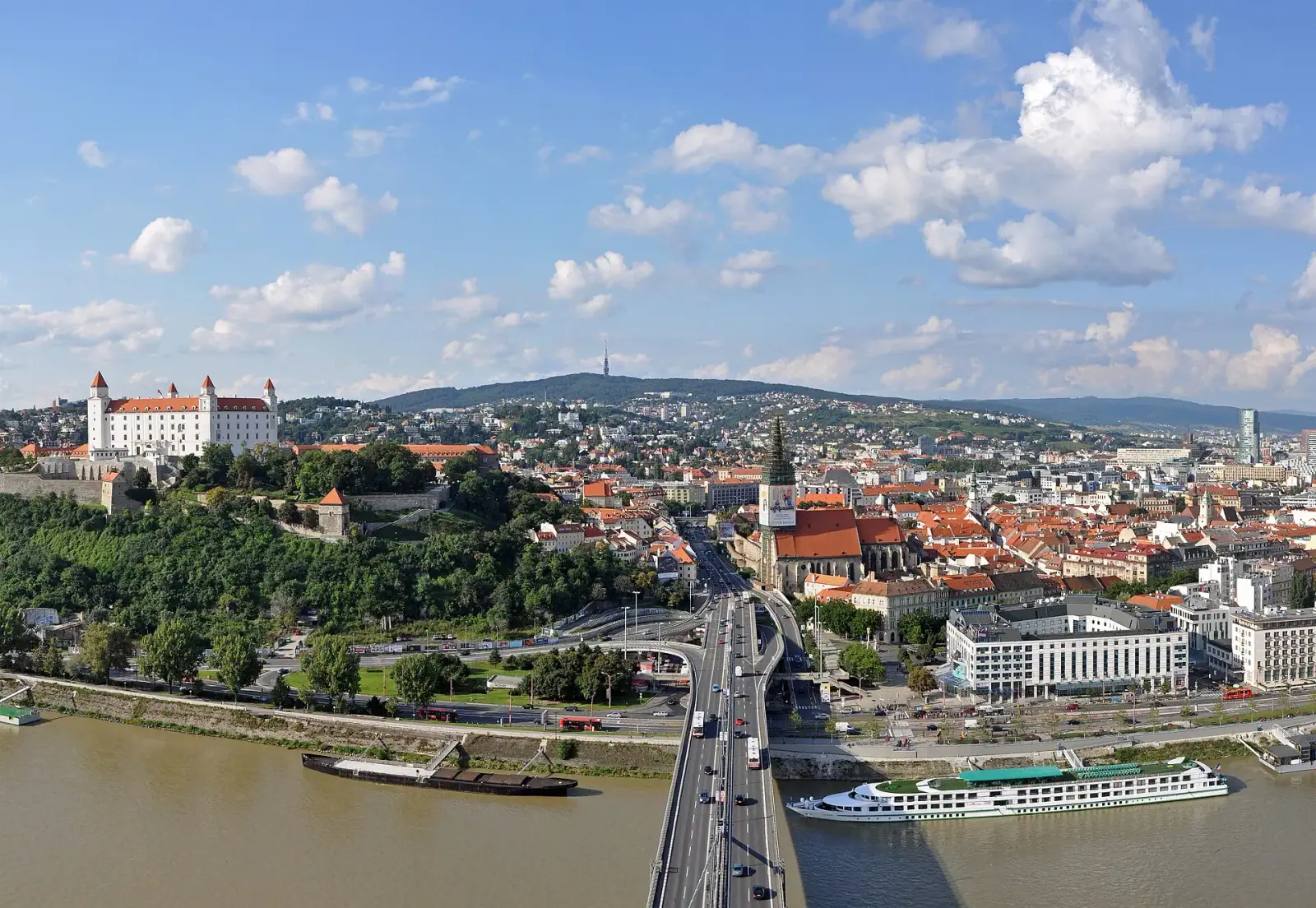
Bratislava sits in a comfortable middle ground for European capitals: cheaper than Vienna (45 minutes away) and Prague, but not as cheap as Tbilisi or Belgrade. In local currency, Slovakia uses the euro (EUR).
Expect to spend roughly in these ranges per month:
- Rent, 1-bedroom in Old Town (Stare Mesto): $1,040-1,500 furnished
- Rent, 1-bedroom in Ruzinov or Petrzalka: $750-1,040
- Groceries (self-catering): $230-345
- Eating out, lunch daily menu (soup + main): $7-9 per meal
- Dinner at a mid-range restaurant: $12-21 per person
- Coworking hot desk, monthly: $205-290
- Public transport monthly pass: $35-46
Your realistic all-in monthly total: $1,610-2,530, depending on accommodation choice and how often you eat out. Living locally, closer to $1,150-1,610 is possible if you rent outside the centre and cook regularly.
Where to Work
Bratislava has a solid, if not huge, coworking scene. The most established options are dedicated spaces, and cafe-working is genuinely viable in the Old Town.
- Progressbar (Dunajska 14, Old Town): A tech and blockchain-focused hackerspace-turned-coworking. Open plan with standing desks, meeting rooms, and a tight community of startup founders. Good for developers and builders.
- Impact Hub Bratislava (Hviezdoslavovo nam. 20, Old Town): Part of the global Impact Hub network. Focused on social enterprise and startups. Regular events make it good for networking beyond just a desk.
- HubHub (Mlynske Nivy, Nove Mesto): The largest coworking in the city at over 2,300 sqm, with 24/7 access, conference rooms, and a gaming zone. More corporate in feel, good for those who want professional amenities.
For cafe work, the Old Town has several reliable options with power outlets and solid WiFi. Laptops are a common sight in the morning and early afternoon. Most cafes slow down on wifi during lunch crowds, so arriving early is the better strategy. Most coworking spaces run faster connections than typical home broadband in Bratislava.
One honest note: the dedicated coworking scene is smaller than in larger nomad hubs. You will not find dozens of spaces to choose from, but what exists is well-run and genuinely usable.
Getting Around
Bratislava is a compact city. The Old Town is entirely a pedestrian zone, and you can walk end-to-end in about 20 minutes. For most nomads staying centrally, your legs cover the daily routine.
Beyond the centre, trams and buses serve the wider city well. Trams run from roughly 5 am to midnight, with night buses covering the gaps. A single ticket costs $1.50 and is valid for 60 minutes with transfers. A monthly pass runs $35-46 and makes sense if you are staying for more than a couple of weeks.
The airport (BTS) sits about 9 km northeast of the centre. Bus line 61 connects it directly to the main train station (Hlavna stanica), then a tram or short walk gets you to Old Town. Total trip: 40-50 minutes for $2. Taxis or rideshares run $14-21 for the same journey.
One practical advantage: Vienna is 60-70 minutes away by bus or train, giving you easy access to a major international airport (VIE) if your flight options from BTS are limited. BlaBlaCar and FlixBus make this connection cheap and frequent.
Sorting transport? Book an airport transfer, or compare car rental on Auto Europe and QEEQ.
Visas and Staying Long-Term
Slovakia is a member of the Schengen Area. Passport holders from the US, Canada, Australia, UK, and most other Western countries can enter visa-free and stay up to 90 days within any 180-day period. This is the standard Schengen rule and applies across all EU/Schengen countries, not just Slovakia.
Slovakia does not have a dedicated digital nomad visa as of mid-2026. The most commonly used path for staying longer is the Temporary Residence Permit for Business, which requires registering as a self-employed person (SZCO) under Slovak law. The government introduced a quota of around 700 such permits per year starting in 2025, so availability is not unlimited. The process requires documentation of income, health insurance, and a local address.
ETIAS, the EU pre-travel authorisation for visa-exempt travellers, is not required yet: the European Commission has scheduled it for the last quarter of 2026 and will announce the exact start date in advance. It is a quick online process, not a visa.
Best Time to Visit
The most practical months for remote work in Bratislava are May, June, September, and October. Temperatures are comfortable (18-25 C / 64-77 F), tourist crowds are manageable, and cafes and outdoor terraces are pleasant for breaks between calls.
July and August push into the high 20s to low 30s C (82-90 F). It gets hot indoors without good air conditioning, and some smaller cafes and restaurants close for summer holidays. The city drains of locals who head to the mountains or coast, leaving mainly tourists. Not impossible, but not the ideal working window.
Winter (December to February) is cold and grey, with temperatures often at or below freezing. Bratislava's Christmas market is a genuine draw in December, but sustained remote work in this period means you rely heavily on indoor spaces. Daylight is short. January and February are the quietest months with good accommodation rates if cold does not bother you.
Spring and early autumn offer the best balance of weather, local atmosphere, and productive conditions.
Pros and Cons
- Pro: Central European location with Vienna, Budapest, and Prague all within 2-3 hours by train or bus
- Pro: Lower cost than other EU capitals with the same euro currency and EU-standard infrastructure
- Pro: Compact, very walkable Old Town with a genuine medieval atmosphere
- Pro: High safety ratings, low violent crime, public transit safe at night
- Pro: English widely spoken in service industries and among under-40s
- Pro: Good broadband speeds and reliable coworking options
- Con: No dedicated digital nomad visa; 90-day Schengen cap limits stays without bureaucratic legwork
- Con: Small city: attractions and social variety thin out quickly after the first week
- Con: Nomad community is small; networking with other remote workers requires effort
- Con: Air quality is moderate, with particulate matter above WHO guidelines, particularly in winter heating months
- Con: Limited flight connections from BTS; many itineraries require going through Vienna
- Con: Slovak bureaucracy and healthcare can be hard to navigate without local language skills
Who Bratislava Is Best For
Bratislava works well for nomads who want a genuine Central European base at a price point below Vienna or Prague. If you are comfortable in a quieter city, appreciate easy day-trip access to multiple countries, and do not need a buzzing nomad social scene, Bratislava delivers solid value. It suits people already on a Schengen tour who want a few productive weeks in a compact, safe, affordable city without the tourist fatigue of larger capitals.
It suits solo remote workers and couples more than groups seeking nightlife-heavy social calendars. Developers, writers, and consultants who need a desk and a reliable connection will find what they need. Those looking for a large international community of fellow nomads, a robust long-term visa option, or a city with months of unique activities and neighbourhoods to explore will likely feel restless after the first month and should consider Lisbon, Berlin, or Warsaw instead.