Cost of Living in Monterrey
Where this figure comes from. No cost survey covers Monterrey, so the $1,200 a month above is our own estimate rather than a measurement. On 416 of our 999 city guides the figure is built from a published Numbeo basket, a one-bedroom rent in the centre plus one person's monthly costs without rent, converted to USD; this city is not one of them. How we source everything.
A single nomad lands near $1,200 a month in Monterrey, which buys a comfortable rather than bare existence. A furnished one-bedroom on a monthly lease in San Pedro Garza Garcia runs $650 to $950, while equivalent space in Colonia Del Valle Oriente, Contry or the streets around Barrio Antiguo sits closer to $450 to $700. Groceries for one come to $180 to $260, and eating out is cheap outside San Pedro: taqueria plates cost $3 to $5, a proper cabrito dinner $15 to $25. A Telcel or AT&T Mexico prepaid SIM with generous data costs $10 to $18 a month. Coworking hot desks at the main business-district operators run $110 to $180. Utilities including electricity, water and fibre total $50 to $110, with summer air conditioning pushing the top of that range hard. Transport, mostly Uber and Metro, adds $60 to $110. The value verdict: strong, provided rent is not paid in San Pedro dollars.
Where to Work in Monterrey
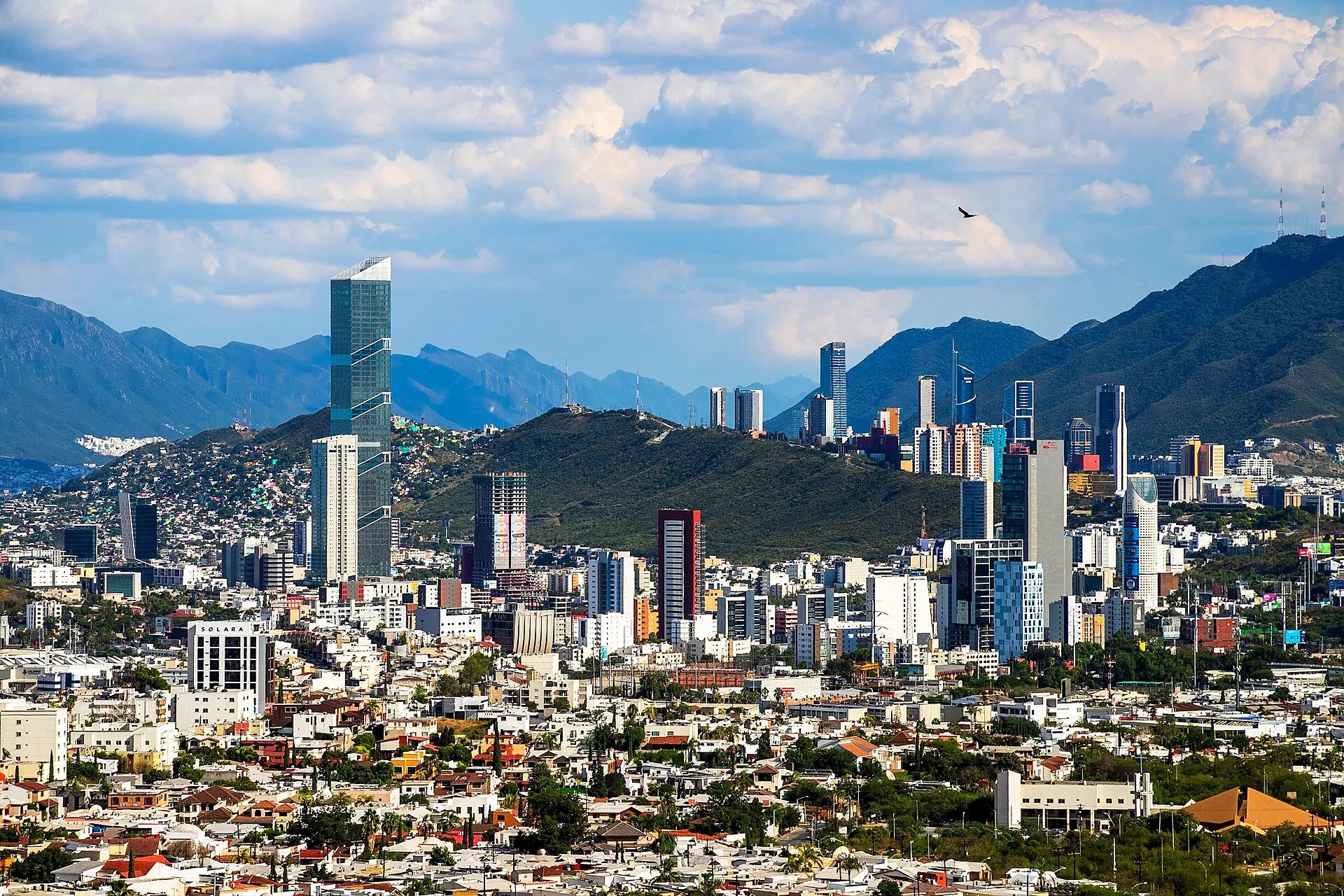
Monterrey is a business city first, so infrastructure is genuinely good. Fibre is common in apartments, and coworking spaces advertise comparable connections. The obvious bases are San Pedro Garza Garcia, polished, safe and expensive, with Valle Oriente offering towers, malls and serviced offices; Colonia Del Valle for a slightly cheaper version of the same; and Centro or Barrio Antiguo for character, walkable streets and lower rents at the cost of more noise. WeWork operates in the Valle Oriente towers, and a cluster of independent operators sits along Avenida Vasconcelos and Calzada del Valle. Specialty coffee is a real scene: Cafe Iberico, Rojo Cafe and the third-wave roasters around San Pedro and Centro serve as informal offices. Caveats matter: many Mexican specialty cafes tolerate laptops on weekday mornings but discourage them at weekend brunch, sockets are scarce, and traffic noise on the avenues is constant. Several of the largest industrial groups in the country are headquartered here rather than in the capital, and the private university they founded is the most selective in the country, which between them explain why the business culture reads more like Texas than like the rest of Mexico.
Getting Around Monterrey
Monterrey has a real metro, unusual for a Mexican city of its size. Metrorrey runs three lines with a flat fare around $0.30, useful for the Centro to north axis but weak for San Pedro, which the network barely serves. Ecovia and Transmetro buses fill gaps for similar money. In practice most nomads live on Uber and DiDi, which are cheap and reliable: a typical cross-city ride costs $4 to $9, Centro to San Pedro about $6 to $10. Monterrey International Airport sits roughly 30 to 45 minutes northeast of the centre, and a ride-hail there runs $15 to $25. Walkability is patchy. San Pedro and Centro have pleasant walkable pockets, but the wider metropolitan area is highway-scaled, sidewalks vanish, and summer heat discourages long walks. A car is not mandatory given cheap ride-hailing, but anyone based outside the Centro-San Pedro corridor will want one. The border is two hours north, which makes a day on the other side an ordinary errand rather than a trip and is why so much of the shopping and so many of the flights go that way. Buses to the crossing run more or less constantly.
Sorting transport? Book an airport transfer, or compare car rental on Auto Europe and QEEQ.
Visas for Monterrey
Mexico admits most nationalities, including citizens of the United States, Canada, the United Kingdom, the European Union and Japan, visa-free as tourists. The critical detail as of 2026 is that the old automatic 180 days no longer applies: immigration officers set the permitted stay individually at the border, and durations of 30, 60 or 90 days are now common, with up to 180 days at officer discretion. Stating a clear plan, showing onward travel and proof of funds improves the outcome. The tourist entry does not permit working for a Mexican employer, though remote work for a foreign company on foreign income is widely tolerated in practice. Mexico has no dedicated digital nomad visa. For stays beyond six months, the standard route is a Temporary Resident visa applied for at a Mexican consulate abroad, granted on proof of income or savings, valid one year and renewable up to four.
Best Time to Visit Monterrey
Monterrey sits in a mountain bowl that traps heat, and the climate is the single biggest constraint. From late May through mid-September daytime highs routinely reach 95F to 105F, with humidity, and outdoor life largely stops. The best window runs from late October through April: October to November brings warm, dry days in the 75F to 85F range, December to February is mild and pleasant with occasional cold northers dropping temperatures sharply for a day or two, and March to April is close to ideal before the heat builds. Rain is concentrated between June and September, when remnants of Gulf tropical systems can deliver serious flooding; Monterrey has a history of destructive storm flooding down the Santa Catarina riverbed. Worth planning around: the Festival Santa Lucia in September, Fiestas de Guadalupe in December, and Semana Santa in spring, when the city partly empties for the coast. The reservoirs serving the city ran effectively dry in 2022 and the taps were rationed to a few hours a day for months, which is a recent enough memory that every dry winter now gets watched closely. Water rather than heat is the constraint people here actually worry about.
Pros and Cons of Monterrey
The strengths are concrete. Monterrey is Mexico's industrial and financial capital, so internet, banking, healthcare and international flights are all better than the tourist-city average, and English is widely spoken in business circles. Costs stay low relative to the quality of infrastructure, the food scene is distinctive, and the Sierra Madre puts serious hiking, climbing and canyon country within an hour, with Chipinque and Huasteca Park nearly in the city. Nightlife is real and unpretentious. The summer heat is brutal and long, and the air quality is among the worst in Mexico, with the mountain bowl trapping industrial and vehicle pollution to unhealthy levels for weeks in winter. The city is sprawling and car-scaled, walkability outside a few pockets is poor, and the nomad community is thin compared with Mexico City or Playa del Carmen. Security is better than its reputation but uneven by neighbourhood, and San Pedro rents approach US levels.
Who Monterrey Is For
People come here with a business or industrial reason to be in Mexico: consultants serving manufacturing and logistics clients, engineers, anyone working with nearshoring supply chains, or people who want a Latin American base with dependable infrastructure and a short flight to Texas. It rewards outdoor types, since world-class hiking and climbing begin at the city edge, and it works well for those who prefer a functional real city over a nomad enclave. A ready-made coworking scene, cafe-hopping walkability and beaches are all better found elsewhere, and Mexico City, Oaxaca and the Caribbean coast each do one of them far better than this city manages any of the three. Skip it if heat sensitivity or asthma is an issue, since summer temperatures and winter smog are both genuinely punishing. Also skip it if the intention is to live entirely without a car in an outer neighbourhood.