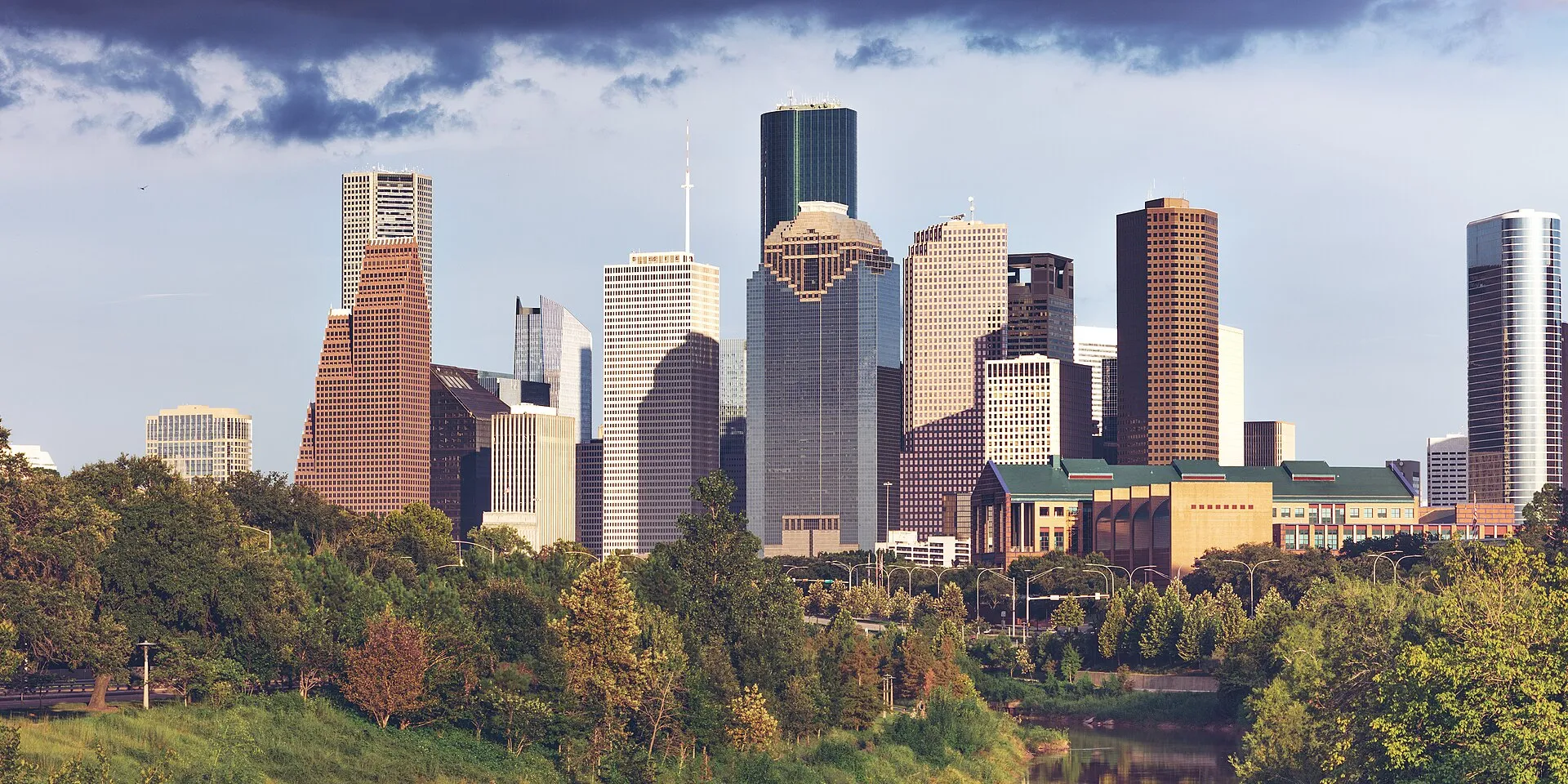
Cost of Living in Houston
Where this figure comes from. No cost survey covers Houston, so the $2,400 a month above is our own estimate rather than a measurement. On 416 of our 999 city guides the figure is built from a published Numbeo basket, a one-bedroom rent in the centre plus one person's monthly costs without rent, converted to USD; this city is not one of them. How we source everything.
Budgeting $2,400 a month works for a single nomad in Houston, which by American standards is decent value for a city of this size. A furnished one-bedroom on a short monthly lease in Montrose, Midtown or the Museum District runs $1,300 to $1,900; unfurnished annual leases go far lower, around $1,100 to $1,500, but rarely suit short stays. Groceries for one cost $350 to $480, and Houston's restaurant scene means eating out well is possible from $12 to $20 a meal. A prepaid SIM with unlimited data on Mint, Visible or T-Mobile costs $25 to $45. Coworking hot desks run $180 to $350 a month, with dedicated desks higher. Utilities are the local trap: electricity for summer air conditioning can hit $150 to $220 in August, with $120 to $180 typical once internet is included. Transport, meaning a car with insurance, fuel and parking, realistically adds $400 to $650. Value verdict: cheap housing, expensive to move around. Houston is the largest American city with no zoning code, which is part of why housing stays cheap, though many streets are bound by private deed restrictions instead; where neither applies, a quiet rental can end up beside a new bar or a townhouse building site.
Where to Work in Houston
Base yourself inside the 610 Loop or the working week becomes commuting. Montrose is the default nomad choice: walkable by Houston standards, dense with independent cafes and bars, and central to everything. The Heights offers a quieter, prettier version; Midtown and EaDo trade charm for proximity to downtown and the rail line. Internet is strong, with Xfinity and AT&T Fiber reaching most inner-loop apartments and coworking spaces equally well connected. Coworking options include WeWork and Common Desk locations downtown and in the Heights, plus The Cannon on the west side for a startup-heavy crowd and Impact Hub Houston. Cafes that reliably accommodate laptops include Agora in Montrose, Blacksmith and the Boomtown Coffee locations, and the Siphon Coffee crowd in Montrose. Caveats: peak-hour seating disappears, some independents cut wifi at weekends, and parking at popular cafes is genuinely difficult. The medical centre south of downtown is the largest concentration of hospitals and research institutes anywhere in the world, employing more people than the energy industry does, and the space agency's mission control sits half an hour southeast. Neither is what the city's reputation leads with, and both hire internationally.
Getting Around Houston
Be honest about this: a car is close to mandatory in Houston. The METRORail Red Line usefully links downtown, Midtown, the Museum District, the Texas Medical Center and NRG Stadium, with the Green and Purple lines serving the east side; a fare is $1.25 and a day pass $3. The bus network was redesigned into a frequent grid and is better than its reputation, but the city covers over 600 square miles and most destinations sit off any transit spine. Uber and Lyft are ubiquitous: a typical inner-loop trip costs $12 to $22, and rides to George Bush Intercontinental, roughly 35 to 50 minutes north, run $45 to $70. Hobby Airport is closer and cheaper, around $30 to $45. Walkability is poor outside Montrose, the Heights and downtown, sidewalks are inconsistent, and summer humidity makes even short walks unpleasant. Cycling exists on the bayou greenway trails but is not a practical commute for most. In heavy rain, check the Houston TranStar roadway flood warnings before setting off, because underpasses and low feeder roads are the first places to fill.
Sorting transport? Book an airport transfer, or compare car rental on Auto Europe and QEEQ.
Visas for Houston
The United States has no digital nomad visa, and as of 2026 no such category is under active legislation. Citizens of Visa Waiver Program countries, including most of Western Europe, the United Kingdom, Japan, South Korea, Australia and Chile, may enter for up to 90 days with an approved ESTA, which costs $40.27 since January 2026 and must be obtained before travel. The 90 days cannot be extended and time is not reset by short trips to Mexico, Canada or the Caribbean. Everyone else needs a B-1 or B-2 visitor visa, with B-2 visitors normally admitted for six months per entry and consular interview waits that in some countries still run many months. A visitor may not engage in any employment in the United States, and no American visa is designed for remote work. Officers hold discretion, and admission is never guaranteed.
Best Time to Visit Houston
Houston's climate is defined by heat and humidity rather than cold. The comfortable window runs from late October through April. November and March are close to perfect, with highs from 68F to 78F, low humidity and blue skies; December through February is mild, generally 55F to 68F, with rare short freezes that occasionally cause real disruption given the fragile Texas grid. April brings warmth and thunderstorms. From June through September the city is hot and saturated, with highs near 95F, dewpoints in the 70s and heat indices well past 105F, so life moves indoors entirely. Atlantic hurricane season runs June through November, peaking in August and September, and Houston floods badly: Harvey in 2017 remains the reference point. Events worth timing around include the Houston Livestock Show and Rodeo in late February and March, the Art Car Parade in April, and the Bayou City Art Festival in the autumn. Wildflowers come up along the highway verges for a few weeks in spring, planted deliberately decades ago and now a fixture that people drive out of town to photograph. It is the one thing in this climate everybody agrees is worth waiting for. Mosquitoes arrive with the first warm rain and stay until the first cold front.
Pros and Cons of Houston
Houston's strengths are underrated. It is the most ethnically diverse large city in the United States, and the food reflects that, with Vietnamese, Nigerian, Mexican, Indian and Gulf seafood cooking all at a serious level and prices far below the coasts. Housing is cheap for a top-five US metro, Texas levies no state income tax, the Texas Medical Center is the largest medical complex in the world, the museum district and Menil Collection are excellent, and two airports give strong international connectivity. Now the drawbacks, which are substantial. Sprawl is extreme and car dependence total, so a car payment, insurance and fuel are unavoidable. Traffic on I-45 and the 610 Loop is severe. Air quality is poor, with ozone alerts common and petrochemical emissions from the ship channel a real concern. Summer is oppressive for a third of the year, flooding risk is not theoretical, the grid is unreliable in extremes, and the city is visually charmless in long stretches.
Who Houston Is For
Houston fits nomads who want a large American base with low housing costs and no state income tax, particularly those with ties to energy, aerospace, medicine or international logistics, since all four industries are concentrated here. It suits people who prioritize food, cultural diversity and cheap space over scenery or walkability, and those who already own or are willing to run a car. Long-stay remote workers who want to bank savings while keeping easy flights to Latin America and Europe do well. It is a poor choice for car-free nomads, for anyone with asthma or heat intolerance, and for those who want a compact, strollable European-style city or a visible international nomad community, which Houston does not have in any concentrated form. Anyone whose priority is nature, mountains or a temperate climate should look elsewhere entirely. The time zone helps anyone with clients in Mexico: Mexico City has stayed on Central Standard Time all year since Mexico dropped daylight saving in 2022, so it matches Houston through the winter and sits an hour behind in summer.