Cost of Living in Nashville
Real market data
Source: Numbeo · August 2026
$2,970/moSolo nomad1-bed centre + living costs
$3,780/moCoupleshared 1-bed + costs
$2,420/moLean / localcheaper area + costs
- 1-bed rent, city centre$1,950
- 1-bed rent, outside centre$1,400
- Monthly costs excl. rent (1 person)$1,020
- Meal, inexpensive restaurant$19
- Monthly transit pass$65
- Buy price, per m² (centre)$7,910
Prices are from Numbeo (August 2026), already in US dollars. The monthly living-costs figure is our transparent one-person basket, groceries, a few meals out, utilities, phone, internet, transport and essentials, priced from those figures. Solo adds central rent; couple and lean are estimates from the same numbers. The guide below quotes its own monthly range, which is a different measurement rather than a competing one: this table prices a defined basket at the figures above, while that range is a judgement about how somebody actually lives here.
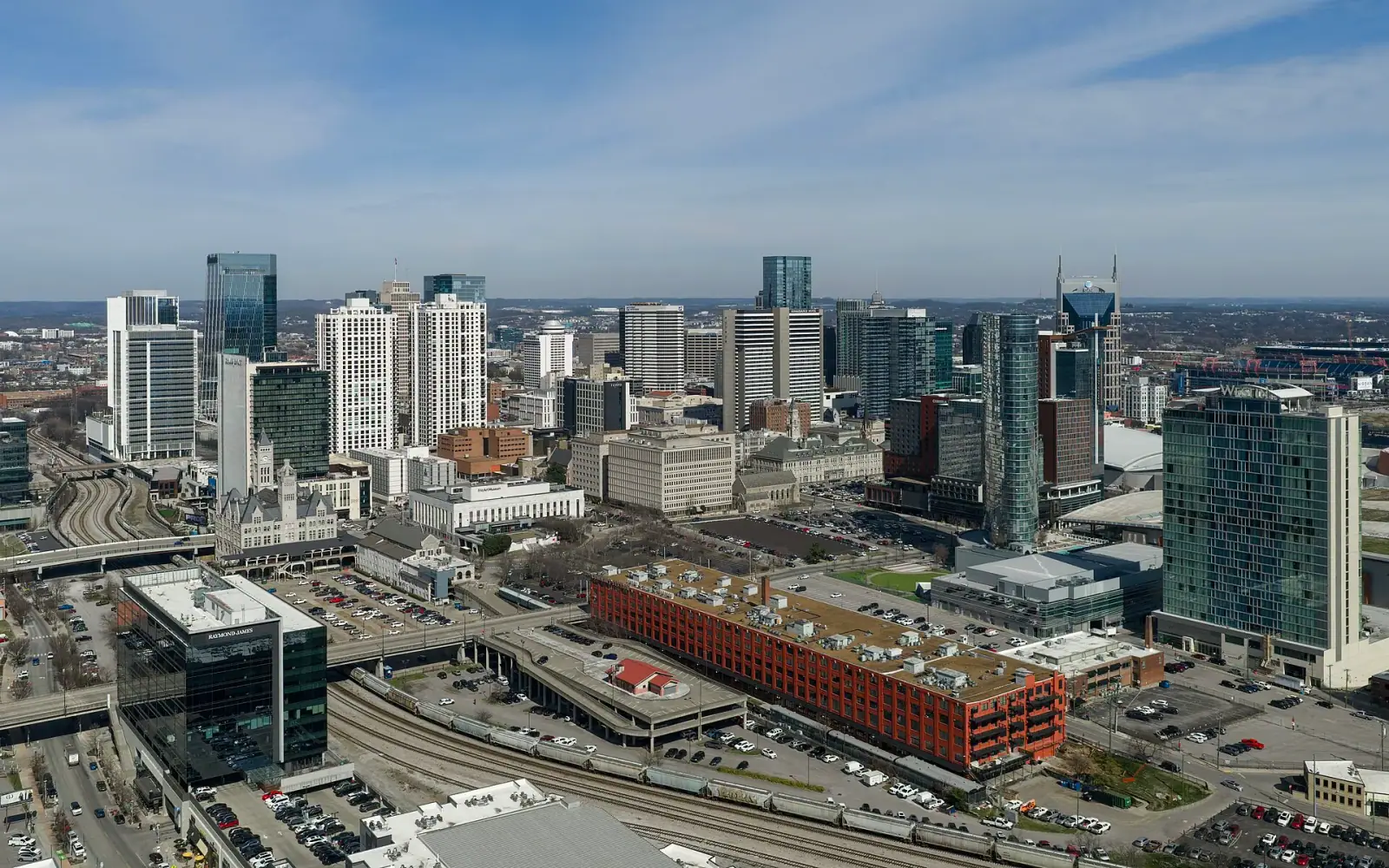
Nashville sits firmly in the mid-range for US cities. A realistic monthly budget for a solo nomad runs between $2,800 and $4,500, depending heavily on how central you live and how often you eat out.
- Rent (central, 1-bed): $1,700-2,200/mo in neighborhoods like The Gulch, Midtown, or SoBro
- Rent (cheaper areas): $1,200-1,550/mo in areas like Antioch, Madison, or outer East Nashville
- Groceries: $350-500/mo cooking at home; Trader Joe's and Kroger are solid options
- Eating out: $15-25 for a casual lunch, $40-70 per person for a mid-range dinner; budget $400-700/mo if you eat out regularly
- Coworking hot-desk: $100-200/mo on a membership; day passes typically run $20-35
- Local transport: $50-80/mo if you rely on buses and occasional rideshare; $150-250/mo if you use rideshare heavily (no subway, car-dependent city)
- Total estimated range: $2,800-4,500/mo (all figures in USD; Tennessee has no state income tax)
Tennessee charges no state income tax on wages, which benefits US-based freelancers working remotely. There is a 9.75% combined sales tax rate on most purchases.
Where to Work
Nashville has a solid coworking ecosystem, particularly in East Nashville, SoBro, and Downtown. Cafe-work culture exists but is more hit-or-miss than in larger tech-hub cities.
Coworking Spaces
Center 615 on Main Street in East Nashville is a well-established campus with multiple buildings, day passes for $25, and a genuinely creative community of freelancers and small businesses. InDo Nashville in SoBro offers free parking alongside day passes from $20 and fiber WiFi. Industrious at 414 Union St Downtown targets a more corporate clientele with polished amenities and reliable connectivity. WeWork 901 Woodland in East Nashville is convenient if you need a corporate-brand option near trendy restaurants and cafes.
Cafes
Frothy Monkey on 12th Ave S (12 South) is reliable for laptop work: solid WiFi, all-day food menu, and ample seating. The Well Coffeehouse on 16th Ave S near Music Row is quieter and good for focused sessions. Be aware that Barista Parlor's original East Nashville location has gone through changes; verify hours before making it your daily spot.
WiFi Reality
In Nashville, coworking spaces deliver consistent fiber connections. Cafes are generally fine for video calls but can get crowded on weekday mornings. Backup with a mobile hotspot on T-Mobile or Verizon if connectivity is critical to your work.
Getting Around
Nashville is a car-dependent city. Its Walk Score of 29 reflects the reality: outside a few neighborhoods you will need wheels or rideshare for most errands.
Public Transport
WeGo Transit runs 27 local bus routes and nine regional ones, most of them feeding into downtown. Route 18 links downtown to Nashville International Airport (BNA) about every 45 minutes through the day, seven days a week, and hourly in the evening, for a $2 two-hour pass. The system is functional but slow, and service gaps in the evening make it impractical as a sole transport option.
Rideshare and Bikes
Uber and Lyft are widely available and reasonably priced by US standards. B-cycle e-bikes and scooters are available in walkable pockets like 12 South, East Nashville, and Germantown. If you plan to stay more than a month or two, renting a car significantly expands your range and convenience.
Airport
BNA is about 8 miles from downtown. A rideshare costs $20-30 depending on traffic and surge pricing. The WeGo Route 18 bus is the budget option. The airport is undergoing ongoing improvements to its ground transportation center as of 2025-2026.
Sorting transport? Book an airport transfer, or compare car rental on Auto Europe and QEEQ.
Visas and Staying Long-Term
Nashville is a US city, so entry requirements are governed by US federal immigration law.
- Visa Waiver Program (ESTA): Citizens of 42 qualifying countries (including most of the EU, UK, Australia, Japan, South Korea, and others) can enter the US visa-free for up to 90 days by obtaining an ESTA authorization online before travel.
- B-2 Tourist Visa: For nationalities not covered by VWP, a B-2 visitor is normally admitted for six months, and the rules allow an admission of up to one year. A visitor, on a B-2 or an ESTA, may not engage in any employment in the United States.
- No digital nomad visa: The United States does not currently offer a dedicated digital nomad or remote-work visa. A Visa Waiver stay cannot be extended; a B-2 visitor can apply to USCIS for an extension of up to six months at a time.
- Long-term options: Options like O-1 (extraordinary ability), TN (for Canadian and Mexican nationals under USMCA), or employment-based visas exist but are complex and not designed for typical nomads.
The ESTA itself costs $40.27 since 1 January 2026 and is applied for on the CBP website before you fly.
Best Time to Visit
Nashville has a humid subtropical climate with four distinct seasons. The city gets hot and humid in summer and can see severe thunderstorms from spring through fall.
- Spring (April-May): Arguably the best window. Temperatures of 65-80F (18-27C), low humidity relative to summer, and the city is lively with outdoor events. Ideal for remote work with plenty of cafe terrace and park options.
- Fall (September-October): A close second. Heat breaks by late September, foliage turns, and crowds thin compared to peak summer. Comfortable for outdoor productivity breaks.
- Summer (June-August): Hot and muggy, regularly reaching 90F+ (32C) with high humidity. Evening entertainment is vibrant but working comfortably requires air conditioning. Expect thunderstorms.
- Winter (November-March): Mild by northern US standards, 35-55F (2-13C), with rare snow. Low tourist crowds and cheaper short-term rentals. Cold enough to keep you indoors, which can suit focused work periods.
For the best balance of weather and productivity, aim for April-May or September-October.
Pros and Cons
Pros
- No Tennessee state income tax, a real financial benefit for US-based freelancers
- Strong live music and creative culture that makes evenings genuinely interesting
- Growing coworking scene with real community, not just corporate WeWork clones
- Affordable compared to coastal US tech hubs like New York or San Francisco
- Fast-growing food scene with standout restaurants across multiple neighborhoods
- Good flight connectivity from BNA to most major US and some international cities
Cons
- Almost entirely car-dependent outside a handful of walkable pockets
- Summer heat and humidity can make outdoor time genuinely unpleasant
- Bachelorette party tourism saturates Broadway and parts of downtown on weekends
- Higher crime rates in some areas compared to many similarly-sized US cities
- No digital nomad visa path; a Visa Waiver stay ends at 90 days and a B-2 admission is normally six months
- Rising rents and traffic congestion as the city grows rapidly
Who Nashville Is Best For
Nashville suits US-based remote workers and freelancers who want a city with genuine cultural identity, decent affordability compared to coastal hubs, and no state income tax. It works well for people drawn to music, food, and a creative scene that feels earned rather than manufactured. The city also appeals to those who enjoy outdoor activities within a short drive, including hiking in the nearby Cumberland Plateau.
It is a strong fit if you work in music, healthcare, tech, or creative industries and want to network in a mid-size city where it is easier to stand out than in New York or LA.
Skip Nashville if you rely on public transport and do not want to rent a car, if you are a non-US national looking for an extended stay beyond 90 days without a complex visa process, if summer heat is a dealbreaker, or if you want a city that feels calm and uncrowded on weekends.