Cost of Living in Burlington
Where this figure comes from. No cost survey covers Burlington, so the $2,200 a month above is our own estimate rather than a measurement. On 416 of our 999 city guides the figure is built from a published Numbeo basket, a one-bedroom rent in the centre plus one person's monthly costs without rent, converted to USD; this city is not one of them. How we source everything.
Budget around $2,200 a month as a solo remote worker in Burlington, which is expensive for a city of forty-five thousand people and reflects a tight housing market squeezed by the university and by very limited new construction. A one-bedroom apartment runs roughly $1,300 to $1,700, and finding one at all is harder than affording one, particularly around the start of the academic year. Vermont's grocery prices run above the national average. Health insurance sits outside this figure as it does everywhere in the country. This is our own estimate rather than a reconciliation against measured data. Vermont has no sales tax on clothing or groceries and a modest rate on everything else, which softens the housing figure slightly. Coworking runs $200 to $350 a month. Heating is the northern cost and a Vermont winter on oil or propane can add $150 to $250 a month between December and March, which is the line most people from warmer states get wrong.
Where to Work in Burlington
Burlington has a coworking scene disproportionate to its size, built on a startup community, the University of Vermont and a long-standing culture of small independent business. Desks run from roughly $200 a month and several spaces sit within walking distance of Church Street. Burlington Electric has run the city on entirely renewable sources since 2014, which is a genuine distinction rather than a marketing line, and the grid is reliable. Fibre is available across most of the city. Montreal is under two hours by road for anything the local network cannot supply. Burlington sits in Eastern time, which makes it the rare American base with a workable European overlap: a London afternoon is a Burlington morning. Montreal being ninety minutes north also means a genuinely international city is closer than Boston, which is four hours, and that shapes weekends more than the map suggests. The state has more breweries per head than any other and this city is where most of them sell, which sounds like a novelty until you notice how much of the local small-business economy, from packaging through distribution to hospitality, is built on top of it.
Getting Around Burlington
Burlington is small enough to cross on foot, with the Church Street Marketplace as a genuine pedestrian centre rather than a token block, and the lakefront a few minutes downhill from it. The Island Line Trail runs north along Lake Champlain on an old causeway, with a seasonal bike ferry across the gap, and is one of the best rides in the northeast. Green Mountain Transit covers the county. Burlington airport is fifteen minutes out with connections through the eastern hubs. Stowe and Sugarbush are both under an hour, and Montreal is a straightforward drive north. The Amtrak Vermonter runs south to New York in about nine hours, which is slow but scenic and avoids the airport entirely. Lake Champlain ferries cross to New York State from three points along the shore, and the Burlington to Port Kent run is a seasonal shortcut into the Adirondacks that saves an hour over driving around the water.
Sorting transport? Book an airport transfer, or compare car rental on Auto Europe and QEEQ.
Visas for Burlington
The United States has no digital nomad visa. Visa Waiver Programme nationals enter with an ESTA for up to ninety days, which permits tourism and business meetings but no employment. Longer visits run on a B1 or B2 visitor visa, and B2 admissions are normally six months. Anything beyond that requires an employer-sponsored category, an investor route or family sponsorship. The Canadian border is forty-five minutes away, which is convenient but is not a reset mechanism for status. The proximity of the Canadian border is worth stating plainly rather than leaving implied: crossing to Montreal and returning does not reset an ESTA period, and a same-day turnaround is a well-known pattern that officers on both sides recognise immediately. State income tax is a separate question from the federal one: this state taxes people who spend more than half the year in it, and its rules do not depend on immigration status at all. Both sets of thresholds want looking at together before a stay is planned around either.
Best Time to Visit Burlington
September and early October are the reason people come, with clear cool days and foliage across the Green Mountains that draws visitors from across the country. Summer from June to August is warm, humid and the best time for the lake, and the city is at its most alive. Winter is long and genuinely cold, with January averages below freezing and heavy snow, which is excellent for the ski areas and hard on anyone unprepared for four months of it. Spring is the mud season locals warn about, wet and unattractive, and April is the month to skip. Foliage peaks in the Champlain valley around the first week of October and a week or two earlier in the mountains, and accommodation across the state books out months ahead for it. The lake moderates the city's climate noticeably, so Burlington is milder than the interior of Vermont in both directions. Whether the lake freezes over completely is recorded each year and has been for well over a century, and it now happens far less often than it once did, which is the local climate record everybody here cites. In the years it does, people walk out onto it.
Pros and Cons of Burlington
Burlington is a small city with the amenities of a much larger one: a real pedestrian centre, a lake with the Adirondacks on the far shore, a startup and food culture well beyond its size, and an electricity supply that has been fully renewable for over a decade. Skiing is under an hour and Montreal under two. It is expensive for what it actually is, housing is genuinely scarce, the winter is a long one, and a city of this size will be exhausted by anyone looking for scale. There is no meaningful international community. The renewable electricity claim is worth understanding precisely: Burlington Electric sources the equivalent of the city's annual use from renewables, largely a biomass plant, hydro and wind, rather than running islanded from the grid. It is still a genuine and unusual achievement for an American city.
Who Burlington Is For
A walkable small city with mountains, a lake and a strong independent culture, for an American who actively likes winter rather than tolerating it. Food, the outdoor industry and climate work all have a local network here that runs a good deal deeper than the population would predict. Without United States work rights nothing else about this town matters, and anybody needing a large city is describing Boston rather than Vermont. Late August is the specific date to avoid: the student housing rush makes finding anywhere to live close to impossible for a fortnight. Portland, Maine is the usual comparison: Burlington trades the ocean for the mountains and gets closer to Montreal in the bargain. Vermont once paid remote workers to relocate here through a state grant scheme, which says something about its demographics: among the oldest and least populous states in the country, and actively trying to import working-age people.
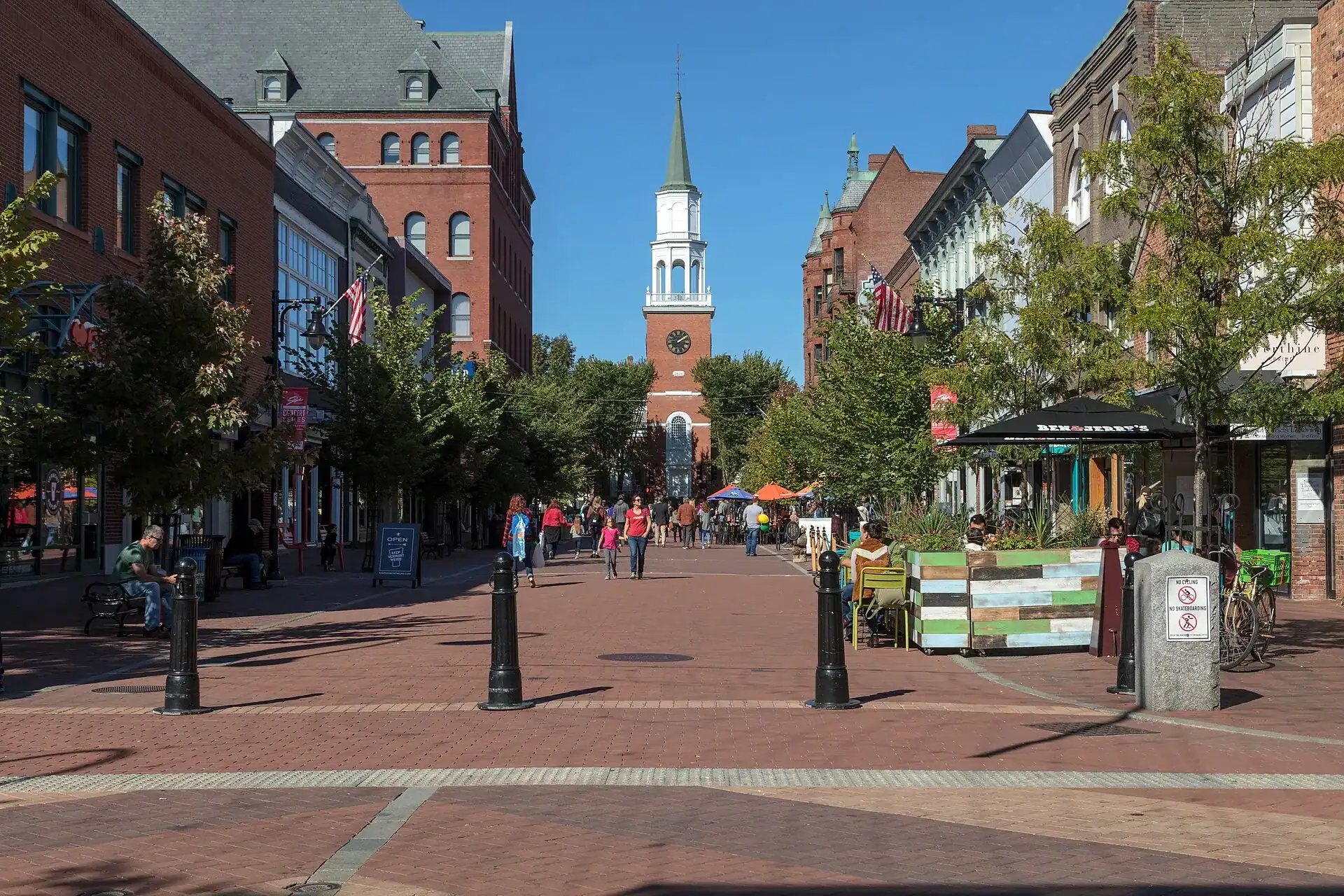 Photo: Carol M. Highsmith / Wikimedia Commons (Public domain)