Cost of Living in Bozeman
Where this figure comes from. No cost survey covers Bozeman, so the $2,500 a month above is our own estimate rather than a measurement. On 416 of our 999 city guides the figure is built from a published Numbeo basket, a one-bedroom rent in the centre plus one person's monthly costs without rent, converted to USD; this city is not one of them. How we source everything.
Budget around $2,500 a month as a solo remote worker in Bozeman, the most expensive city in this batch, and understand that its housing market has been reshaped over the past decade by people arriving with outside incomes. A one-bedroom apartment runs roughly $1,400 to $1,900 and vacancy is tight. Groceries and eating out are ordinary American prices with a mountain-town premium. Utilities include real winter heating at this altitude and latitude. A car and the fuel for it are a fixed cost. Ski passes, gear and the outdoor life the town is built around add up quickly. Montana has no sales tax, which is a real saving on everything bought locally and partly offsets the housing. Coworking runs about $200 to $350 a month. The outdoor line is the one people underestimate: a Bridger Bowl season pass is a few hundred dollars and Big Sky several times that, and the gear for a Montana winter is a serious one-off outlay if you arrive without it. Health insurance sits outside this figure entirely.
Where to Work in Bozeman
Bozeman has a genuine coworking scene for its size, built on Montana State University, a technology cluster that has grown steadily, and a large population of remote workers who arrived in the last decade. Desks run from roughly $200 a month. Fibre reaches most of the city at reliable speeds and typical American prices. Mobile coverage is good in town and disappears in the mountains, which matters more here than in most places because so much of life happens up there. The professional network is unusually strong for a town of this size. Bozeman sits in Mountain time, two hours behind New York and seven to eight behind most of Europe, so east-coast work means starting at seven and European work is impractical. The airport's growth has been the quiet enabler of the whole remote-work influx: direct flights to both coasts from a town of fifty thousand is unusual and is why people who need to be somewhere occasionally can live here. The software cluster has a traceable origin: RightNow Technologies was founded here in 1997 and bought by Oracle for about $1.5 billion, and the engineers and founders it trained seeded a good deal of what followed.
Getting Around Bozeman
Downtown Bozeman along Main Street is walkable and the university is a short distance from it, but the city is otherwise American in layout and a car is necessary. A free local bus service, Streamline, covers the main routes. Bozeman Yellowstone International Airport is fifteen minutes out and has grown into a substantial regional hub with direct flights across the country. Bridger Bowl is twenty-five minutes north, Big Sky an hour south and the north entrance to Yellowstone about ninety minutes. Winter driving on mountain roads is a real skill and snow tyres are not optional. Winter driving here is a genuine skill rather than a caution: the passes ice, the plows run at night and a vehicle without proper snow tyres is a liability on the road to Bridger. Yellowstone's north entrance at Gardiner stays open year-round while the interior roads close to cars from November to April and switch to snow coaches, which changes what a winter visit means. The airport is not actually in Bozeman but beside Belgrade, about eight miles northwest, and it has been the busiest in Montana since 2013, which explains why the nonstop list is so long for a valley this size.
Sorting transport? Book an airport transfer, or compare car rental on Auto Europe and QEEQ.
Visas for Bozeman
The United States has no digital nomad visa. Visa Waiver Program nationals get ninety days per entry via ESTA, and a B-2 visitor is normally admitted for six months, and neither admission allows employment in the country. Longer stays run through employer sponsorship, intra-company transfer or the investor and extraordinary-ability categories, all of which are lengthy and expensive processes. For most non-Americans this is a place to visit rather than a place to base. The practical reading is that this page describes a place for people who already have the right to work in the United States. Anyone else should treat repeated ninety-day entries as the risk they are, since a pattern of them is exactly what secondary inspection looks for and the discretion sits entirely with the officer at the border. The Canadian border sits around three hours north and the crossings there are quiet, which makes a day on the far side simple and does nothing whatever to reset an entry period.
Best Time to Visit Bozeman
July to September is the summer window, with warm dry days in the high twenties, cold nights and the mountains open for hiking and fishing. September is the best single month: the crowds thin, the aspens turn and the weather usually holds. Winter from December to March is long, cold and snowy, with temperatures regularly below minus ten and the occasional deep Arctic outbreak, and it is the reason many people are here. April and May are the mud season, when the snow goes and the trails are unusable. Winter here runs from November into April with nights regularly below minus fifteen, and the cold is the defining condition rather than an inconvenience within it. The shoulder months are worth naming precisely: late April to early June is mud season, when the snow has gone and the trails are unusable, and late October to early December is the wait for the snowpack. Both are cheap and quiet, and both leave very little to do outdoors.
Pros and Cons of Bozeman
Bozeman puts world-class skiing, fly fishing, hiking and Yellowstone within a short drive of a small, prosperous university town with a real professional network and an airport that goes everywhere. The Bridgers rise straight out of the valley. Nowhere else on this list costs as much to live in, the housing market is under severe pressure and locals are frank about the effect of the arrivals, the winter is both long and hard, and the American visa position rules it out for most non-Americans. It is car-dependent and remote from anywhere else. The housing pressure is not an abstraction: Gallatin County was among the fastest-growing in the country through the early 2020s and the gap between local wages and rents is now the dominant local political issue. Anyone moving here with an outside income is part of that story whether they intend to be or not. The Museum of the Rockies on the university campus is a Smithsonian affiliate whose dinosaur halls owe their reputation to Jack Horner, its first curator of paleontology, and it is the best rainy-day answer in town.
Who Bozeman Is For
Americans with remote incomes whose weekends are the point: skiers, anglers, climbers and hikers who want a functioning town attached to the mountains. It works for anyone connected to the university or the local technology sector. Non-Americans without work rights have no route in, the budget required has climbed steeply, and the winter is long enough to be a lifestyle rather than a season. There is also the matter of what remote workers have done to local rents, which is a live and entirely reasonable grievance here, and anybody arriving should understand they are joining the cause of it. Anyone arriving in April or May should know that the mud season between the snow and the summer is the one time of year the place has little to offer. This is a place that rewards settling rather than circulating. Gear, a season pass and a working knowledge of the mountain roads all take a while to acquire and all pay off, which makes it a better single base than a stop on a circuit.
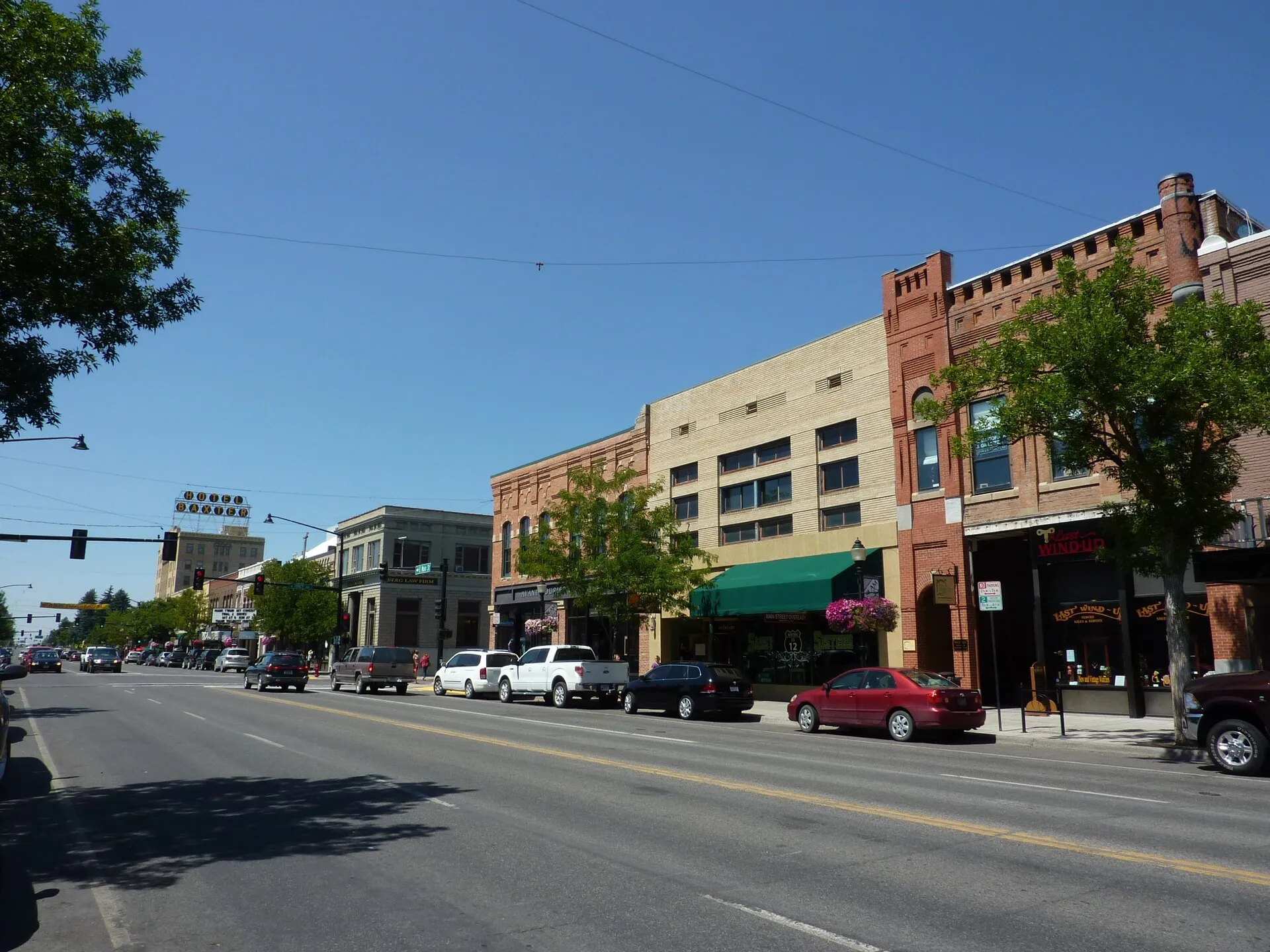 Photo: Chris06 / Wikimedia Commons (CC BY-SA 3.0)