Cost of Living in Boston
Real market data
Source: Numbeo · August 2026
$4,630/moSolo nomad1-bed centre + living costs
$5,620/moCoupleshared 1-bed + costs
$3,830/moLean / localcheaper area + costs
- 1-bed rent, city centre$3,400
- 1-bed rent, outside centre$2,600
- Monthly costs excl. rent (1 person)$1,230
- Meal, inexpensive restaurant$28
- Monthly transit pass$90
- Buy price, per m² (centre)$13,710
Prices are from Numbeo (August 2026), already in US dollars. The monthly living-costs figure is our transparent one-person basket, groceries, a few meals out, utilities, phone, internet, transport and essentials, priced from those figures. Solo adds central rent; couple and lean are estimates from the same numbers.
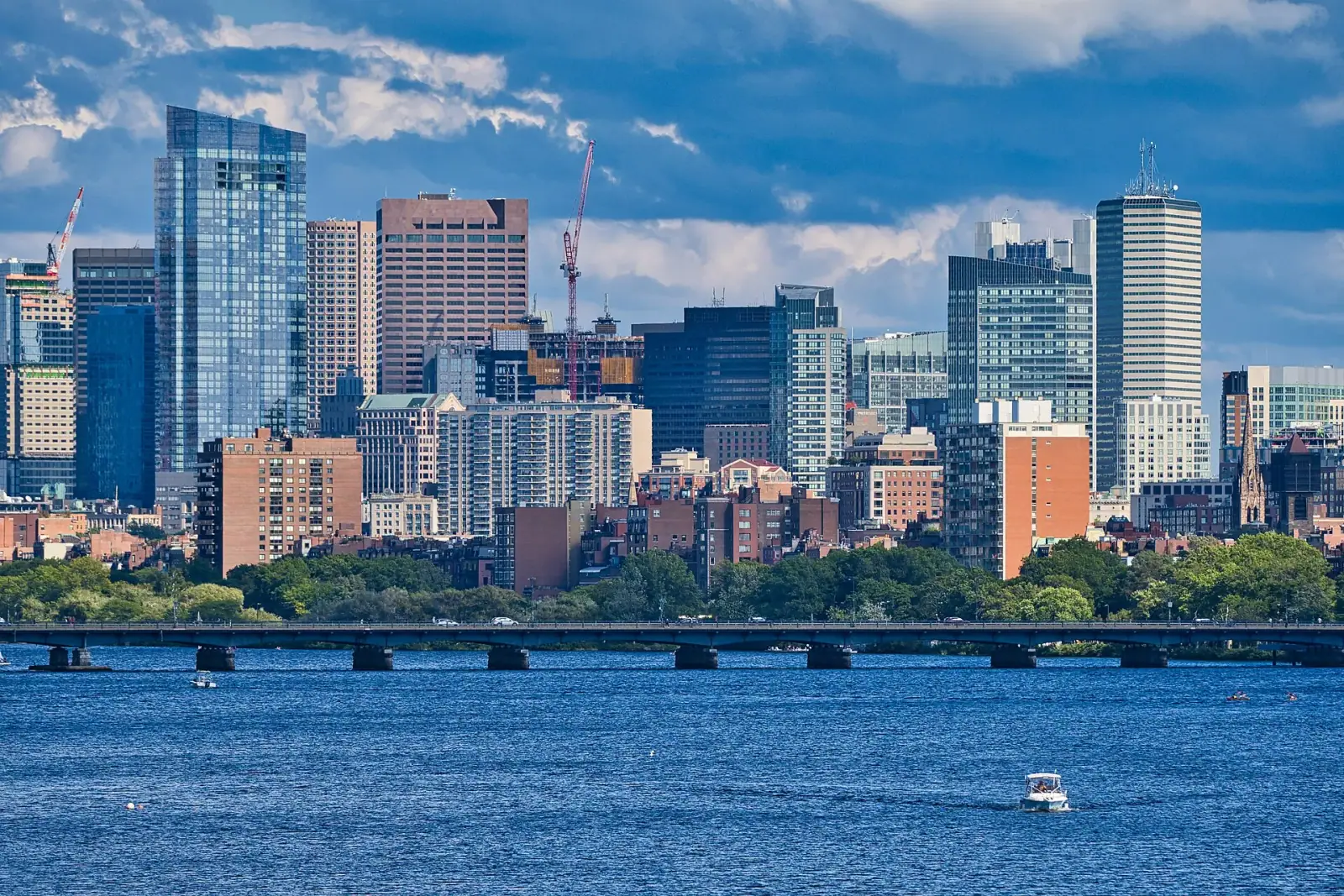
Boston is one of the most expensive cities in the United States, and you should plan accordingly. Rent is the biggest line item. A studio or one-bedroom in central neighborhoods like Back Bay, Beacon Hill, or the South End typically runs $2,800-3,800/month (USD). Move out to Allston, Brighton, Jamaica Plain, or Somerville and you can find studios for $1,800-2,400/month, though nothing is truly cheap here.
Groceries for one person cooking at home cost around $350-500/month at a typical supermarket. Eating out is pricey: a casual lunch runs $15-20, dinner at a mid-range restaurant $35-60 per person with a drink. Budget-conscious nomads can keep food costs near $500-700/month by cooking most meals.
A hot-desk coworking pass at places like Workbar or Industrious runs $29-50/day or roughly $200-400/month for a monthly plan. The MBTA subway (the "T") costs $2.40/ride with a CharlieCard, and a monthly pass is around $90. All figures are in USD.
Realistic monthly total range: $3,500-5,500/month depending on your rent situation, how often you eat out, and whether you use a coworking space daily. Boston is not a budget destination; it rewards you with world-class universities, healthcare, and culture in exchange.
Where to Work
Boston has a strong coworking market, particularly in Downtown, Back Bay, and the Seaport District. Workbar is the city's homegrown network with locations in Downtown (24 School Street) and Back Bay (399 Boylston Street), offering quiet zones, open areas, and flexible day passes from $29. Industrious has a well-regarded Seaport location at 22 Boston Wharf Road with high-end amenities and included breakfast, plus a Back Bay outpost at 855 Boylston Street with river views. WeWork South Station at 745 Atlantic Avenue is a solid choice, sitting above one of the two main rail terminals with the Red Line underneath it and the commuter network beside it.
Cafe work culture is genuinely strong here. George Howell Coffee (505 Washington Street, Downtown) offers abundant seating, fast WiFi, and a professional crowd. Thinking Cup on Tremont Street and Newbury Street has multiple locations with good WiFi and plenty of solo seating, though WiFi can be inconsistent at peak times. Broadsheet Coffee Roasters in Cambridge draws academics and tech workers but restricts laptops during brunch hours.
WiFi reliability is generally good across Boston coworking spaces. Public libraries, especially the Boston Public Library in Copley Square, are free alternatives with solid connectivity. Coffee shops near universities (especially around Kenmore, Cambridge, and Fenway) are used to laptop workers and rarely push you out.
Getting Around
Boston is one of the most walkable cities in the United States. The compact downtown core, Beacon Hill, North End, and Back Bay are all easily navigated on foot. Many nomads go entire weeks without needing a vehicle.
The MBTA (the "T") covers most key areas with four subway lines, Silver Line buses, and commuter rail. A single fare is $2.40 with a CharlieCard. The system is functional but aging, with occasional delays and weekend service gaps. It connects well enough for most daily needs.
Getting to Logan International Airport is easy and inexpensive. The Silver Line 1 (SL1) bus runs directly from South Station to all terminals and is free from the airport to downtown. The Blue Line subway also connects to Airport Station with a free shuttle to terminals. Budget $2.40-3 inbound. A taxi or rideshare runs $25-45 depending on traffic and tip.
Cycling is viable with the Bluebikes bike-share network, though winters make it impractical from December through March. Car ownership in the city center is expensive and largely unnecessary.
Sorting transport? Book an airport transfer, or compare car rental on Auto Europe and QEEQ.
Visas and Staying Long-Term
The United States does not offer a dedicated digital nomad visa. Your options depend on your passport.
Visa Waiver Program (VWP/ESTA): Citizens of around 42 countries (including most of the EU, UK, Australia, Japan, South Korea, and others) can enter for up to 90 days per visit without a visa via ESTA approval, obtained online before travel. An ESTA costs $40.27, and a Visa Waiver admission does not permit employment in the United States.
B-2 Tourist Visa: Nationals of countries not in the VWP must apply for a B-2 visa. B-2 visitors are normally admitted for six months per entry, and the visa itself can be valid for multiple entries over up to 10 years.
There is no US nomad visa, a Visa Waiver stay cannot be extended (a B-2 visitor can apply to USCIS for more time), and overstaying has serious long-term consequences for future US entry.
Best Time to Visit
The best windows for remote work in Boston are late May through mid-June and September through mid-October. Temperatures sit in the 18-25C (65-77F) range, humidity is manageable, and the city is energized without the peak summer crowds. Fall foliage in early October is genuinely spectacular and transforms the city.
Summer (July-August) is peak tourist season: crowded, expensive, and humid, though still workable. Spring (March-April) is unreliable with cold snaps and occasional late snowstorms.
Winter (December-February) brings genuine cold, frequent snowstorms, and temperatures that can drop below -15C. Productivity can suffer if a blizzard disrupts transit and you need to be anywhere. It does offer the lowest accommodation rates if you are flexible and well-prepared. The Head of the Charles Regatta, rowed on the river between Boston and Cambridge on a weekend in the second half of October, fills hotels on both banks, so a stay that overlaps it is worth booking well ahead.
Pros and Cons
Pros
- Exceptionally walkable, compact city with outstanding public transit by US standards
- World-class universities create a dense, educated, ambitious professional community
- Strong English-language environment with no communication barriers
- Excellent food scene spanning seafood, international cuisines, and high-end dining
- Generally safe, with violent crime at historic lows in 2025-2026
- Rich history, culture, and outdoor green spaces including the Emerald Necklace parks
- Good healthcare access, including some of the top hospitals in the world
Cons
- One of the most expensive cities in the US: rent alone can consume most of a modest nomad budget
- Harsh winters with snowstorms that can disrupt transit and daily life for days at a time
- No digital nomad visa pathway and strict 90-day limit for many passport holders
- The MBTA has reliability issues; some neighborhoods are poorly served after evening hours
- High competition for apartments: finding good housing quickly is genuinely difficult
- Coworking day passes are expensive compared to most international nomad hubs
Who Boston Is Best For
Boston suits nomads who earn in USD or another strong currency and are not compromising on quality of life. If you work in tech, biotech, finance, academia, or law, the professional ecosystem here is unmatched in the Northeast. It is a particularly good base for Americans who want an urban hub with excellent infrastructure, no language friction, and strong networking opportunities. The city also works well for anyone on a longer-term US stay on a B-2 visa who wants a stimulating, walkable city with access to serious professional communities.
Skip Boston if you are on a tight budget, rely on visa-free stays that expire at 90 days and cannot easily return, or simply want warmth and low cost of living. Southeast Asia, Latin America, or Southern Europe will stretch the same income three to five times further. Boston is also a tough fit if you dislike cold winters and need outdoor weather year-round.