Cost of Living in Montreal
Real market data
Source: Numbeo · August 2026
$1,990/moSolo nomad1-bed centre + living costs
$2,570/moCoupleshared 1-bed + costs
$1,710/moLean / localcheaper area + costs
- 1-bed rent, city centre$1,270C$1,784
- 1-bed rent, outside centre$990C$1,393
- Monthly costs excl. rent (1 person)$720C$1,008
- Meal, inexpensive restaurant$18C$25
- Monthly transit pass$75C$105
- Buy price, per m² (centre)$5,170C$7,244
Prices are from Numbeo (August 2026), converted to USD at $1 = C$1.4 (01 Aug 2026). The monthly living-costs figure is our transparent one-person basket, groceries, a few meals out, utilities, phone, internet, transport and essentials, priced from those figures. Solo adds central rent; couple and lean are estimates from the same numbers. The guide below quotes its own monthly range, which is a different measurement rather than a competing one: this table prices a defined basket at the figures above, while that range is a judgement about how somebody actually lives here.
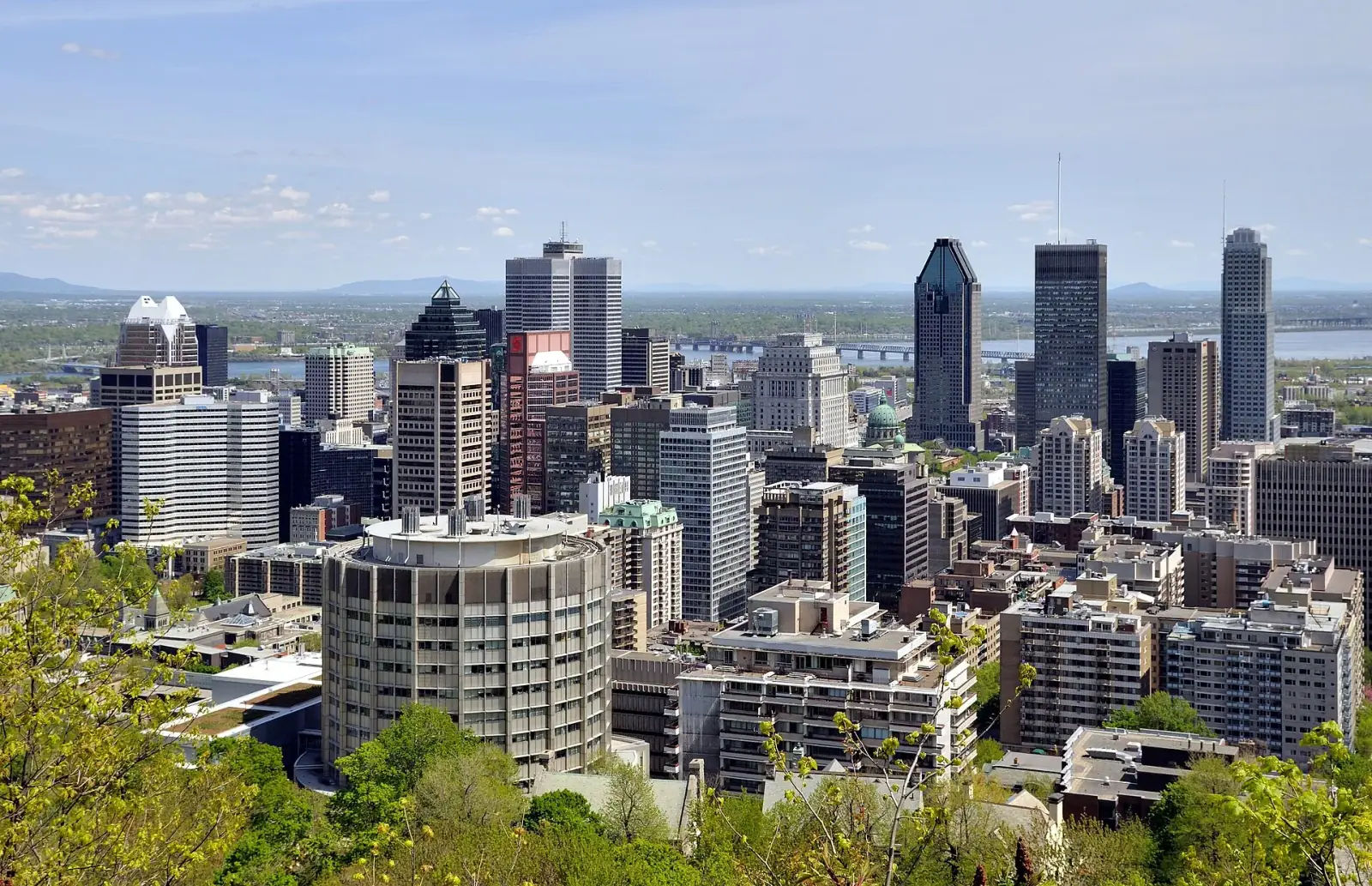
Montreal is the most affordable major city in Canada, and it shows in your monthly budget. Rent for a furnished one-bedroom in central neighbourhoods like the Plateau, Mile End, or Griffintown runs $1,280-1,710 per month. Move further out to Rosemont, Villeray, or Verdun and you can find comparable apartments for $1,000-1,280.
Groceries at supermarkets like IGA or Marche Metro cost $250-355 per month if you cook regularly. Eating out is reasonably priced by Canadian standards: a sit-down lunch at a casual restaurant runs $13-18, while a dinner with drinks at a mid-range spot will set you back $32-50 per person. A coworking hot-desk membership at a well-equipped space costs $145-285 per month. The STM unlimited transit pass is $70 per month and covers metro, bus, and the REM light rail network.
- Rent (central, 1BR furnished): $1,280-1,710
- Rent (outer areas, 1BR furnished): $1,000-1,280
- Groceries: $250-355
- Eating out (moderate): $285-500
- Coworking hot-desk: $145-285
- Monthly transit pass: $70
- Total comfortable range: $2,280-3,210
That total range assumes dining out regularly and using paid coworking. Budget more carefully and $2,000 is realistic; add social spending and a nicer apartment and you can push past $3,570 easily.
Where to Work
Montreal has a solid coworking scene spread across several neighbourhoods. 2727 Coworking in Griffintown sits beside the Lachine Canal and is frequently cited as the highest-rated coworking space in the city, with gigabit fibre and a relaxed atmosphere. Crew Collective and Cafe in Old Montreal is housed in a stunning 1920s bank hall with 50-foot gilded ceilings; it functions as both a cafe and a working space, though it gets busy and noisy in the afternoons. Maison Notman near Sherbrooke is the centre of Montreal's tech startup scene and offers a more community-focused environment. Anticafe near Place-des-Arts runs a pay-per-hour model with unlimited coffee and snacks included, which makes it easy to drop in without a monthly commitment.
Cafe culture in Montreal is genuinely laptop-friendly. Unlike some European cities, no widespread movement to ban laptops exists here. Neighbourhood cafes in Mile End and the Plateau routinely have remote workers nursing a coffee for two or three hours without friction, though buying something every couple of hours is expected. WiFi in cafes ranges from reliable to inconsistent; always have a mobile hotspot as backup. Most coworking spaces offer fast, stable connections. Public libraries also offer free WiFi and quiet study rooms if you want a cost-free fallback.
Getting Around
The STM metro is fast, clean, and covers central Montreal well with four lines. Most nomad-friendly neighbourhoods (Plateau, Mile End, Downtown, Griffintown, Old Montreal) are either walkable between each other or a single metro stop apart. The city is also extensively bikeable, with the BIXI bike-share network operating from April through November and dedicated lanes on major streets.
Winter changes the equation. From December through March, heavy snow and temperatures that drop to -20C or colder make walking less appealing. The Underground City (RESO), a network of tunnels connecting 80 city blocks in the downtown core, lets you move between metro stations, offices, and malls without going outside.
Montreal-Trudeau Airport (YUL) is about 20 kilometres from downtown. The STM 747 express bus runs 24/7 between the airport and the Lionel-Groulx and Berri-UQAM metro stations, taking 45-70 minutes depending on traffic, and costs $8 (which includes a 24-hour transit pass). A taxi or rideshare runs $32-43. The new REM automated light-rail line is expected to connect the airport directly to downtown in under 25 minutes once fully operational; its opening has been subject to delays.
Sorting transport? Book an airport transfer, or compare car rental on Auto Europe and QEEQ.
Visas and Staying Long-Term
Citizens of most Western countries (US, UK, EU member states, Australia, and others) can enter Canada visa-free or with an Electronic Travel Authorization (eTA), costing $5. As of January 2026, IRCC updated the standard authorized stay to up to one year per entry for most visitor-visa holders, though the border officer sets the actual duration and may grant less. Working remotely for a non-Canadian employer does not count as entering the Canadian labour market under current IRCC guidance, meaning most remote workers can legally stay without a Canadian work permit.
Canada has no dedicated digital nomad visa. If you want to extend your stay beyond what was initially granted, apply for a Visitor Record through the IRCC online portal before your authorized stay expires; IRCC recommends applying at least 30 days in advance.
Best Time to Visit
The sweet spot for remote work in Montreal is May through early October. Spring (May to early June) brings mild temperatures of 10-20C, manageable crowds, and the city shaking off winter. Summer (June through August) is warm and vibrant, with festivals nearly every weekend including the Jazz Festival, Just For Laughs, and Osheaga, though July and August bring humid stretches above 30C. Fall (September to October) is arguably the best all-round window: comfortable temperatures of 10-20C, spectacular foliage, and noticeably fewer tourists than summer.
Winter (November through March) is the honest deterrent. Temperatures regularly drop to -15C or colder, snowstorms are common, and outdoor movement becomes a genuine inconvenience. That said, rent is sometimes cheaper in winter, the coworking scene stays active, and the city does not shut down. If you run well on indoor productivity and cafes, winter is manageable but not enjoyable for most people. Avoid late November through February if you are not prepared for real cold.
Pros and Cons
- Most affordable major Canadian city by a clear margin
- Bilingual city with a large English-speaking community; you can live comfortably without French
- Outstanding food scene, with more restaurants on Canada's 100 Best list than any other city
- Strong tech and startup ecosystem with active nomad and freelancer communities
- Excellent public transit for a North American city
- Rich cultural life: festivals, arts, live music, and a genuine neighbourhood identity in each district
- Winters are brutal: several months of genuine cold that limits outdoor life significantly
- No dedicated nomad visa; stays are capped at what the border officer grants
- Quebec language politics can be a friction point in some administrative contexts, even if daily English life is easy
- Airport connectivity is still bus-dependent until the REM extension opens
- Rental market has tightened in recent years; good furnished short-term apartments require lead time to find
Who Montreal Is Best For
Montreal works best for nomads who want a proper city experience at Canadian standards but without Toronto or Vancouver prices. It suits people who value food, culture, and nightlife as much as productivity. If you can handle cold winters or plan to visit during the May-October window, the city rewards you generously. The bilingual environment makes it accessible for English speakers without any French, though picking up basic French earns you goodwill quickly.
Creatives, designers, developers, and anyone who enjoys a neighbourhood-first lifestyle over a corporate one will feel at home here, particularly in the Plateau, Mile End, or Griffintown. The city is also a solid base for exploring the wider northeast: Quebec City, the Laurentians, and the Eastern Townships are all within a few hours.
Skip Montreal if brutal winters are a dealbreaker for you, if you need a simple long-term visa pathway, or if you are looking for a Southeast Asia-style budget. It is not the cheapest city for a nomad lifestyle globally, and Canadian visa restrictions mean it works better as a seasonal base than a year-round hub for most passport holders.