Cost of Living in Toronto
Real market data
Source: Numbeo · August 2026
$2,470/moSolo nomad1-bed centre + living costs
$3,140/moCoupleshared 1-bed + costs
$2,280/moLean / localcheaper area + costs
- 1-bed rent, city centre$1,620C$2,276
- 1-bed rent, outside centre$1,440C$2,016
- Monthly costs excl. rent (1 person)$840C$1,183
- Meal, inexpensive restaurant$18C$25
- Monthly transit pass$110C$156
- Buy price, per m² (centre)$8,510C$11,929
Prices are from Numbeo (August 2026), converted to USD at $1 = C$1.4 (01 Aug 2026). The monthly living-costs figure is our transparent one-person basket, groceries, a few meals out, utilities, phone, internet, transport and essentials, priced from those figures. Solo adds central rent; couple and lean are estimates from the same numbers. The guide below quotes its own monthly range, which is a different measurement rather than a competing one: this table prices a defined basket at the figures above, while that range is a judgement about how somebody actually lives here.
Toronto is one of the most expensive cities in North America, and you should budget accordingly. Rent is the biggest line item: a one-bedroom in the downtown core (Financial District, King West, Yorkville) will run you $1,570-2,000/month (roughly USD 1,600-2,050) for a furnished short-term place. Move to a cheaper area like Scarborough, Etobicoke, or East York and you can find unfurnished one-bedrooms for $1,070-1,360/month (USD 1,100-1,400), though commute times increase.
- Rent (central, furnished 1BR): $1,570-2,000
- Rent (outer area, unfurnished 1BR): $1,070-1,360
- Groceries: $285-390 per month
- Eating out (mid-range, per meal): $14-25 per person
- Coworking hot-desk: $145-285 per month
- Monthly transit (TTC): $110 (fare capping replaces monthly pass September 2026)
- Total realistic monthly range: $2,280-3,210 depending on lifestyle and rent choice
Canada uses the Canadian dollar (CAD). The USD conversion here is approximate at roughly 0.73 USD per CAD. Toronto is not a budget destination for nomads, but quality of life, safety, and infrastructure justify the spend for many people.
Where to Work
Toronto has a well-developed coworking scene. Major operators like WeWork (locations at 240 Richmond St W and 1 University Ave), Workhaus (nine locations across the city including King West and the Financial District), and East Room (507 King St E) offer hot-desk day passes and monthly memberships. Hot-desk memberships typically run $145-285/month. Regus has multiple downtown locations if you need a more corporate setup.
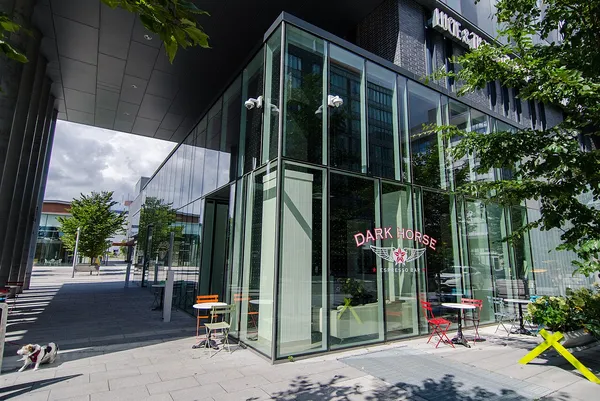
Cafe culture in Toronto is strong, but it is uneven for working. Established spots like Pilot Coffee Roasters, Dark Horse Espresso Bar, and Forno Cultura are popular with remote workers and usually have decent WiFi. That said, some well-known Toronto cafes actively discourage long laptop sessions during busy hours, and power outlets are not always abundant. Your best bet during peak times is to grab a coworking day pass rather than camp in a cafe.
WiFi speeds in Toronto are generally strong. The city has broad fibre coverage and most coworking spaces deliver reliable gigabit-class connections. Mobile data on Rogers, Bell, or Telus is fast and covers the whole urban area well. Public library branches (Toronto Public Library) also offer free WiFi and quiet seating if you need a free option.
Getting Around
The TTC (Toronto Transit Commission) runs subway, streetcar, and bus routes across the city. A single fare is $2.50 with a Presto card, and a monthly adult pass is $110 (the TTC is moving to a fare-capping model in September 2026 that functions similarly). The subway is clean and reliable for core routes, but coverage thins out in the outer boroughs and service stops around 1:30 AM most nights. Streetcars on King and Queen streets are slower and frequently delayed.
Walkability in the downtown core is high. Areas like the Entertainment District, Kensington Market, and Distillery District are very pedestrian-friendly. Bike share (Bike Share Toronto) is a practical option for short hops. Driving is not recommended for daily use since parking is expensive and traffic is genuinely bad.
For airports: Pearson International (YYZ) is the main hub, about 30 km northwest of downtown. The UP Express train connects Union Station to Pearson in 25 minutes, departing every 15 minutes, for $9 one-way with a Presto card. This is by far the easiest option. Billy Bishop City Airport (YTZ) sits on the Toronto Islands, a short pedestrian tunnel walk from the mainland, and serves domestic and some US routes via Porter Airlines. It is a 10-15 minute taxi or rideshare from downtown.
Sorting transport? Book an airport transfer, or compare car rental on Auto Europe and QEEQ.
Visas and Staying Long-Term
Canada does not have a dedicated digital nomad visa. Most visitors from the US, UK, EU, Australia, and other visa-exempt countries enter without a visa and are typically granted a stay of up to six months by border officials, though since January 2026 officers can authorize stays of up to one year per entry at their discretion.
You cannot work for Canadian employers or clients on a visitor entry. Working remotely for a non-Canadian employer is generally tolerated as long as your income comes entirely from outside Canada, but this is a grey area and border officers assess it case by case. Having documentation of your employment or freelance contracts with foreign clients is advisable.
You can apply for a Visitor Record to extend your stay beyond your initial authorization period. Canada has no formal nomad visa stream; for longer-term residence you would need a work permit, skilled worker immigration pathway, or one of the province-based tech immigration streams.
Best Time to Visit
Toronto has four distinct seasons. Summer (June-August) brings warm weather in the 25-30C range, long daylight hours, and a packed festival calendar (Pride, TIFF in September, Caribana). It is the most lively season but also the most humid and the most expensive for short-term rentals.
Spring (May) and fall (September-October) are the best windows for remote work. Temperatures sit comfortably between 12-22C, crowds and accommodation prices ease, and the city is visually at its best with blossoms in spring and foliage in fall. You can get outdoors during breaks without melting or freezing.
Winter (November-March) is cold, grey, and often snowy, with temperatures regularly dropping to -10C or below with wind chill. If you are indoors working most of the day it is manageable, and the city does not shut down, but it requires proper winter clothing and makes daily life more effort than most nomads want. Flights and rentals are cheaper, which is the main upside.
Pros and Cons
- Genuinely multicultural food scene with world-class dining at every price point
- Very safe city with low violent crime compared to other major North American metros
- English-speaking with no language barrier at all
- Strong infrastructure: fast internet, reliable transit, excellent public services
- Large nomad and tech community with meetups and networking events year-round
- Easy access to nature via the Toronto Islands, Rouge National Urban Park, and Niagara Falls within a couple of hours
- Very expensive relative to most nomad destinations, particularly rent
- No digital nomad visa and a genuine six-month stay limit in practice
- Winters are harsh and long, lasting roughly five months
- Commutes can be long if you are not near a subway line
- Some cafes are not remote-work friendly during peak hours
- High competition for short-term furnished rentals in desirable central areas
Who Toronto Is Best For
Toronto works well for nomads who want a genuinely world-class city experience without a language barrier, value personal safety highly, and are on a solid income (at least USD 4,000-5,000/month net to live comfortably). It suits people in the North American timezone who need to be in sync with US clients or colleagues, as well as those drawn to excellent food, a buzzing arts scene, and one of the most diverse cities on earth.
It is also a strong choice if you hold a Canadian passport or are considering Canadian permanent residency and want to spend time feeling out the country before committing.
Skip Toronto if you are on a tight budget, if long winters will affect your mental health or productivity, or if you want the lifestyle freedom that comes with lower cost of living. Southeast Asian or Latin American alternatives will stretch the same budget two or three times as far. Toronto also makes less sense for nomads who want to build deep roots somewhere, since the visa situation caps your stay and does not offer a clear path to staying long-term without committing to full immigration.