Cost of Living in Brades
Where this figure comes from. No cost survey covers Brades, so the $1,700 a month above is our own estimate rather than a measurement. On 416 of our 999 city guides the figure is built from a published Numbeo basket, a one-bedroom rent in the centre plus one person's monthly costs without rent, converted to USD; this city is not one of them. How we source everything.
Budget around $1,700 a month. A one-bedroom runs roughly $600 to $1,000, and the housing stock is limited because the population fell from about twelve thousand to under five thousand after the volcanic crisis and much of what was built is in the exclusion zone. Groceries are imported and expensive, with the supply chain running through Antigua. Local produce and fish are cheaper. Utilities are moderate. Eating out is limited to a handful of places at modest prices. Montserrat uses the East Caribbean dollar, which is pegged to the United States dollar at a fixed rate. Land in the safe zone is scarce and dear for the same reason housing is: everything the island had in the south sits inside the zone and can neither be built on nor insured. Import duty applies to almost everything arriving by boat or small aircraft, and the freight cost per box is what lifts the shopping bill rather than any markup at the till. There is no chain supermarket, so stock arrives on a boat schedule and the shelves empty in a pattern residents learn to read. Cash still matters more than a card in the smaller shops.
Where to Work in Brades
Connectivity is adequate. Montserrat has a submarine cable connection and fibre reaches the inhabited north, with speeds workable for normal remote work, and mobile coverage across the safe zone. Power is reasonably reliable. There is no coworking. The island has actively marketed a remote work visa and has infrastructure adequate to support one, which is unusual for somewhere this small. The time zone is four hours behind GMT, giving a good overlap with the eastern United States and a workable morning with Europe. The remote work stamp has an income threshold and an insurance requirement, and the scheme has been adjusted since it was introduced. The public sector is the economy here: government is by some distance the largest employer, and the British budget support that keeps it running is a standing fact of life rather than an emergency measure. The observatory, the airport, the ferry and the hospital account for much of the rest. That means the professional network available to an outsider is small and mostly public, and the private businesses are family firms of long standing. Anyone hoping to plug into a local industry should understand that there is essentially one, and it is administration.
Getting Around Brades
You need a car. The habitable northern third of the island is about ten kilometres across, with steep, winding roads and no public transport beyond a few minibuses. Brades, Salem and Little Bay are the main settlements and none of them is walkable to the others. John A Osborne Airport in the north is served by small aircraft from Antigua several times a day, a fifteen minute flight, and a ferry also runs from Antigua. The exclusion zone in the south is entered only with permission and a guide. Anyone taking the ferry from Antigua should allow for it being weather-dependent, and for the schedule changing seasonally in a way the airline connection does not.
Sorting transport? Book an airport transfer, or compare car rental on Auto Europe and QEEQ.
Visas for Brades
Montserrat is a British Overseas Territory and grants visa-free entry to citizens of the United Kingdom, the European Union, the United States, Canada and most Commonwealth countries for up to six months. It also operates a Remote Work Stamp, a formal one year visa for remote workers with proof of employment outside Montserrat, minimum income and health insurance, which is one of the more straightforward such schemes in the Caribbean. Arriving requires transiting Antigua, so that country's entry rules apply first. Anyone applying for the remote work stamp should budget for the application fee and for proof of income, both of which are checked rather than taken on trust. Because every arrival transits another country, the practical itinerary involves two sets of formalities on the same day, and a delayed connection can mean a night on the other island rather than an hour in a lounge. The stamp asks for a police certificate and a bank statement alongside the employment letter, and the file is read by a small office rather than processed by a system, which cuts both ways: slower, but it is possible to ask a question and get an answer from a person. Renewal is a fresh application rather than a stamp in a passport.
Best Time to Visit Brades
December to April is the dry season and the practical window, with temperatures around twenty seven degrees and low humidity. The rains from June to November are heavier and this is also the hurricane season. The volcano is the other calendar: Soufriere Hills has been intermittently active since 1995 and its state determines what is accessible, with the Montserrat Volcano Observatory publishing the current hazard level. Ash falls happen. The observatory itself is open to visitors and is the best introduction to what happened here. The Saint Patrick's Day festival in March is the island's biggest event and marks a 1768 slave rebellion, which is why Montserrat's Irish heritage is commemorated the way it is. The carnival here runs from the middle of December into the new year rather than before Lent, a pattern several of the smaller islands follow, and it makes the Christmas fortnight the busiest stretch of the year. A calabash festival takes the July slot. Ash advisories, when they come, are issued as routine and specify which districts should keep their windows shut rather than telling anybody to leave, and residents treat them roughly the way other places treat a wind warning.
Pros and Cons of Brades
Montserrat comes with a formal remote work visa, an English-speaking British administration, genuine safety, and a landscape unlike anywhere else in the Caribbean, since the buried town of Plymouth is visible from the viewing points and is the only abandoned capital city anywhere in the Americas. The island is green, quiet and largely undeveloped. The island is tiny and quiet in return, with a population under five thousand, minimal shopping, a single flight route in, and a volcano that has never once stopped being active. Montserrat is also where George Martin built AIR Studios in 1979, and the Rolling Stones, Dire Straits and Paul McCartney all recorded here before Hurricane Hugo destroyed it in 1989.
Who Brades Is For
Montserrat suits remote workers who want a formal visa, a quiet English-speaking base and low prices, and who genuinely mean it about quiet. It suits geologists and anyone drawn to the volcano, which is among the most studied in the world. It suits birdwatchers, since the Montserrat oriole exists nowhere else. Choice, nightlife and company are all in short supply among five thousand people. The volcano is the real question: it is active, the exclusion zone is enforced, and anybody who would find that unsettling should take the feeling seriously rather than override it. It also suits divers, since the reefs off the north coast are almost entirely unvisited and the volcanic activity has created new underwater terrain since the 1990s. Three months is long enough to see whether the quiet is restful or oppressive, and that is the question the island turns on rather than any of the practical ones.
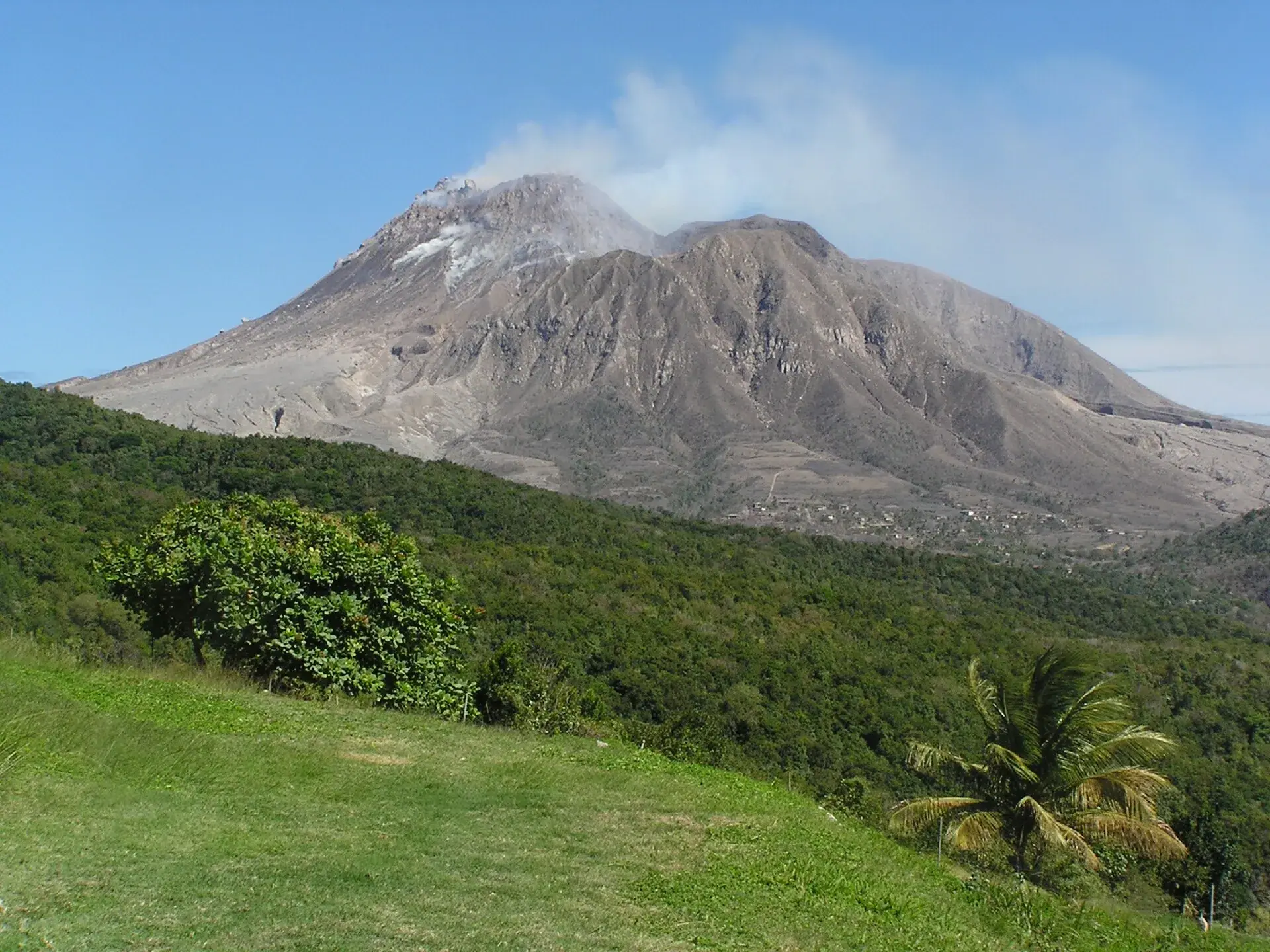 Photo: CommonismNow / Wikimedia Commons (Public domain)