Cost of Living in Roseau
Where this figure comes from. No cost survey covers Roseau, so the $1,500 a month above is our own estimate rather than a measurement. On 416 of our 999 city guides the figure is built from a published Numbeo basket, a one-bedroom rent in the centre plus one person's monthly costs without rent, converted to USD; this city is not one of them. How we source everything.
Budget around $1,500 a month as a solo remote worker in Roseau, which makes Dominica one of the cheaper Eastern Caribbean islands and considerably cheaper than its better-known neighbours. A one-bedroom place runs roughly $500 to $900, and houses outside the capital are within reach at figures that would be impossible on Barbados. Dominica grows a great deal of its own food, which is unusual in the region and keeps the market cheap; imported goods carry the usual island markup. The East Caribbean dollar is pegged at 2.7 to the United States dollar, so budgeting is simple. This is our own estimate rather than a reconciliation against measured data. Fibre where it reaches runs $60 to $110 a month and a generator or an inverter is a normal household expense rather than a contingency, which is the line most budgets miss. A minibus fare anywhere on the island is a dollar or two, and hiring a four-wheel drive runs $50 to $70 a day, which is the realistic way to reach the trailheads. Sea Cat and dive operators charge $80 to $120 for a whale-watching trip and $100 or so for two tanks, and those are the two things most people come here to spend money on.
Where to Work in Roseau
Connectivity is the honest weakness of the island. Fibre has reached parts of Roseau and Portsmouth and works well where it exists, but coverage is patchy outside the towns and speeds vary. Mobile data from Flow and Digicel is the practical fallback. Power cuts are not rare and the grid is still being rebuilt in places after Hurricane Maria in 2017, which destroyed much of the island's infrastructure. Anyone whose work cannot pause should ask about backup power before committing, and should treat a video-call-heavy schedule as a real constraint here. Starlink became available here after 2023 and has quietly transformed what is possible on the island, so it is worth asking a prospective landlord about by name rather than accepting a general assurance about wifi. Dominica sits four hours behind central European time and one ahead of New York in winter, which gives a European afternoon at the start of the day and a full American overlap after it. The 2017 rebuild buried a good deal of the distribution network, so outages are shorter and less frequent than they were, though they have not stopped.
Getting Around Roseau
Roseau is small and walkable, a grid of narrow streets between the river and the sea that can be crossed in fifteen minutes. Beyond it the island is mountainous and the roads are steep, winding and slow: Dominica is only 47 kilometres long but crossing it takes far longer than the distance suggests. Minibuses cover the main routes cheaply and stop early. A four-wheel drive helps for the trailheads. There is no international airport for large jets, so almost everyone arrives via a connection through Antigua, Barbados or Saint Martin into Douglas-Charles, an hour and a half from Roseau. The cruise berth in Roseau brings several thousand people ashore on ship days and empties the town again by late afternoon, which changes the character of the centre from one morning to the next. The Waitukubuli National Trail runs 184 kilometres in fourteen segments from the south to the north, and several segments start close enough to Roseau to be walked as day trips rather than as an expedition. Ferries run from Roseau to Martinique, Guadeloupe and Saint Lucia several times a week and are often cheaper and simpler than flying between the islands.
Sorting transport? Book an airport transfer, or compare car rental on Auto Europe and QEEQ.
Visas for Roseau
Dominica's Work In Nature visa is an eighteen-month remote work permit, the longest single term offered anywhere in the Eastern Caribbean, open to people employed or self-employed outside the country who can show an annual income of around $50,000 and hold health insurance. The fee is roughly $800 for an individual. Applications are handled online. Short visits are visa-free for most Western nationalities, typically for up to six months, granted at the border. Dominica also runs a citizenship by investment programme, which is a separate matter and should be researched independently rather than through the agents who market it. That length is the strongest practical argument for choosing Dominica, because it removes the mid-stay renewal that a shorter permit forces on anybody intending to settle in for a while. Applications are processed in a few weeks and the income bar of around $50,000 is lower than Barbados or Antigua ask, which makes it accessible to a wider range of people than most Caribbean schemes. Holders may bring dependants on the same permit, and time spent on it does not count towards permanent residence, which is a separate track entirely.
Best Time to Visit Roseau
February to May is the driest and most comfortable window, with daytime temperatures around twenty-eight and the trails at their most passable. Dominica is one of the wettest places in the Caribbean by design of its geography: mountains over 1,400 metres wring rain out of the trade winds, which is why there are 365 rivers and why the island is green in a way its neighbours are not. June to November is the wet season and the hurricane season, and Dominica is exposed; Hurricane Maria in 2017 damaged or destroyed the majority of buildings on the island. Plan around September and October. Sperm whales are resident year-round rather than migratory here, which is why Dominica is the only country in the world to have declared a marine protected area specifically for them, gazetted in 2023 and covering nearly eight hundred square kilometres of the western coast. Sightings are most reliable between November and March. The Boiling Lake walk is closed after heavy rain and guides are compulsory, so it needs a settled forecast as well as a free day.
Pros and Cons of Roseau
Dominica is the Nature Island and the name is earned: rainforest running to the waterline, the second-largest boiling lake in the world at the end of a hard six-hour walk, hot springs, whale watching that runs almost year-round because sperm whales live offshore, and the Waitukubuli Trail down the length of the island. It is cheap and the eighteen-month visa is the region's longest. The internet is genuinely unreliable, no remote-working scene exists here at all, getting here always requires a connection, and the island is exposed to hurricanes in a way that shapes everything. Dominica has committed to becoming the world's first climate-resilient nation after Maria, which shapes how the island rebuilds: buried power lines, reinforced roofs and a geothermal plant under development at Laudat that would make the island largely self-sufficient in electricity. The island has no chain hotels of any size and no cruise pier outside Roseau, which is deliberate policy rather than an accident of development. Dominica has instead built its tourism around hiking, diving and the whale population, which keeps visitor numbers low and means the trails are rarely crowded even in the dry season.
Who Roseau Is For
Rainforest, rivers and hiking above all else, for a connection that will drop out and somebody who wants neither nightlife nor company. Divers and hikers get more from Dominica than from anywhere else in the Eastern Caribbean. A demanding call schedule will not hold up here. Anybody picturing white sand has the wrong island, since Dominica's beaches are volcanic and dark, and flying in or out at short notice is difficult enough that plans need building around the schedule rather than the other way round. Dominica against Saint Lucia is a plain trade: worse beaches and infrastructure, far better hiking, and a stay you can measure in months rather than weeks. The Kalinago Territory on the east coast is the only surviving pre-Columbian Carib community anywhere in the Caribbean. It has its own elected chief and governs its own land, and it is a place people live rather than a heritage exhibit arranged for visitors.
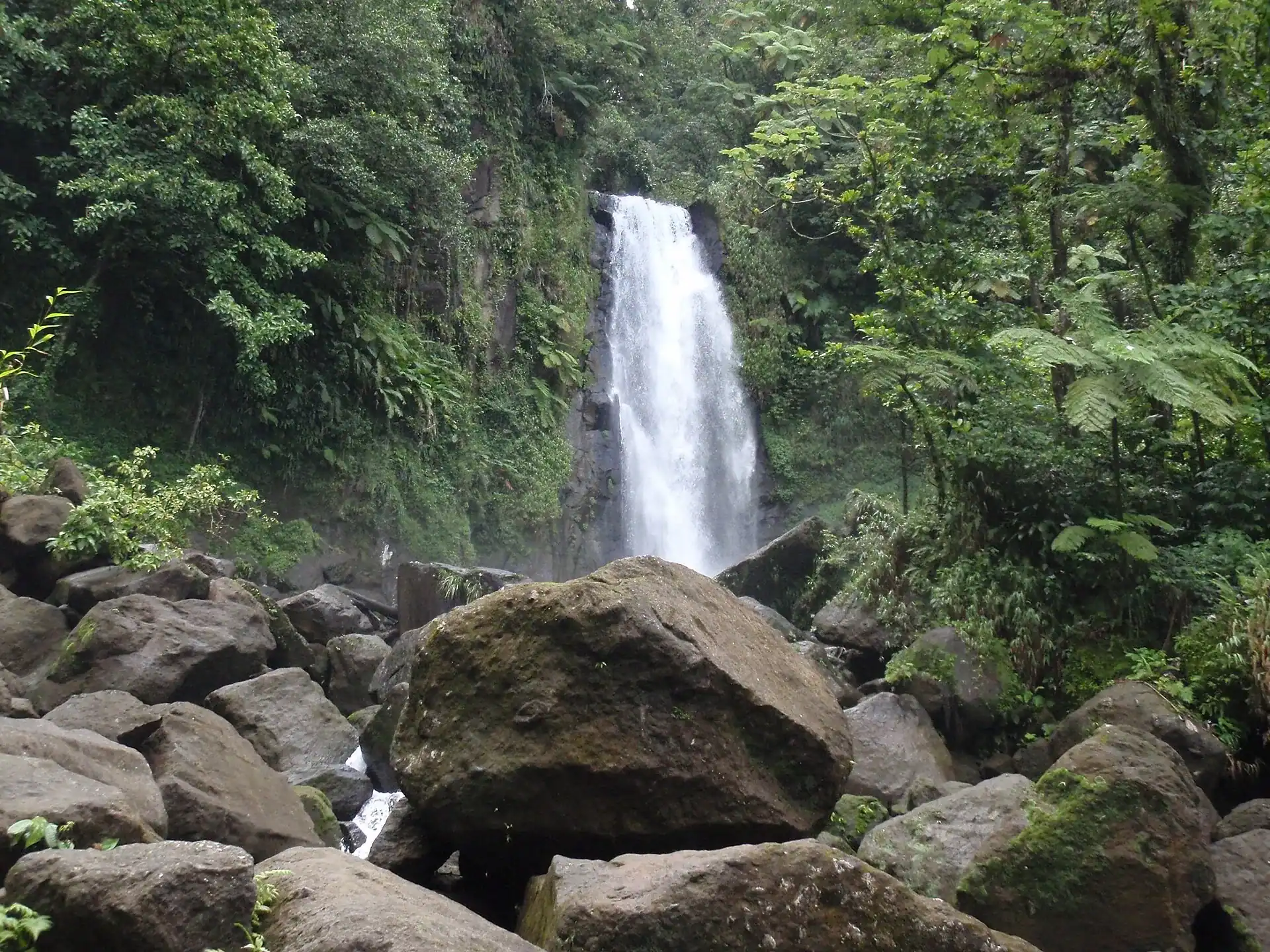 Photo: Nelro (talk) / Wikimedia Commons (Public domain)