Cost of Living in Marigot
Where this figure comes from. No cost survey covers Marigot, so the $2,200 a month above is our own estimate rather than a measurement. On 416 of our 999 city guides the figure is built from a published Numbeo basket, a one-bedroom rent in the centre plus one person's monthly costs without rent, converted to USD; this city is not one of them. How we source everything.
Budget around $2,200 a month on the French side, which is expensive by Caribbean standards and considerably cheaper than Saint Barthelemy next door. A one-bedroom runs roughly $900 to $1,400, with Terres Basses and the Baie Nettle strip at the top. Groceries in the French supermarkets are imported and pricey, though crossing to the Dutch side for some shopping is normal and legal, since there is no border post. Restaurants in Grand Case, which markets itself as the gourmet capital of the Caribbean, are excellent and expensive. The euro is the currency on this side and dollars are widely accepted. The octroi de mer levied across Guadeloupe and Martinique is simply not charged on this side, and that single exemption is why several categories of imported goods cost less here than on the departments to the south. Rent is where the money goes instead, since the housing stock never fully recovered from 2017 and demand from the yachting and hospitality trades keeps the pressure on year-round rather than seasonally.
Where to Work in Marigot
Connectivity is reasonable. Fibre reaches parts of Marigot and the main settlements, French mobile networks operate with free roaming for European visitors, and power is generally reliable, though the recovery from Hurricane Irma in 2017 took years and some infrastructure still shows it. There is limited coworking. The time zone is four hours behind GMT, which gives a good working overlap with the eastern United States all afternoon and with Europe in the morning, one of the more genuinely useful positions on this site for anyone with clients on both sides. Administration is the friction rather than the infrastructure. This is a collectivity with its own competences, so tax and some regulation are local while social security and the courts remain French, and working out which office handles a given question is a genuine time cost for anyone setting up. A great many residents on this side work on the Dutch side, where the jobs in the airport, the marinas and retail concentrate, so the daily flow across an unmarked border is the island's real economy. Marigot itself is administrative and quiet by comparison.
Getting Around Marigot
A car is the practical answer. The island is about eighty seven square kilometres shared between France and the Netherlands, with a single ring road and no border checks between the two halves, though the road narrows and the traffic backs up badly around Marigot and Simpson Bay. Shared minibuses run the main routes cheaply. Marigot itself is walkable. Princess Juliana International Airport on the Dutch side is the island's air link and one of the busiest in the eastern Caribbean, with direct flights to Europe and North America. Anyone crossing to the Dutch side regularly should also know that the two halves use different currencies and different plug standards, which catches people out more often than the border does. The Anguilla ferry leaves from here rather than from the Dutch side, running from Marigot to Blowing Point several times a day, which makes this the practical jumping-off point for that island and a reason to stay on this half. Taxi fares are set by a published tariff and are high enough that most residents drive. Parking in Marigot is manageable except on market mornings, when Wednesday and Saturday fill the waterfront and the streets behind it.
Sorting transport? Book an airport transfer, or compare car rental on Auto Europe and QEEQ.
Visas for Marigot
Saint Martin is a French overseas collectivity, part of France and the European Union but outside the Schengen area, so a Schengen visa does not admit you and time here does not count against a Schengen allowance. European Union citizens may live and work here without a permit. Most Western nationalities enter visa-free for ninety days. The Dutch side, Sint Maarten, is a separate country within the Kingdom of the Netherlands with its own rules, and although nobody checks the internal border, the two sides do keep separate records. Anyone planning a long stay should also weigh which side to base on, since the French side offers European Union rights and the Dutch side offers a lower cost of living. The 2007 reorganisation is the thing to understand: this side was detached from Guadeloupe to become a collectivity in its own right, which is why its rules differ from the departments to the south despite everything looking equally French. Social security and health cover run through the French system, so a European card works here as it does in Paris. For non-Europeans the long-stay route is the French one, applied for before travel, and there is no local scheme that shortcuts it.
Best Time to Visit Marigot
December to April is the dry season and the high season, warm at around twenty seven degrees with low humidity and the whole island busy. May, June and November are quieter and better value. Hurricane season runs June to November, and this island took the full force of Irma in 2017, which was the strongest Atlantic hurricane on record at landfall and destroyed a large part of the built environment. Recovery has been substantial but uneven. September is the quietest month and much of the tourist economy shuts. Carnival on the French side runs in February and March before Lent, while the Dutch side holds its own in April, so the island effectively gets two. The eleventh of November is the island's own day, marking the saint the place was named for and celebrated jointly across both halves at the obelisk on the border, and no other divided island marks its shared identity in quite that way, so it repays timing a visit around. February and March bring the French side's carnival. Sea grape and flamboyant flower through the early summer, and the light in the weeks after the rains breaks is when photographers say the island looks best.
Pros and Cons of Marigot
The French side sells itself on food, which at Grand Case is genuinely a cut above anything else in the region, along with the beaches, the ability to live in France while working American hours, and freedom of movement for European Union citizens. Two legal systems on one small island produce useful arbitrage in several directions. Saint Martin also has real crime problems by regional standards, the recovery from Irma is incomplete, the traffic is bad, and the island leans heavily on a cruise and charter economy that it does not control. Healthcare on this side runs through a French public hospital with the standards that implies, which is a genuine advantage over most of the eastern Caribbean and the reason people cross from neighbouring islands for treatment. Schooling is the French state system, free and in French. The collectivity also carries serious social problems, with unemployment among the young high and the post-Irma reconstruction of public housing still unfinished, and those are visible rather than tucked away out of sight of the beaches.
Who Marigot Is For
Saint Martin suits European Union citizens who want a Caribbean base with no immigration friction and a time zone that works for both sides of the Atlantic. It suits sailors, since the lagoon is one of the largest in the Caribbean and a major charter hub. It suits anyone who takes food seriously. Quiet is not on offer, the security situation is something to research honestly rather than assume, and anybody hoping for a cheap Caribbean island has picked one of the more expensive ones. The arrangement itself is the curiosity. The 1648 Treaty of Concordia that split this island between France and the Netherlands is among the oldest border agreements anywhere in the world still in force. For a European Union citizen this is one of very few places in the Caribbean offering full residence rights, a French hospital, French schools and a working American time zone at once, a set of things almost nowhere else offers together, and the strongest argument this island has. Families do well on this side for exactly those reasons. Anyone whose priority is cost rather than paperwork should look at the Dutch half or further down the chain, since neither the rent nor the restaurants here are forgiving.
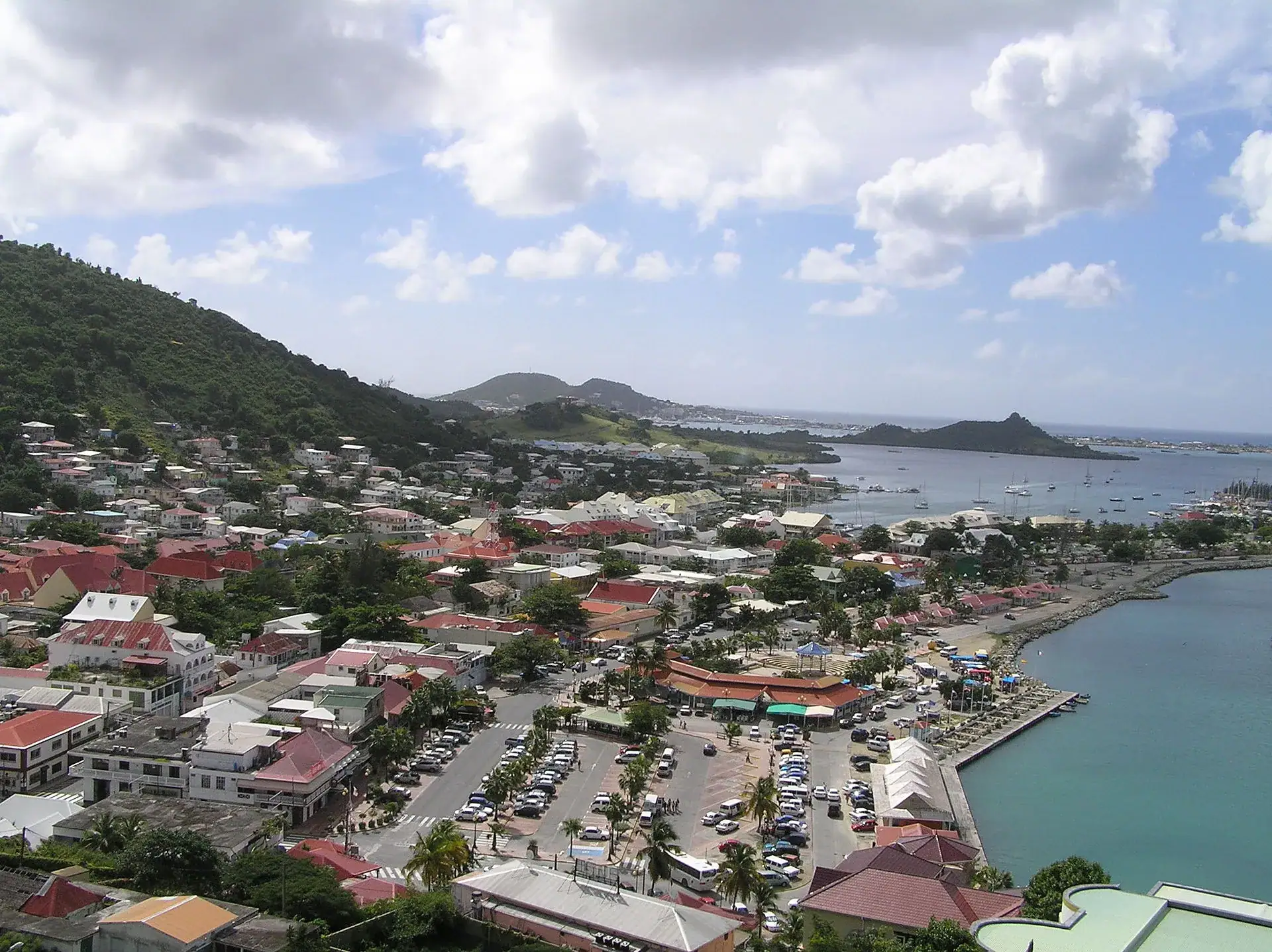 Photo: Original uploader was Darwinek at en.wikipedia / Wikimedia Commons (CC BY-SA 3.0)