Cost of Living in Almaty
Real market data
Source: Numbeo · August 2026
$1,290/moSolo nomad1-bed centre + living costs
$1,700/moCoupleshared 1-bed + costs
$1,010/moLean / localcheaper area + costs
- 1-bed rent, city centre$780₸369,333
- 1-bed rent, outside centre$500₸238,190
- Monthly costs excl. rent (1 person)$510₸241,935
- Meal, inexpensive restaurant$13₸6,000
- Monthly transit pass$21₸9,900
- Buy price, per m² (centre)$2,420₸1,146,875
Prices are from Numbeo (August 2026), converted to USD at $1 = ₸474.52 (01 Aug 2026). The monthly living-costs figure is our transparent one-person basket, groceries, a few meals out, utilities, phone, internet, transport and essentials, priced from those figures. Solo adds central rent; couple and lean are estimates from the same numbers.
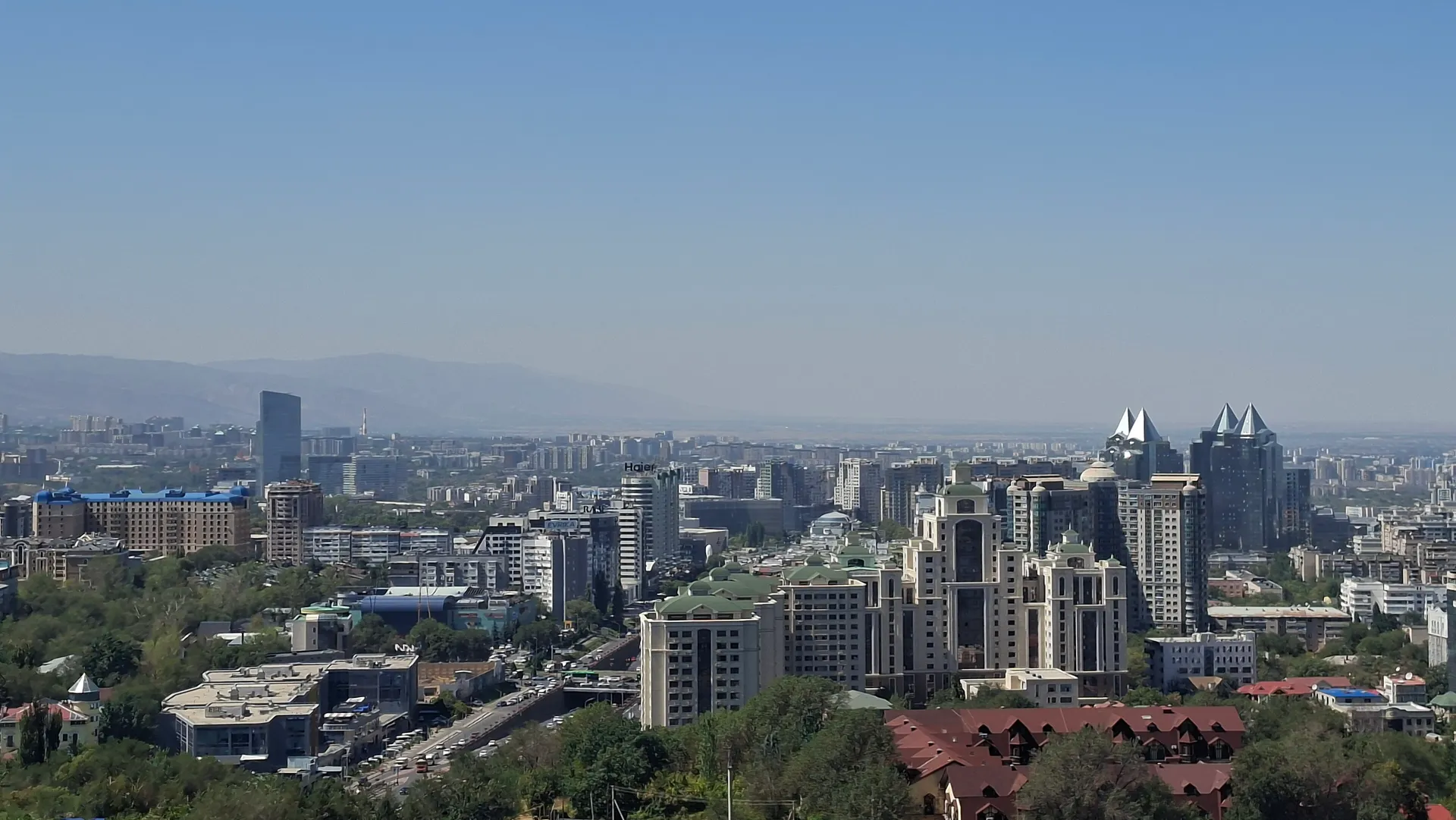
Almaty is affordable by European or North American standards while sitting a step above Southeast Asia. A single person lives comfortably on roughly $1,200 to $1,700 a month. A furnished one-bedroom in a central district such as Medeu or near Panfilov Park runs about $400 to $700, less if you head to the outer microdistricts. Everyday costs are low: a hearty bowl of lagman or plov costs a few dollars, a Yandex taxi across town rarely exceeds $3, and the Green Bazaar keeps grocery bills modest. These are our editorial estimates rather than official data, and prices in tenge can swing with the exchange rate. The apartment market runs on personal agreements more than on agencies, and a flat found by asking around costs meaningfully less than one advertised to foreigners. Expect to pay a month's deposit and a month ahead, usually in cash. Most Soviet-era blocks are on the city heat network, billed flat and switched on centrally, so a January month in one costs no more than a July month, which is unusual and worth knowing when comparing a new build. Set aside something for a proper winter coat; the cold here is the continental kind and a city jacket will not do.
- Furnished 1-bed, central: roughly $400 to $700 a month
- Lunch of plov or lagman: roughly $3 to $5
- Monthly metro and taxi habit: roughly $40 to $80
- Coffee at a specialty cafe: roughly $2 to $3
Where to Work in Almaty
Almaty has a dependable digital backbone: fibre internet is widely available and cheap, which makes home working painless. The city's cafe culture is excellent, with a dense scene of specialty coffee shops around the centre that happily host laptops. A handful of proper coworking spaces cater to the growing startup and freelance crowd, offering day passes and monthly desks. Mobile data on Beeline, Kcell or Activ is inexpensive and fast, useful as a backup for calls. The main friction is language rather than connectivity: menus and signage lean Russian and Kazakh, so a translation app smooths the daily routine. A recent change is worth noting: the country moved to a single time zone in 2024, so the city now runs five hours ahead of UTC rather than six, which shifted its overlap with Europe by an hour and makes older advice on call times wrong. The other working condition is the winter air. Cold, still days trap smoke and exhaust in the bowl the city sits in, and the readings are among the worst of any major city during those spells, which is an argument for a purifier and for taking the mountains seriously as an escape rather than a hobby.
Getting Around Almaty
Almaty is laid out on a clear grid that slopes gently down from the mountains, so orienting yourself is easy: uphill is south, toward the peaks. The city has a single clean, cheap metro line running through the centre, backed by an extensive bus network. In practice most nomads lean on Yandex Go, where taxi rides are plentiful and cost only a few dollars. Walking is pleasant along the tree-lined avenues in the warmer months. For weekend escapes, cable cars climb to Kok-Tobe and the Shymbulak ski resort, and minibuses and taxis reach Big Almaty Lake and Charyn Canyon. Mountain trips come with two details that save trouble. The lake above the city sits inside a protected watershed and a border zone, so access has been restricted at times and a permit or a registered driver is sometimes required; check before setting out rather than at the checkpoint. And the road up is not cleared as thoroughly as the city streets, so a winter trip needs proper tyres and a driver who has done it before. In town, the bus and metro run on a single stored-value card sold at kiosks, which is worth buying on day one.
Sorting transport? Book an airport transfer, or compare car rental on Auto Europe and QEEQ.
Visas for Almaty
Kazakhstan is one of Central Asia's more open countries for visitors. Citizens of many nations, including the United States, the United Kingdom, the EU and others, can enter visa-free for up to 30 days, which covers a short stay in Almaty with no paperwork. For longer stays, Kazakhstan has introduced a Neo Nomad Visa aimed at remote workers, alongside conventional longer-stay options. If you enter visa-free, note the exact permitted period and any registration requirement to avoid trouble on exit. The rule underneath the thirty days is the one that catches long-stayers. Visa-free visitors are also capped at a total across any rolling period, so a pattern of leaving for a weekend and returning does not extend indefinitely, and border officers can and do count. Registration is handled automatically when you arrive by air and is your own responsibility when you cross by land, which is where the fines come from. The crossing south into Kyrgyzstan is a few hours away and is the usual reset, but treat it as a stopgap rather than a strategy.
Best Time to Visit Almaty
Almaty is a four-season city, and the shoulder seasons are the most pleasant. Late spring, roughly April to June, brings blossom, green foothills and mild temperatures, while September and October deliver crisp, clear autumn days ideal for hiking. Summer is warm and sometimes hot in the valley but opens up the high mountains. Winter is cold and snowy, which is a draw rather than a drawback for skiers heading to nearby Shymbulak from December to March. The main seasonal caveat is air quality: cold winter days can trap smog in the valley, so those sensitive to pollution may prefer the warmer months. The city takes its name from the apple, and the wild orchards on the foothills are the ancestor of every cultivated variety in the world, which makes the blossom in the second half of spring a genuinely significant thing to be here for as well as a pretty one. Nauryz, the spring new year, falls a month earlier and brings a week of public holidays when the city empties and much of it closes. The ski season above town typically runs from midwinter into spring, longer than the valley weather suggests, because the resort sits well above the haze.
Pros and Cons of Almaty
Almaty is an underrated base that trades polish and English for mountains, value and cheap internet. The trade is real but the terms have shifted. A second language is now widespread among people under thirty, the cafe and service economy is as polished as anywhere in the region, and the internet is dependable and cheap. What has not improved is the winter air, and that is the thing most likely to end a long stay. For three or four months a year the city sits under an inversion that traps everything burned in it, and on the worst days the readings are the sort that make news elsewhere. Nobody local pretends otherwise. Against that, the mountains start where the bus routes end, a serious ski resort is forty minutes from a desk, and a month here costs what a fortnight costs in Europe. If you can arrange to be somewhere else in January and February, very little else about this city argues against it.
- Pros: dramatic mountain access on the city's doorstep, fast and cheap fibre, a low cost of living, excellent and varied food, cheap taxis, and world-class hiking and skiing within an hour.
- Cons: limited English outside younger and hospitality circles, winter air pollution in the valley, a nomad community still small compared with established hubs, and a bureaucratic streak that can complicate longer stays. Seismic activity is also a background reality in the region.
Who Almaty Is For
Almaty is made for the outdoors-minded nomad who wants a real city at the foot of serious mountains. Hikers, skiers, climbers and anyone who likes finishing the workday with a cable-car ride above the treeline will thrive. It also suits value-seekers who want dependable internet and low costs without the crowds of Southeast Asia, and the culturally curious drawn to a Soviet-Kazakh crossroads of food and history. It is a tougher fit for those who need widespread English, pristine air year-round, or a large established nomad scene. Come in spring or autumn, base yourself centrally, and let the Tian Shan set the weekend agenda. A shape that works well here is the long warm half of the year: arrive in April, leave in October, and skip the months that make people leave permanently. Six months covers the blossom, the whole hiking season, the autumn in the gorges and none of the inversion. Anyone who skis should invert that and come for the winter instead, because the resort above the city is genuinely good and the season is long. Anyone here for more than a month should take a few Russian lessons; the return on a dozen hours is larger here than almost anywhere.